华盛顿11月7日——全球环保组织正在使用人工智能来分析气候数据、追踪森林火灾并清点濒危野生动物——与此同时,他们也警告称,这种技术正在导致电力需求、用水量和温室气体排放量激增。
WASHINGTON, Nov 7 - Environmental groups worldwide are using artificial intelligence to analyze climate data, track forest fires and count endangered wildlife – embracing a technology they also warn is driving a surge in electricity demand, water use and greenhouse-gas emissions.
这种矛盾迫使这些组织为他们在使用人工智能执行应对气候变化或保护自然资源的任务进行辩护。
The contradiction is forcing these organizations to justify their AI use in carrying out missions to combat climate change or protect natural resources.
美国非营利组织“保护国际”的人工智能负责人阿里·斯旺森表示:“我们认识到人工智能会带来环境成本,我们需要慎重对待使用它的方式。但在气候和生物多样性危机日益紧迫之际,人工智能可以帮助我们更快地行动,并更好地利用我们正在收集的信息。”该组织最近开始使用人工智能来评估卫星探测到的热点地区,并向柬埔寨偏远且环境敏感地区的社区森林巡逻队发送关于潜在野火的实时警报。
"We recognize that AI can come with environmental costs, and we need to be thoughtful about how we use it," said Ali Swanson, AI lead at the US nonprofit Conservation International. "But at a time when the climate and biodiversity crises are becoming more urgent, AI can help us move faster and make better use of the information we’re collecting." The group recently started using AI to assess hotspots detected by satellites and send real-time alerts to community forest patrols about potential wildfires in remote and environmentally sensitive parts of Cambodia.
路透社采访了15家主要的环境、保护和发展组织,了解他们对人工智能的使用情况。所有组织都表示,他们以某种形式使用了该技术,并对其背后的数据中心所带来的环境影响表示担忧。这些装满服务器的中心可能需要大量的电力以及用于冷却的水。
Reuters interviewed 15 major environmental, conservation and development organizations about their AI use. All said they used the technology in some form and expressed concern about the environmental impact of the data centers powering it. The centers, filled with servers, can require vast amounts of electricity, along with water for cooling.
对于在人工智能的益处与其巨大风险之间寻求平衡的个人、政府和行业来说,这是一个全球性的困境。本月晚些时候,在联合国COP31气候大会上,这一权衡可能会受到关注。届时,主办国土耳其将呼吁各国政府、企业和其他机构签署一项承诺书,概述确保人工智能以可持续方式开发和部署的原则。
It’s a global dilemma for individuals, governments and industries balancing AI’s benefits with its enormous risks. The tradeoffs likely will grab attention at the UN’s COP31 climate conference this month, when host Turkey will call on governments, businesses and other institutions to sign a pledge outlining principles to ensure AI is developed and deployed sustainably.
联合国秘书长安东尼奥·古特雷斯希望主要的人工智能公司公开披露其系统的环境影响。
UN Secretary-General Antonio Guterres wants major AI companies to publicly disclose their systems’ environmental impacts.
联合国大学水、环境与健康研究所的研究人员估计,到2030年,全球数据中心的占地面积可能会增加一倍以上,达到印度尼西亚特大城市雅加达面积的约两倍。
Researchers at the United Nations University Institute for Water, Environment and Health estimate the global data-center footprint could more than double by 2030, reaching a size about twice that of Jakarta, the Indonesian megalopolis.
与此同时,国际能源署估计,到2030年,全球数据中心每年将消耗约945太瓦时的电力,产生相当于3亿多公吨二氧化碳的排放量。这相当于目前消耗量的两倍,约等于日本的年用电量。
The International Energy Agency, meanwhile, estimates global data centers will consume about 945 terawatt-hours of electricity annually by 2030, producing the equivalent of more than 300 million metric tons of carbon dioxide. That’s double current consumption and about equal to Japan’s annual electricity use.
该机构还预计,全球数据中心的用水量将从2023年的约5600亿升(1479亿加仑)增加到2030年的约1.2万亿升(3170亿加仑)。
The agency also projects that global data center water consumption will increase from about 560 billion liters (147.9 billion gallons) in 2023 to about 1.2 trillion liters (317 billion gallons) annually by 2030.
包括微软、亚马逊和Alphabet旗下谷歌在内的科技巨头报告称,部分由于数据中心扩张,其排放量有所上升,这引发了关于它们能否实现自身长期气候目标的质疑。
Technology giants including Microsoft, Amazon and Alphabet’s Google have reported rising emissions linked in part to data center expansion, raising questions about their ability to meet their own long-term climate goals.
亚马逊告诉路透社,由于公司采购低碳能源以及致力于高效利用电力和水资源,其人工智能产品属于最可持续的产品之列。微软和谷歌未回应置评请求。
Amazon told Reuters its artificial-intelligence products were among the most sustainable due to the company’s purchases of low-carbon energy and its efforts to use power and water efficiently. Microsoft and Google didn’t respond to requests for comment.
曾被认为不可能的突破 许多接受路透社采访的组织认为,目前人工智能的收益大于成本,因为该技术使得以前困难、昂贵或不可能的工作成为可能。
BREAKTHROUGHS ONCE THOUGHT IMPOSSIBLE Many of the organizations that spoke to Reuters believe AI’s benefits currently outweigh its costs because the technology is enabling work that was previously difficult, expensive or impossible.
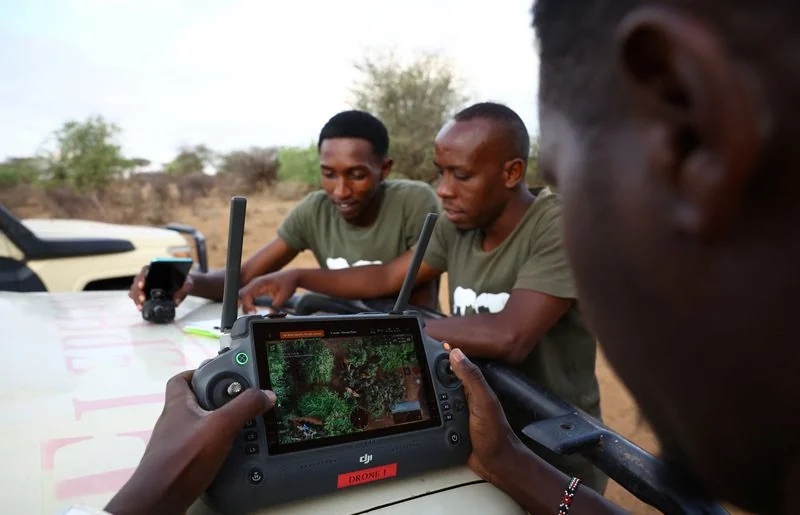
野生动物保护网络的合作伙伴、肯尼亚的“拯救大象”组织表示,正在利用机器学习改进种群调查并研究大象交流。
Kenya’s Save the Elephants, a partner of the Wildlife Conservation Network, said it is using machine learning to improve population surveys and study elephant communication.
该组织首席执行官弗兰克·波普表示,去年对肯尼亚最大保护区的一次空中调查产生了约20万张图片,9个人手工审核花了9个月。在英伟达GeForce图形平台上训练的AI模型现在可以在几小时内完成类似分析。
Frank Pope, the group’s chief executive, said an aerial survey of Kenya’s largest protected area last year generated roughly 200,000 images that took nine people nine months to review manually. AI models trained on Nvidia’s GeForce graphics platforms can now complete similar analyses in hours.
“结果令人大开眼界,”波普(Pope)说,“我们发现,人工调查漏掉了大约三分之一的大象、大约一半的斑马和长颈鹿,以及四分之三的羚羊种群。”他说,更准确的野生动物数据有助于为保护工作争取资金。
"The results have been eye-opening," Pope said. "We found that human surveys were missing about a third of the elephants, roughly half of zebras and giraffes, and three-quarters of oryx populations." More accurate wildlife data can help secure financing for conservation, he said.
“归根结底,这些工具让自然变得可量化,从而变得可投资,”他说,“如果我们要在宏观层面上保护生物多样性,这是一个至关重要的转变。”在已故杰出自然保护偶像简·古道尔(Jane Goodall)创立的研究所里,研究人员正在利用人工智能将坦桑尼亚贡贝国家公园(Gombe National Park)数十年来关于黑猩猩行为的野外记录数字化。
"Ultimately, these tools make nature measurable and therefore investable," he said. "That’s a critical transformation, if we’re going to conserve biodiversity at scale." At the institute founded by the late conservation icon Jane Goodall, researchers are using AI to digitize decades of field notes about chimpanzee behavior in Tanzania’s Gombe National Park.
该项目曾经预计需要13到15年,因为这些记录是用当地的基哈语(Kiha)并采用科学速记手写而成的。
The project was once expected to take 13-15 years because the records were written by hand using the local Kiha language and scientific shorthand.


简·古道尔研究所保护科学副总裁莉莲·平蒂亚(Lilian Pintea)表示,多亏了一款与亚马逊云科技(Amazon Web Services)共同开发的工具,这些笔记现在可以在几分钟内完成扫描、翻译和结构化,将所需时间大幅缩短至两年左右。
Thanks to a tool developed with Amazon Web Services, the notes can now be scanned, translated and structured in minutes, slashing the time needed to about two years, said Lilian Pintea, the Jane Goodall Institute’s vice president of conservation science.


平蒂亚说,古道尔生前支持利用人工智能推进保护科学,前提是人类必须牢牢掌控其使用方式。“人工智能技术应当被视为以人为本的工具,”平蒂亚说。
During her lifetime, Pintea said, Goodall supported the use of AI to advance conservation science, provided people remained firmly in control of how it was used. "AI technology should be seen as tools which are human-centered," Pintea said.
限制环境影响 一些组织正在试验各种方法,以限制其使用人工智能对环境造成的影响。
LIMITING THE ENVIRONMENTAL IMPACT Some organizations are experimenting with ways to limit the environmental impact of their AI use.
世界资源研究所(World Resources Institute,简称WRI)是一个利用人工智能加速其气候和环境分析的研究集团。该研究所表示,他们限制使用视频和图像生成等消耗大量资源的应用程序,同时对人工智能查询结果进行缓存,这样就不需要重新处理相同的搜索。
The World Resources Institute (WRI), a research group that uses AI to accelerate its climate and environmental analyses, said it limits resource-intensive applications such as generating videos and images, while caching AI query results so identical searches don’t need to be reprocessed.
总部位于美国的大自然保护协会采取了类似的方法。该组织利用人工智能分析商业捕捞船只拍摄的视频,以获取不同鱼类捕获量的信息。但该组织并没有将大量视频上传到集中式数据中心,而是在船只上安装了人工智能驱动的数字摄像头,在船上处理信息,从而减少了能源使用和数据传输需求,该组织高级科学家维也纳·萨科马诺表示。
The US-based Nature Conservancy has adopted a similar approach. It uses AI to analyze video captured on commercial fishing vessels for information on how many fish of different species they catch. But instead of uploading huge numbers of videos to centralized data centers, it has installed AI-powered digital cameras to process information aboard the vessels, reducing energy use and data-transfer requirements, said Vienna Saccomanno, a senior scientist at the organization.
“要让边缘计算成为可能,需要大量的工程工作,”她说。“这很值得,既能减少我们的碳足迹,又能提供这些可持续性洞察。”绿色和平国际表示,它也使用一些人工智能工具,主要是因为它依赖的软件平台包含人工智能功能。
"It takes a lot of engineering to make computation on the edge possible," she said. "This was worth it to reduce both our carbon footprint and deliver these sustainability insights." Greenpeace International said it, too, uses some AI tools, mainly because software platforms it relies upon include AI features.
该组织表示,它制定了内部准则,强调透明度、人工监督和“有意识地”使用人工智能。但由于环境影响,它更倾向于避开这项技术,并强力抵制数据中心的大规模建设。
It’s imposing internal guidelines emphasizing transparency, human oversight and "intentional" AI use, the group said. But it would prefer to sidestep the technology due to its environmental impacts and is pushing back hard on the data center buildout.
“当其他组织在询问如何负责任地使用人工智能时,绿色和平在询问首先是否有必要建设所有这些大规模数据中心,”该组织气候与能源活动家吴雪莹(Katrin Xueying Wu,音译)表示。其他组织现在认为人工智能对于有效的环保行动至关重要。
"While other organizations are asking how to use AI responsibly, Greenpeace is asking whether it’s necessary to build all these massive data centers in the first place," said Katrin Xueying Wu, a climate and energy campaigner with the organization. Other groups now see AI as vital to effective environmental activism.
“我们的工作是拯救地球。如果我们能利用人工智能,在有限的资源下更有效、更高效地完成这项工作,那么我们就必须认真探索这种可能性,”总部位于英国的国际鸟盟首席科学家斯图尔特·巴特查特表示。“如果我们不这样做,那就有失职守之嫌。”
"It’s our job to save the planet. If we can do that more effectively and efficiently with the limited resources we’ve got by using AI, then we have to seriously engage in that possibility," said Stuart Butchart, chief scientist at UK-based BirdLife International. "If we don’t do it, then we’re sort of being derelict in our duty."