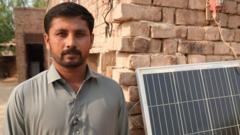
法伊扎尔·沙赫扎德想再买几块太阳能板,让自己位于旁遮普农村的家完全实现自给自足。卡丽·戴维斯,巴基斯坦通讯员,2026年11月17日珠宝、闪闪发光的银器、沙发和一台空调。婚礼三个月后,法伊萨尔·沙赫扎德位于旁遮普农村的家中堆满了新娘家送来的礼物,这些都是嫁妆的一部分。但最珍贵的物品藏在床底下:一块340瓦的太阳能板。
Faizal Shahzad wants to buy several more solar panels to make his home in rural Punjab fully self-sufficient Carrie Davies Pakistan correspondent 17 November 2026 Jewellery, glimmering silverware, sofas and an air-conditioning unit. Three months after his wedding, Faisal Shahzad's home in rural Punjab is bursting with gifts from his bride's family, as part of the dowry. But the most prized possession is tucked under the bed: a 340W solar panel.
“夏天我们从早上8点一直用到晚上,”他说,并补充说他们白天根本不需要用电网的电。“我们整天都用它带动空调扇。”巴基斯坦出现了进口太阳能板的热潮,这些板子在住宅和医院的屋顶上闪闪发光,从农民的田地到工业园区随处可见。
"In the summer we ran it from 08:00 in the morning until the evening," he says, adding they didn't need to use grid power at all during the day. "We ran our air cooler on it all day." Pakistan has seen a boom in imported solar panels, which glisten from the rooftops of homes and hospitals; from farmers' fields to industrial complexes.
据总部位于巴基斯坦的智库“可再生能源第一”称,从2018年到2025年,该国太阳能发电所占比例从1%上升到28%,目前约有700万户家庭拥有太阳能板。
From 2018 to 2025, the share of electricity generated from solar energy in the country rose from 1% to 28%, according to Pakistan-based think tank Renewables First, with some seven million households now owning panels.
沙赫扎德说,过去人们在婚礼上送摩托车或其他家居用品。“现在他们送太阳能板和空调扇。这几乎已经成了必备品。”除了太阳能板,他仍然使用国家电网来满足能源需求,尤其是因为他与家人和兄弟的家庭同住一栋房子,他们经常同时使用多台电器。但在一个平均月工资略低于4万巴基斯坦卢比(110英镑;145美元)的国家,电费正变得难以承受,已涨到1.5万至1.8万卢比。
People used to gift motorbikes or other household items at weddings, Shahzad says. "Now they give a solar panel and an air cooler. It has almost become a must." Alongside the solar panel he still uses the national grid to meet his energy needs, particularly as he lives in a house with his family and brothers' families, who often use multiple appliances simultaneously. But in a country where the average wage is just under 40,000 Pakistani rupees (£110; $145) per month, bills are becoming unaffordable, rising to 15,000-18,000 rupees.
今年,COP31正在推动世界摆脱化石燃料驱动的汽车、锅炉和其他排放温室气体的设备。尽管巴基斯坦已成为太阳能化的典范,但国家电网系统正受到连锁影响。
This year, COP31 is pushing the world to move away from fossil-powered vehicles, boilers and other greenhouse gas-emitting equipment. And while Pakistan has become a poster child for solarisation, the national grid system is experiencing knock-on effects.
电网的“死亡螺旋” 转向太阳能的大潮并非由政府政策推动,而是由巴基斯坦各个家庭推动。我们采访的大多数人都表示,他们安装太阳能板是为了摆脱往往不可靠的国家电网所导致的飞涨电价。
The power grid death spiral The big pivot to solar wasn't driven by government policy but by individual Pakistani households. Most people we spoke to said they installed panels to escape soaring electricity prices from an often unreliable national grid.
可再生能源第一组织行业联络人穆罕默德·哈桑·达贾纳表示,电价在几年内上涨了一倍多,而中国太阳能板的成本“下降了93%”。
Electricity tariffs have more than doubled in a few years, says Muhammad Hassan Dajana, industry liaison at Renewables First, while the cost of Chinese solar panels has "decreased by 93%".
能源部长阿瓦伊斯·艾哈迈德·莱加里说:“人们只是找到了另一种生存方式。这是一件非常健康的事情。我们适应了形势。人们以非常经济可行且高效的方式做出了反应和回应。”尽管太阳能的繁荣带来了明显的好处,尤其是对一个进口大量燃料的国家而言,但也存在担忧。巴基斯坦需要避免所谓的公用事业“死亡螺旋”。
"People have just found another way to be able to survive," says Energy Minister Awais Ahmad Leghari. "It's a very healthy thing. We have adapted to the situation. The people have reacted and responded in a very economically viable and efficient manner." While the solar boom brings clear benefits, particularly for a country that imports huge amounts of fuel, there are worries too. Pakistan needs to avoid the so-called utility death spiral.
当人们从国家电网购买的电力减少时,剩下承担电网固定维护成本的用户就更少。这可能迫使电价上涨,进而鼓励更多人转向太阳能。
When people buy less energy from the national grid, fewer customers are left to cover the fixed costs of maintaining it. That can force prices up - which in turn encourages even more people to switch to solar.
随着时间的推移,这可能导致双层体系:买不起太阳能板的人面临不断上涨的电费,而国家电网日益成为国家的负担。
Over time, this can lead to a two-tier system in which those who can't afford to buy panels face ever-rising bills, while the national grid becomes an increasing burden on the state.
达贾纳说:“你将会看到一个国有企业形式的‘白象’,需要大量公共资金才能勉强维持运转。”
"You'll have a white elephant in the form of a state-owned enterprise that requires a lot of public funding to just stay afloat," says Dajana.
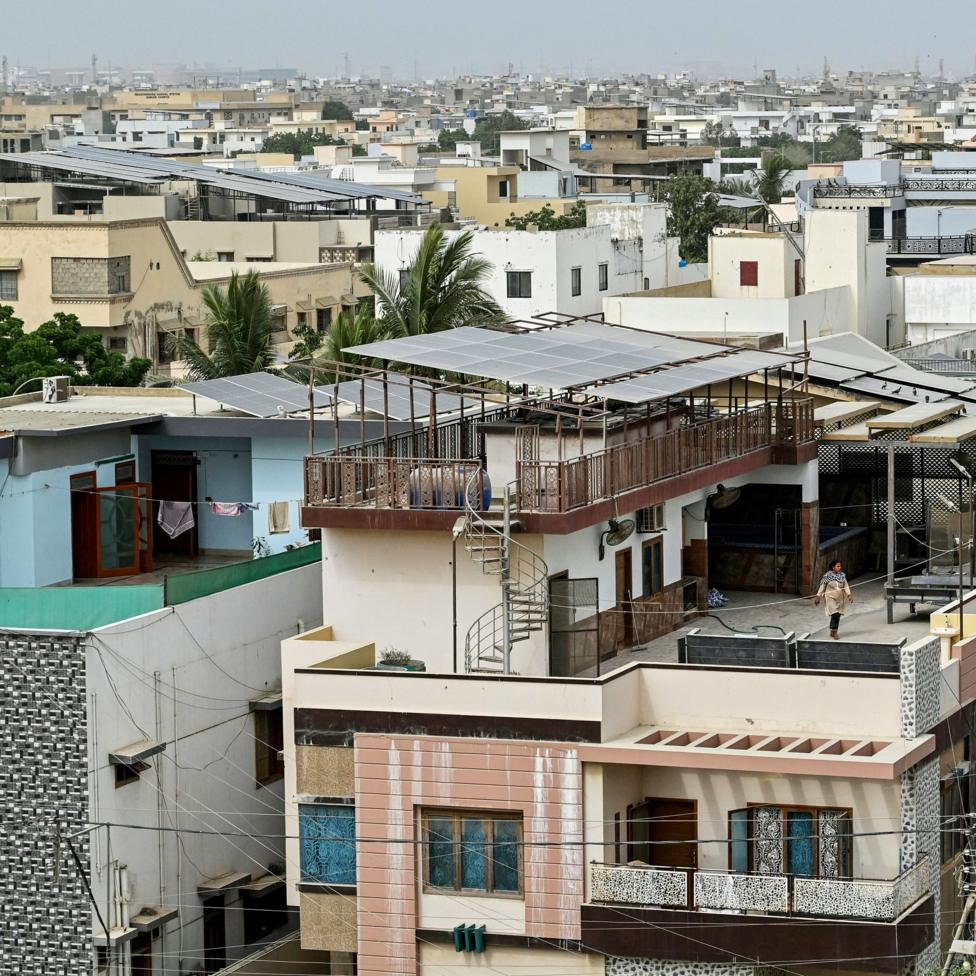
正如卡拉奇所见,越来越多的家庭正在安装太阳能板,但巴基斯坦人仍然需要来自国家电网的能源。巴基斯坦政府表示,相关成本已经显现。
More and more households are installing solar panels, as seen here in Karachi, but Pakistanis still need energy from the national grid Pakistan's government says the costs are already being felt.
莱加里说:“仅在过去两年里,用户逃离电网每年就让其余消费者多承担超过5亿美元(3.78亿英镑)的费用。这是一个非常沉重的负担。”他解释说,政府不想让人们远离太阳能,而是希望电网更具竞争力,从而能够提供更好的能源价格。
"In just the past two years, the exodus from the grid has cost the rest of the consumers more than $500 million [£378m] a year," says Leghari. "That's a very big burden." The government doesn't want to pull people away from solar, he explains, but wants the grid to be more competitive to be able to offer better energy prices.
私营电力生产商向电网供电,因让巴基斯坦陷入成本高昂且缺乏灵活性的合同,在巴基斯坦国内受到严厉批评。生产商自己则指出,电网维护不善等更广泛的结构性问题也是导致电费上涨的原因。莱加里表示,政府已重新谈判了大部分合同,目前正专注于通过更好的储能、减少浪费和更多创新来提高电网效率。
Private power producers, which feed into the grid, have been heavily criticised inside Pakistan for locking the country into costly, inflexible contracts. Producers themselves point to broader structural problems like poor grid maintenance as contributing to higher bills. Leghari says the government has renegotiated most of the contracts and is now focused on making the grid more efficient with better storage, less waste and more innovation.
莱加里希望该国到2036年底实现“高达90%的清洁电力”运行——包括可再生能源和核能——同时将进口能源的依赖度从26%降至4%。
Leghari wants the country to run on "up to 90% clean power" by the end of 2036 - including renewables and nuclear - with dependence on imported energy reducing from 26% to 4%.
巴基斯坦和菲律宾的太阳能热潮 廉价太阳能板主要从中国进口,正在改变亚洲各地的生活,并大幅削减电费。
The solar power boom in Pakistan and the Philippines Cheap solar panels, mainly imported from China, are transforming lives and slashing electricity bills across Asia.
在Sounds收听 太阳能驱动的企业 但在政府努力改善电网的同时,太阳能仍在扩张,在工业领域得到广泛采用。
Listen on Sounds Solar-powered business But as the government tries to improve the grid, solar is still expanding with widespread adoption in industry.
位于伊斯兰堡的科希努尔纺织厂就是其中一个例子,该厂由一片巨大的蓝色太阳能板供电。公用事业经理萨巴温·汗将这些太阳能板称为他的“宝贝”,并指着正在平整土地以安装更多太阳能板的施工现场。
Kohinoor Textiles Mills in Islamabad, which is powered by a sea of huge blue solar panels, is one example. Utilities manager Sabawoon Khan describes them as his "baby", pointing at construction work levelling the ground for more panels.
汗说,阳光充足时,工厂的数百台机器完全由太阳能供电。他们曾经依赖的重油发动机如今被封存在仓库里。
When the sun shines, the mills' hundreds of machines are powered entirely by solar energy, Khan says. The heavy-furnace-oil engines they once relied on sit mothballed in a warehouse.
但也有局限。当天气多云或污染严重时,以及夜间,公司会从国家电网获取更多电力。未来几周内,与其他公司一样,该厂将开始使用工业电池来储存多余的太阳能。
But there are limits. When it's too cloudy or polluted, and during the night, the company takes more energy from the national grid. In the coming weeks, like other firms, it will start using industrial batteries which can store excess solar energy.
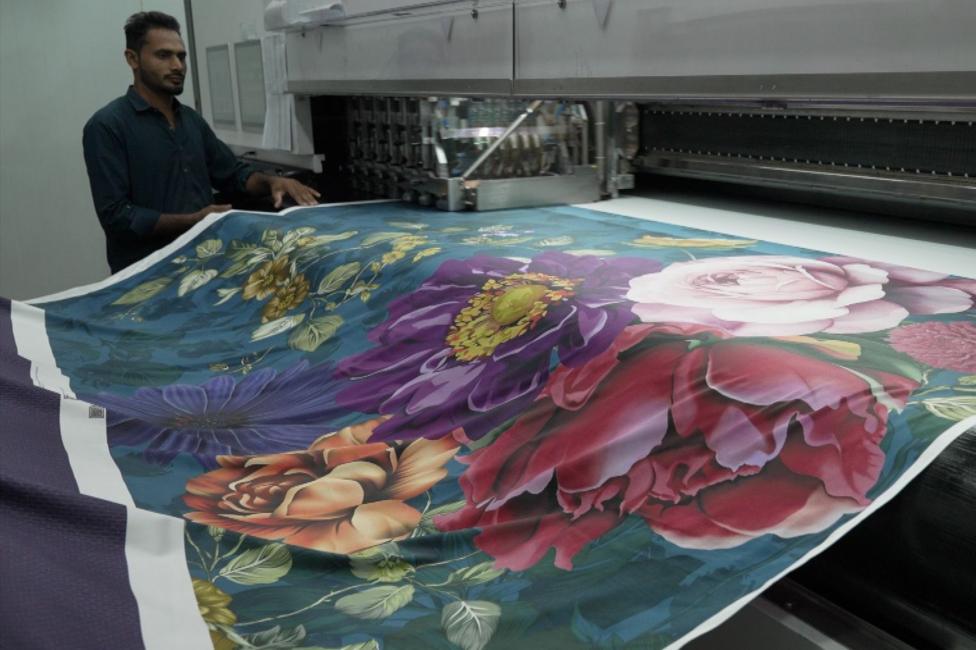
“我们需要降低能源成本,这是一个办法,”该厂首席执行官陶菲克·赛义德·赛戈尔说,他补充说,计划并不是完全脱离电网。
"We needed to reduce our energy costs and this was one way to do it," says Taufique Sayeed Saigol, the mills' CEO, who adds the plan is not to disconnect from the grid altogether.
“不幸的是,国家没有资源,所以我们不能真的把一切都归咎于国家。有些事情是我们自己做的。”成排的大型太阳能电池板每天为伊斯兰堡这家纺织厂提供大部分时间的电力。批评者指责政府在太阳能政策上改变规则。此前,家庭可以将多余电力送入电网并获得积分,这些积分随后用于在阳光不足时抵消电网电力的成本。该政策在今年早些时候发生了变化。
"The state unfortunately doesn't have the resources so we can't really say that we blame everything on the state. We do some of the things ourselves." Rows of large solar panels power this textiles factory in Islamabad for large parts of the day Critics accuse the government of moving the goalposts on solar power. Previously, households could feed excess electricity into the grid and earn credits, which were then used to offset the cost of grid power when the sun wasn't shining. That policy changed earlier this year.
“最初他们的政策非常有用,”费萨拉巴德商会主席阿里夫·埃赫桑·马利克说。“但后来政策变了。现在他们开始以较低价格收购,再以较高价格卖回。”马利克说,这对中小企业影响很大。莱加里反驳说,最初模式的成本根本算不过来;太阳能生产者送入系统的电力,比他们最终从系统中取用的电力便宜得多。
"Initially their policy was very helpful," says Arif Ehsan Malik, president of Faisalabad's chamber of commerce. "But then the policy changed. Now they have started purchasing at a lower rate and selling back at a higher rate." Malik says that makes a big difference for small and medium businesses. Leghari counters that the costs of the initial model didn't add up; the electricity the solar producers put into the system was much cheaper than the electricity they ended up taking out of it.

“那些利润是以电网其他消费者为代价的。如果我们没有改变那些规定,其他消费者每年将至少多负担1500亿到2000亿卢比,比如说,两年后。”Renewables First的穆罕默德·哈桑·达贾纳认为,只要有正确的政策,巴基斯坦可以成为能源转型成功的全球典范。尽管莱加里承认第一波太阳能采用潮对政府来说是个“意外”,但他表示并不担心太阳能会超出他们的计划,称其已被纳入他们的10年预测,而且离开电网的电力数量已经放缓。
"Those profits were coming at the cost of the rest of the consumers of the grid. Had we not changed those regulations, the rest of the consumers would have been burdened by at least 150 to 200 billion rupees a year, say, two years from now." Muhammad Hassan Dajana from Renewables First believes that with the right policy, Pakistan could become a global example of a successful energy transition Despite admitting that the first wave of solar adoption was a "surprise" to the government, Leghari says he has no fear that solar could outrun their plans, saying it has been incorporated into their 10-year forecasts and the numbers leaving the grid have slowed.
巴基斯坦对太阳能抱有雄心;有计划在全国各地开设太阳能电池工厂,并鼓励更多电动汽车。但它也正处在十字路口。
Pakistan has big ambitions for solar; there are plans to open solar battery factories around the country and encourage more electric vehicles. But it's also at a crossroads.
“前方有两条路,”达亚娜说。一条是太阳能与电网并行运作的未来,展示渐进式能源转型如何能够成功。另一条是巴基斯坦成为一个反面教材,背负着昂贵且日益衰落的电网。沙赫扎德为他在旁遮普农村的家实现太阳能的雄心显然并未放缓。
"There are two paths ahead," Dajana says. One is a future where solar and the grid work in parallel, demonstrating how a gradual energy transition can succeed. The other is where Pakistan becomes a cautionary tale, burdened with a costly, declining grid. Shahzad's solar ambitions for his home in rural Punjab certainly have not slowed.

“我们计划再买10到15块太阳能板,安装在屋顶上,然后接入一套带电池和备用的完整系统。“目标是完全自给自足。”
"We plan to get another 10-15 panels and install them on the roof, then connect a full system with batteries and back up. "The plan is to be fully self-sufficient."