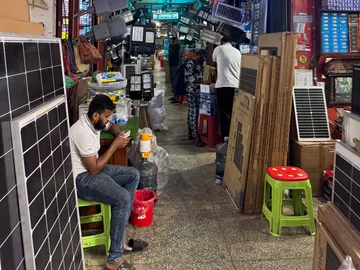
达卡市中心一家拥挤的市场已成为孟加拉国能源转型的意外“零点”。在挤满购物者和送货工人的狭窄通道中,微小的店铺里堆满了排排摆放的太阳能电池板和电池。
A cramped market in the heart of Dhaka has become an unlikely ground zero for Bangladesh’s energy transition. Down narrow aisles crowded with shoppers and delivery workers, tiny storefronts are overflowing with rows of solar panels and batteries.
东进集团孟加拉公司销售代表蒙朱·侯赛因表示,该零售商难以满足需求,近几个月销售额较去年同期增长了50%。中东战争引发的该国日益严重的能源危机,正迫使家庭和企业寻找越来越不可靠的电网的替代方案。
Monju Hossain, a sales representative for Dongjin Group Bangladesh, said the retailer is struggling to keep up with demand, with sales jumping 50% in recent months from a year earlier. The country’s worsening energy crisis, triggered by the war in the Middle East, is pushing households and businesses to seek alternatives to an increasingly unreliable grid.
“孟加拉国的停电情况越来越糟,这增加了对我们设备的需求,”侯赛因在卡普坦巴扎二楼的一家店铺里说。“工业客户的需求显著增加,因为他们必须让工厂继续运转。”这个繁忙的市场展示了中东能源冲击如何加速贫穷国家远离化石燃料的转变。从菲律宾到巴基斯坦和尼日利亚,人们正在转向太阳能和电池,以削减公用事业账单,或者仅仅是为了让灯光和机器继续运转。
“The blackouts in Bangladesh have gotten worse, which has increased the need for our equipment,” said Hossain, in a shop on the second floor of the Kaptan Bazar. “Demand from industrial customers has increased significantly, as they have to keep factories running.”The busy market offers a glimpse of how the Middle East energy shock is accelerating the shift away from fossil fuels in poorer countries. From the Philippines to Pakistan and Nigeria, people are turning to solar and batteries to cut utility bills or just to keep the lights and machinery on.
这对液化天然气的长期需求前景构成威胁,因为像孟加拉国这样人口众多的发展中国家长期以来被宣传为这种超低温燃料的高增长市场。
It’s a threat to the long-term demand outlook for liquefied natural gas, given that populous developing nations like Bangladesh have long been touted as high-growth markets for the super-chilled fuel.
这个拥有1.8亿人口的南亚国家是波斯湾能源流动中断受打击最严重的国家之一。今年,该国部分地区的限电——即轮流停电——每天长达18小时,此前孟加拉国的主要供应国卡塔尔的液化天然气出口已减少到寥寥无几。
The South Asian nation of 180 million has been one of the hardest-hit by the disruption to energy flows from the Persian Gulf. Load-shedding — or rolling blackouts — have stretched to as long as 18 hours a day in some parts of the country this year as LNG exports from Qatar, formerly Bangladesh’s main supplier, slowed to a trickle.
为弥补短缺,孟加拉国一直在现货市场购买液化天然气,价格约为其从卡塔尔签约供应量的三倍,迫使公用事业公司提高电费。更高成本与停电的结合,正推动消费者转向可再生能源。本周当地媒体报道称,即使是总理塔里克·拉赫曼也在自家安装了太阳能电池板。
To help make up the shortfall, Bangladesh has been buying LNG on the spot market, at around triple the price of its contracted supply from Qatar, forcing utilities to hike electricity bills. That combination of higher costs and power cuts is pushing consumers toward renewables. Even Prime Minister Tarique Rahman has installed solar panels on his house, according to local media reports this week.
对卡普坦巴扎尔——孟加拉国最大的太阳能设备集散地之一——三十多个摊位的非正式调查发现,所有店铺的需求都以不同程度增加。近年来太阳能电池板和电池成本大幅下降,使这项技术对普通家庭更加负担得起,不仅推动了达卡市场的销售,也带动了全国各地的销售。
An informal survey of more than three dozen stalls at the Kaptan Bazar — one of Bangladesh’s biggest hubs for solar equipment — found that all of shops have seen demand increase to varying degrees. A plunge in the cost of solar panels and batteries in recent years has made the technology more affordable for regular households, spurring sales not just in Dhaka’s markets but across the country.
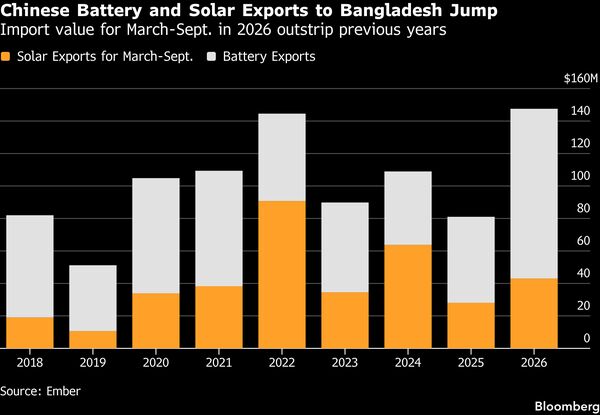
作为全球太阳能和电池设备主要制造商的中国,正在助力这一转变。孟加拉国从中国进口的相关设备,从去年同期的数字翻了一番多,在3月至9月期间达到约1.4亿美元。
China, the world’s dominant manufacturer of solar and battery equipment, is helping enable the shift. Bangladesh’s imports of the equipment from the country more than doubled to about $140 million in the March through September period from a year earlier.
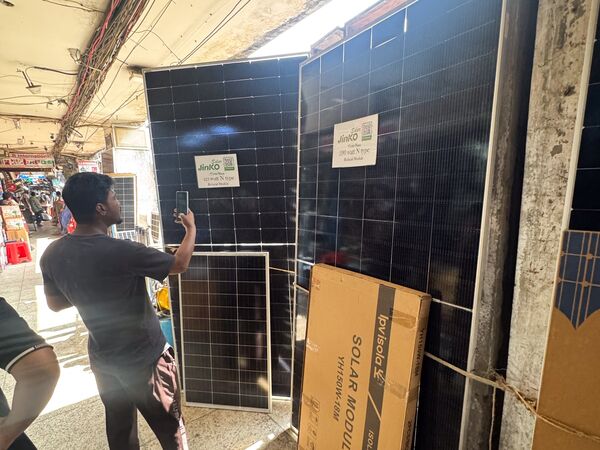
达卡店主表示,中国晶澳太阳能股份有限公司和隆基绿能科技股份有限公司生产的电池板因价格低廉、性能可靠,远远是最受欢迎的产品。购买一块750瓦的电池板,足够供一个家庭使用,约需1.5万塔卡(约合121美元),而一年的电费约为3.8万塔卡。
Panels made by China’s Jinko Solar Co. and Longi Green Energy Technology Co. are by far the most popular due to their low price and reliability, according to the Dhaka store owners. Buying a 750-watt panel, enough for a single household, costs about 15,000 taka ($121), compared to about 38,000 taka a year in electricity bills.
添加电池及相关设备会使投入迅速增加数倍,但东进集团的侯赛因表示,对于普通家庭而言,这些成本可在十年内收回。
Adding a battery and associated equipment will quickly boost the outlay by several times, but those costs can be recouped within a decade for a normal family, Dongjin Group’s Hossain said.
达卡政府也在助推向太阳能的转变,9月削减了相关设备的进口关税。本周引用总理拉赫曼的话的一篇当地媒体报道称,政府的目标是到2030年可再生能源占电力结构的20%,到2040年达到30%,而去年这一比例仅为2.5%。
The shift to solar is being abetted by Dhaka, which cut import tariffs on the equipment in September. The government is aiming for renewables to make up 20% of the power mix by 2030 and 30% by 2040, according to a local media report this week that cited Prime Minister Rahman. That’s up from just 2.5% last year.
据能源经济与金融分析研究所(Institute for Energy Economics and Financial Analysis)孟加拉国首席分析师沙菲库尔·阿拉姆(Shafiqul Alam)表示,当局已接受,更多清洁电力将降低该国对当前及未来能源冲击的脆弱性。太阳能进口税削减有所帮助,但更有利于能够一次性购买系统的高收入家庭。
Authorities have accepted that more clean power will reduce the country’s vulnerability to this and future energy shocks, according to Shafiqul Alam, the lead analyst for Bangladesh at the Institute for Energy Economics and Financial Analysis. The cut in solar import taxes is a help, but it’s more beneficial for high-income households that can afford to buy the systems upfront.
“低收入群体可能会考虑印度的资本补贴等模式,”他说,指的是一项为安装太阳能设备的家庭提供补贴和其他付款的计划。
“For lower-income groups, they might consider models like India’s capital subsidy,” he said, referring to a program that provides households with subsidies and other payments for installing solar equipment.
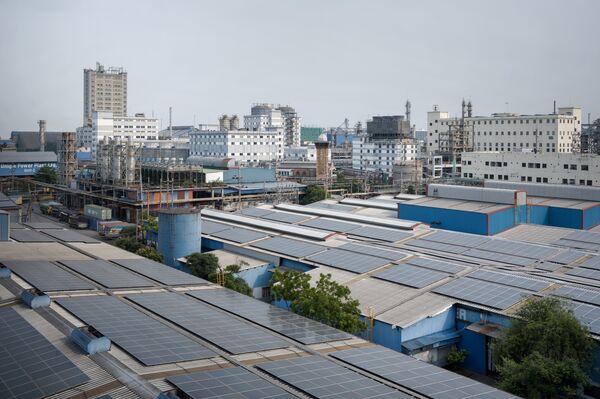
阿卜杜勒·哈基姆(Abdul Hakim)大约六个月前开始在其位于达卡的陶瓷工厂安装屋顶太阳能。他现在看到这项技术的热情足够高,他的公司正考虑自行进入能源业务,供应太阳能电池板和锂电池。
Abdul Hakim began installing rooftop solar at his ceramics factory in Dhaka about six months ago. He now sees enough enthusiasm for the technology that his company is considering expanding into the energy business itself, supplying panels and lithium batteries.
“需求很高,”卓越陶瓷工业有限公司(Excellent Ceramics Industries Ltd.)总经理哈基姆说。孟加拉国消费者的下一步是锂电池,他说。“作为备用,他们需要锂电池。”不过,哈基姆工厂的窑炉使用天然气,无法完全由太阳能取代。
“Demand is high,” said Hakim, managing director of Excellent Ceramics Industries Ltd. The next step for Bangladeshi consumers is lithium, he said. “For the backup, they need a lithium battery.”Still, the kiln at Hakim’s factory runs on natural gas and can’t be fully replaced by solar.
该国的纺织和服装工厂——孟加拉国的首要出口产品——为H&M和拉尔夫·劳伦等国际品牌供货,面临类似问题。纺织制造是高能耗行业,燃气锅炉产生蒸汽,用于染色和整理面料。
The country’s textile and garments plants — Bangladesh’s top export — which supply international brands like H&M and Ralph Lauren have a similar problem. Textile manufacturing is energy-intensive, with gas-fired boilers producing steam that’s used in dyeing and finishing the fabrics.
孟加拉国领先的实业家之一穆沙拉夫·侯赛因(Mosharaf Hossain)表示,他服装厂的现场锅炉产生的动力远超他能从可用土地上的太阳能板产生的电力,即使能做到,可再生能源也无法完全满足他的需求。
Mosharaf Hossain, one of Bangladesh’s leading industrialists, said his clothing factory’s on-site boiler produces far more power than he could generate from solar panels on the available land, and even if he could, renewable energy couldn’t fully meet his needs.
“太阳能只产生电力,不产生工业锅炉所需的蒸汽,”侯赛因说,他是穆沙拉夫集团(Mosharaf Group)的主席,该集团是该国最大的纺织生产商之一。
“Solar only produces electricity, not steam for industrial boilers,” said Hossain, the chairman of the Mosharaf Group, one of the country’s biggest textile producers.
尽管太阳能并不适合某些行业,但能源危机正迫使孟加拉国经济几乎各个领域的公司考虑可再生能源如何帮助降低成本。
Despite solar’s unsuitability for some industries, the energy crisis is forcing companies in almost every part of Bangladesh’s economy to think about how renewables can help cut costs.
在达卡的洲际酒店,电网停电每周多次使建筑陷入黑暗,随后现场柴油发电机在不到10秒内恢复供电。对客人来说,这只是短暂的不便,但这迫使酒店在燃油价格接近历史高点的时期燃烧更多柴油。
At the InterContinental Hotel in Dhaka, grid outages plunge the building into darkness several times a week, before onsite diesel generators restore power less than 10 seconds later. For guests, it’s a brief inconvenience, but it forces the hotel to burn more diesel at a time when prices for the fuel are near record highs.
据酒店一名管理人员透露,该酒店正考虑在屋顶安装太阳能电池板。他表示,锂离子电池可以让酒店储存该电力,并减少对昂贵柴油发电机的依赖。
The hotel is looking at installing solar panels on its roof, according to one of its managerial staff. Lithium-ion batteries could allow it to store that power and reduce its reliance on the costly diesel generators, he said.