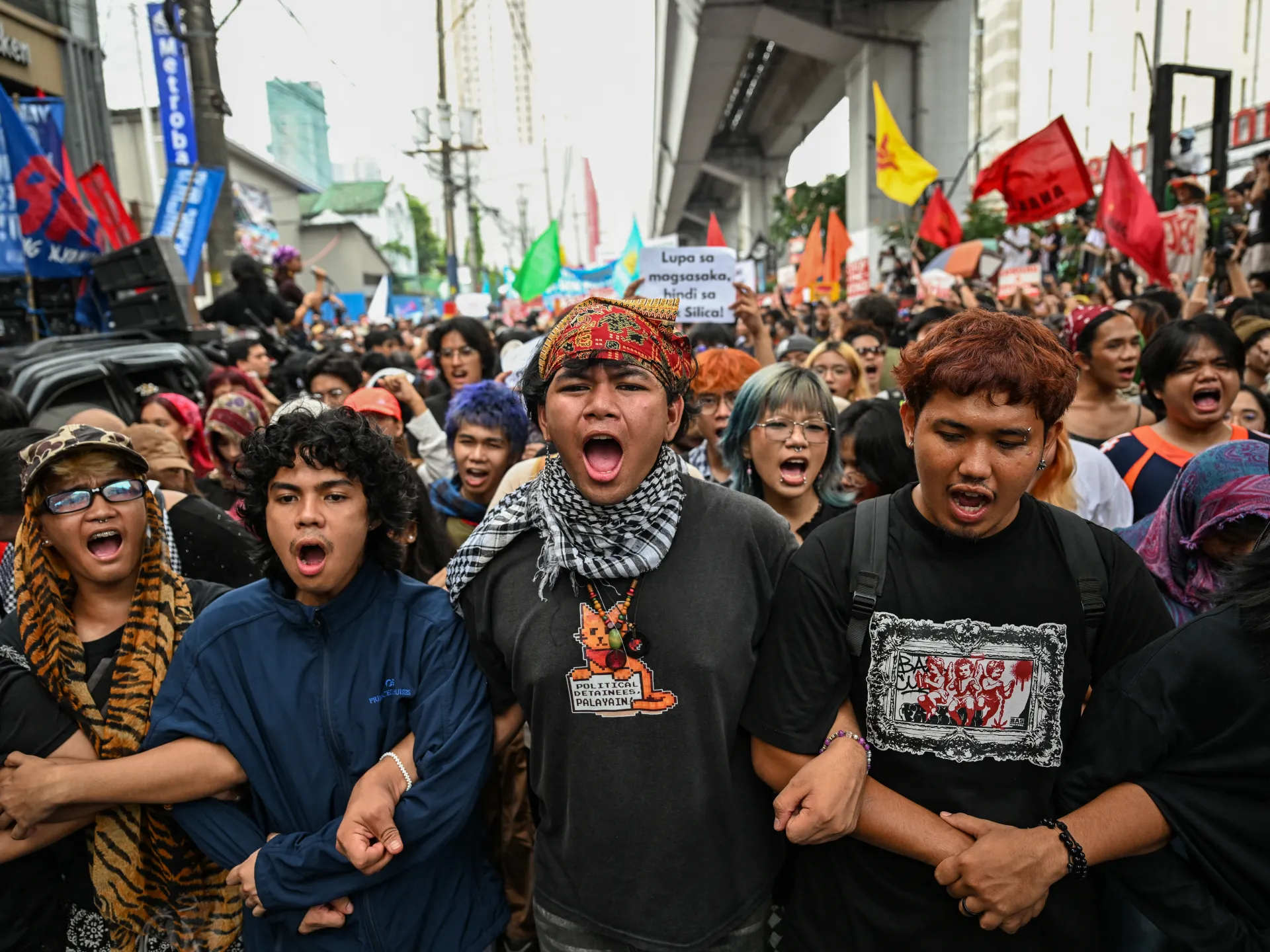
菲律宾政府承诺,通过美国主导的“帕克西利卡”倡议提供就业机会和数十亿美元的投资。但抗议者看到的是一个截然不同的未来:祖传土地受到威胁、环境遭到破坏,以及对华盛顿的依赖加深。
The Philippine government is promising jobs and billions in investment through the United States-led Pax Silica initiative. But protesters see a very different future: threatened ancestral lands, environmental destruction and deeper dependence on Washington.
11月15日,在唐纳德·特朗普访问马尼拉出席东盟峰会之前,菲律宾警方逮捕了200多名反对该倡议的示威者。这些逮捕行动是针对一项批评者视为另一种形式的美国新帝国主义的项目所进行的更广泛抗议活动打压的一部分。
On November 15, ahead of Donald Trump’s visit to Manila for the ASEAN summit, Philippine police arrested more than 200 demonstrators opposing the initiative. The arrests were part of a wider crackdown on protests against a project that critics see as another form of US neo-imperialism.
“帕克西利卡”倡议是一个由美国主导的联盟,旨在保障供应链,并遏制中国在关键矿产、半导体以及人工智能基础设施所必需的其他技术方面的实力。菲律宾于2026年4月加入该倡议,塔拉克省新克拉克城的拟建工业园区是其中的一部分。菲律宾政府将拟建的工业园区宣传为经济发展所必需,预计该园区一旦全面建成,可创造超过13万个就业岗位,吸引高达700亿美元的投资,这一过程预计需要数十年。
The Pax Silica initiative is a US-led coalition aimed at securing supply chains and countering China’s strength in critical minerals, semiconductors and other technologies essential to AI infrastructure. The Philippines joined the initiative in April 2026, with a proposed industrial hub in New Clark City, Tarlac province, forming part of it. The Philippine government has promoted the proposed industrial hub as essential to economic development, projecting that it could generate more than 130,000 jobs and attract up to $70bn in investment once fully developed, a process expected to take decades.
拟建的“帕克西利卡”工业园区占地约1618公顷,引发的担忧不仅涉及国家主权,还涉及当地社区的迁移、环境后果、原住民土地权利和人身安全。
The proposed Pax Silica industrial hub, which covers approximately 1,618 hectares, raises concerns not only about national sovereignty but also about the displacement of local communities, environmental repercussions, Indigenous land rights and human security.
批评者认为,该项目是从当地社区和农民手中夺取土地,以服务外国利益。例如,萨潘卡亚扬的阿塔洪盖伊社区面临着从其世代居住的土地上迁出的命运。约200名居民可能失去其住宅、农田、水源和墓地的使用权,而该社区争取正式承认其祖传土地的努力,可追溯至1994年,至今仍未得到解决。
Critics see the project as taking land from local communities and farmers to serve foreign interests. The Aeta Hungey community in Sapang Kawayan, for example, faces relocation from land it has occupied for generations. Around 200 residents could lose access to their homes, farmland, water sources and burial grounds, while the community’s efforts to secure formal recognition of its ancestral land, dating back to 1994, remain unresolved.
另一大主要担忧是水资源消耗。根据基地转换与开发管理局(BCDA)的说法,拟建的工业枢纽每天可能需要6500万至9000万升水。尽管BCDA计划通过地表水采集来满足这一需求,但对水资源压力的担忧依然存在,尤其是在干旱期间。菲律宾本身就容易受到干旱、水资源短缺、农业中断和气候变化的影响。11月4日,菲律宾大气、地球物理和天文服务管理局(PAGASA)确认,一场非常强烈的厄尔尼诺现象已经出现,并预计将持续到2027年上半年。
Another major concern is water consumption. According to the Bases Conversion and Development Authority (BCDA), the proposed industrial hub could require 65–90 million litres of water daily. Although the BCDA plans to meet this demand through surface-water harvesting, concerns remain about the pressure on water resources, particularly during droughts. The Philippines is already vulnerable to drought, water shortages, agricultural disruption and climate change. On November 4, the Philippine Atmospheric, Geophysical and Astronomical Services Administration (PAGASA) confirmed that a very strong El Nino was present and expected to persist into the first half of 2027.
菲律宾政府必须回应菲律宾人民的迫切需求,而不是成为美国在地缘政治竞争中对抗中国的棋子。东南亚是两大强国竞争的焦点,菲律宾是美国的关键盟友。Pax Silica将把菲律宾定位为与中国新兴人工智能冷战中的一个核心节点。
The Philippine government must respond to the pressing needs of Filipinos instead of becoming a pawn of the United States in its geopolitical rivalry with China. Southeast Asia is a focal point of competition between the two major powers, with the Philippines serving as a key US ally. Pax Silica would position the Philippines as a central node in an emerging AI Cold War with China.
Pax Silica被视为经济进步的途径,但也可能成为美国在该地区,特别是在菲律宾进行军事扩张的工具。半导体用于现代军事生产,是现代战争武器系统的关键组成部分。在11月17日的东盟演讲中,特朗普强调了美国在该地区涉及关键矿产、能源和技术的协议,同时将菲律宾描述为长期以来的关键盟友。他还指出两国国防合作的加强。这种合作部分建立在《增强国防合作协定》(EDCA)之上,该协定允许美军使用商定的菲律宾军事设施。
Projected as an avenue for economic progress, Pax Silica could also serve as a tool for the military expansion of the US in the region, particularly in the Philippines. Semiconductors are used in modern military production and are essential components of weapon systems in modern warfare. During his November 17 ASEAN speech, Trump highlighted US agreements across the region involving critical minerals, energy and technology, while describing the Philippines as a longstanding key ally. He also pointed to increased defence cooperation between the two countries. This cooperation already rests in part on the Enhanced Defense Cooperation Agreement (EDCA), which allows US forces access to agreed Philippine military facilities.
菲律宾总统小费迪南德·马科斯也强调了两国关系的深度,这种关系根植于共同的历史和价值观。描述美国在菲律宾生活中的影响范围时,他说:“在菲律宾,我们生活中没有哪一部分不以某种方式、某种形式或某种形态与美国有所关联。”未经审视的联盟损害国家利益,特别是影响菲律宾人民生活的利益。经济发展不应以牺牲人类安全、主权和环境可持续性为代价。
President Ferdinand Marcos Jr also emphasised the depth of the relationship between the two countries, rooted in shared history and values. Describing the extent of US influence in Philippine life, he said, “There is no part of our lives in the Philippines that is not involved with the United States in some way, in some shape or form or another.”An unexamined alliance compromises national interests, particularly those affecting the lives of the Filipino people. Economic development should not come at the expense of human security, sovereignty and environmental sustainability.
在此背景下,一场广泛的、跨多个领域的反对“硅和平”的反对运动已经出现,并正在获得动力。它汇集了包括原住民、农民、工人、科学家、环保主义者、宗教领袖、学生和进步活动人士在内的各个领域。
Against this backdrop, a broad, multisectoral opposition movement against Pax Silica has emerged and is gaining momentum. It brings together diverse sectors, including Indigenous peoples, farmers, workers, scientists, environmentalists, faith leaders, students, and progressive activists.
抗议活动也蔓延到了大学校园。11月13日,大学生在菲律宾各地的校园内举行了协调一致的集体退学行动。参与的主要大学包括菲律宾大学、德拉萨大学、马尼拉阿特内奥大学、圣托马斯大学和远东大学等。抗议者团结反对“硅和平”,反复高喊谴责美国帝国主义的口号。借鉴菲律宾作为前美国殖民地的历史,他们将该倡议与帝国主义国家的另一个新殖民主义项目联系起来。
The protests have also spread to university campuses. On November 13, university students staged coordinated campus walkouts across the Philippines. Among the major participating universities were the University of the Philippines, De La Salle University, Ateneo de Manila University, University of Santo Tomas, and Far Eastern University, among others. United in their opposition to Pax Silica, protesters repeatedly chanted slogans denouncing US imperialism. Drawing on the Philippines’ history as a former US colony, they associate the initiative with another neocolonial project by an imperial power.
在棉兰老岛的邦萨摩洛自治区,反“和平硅”(Pax Silica)示威在马拉维市和塔威塔威省举行,当地的反对声浪尤为显著。对这个以穆斯林为主的地区的抗议者而言,反对该倡议与长期积怨交织在一起,这些积怨源于当地社区历史上被剥夺土地——他们的祖传土地被定居者夺走,而帝国主义战争和压迫又加剧了这一状况。他们视“和平硅”为又一个可能迫使当地社区流离失所、并为某个帝国主义国家攫取土地提供便利的项目。
In the Bangsamoro Autonomous Region in Mindanao, where anti-Pax Silica demonstrations took place in Marawi City and Tawi-Tawi, the opposition is particularly significant. For protesters in this predominantly Muslim region, opposition to the initiative intersects with longstanding grievances rooted in the historical dispossession of local communities whose ancestral lands were taken by settlers, reinforced by imperialist wars and oppression. They see Pax Silica as another project that could displace local communities and facilitate land-grabbing by an imperial power.
同样重要的是,这场运动已从菲律宾扩展到跨国团结行动。据组织者称,团结示威已在14个国家的23个城市举行,为反对“和平硅”和美帝国主义的抗争带来了国际支持。
Equally important is the movement’s expansion beyond the Philippines into transnational solidarity. According to organisers, solidarity demonstrations have taken place in 23 cities across 14 countries, bringing international support to the opposition against Pax Silica and US imperialism.
随着运动势头增强,马科斯政府必须回应受拟议项目直接影响的民众的正当诉求。此外,这不仅仅是原住民阿埃塔社区关切的问题,还具有更广泛的地区影响。马科斯提及共同历史,并不一定意味着两国处于平等地位。殖民者与被殖民者之间不存在对等关系。遭受帝国支配者与施加控制者并不平等。
As the movement gains momentum, the Marcos administration must address the legitimate grievances of the people directly affected by the proposed project. Moreover, this is not merely a concern of the Indigenous Aeta communities; it carries broader regional implications. Marcos’s reference to shared history does not necessarily mean that the two countries stand on equal footing. There is no symmetrical relationship between a coloniser and a colonised. Those subjected to imperial domination are not equal to those imposing control.
以协商一致原则为特征的“东盟方式”必须压倒大国之间的利益争夺。促进多边主义将为合作、集体安全和经济进步铺平道路,最终增强东盟和全球南方的力量。正是通过这种方式,菲律宾担任东盟轮值主席国的三大优先事项才能实现:和平与安全之锚、繁荣走廊以及赋权于民。
The ASEAN Way, characterised by the principle of consensus, must prevail over the competing interests of major powers. Fostering multilateralism will pave the way for cooperation, collective security and economic progress that will eventually empower ASEAN and the Global South. It is through this approach that the three major priorities of the Philippine ASEAN chairship can be realised: Peace and Security Anchors, Prosperity Corridors, and People Empowerment.