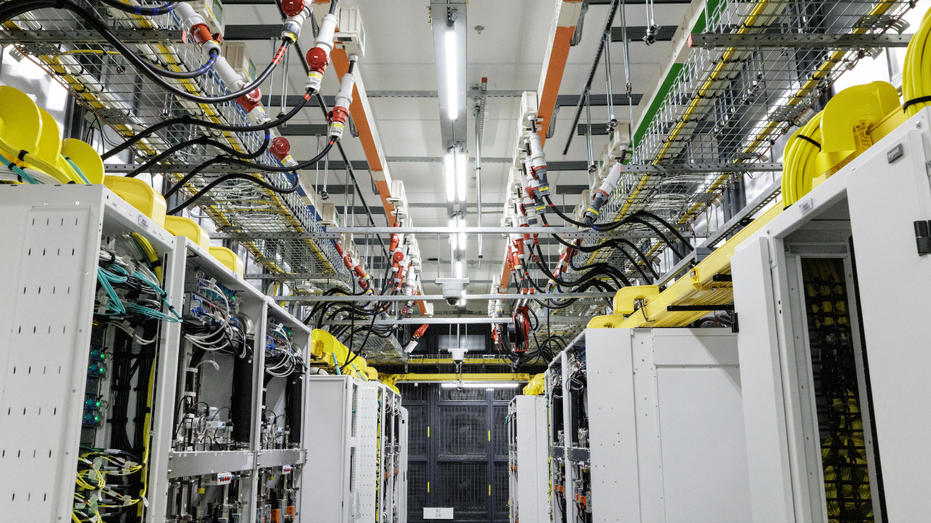
Ecolab首席执行官Christophe Beck表示,该公司正致力于为AI数据中心巨大的用水量等生态问题提供可持续解决方案。他指出,如果不进行改革,AI数据中心最终消耗的水量可能超过美国人每年的饮用水量。
Ecolab CEO Christophe Beck, whose company is working on sustainable solutions to ecological problems like AI data centers’ robust water consumption, said that without reform, AI data centers could wind up consuming more water than Americans drink every year. "95% of the data centers today use a lot of water," he told Fox News Digital in an exclusive interview.
“目前95%的数据中心都消耗大量水资源,”他在接受Fox News Digital独家采访时表示。“我们估计,到2030年,若在美国沿用旧技术,用于冷却数据中心的水量将相当于美国人用于饮用需求的水量。”Beck认为这一现象“不可持续”,并介绍了公司正在研发的旨在降低数据中心用水量的技术。
"We estimate that by 2030, with the old technologies in the U.S., we will use as much water to cool data centers as Americans are using for drinking needs." Beck argued that this phenomenon is "not sustainable," and laid out the technologies his company is working on in an effort to reduce data centers’ water consumption. "Behind AI there's water in every step of the process. You need water to produce the chips, to power the chips and to cool the chips.
“在AI的每个环节背后都有水。生产芯片需要水,为芯片供电需要水,冷却芯片也需要水。而在过去四五年里,我们使用的那代芯片仅靠风冷即可,”他对Fox News Digital表示。
And for the last four or five years, the chips generation that we were using were just cooled with air," he told Fox News Digital.
然而,Beck解释说,随着芯片复杂度不断增加以满足日益增长的算力需求,单靠空调已无法满足数据中心芯片的冷却需要。
However, with the increasing complexity of chips to match an ever-building demand for compute power, air conditioning alone is no longer sufficient to cool chips in data centers, Beck explained. "You need something that's way stronger.

“你需要一种效能强得多的方式。水从芯片带走热量的能力是空气的30倍。因此,许多新数据中心正转向芯片级直冷技术,即直接将冷水引至芯片表面,”他说。
Water is 30 times better at extracting heat than air from the chips. So that's why many of those new data centers are moving towards direct chip water cooling, which ultimately is bringing cold water on top of the chip," he said.
他解释称,直冷水冷具有提高效率和可持续性的双重优势,因为用于冷却芯片的水可以循环利用,并在某一数据中心的每颗芯片上重复使用。
Direct water cooling, he explained, has the dual benefits of increasing efficiency and sustainability, because the water used to cool the chips can be recycled and used on every chip in a given data center.
“最终你会得到一个数据中心,它比不用水的方案强大得多,用电更少,且最终不会对周围的自然资源和社区造成影响,而这正是当前引发诸多抵制的关键突破口之一,”他说。
"So you end up in a place where you have a data center that is much more powerful [than] using no water, using less power, and ultimately not having an impact on natural resources and in communities around us, which is one of the unlocks that people are pushing back so much against right now," he said.
11月4日,全美选民选出了以限制数据中心数量为竞选承诺的立法者和行政长官。
On Nov. 4, voters across the U.S. elected lawmakers and executives who ran on campaigns to limit the number of data centers.
在得克萨斯州,民主党籍当选州长吉娜·伊诺霍萨意外击败了现任共和党州长格雷格·阿博特。投给伊诺霍萨的选民是因为她在竞选中大力主张实施数据中心暂停令,贝克注意到了这一事实。
In Texas, Democratic Governor-elect Gina Hinojosa surprisingly usurped incumbent Republican Greg Abbott. Voters who ticked the box for Hinojosa did so after she campaigned heavily on instituting a data center moratorium, a fact that Beck took note of.
贝克对福克斯新闻数字频道表示:“无论是在得克萨斯州、美国其他地方,还是全世界范围内,大多数已建成的数据中心都消耗大量水资源和电力。这在社区引发了强烈反弹,这是理所当然的。”
"Most of the data centers that were installed in Texas or anywhere else in the country or in the world, for that matter, were using a lot of water, a lot of power. And that's created a lot of backlash from the communities, which is rightfully so," Beck told Fox News Digital.
贝克指出,得克萨斯州虽然是全美经济最强劲的州之一,但也是水资源压力最大的州之一。
Beck noted that while Texas is one of the most economically strong states in the union, it is also one of the most water-stressed.

他说:“这是一个糟糕的组合。显然,高增长是好消息;缺水则是坏消息。因此,我们一直在研究技术解决方案,如何在用水量大幅减少的情况下实现更高增长、更多数据处理。”贝克补充说,Ecolab(依科莱)正在开发的技术将专门用于新建数据中心,而政治反弹主要针对现有的、资源需求更大的项目。
"It's a bad combination," he said. "Obviously, high growth, great news; no water, less good news. So we've looked at those technological solutions on how do you bring higher growth, more data processing while using much less water." Beck added the technologies Ecolab is developing will exclusively be used in new-build data centers, while the political pushback is surrounding the existing, more resource-demanding projects.
直接冷却可实现所谓的闭环系统,这种方法比以往的水冷技术更可持续,用水量更少。
Direct cooling allows for what is known as a closed loop system, a method that is far more sustainable and requires less water than previous iterations of water cooling methods.
贝克解释说,Ecolab找到了不仅在芯片冷却过程中,而且在芯片制造过程中回收利用水资源的方法,后者需要极高纯度的水。
Ecolab, Beck explained, has found a way to recycle water not only in the chip cooling process, but in chip fabrication as well, a process that necessitates extremely pure water.
贝克解释道:“所谓的晶圆厂会使用大量水资源,这些水非常特殊,因为需要达到超纯标准。”
"The so-called fabs, they use huge amount of water, which is very specialized water because it needs to be ultra pure," Beck explained.
他表示:“要回收利用这种水,难度甚至远高于数据中心。但即使在那里,Ecolab也找到了解决方案,不仅能获得生产最先进芯片所需的最高纯度水,还能以实现水中性的方式重复利用这些水。”Beck 还解释了芯片制造用水纯度究竟有多高。
"And that, to be recycled, is even way harder than in a data center. But even there, at Ecolab we found solutions to not only get the highest purity of water to get the most advanced chips, but we can reuse that water as well in ways that are water neutral," he said. Beck also put in context just how pure the water for chip fabrication needs to be.
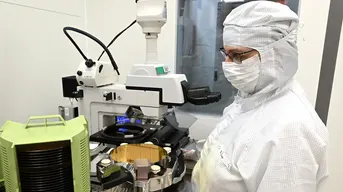
“其纯度比注入血液的药物用水纯净一百万倍。所以是超高品质、超高纯度的水,最终,”他说。
"The purity is a million times more pure than what you would inject in your blood if it's a drug. So super high quality, super high purity of water that at the end," he said.
“简而言之,我们的做法是在工艺的每一个步骤中,都试图从该工艺步骤中提取水。我们对水进行处理、净化,将其恢复到超纯水水平,再送回工艺流程。Ecolab 的独特之处在于,在这些水中含有一些我们称之为‘互联水’的微量物质,”他说。
"So the way we do it, in short, is ultimately at every step of the process we try to extract the water from that process step. We treat, we purify that water, we bring it back to an ultra-pure water level, and we bring back to the process. And the very special thing that we have at Ecolab, within that water you have some trace materials that we call connected water," he said.
“所以我们了解晶圆厂或数据中心整个工艺流程中的水质,确切知道水的质量,以确保芯片完美生产。我们也知道需要做什么来再处理这些水,以便之后重复利用。最终结果是:芯片更好、成本更低,最重要的是实现‘水中性’,”Beck 说。
"So we understand the quality of the water throughout the process within the fab or the data center, for that matter, that we know exactly the quality of that water to make sure that the chips are perfectly produced. And we know what we need to do in order to re-treat that water so that it can be reused afterwards. And you end up with better chips, lower cost, and most importantly, water neutral," Beck said.