抛售潮由有关指控引发,指称在一家被美国列入黑名单的中国服务器制造商的产品中发现了 AMD 固件。
The sell-off was triggered by claims that AMD firmware was found in products from a Chinese server maker blacklisted by the US.
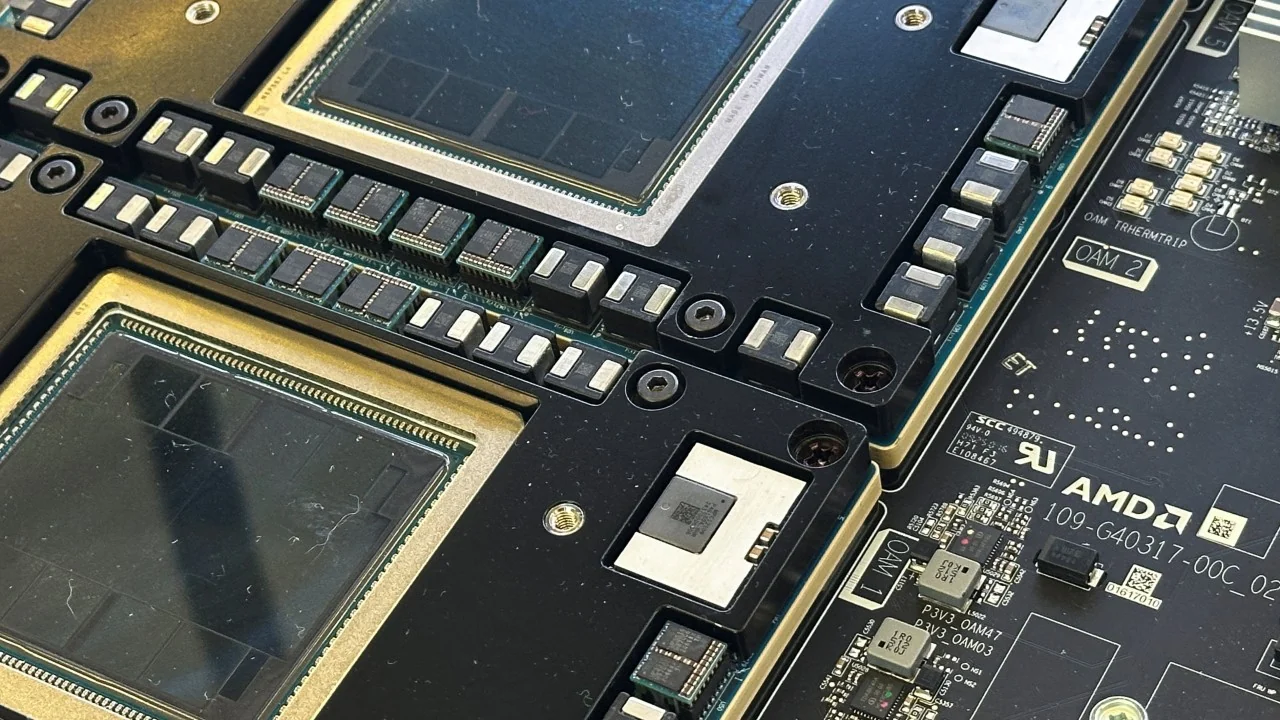
2025 年 6 月 12 日,在加利福尼亚州圣何塞的圣何塞麦克纳里会展中心展出的一款 AMD MI350 系列 AI 芯片。图片:路透社做空机构因指称其与被华盛顿列入黑名单的中国企业存在关联,将矛头对准超威半导体(AMD),在短短数小时内抹去其逾 10% 的市值,并引发市场猜测:在英伟达之后,它是否会成为下一个处于风口浪尖的芯片公司。
An AMD MI350 series AI chip is displayed at the San Jose McEnery Convention Center, in San Jose, California, June 12, 2025. Photo: Reuters Short sellers have targeted Advanced Micro Devices (AMD) over alleged connections to Chinese firms blacklisted by Washington, erasing more than 10 per cent off its value in a matter of hours and fuelling speculation over whether it could be the next chip company in the crosshairs after Nvidia.
周四常规交易时段,AMD 股价暴跌逾 7%,盘后再跌 3.4%,此前美国投资公司 Hunterbrook Capital 披露了对该公司的做空头寸。
AMD shares plunged more than 7 per cent in regular trading on Thursday and slid another 3.4 per cent after hours, following a report from US investment firm Hunterbrook Capital disclosing a short position against the company.
抛售潮由 Hunterbrook Media —— 该公司的关联媒体 —— 的指控引发,称在 IEIT Systems(烽火英特)的产品中发现了 AMD 固件。IEIT Systems 隶属于浪潮集团,后者于 2023 年被美国商务部列入黑名单,此外还有三家与 IEIT 关系密切的公司。
The sell-off was triggered by claims from Hunterbrook Media – the firm’s affiliate outlet – that AMD firmware was found in products from IEIT Systems, a Chinese server maker under Inspur Group, which was blacklisted by the US Commerce Department in 2023, as well as three other companies with close ties to IEIT.
Hunterbrook 指称,AMD 与受限实体的关联使其“面临的中国芯片限制风险不亚于英伟达”,警告华盛顿可能收紧对其海外业务的管制。不过,该报告并未确证 AMD 违反了美国出口管制法规。
Hunterbrook alleged that AMD’s links to restricted entities left it “no less at risk from China chip restrictions than Nvidia”, warning that Washington could tighten curbs on its overseas business. However, the report did not establish that AMD violated US export controls.
AMD 对相关发现予以反驳,周四在致 CNBC 和彭博社的声明中表示,该报告“错误描述了 AMD 的商业惯例和关系”。公司补充称,其“遵守适用的美国出口管制法律法规,并维持严格流程以确保全球业务合规”。
AMD pushed back against the findings, telling CNBC and Bloomberg in a statement on Thursday that the report “misrepresented AMD’s business practices and relationships”. The company added that it “complies with applicable US export control laws and regulations and maintains rigorous processes to ensure compliance across our global operations”.
总部位于加利福尼亚州圣克拉拉的芯片设计商AMD,在美股正常交易时间结束后发出的置评请求未即时回应。
The Santa Clara, California-based chip designer did not immediately respond to a request for comment sent after normal US business hours.
对AMD的审视,恰逢其竞争对手英伟达(Nvidia)遭知名做空机构——包括泥水研究(Muddy Waters)和《大空头》交易员迈克尔·伯里(Michael Burry)——做空报告出击仅两天后。直到本周,投资者仍视AMD为英伟达麻烦的主要受益者,因其是在美国收紧出口管制背景下,图形处理器(GPU)的首要替代供应商。
The scrutiny of AMD comes just two days after rival Nvidia was targeted by prominent short sellers , including Muddy Waters and The Big Short trader Michael Burry. Until this week, AMD had been viewed by investors as a major beneficiary of Nvidia’s troubles, being the leading alternative supplier of graphics processing units (GPUs) amid tightening US export rules.
加剧全行业紧张情绪的是,美国众议院外交委员会周四披露了中国企业寻求从英伟达和AMD采购先进人工智能处理器的机密许可证申请,涉及产品具体为英伟达的H200和AMD的MI325X芯片。据该委员会称,截至5月11日,所有获批出货均未交付。
Adding to sector-wide jitters, the US House Foreign Affairs Committee on Thursday disclosed confidential licence applications from Chinese firms seeking to purchase advanced artificial intelligence processors from both Nvidia and AMD, specifically Nvidia’s H200 and AMD’s MI325X chips. None of the approved shipments had been delivered as of May 11, according to the committee. AMD’s exposure to possible China policy shifts could be larger than Nvidia’s, as 22.4 per cent of its revenue in 2025 came from mainland China and Hong Kong. Photo: Reuters
据晨星高级股票分析师Phelix Lee表示,随着审视范围扩大至全球供应链,营收对华敞口较大的芯片制造商——如韩国的SK海力士(SK Hynix)和三星电子,以及美国芯片设备商泛林半导体(Lam Research)——可能面临成为做空目标的更高风险。
Who’s next? As scrutiny widens across the global supply chain, chipmakers with larger revenue exposure to China – such as South Korea’s SK Hynix and Samsung Electronics, alongside US chip equipment maker Lam Research – could face heightened risk of becoming short-seller targets, according to Phelix Lee, a senior equity analyst at Morningstar.
Hunterbrook指出,AMD面临的中国政策变动风险可能大于英伟达,因其2025年22.4%的营收来自中国大陆和香港,而英伟达这一比例为9%。
Hunterbrook noted that AMD’s exposure to possible China policy shifts could be larger than Nvidia’s, as 22.4 per cent of its revenue in 2025 came from mainland China and Hong Kong, compared to 9 per cent for Nvidia.
李补充道,做空机构的行动通常由短期交易动态驱动,这使得难以预测下一个目标会是哪家公司。
Lee added that short-seller campaigns were often driven by short-term trading dynamics, making it difficult to predict which firm would be targeted next.
咨询公司Gavekal的研究主管Laila Khawaja表示,AMD作为英伟达的首要替代者,自然置于显微镜之下,因为它有机会夺取英伟达不再能服务的中国市场份额。
Laila Khawaja, head of research at consultancy Gavekal, said AMD’s status as the top alternative to Nvidia naturally put it under the microscope, given its opportunity to capture Chinese market share that Nvidia could no longer serve.
Khawaja说:“AMD当然是一个潜在目标,尽管我认为更强有力的理由在于其作为中国先进AI芯片第二选择供应商的地位。”她同时提醒投资者要“区分关于AMD中国业务敞口的合理质疑与实际违规证据”。
“AMD is certainly a potential target, although I think the stronger reason is its position as the second-choice supplier of advanced AI chips to China,” Khawaja said, while cautioning investors to “distinguish between legitimate questions about AMD’s China exposure and actual evidence of violations”. Even so, AMD’s lower-key approach could help protect it from the political blowback facing Nvidia, whose former CEO Jensen Huang had publicly lobbied to expand chip sales to China, according to Lee.
即便如此,据李称,AMD的低调做法可能有助于保护它免受英伟达面临的政治反弹影响,英伟达前CEO黄仁勋曾公开游说扩大对华芯片销售。
“Despite China being a common geopolitical risk, how corporations communicate and react matters as much,” Lee said. “My impression is AMD has been quieter on chip sales lobbying, and there have been fewer chips tailored specifically for China.”
李说:“尽管中国是共同的地缘政治风险,但企业如何沟通和应对同样重要。我的印象是,AMD在芯片销售游说方面更为低调,且专门为中国定制的芯片较少。”Ben Jiang补充报道板块:科技 / 科技战 / 新闻 / 中国未来科技 / 半导体 / AI | 话题:半导体、超威半导体(AMD)、英伟达、黄仁勋、中美科技战、美国、中国、三星电子、超威半导体、浪潮短链接:
Additional reporting by Ben Jiang Sections: Tech / Tech War / News / China Future Tech / Semiconductors / AI | Topics: Semiconductors, Advanced Micro Devices (AMD), Nvidia, Jensen Huang, US-China tech war, United States, China, Samsung Electronics, Advanced Micro Devices, Inspur Short link: https://sc.mp/d20yh Read the original article on SCMP