中国证监会批准上海、深圳两大证券交易所下调融资融券最低维持担保比例——即投资者借钱买证券必须备足的自有资金比例——从100%降至80%,自11月30日起生效,据周日晚间发布的一份通知。
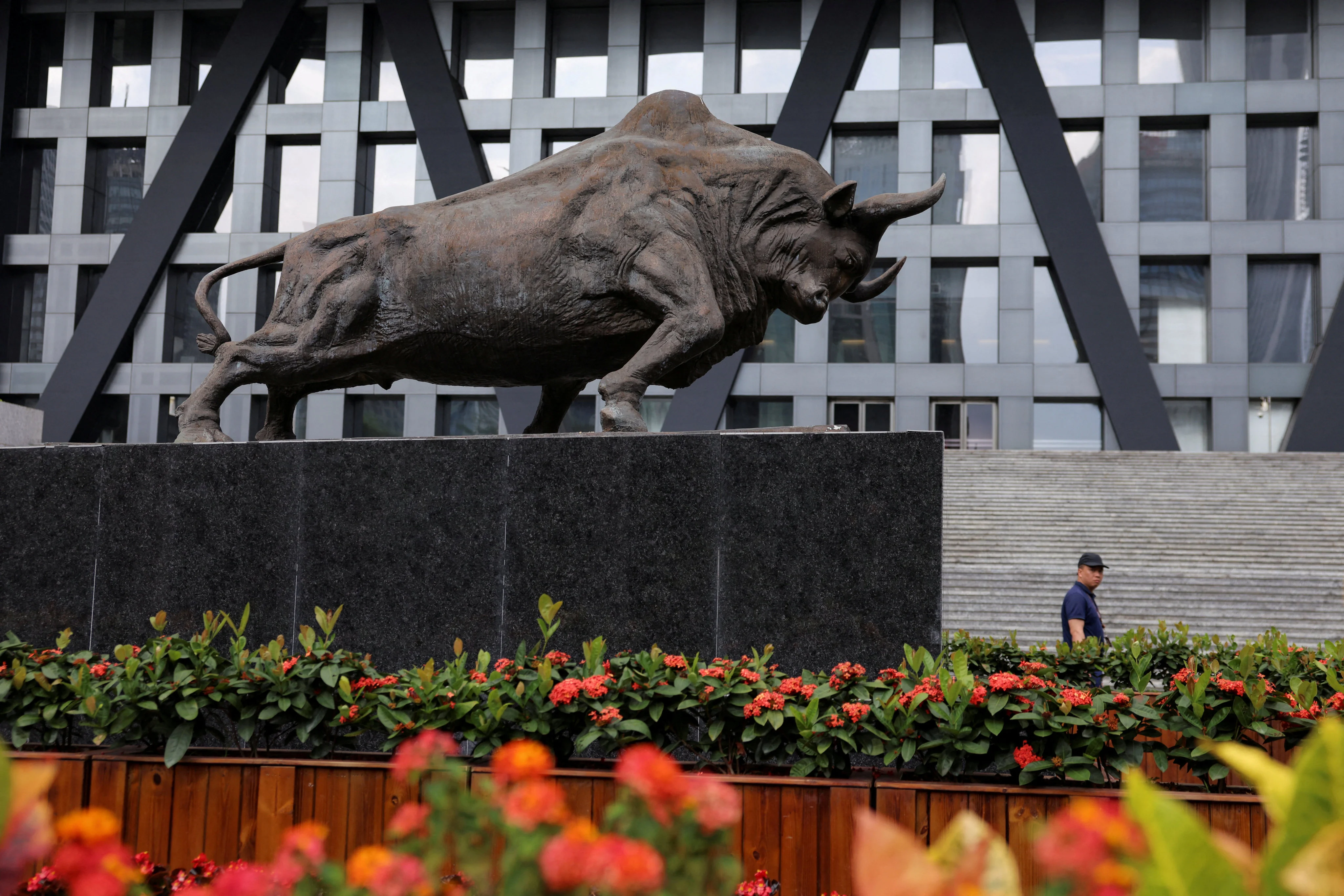
Exchanges will reduce their minimum margin ratios and fees, as Beijing takes action to put a floor under stocks amid AI-led decline. A security guard walks past a bull statue at the Shenzhen Stock Exchange in Shenzhen, Guangdong province, on November 17. Photo: Reuters China rolled out a series of measures to lower the bar for stock trading on its major exchanges, part of an effort to stem a stock market decline amid a global rout.
此举是在今年1月将该比例上调20个百分点至100%之后出台的,两家交易所在通知中表示,此举系因“近期融资融券业务活跃度明显下降”。
The China Securities Regulatory Commission approved the exchanges in Shanghai and Shenzhen to decrease the minimum margin ratio – the amount investors borrowing money to buy securities have to have on hand – from 100 per cent to 80 per cent, effective November 30, according to a notice released on Sunday evening.
通知称,此次调整旨在适度扩大融资规模、提振市场流动性、支持市场长期稳定。
The move, following an increase of 20 percentage points to 100 per cent in January, came after “a noticeable decline in margin trading activity” recently, the Shanghai Stock Exchange and Shenzhen Stock Exchange said in the notice.
同样在周日,两家交易所还发布另一份通知,推出新一轮费用减免措施,并将现有减免政策(含上市费、债券业务办理费等)延长两年。
The change aimed to moderately expand financing capacity, boost market liquidity and support long-term market stability, according to the notice. Also on Sunday, both exchanges issued a separate notice introducing a new round of fee reductions and exemptions, alongside a two-year extension of existing waivers, including listing fees and bond handling fees.
据估算,此次费用减免将为市场参与者节省逾27.5亿元人民币(约合4.12亿美元),使两市全年费用减免总额超过46亿元人民币。
The fee cuts were estimated to save market participants over 2.75 billion yuan (US$412 million), bringing total annual fee reductions across both bourses to more than 4.6 billion yuan this year.
受全球半导体及数据中心相关股票抛售影响,上证综指与深圳创业板指周五分别下跌1.2%和3.5%,双双跌至近一年低点。上证科创50指数重挫3.1%,香港恒生科技指数亦下跌3.8%,徘徊在近两年低位附近。
Both the Shanghai Composite Index and the ChiNext Index in Shenzhen dropped to near one-year lows after falling by 1.2 per cent and 3.5 per cent, respectively, on Friday, following a global sell-off of semiconductor and data centre-related stocks. The chip-centric Star 50 Index in Shanghai slumped 3.1 per cent, and Hong Kong’s Hang Seng Tech Index also declined 3.8 per cent to hover around the lowest level in two years.
深圳证券交易所周日在一份声明中表示,模仿纳斯达克的创业板计划引入做市商机制,以“提升市场稳定性、定价效率和市场韧性”。
The Nasdaq-style ChiNext Market plans to introduce a market-making mechanism to “boost market stability, pricing efficiency and market resilience”, the Shenzhen Stock Exchange said in a statement on Sunday.
上海证券交易所也承诺改进其科技板块科创板的做市商机制,另一份周日发布的声明称,拟议的变更旨在激励做市商在保持严格合规的前提下扩大报价规模。
Shanghai’s bourse also vowed to improve the market-making mechanism of its tech-focused Star Market, with the proposed changes aiming to incentivise market makers to expand their quoting scale while maintaining strict compliance, according to another statement on Sunday.
作者:Themis Qi 栏目:商业 / 市场 / 银行与金融 | 主题:中国股市,上海,深圳,中国,上海黄金交易所,中国证券监督管理委员会,股票,上海股票指数,深圳股票指数短链接:
By Themis Qi Sections: Business / Markets / Banking & Finance | Topics: China stock market, Shanghai, Shenzhen, China, Shanghai Gold Exchange, China Securities Regulatory Commission, Stocks, Shanghai Stock Index, Shenzhen Stock Index Short link: