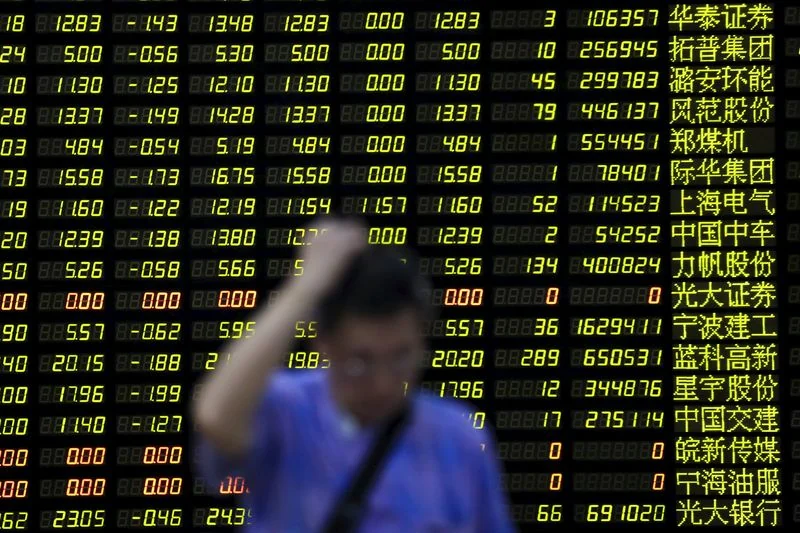
Investing.com -- 周一亚洲股市下跌,科技和半导体股票遭遇新一轮抛售,加深了市场对 AI 估值以及为数据中心投资融资的不断攀升债务的担忧,尽管美国股指期货在华尔街上周大幅下跌后出现反弹。
Investing.com -- Asian stocks fell on Monday as renewed selling in technology and semiconductor shares deepened concerns over AI valuations and the mounting debt used to finance data-centre investments, even as U.S. equity futures rebounded following Wall Street's sharp weekly losses.
韩国 KOSPI 指数暴跌 5%,香港恒生指数下跌 1.5%,台湾加权指数上涨 0.5%,而纳斯达克 100 指数期货在亚洲时段上涨 2.5%,标普 500 指数期货上涨 2%。
South Korea's KOSPI plunged 5%, Hong Kong's Hang Seng fell 1.5% and Taiwan's Weighted Index rose 0.5%, while Nasdaq 100 futures gained 2.5% and S&P 500 futures advanced 2% in Asian trade.
周五,标普 500 指数在连续第七个交易日下跌后进入回调区间;道琼斯指数下跌 1.9%,较峰值下跌逾 10%。纳斯达克指数暴跌 5.3%,2026 年以来转为下跌。道琼斯指数和标普 500 指数本周分别下跌 8% 和 8.6%,为 2025 年 4 月以来最大单周跌幅,而纳斯达克指数单周下跌 10%,为 2020 年 3 月以来最大单周跌幅。
On Friday, the S&P 500 entered correction after a seventh straight loss; the Dow fell 1.9%, more than 10% below its peak. The Nasdaq sank 5.3% turning negative for 2026. The Dow and S&P 500 fell 8% and 8.6% for the week, their steepest weekly losses since April 2025, while the Nasdaq's 10% weekly slide was its biggest since March 2020.
英伟达暴跌 14%,Anthropic 上市第二天下跌 8.5%,费城半导体指数下跌约 11%。恐慌指数 (VIX) 升至 2025 年 4 月以来最高水平。
Nvidia tumbled 14%, Anthropic 8.5% on its second day of trading and the Philadelphia semiconductor index about 11%. The VIX reached its highest level since April 2025.
AI 行情此前也带动了交换机、光缆和电力供应商股价上涨。投资者现在怀疑,靠债务融资建设的数据中心能否赚取足够利润偿还债权人或证明其估值合理;黄仁勋离开英伟达、Anthropic 上市后表现疲软以及利率上升加剧了这波抛售。
The AI rally had also lifted switch, cable and power suppliers. Investors now doubt debt-funded data-centre builds will earn enough to repay lenders or justify valuations; Jensen Huang's departure from Nvidia, Anthropic's weak post-IPO trading and higher rates have deepened the rout.
亚洲市场下滑,政策制定者准备支持措施 MSCI 亚太指数(除日本外)下跌 0.7%,逼近熊市领域,较 6 月峰值下跌约 18%。
Asian markets slide as policymakers prepare support measures The MSCI Asia-Pacific gauge excluding Japan fell 0.7%, nearing bear-market territory after losing about 18% from its June peak.
新兴市场股票面临吐回 2026 年涨幅的风险。台湾股市在单周暴跌 17%(为 1990 年以来最陡峭跌幅)后上涨 0.5%。KOSPI 指数跌至 10 个月低点 4632.34 点,恒生指数下跌 330.80 点。中国沪深 300 指数和上证综指分别下跌 1.1% 和 1.5%。
Emerging-market stocks risked giving up their 2026 gains. Taiwan shares rose 0.5% after a 17% weekly plunge, the steepest since 1990. The KOSPI fell to a 10-month low of 4,632.34, while the Hang Seng lost 330.80 points. China's CSI 300 and Shanghai Composite lost 1.1% and 1.5%.
澳大利亚标普/ASX 200 指数下滑 0.1%,新西兰 NZX 50 指数下跌 1.7%,新加坡海峡时报指数下跌 1.4%。新加坡 SGX 尼夫蒂期货上涨 0.3%。日本市场因假期休市。
Australia's S&P/ASX 200 slipped 0.1%, New Zealand's NZX 50 fell 1.7% and Singapore's Straits Times Index declined 1.4%. Gift Nifty futures gained 0.3%. Japanese markets were closed for a holiday.



各国当局采取行动遏制抛售潮。台湾收紧了做空规则,并一直在买入股票。韩国正准备在必要时立即启动稳定基金,该基金上一次使用是在2008年;韩国将从11月24日起放宽上市公司每日回购股份限额,为期三个月,并将加强对非法做空的监控。
Authorities moved to contain the selloff. Taiwan tightened short-selling rules and has also been buying shares. South Korea is preparing to activate a stabilisation fund, last used in 2008, immediately if needed; it will ease listed companies' daily share-buyback limits for three months from November 24 and intensify monitoring of illegal short selling.
中国上海、深圳和北京证券交易所将从11月30日起,将融资买入股票的最低保证金比例从100%降至80%。
China's Shanghai, Shenzhen and Beijing exchanges will lower minimum margin requirements for stock purchases made with borrowed funds to 80% from 100% from November 30.
随着投资者重新评估AI支出,芯片制造商仍承受压力。SK海力士下跌3.7%,三星电子跌4.48%,LG Innotek跌4.5%。在台湾,大立光跌3.3%,鸿海精密涨0.6%,台积电基本持平。
Chipmakers remain under pressure as investors reassess AI spending SK Hynix fell 3.7%, Samsung Electronics lost 4.48% and LG Innotek slid 4.5%. In Taiwan, Largan Precision declined 3.3%, while Foxconn rose 0.6% and Taiwan Semiconductor Manufacturing Co. was little changed.
中国科技股多数下跌。北方华创暴跌8.9%,中芯国际跌2.5%,寒武纪跌2.1%,工业富联跌1.8%。
Chinese technology shares were mostly lower. Naura Technology plunged 8.9%, while Semiconductor Manufacturing International Corp. fell 2.5%, Cambricon Technologies lost 2.1% and Foxconn Industrial Internet declined 1.8%.
腾讯跌2.79%,阿里巴巴跌4.02%,美团跌4.14%;网易涨2.79%,歌尔股份涨1.57%。
Tencent dropped 2.79%, Alibaba fell 4.02% and Meituan lost 4.14%; NetEase rose 2.79% and Goertek gained 1.57%.
Floodline Research投资策略师兼创始人Anna Wu表示:“什么能恢复投资者对AI交易的信心?过去五年里,大多是来自芯片行业之外的正面催化剂。不需要超级英雄。这一次最大的悬顶风险是美联储过度收紧,所以救援可能必须来自同一来源。”
"What could restore investors' confidence in the AI trade? In the past five years, mostly it was a positive catalyst from outside the chip industry. No superhero is needed. This time the biggest overhang is the Fed overtightening, so the rescue might have to come from the same source," said Anna Wu, investment strategist and founder at Floodline Research.
与此同时,随着避险需求减弱,国债期货下跌;布伦特原油下滑,强劲出口抵消了中东供应风险。
Meanwhile, treasury futures fell as demand for havens eased, while brent crude slipped as robust exports offset Middle East supply risks.