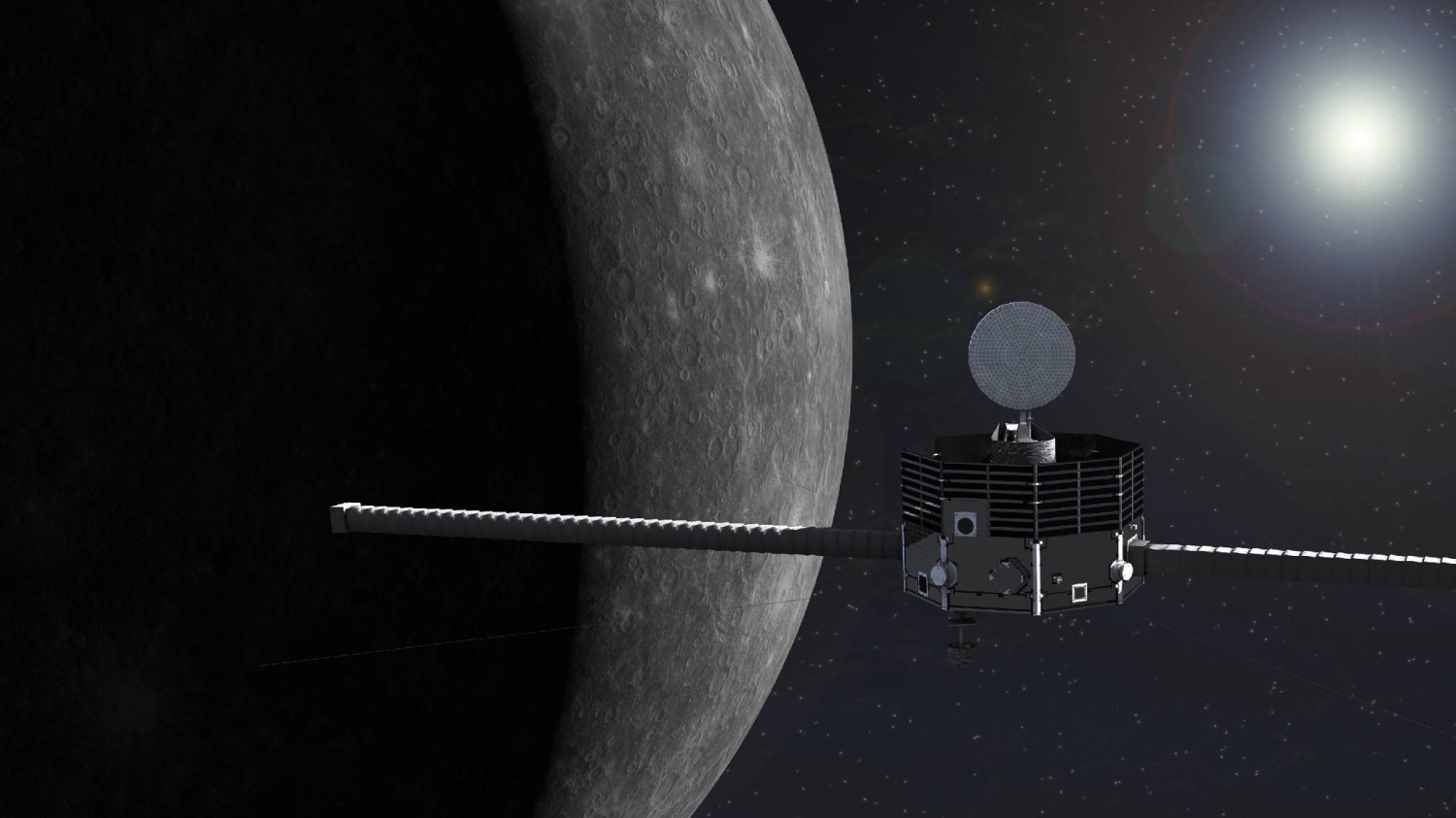
欧洲空间局称,日本和欧洲在其贝皮可伦坡任务中,成功将两艘探测器送入水星轨道,以研究其磁场和大气层。
Japan and Europe have successfully placed two probes into orbit around Mercury in their BepiColombo mission to study its magnetic field and atmosphere, according to the European Space Agency.
日本宇宙航空研究开发机构(JAXA)的“ Mio”号和欧洲空间局的“MPO”号于周日日本时间开始环绕太阳系最内侧行星运行,此前历经八年旅程。
The Japan Aerospace Exploration Agency’s (JAXA) Mio and the ESA’s MPO began orbiting the innermost planet in the solar system on Sunday Japan time after an eight-year journey.
“ Mio”号探测器观测磁场,而“MPO”号探测器检查表面状况。两者在2018年10月发射时相互连接。
The Mio probe observes magnetic fields, while the MPO examines the surface conditions. The two were attached to each other when they were launched in October 2018.
该任务原定于2025年12月抵达,但因推进系统问题推迟了约一年。
The mission was originally scheduled to arrive in December 2025 but was delayed by about a year due to propulsion system problems.
该航天器标志着第二次有探测器进入水星轨道。美国“信使号”探测器于2011年3月实现了这一壮举。由于太阳的强烈热量和强大引力,水星轨道探测需要先进技术。
The spacecraft marked the second time any probe has entered orbit around Mercury. The U.S. probe Messenger had achieved such a feat in March 2011. Orbiting exploration of Mercury requires advanced technology due to the intense heat and strong gravity from the sun.
预计“ Mio”号和“MPO”号探测器将于今年12月10日左右分离。全面科学观测预计将于明年4月左右开始。
Around Dec. 10 this year, the Mio and MPO probes will be separated. Full-scale scientific observations are expected to begin around April next year.