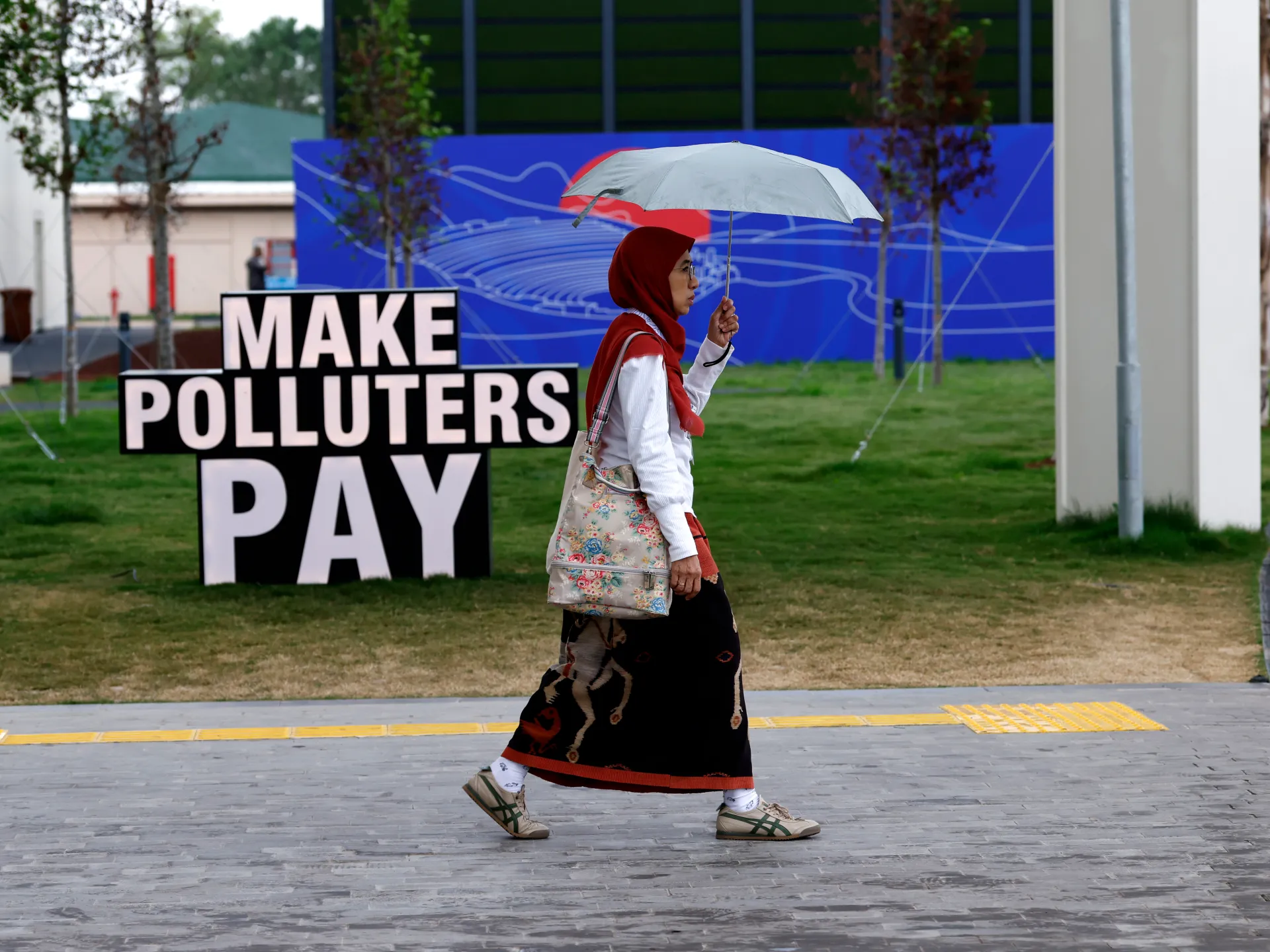
在各国就逐步淘汰导致地球变暖的化石燃料、援助发展中国家能源转型以及应对自然灾害等问题陷入僵局之后。
after countries deadlocked over the phasing out of planet-warming fossil fuels, aiding energy transition for developing countries and the response to natural disasters.
在土耳其安塔利亚举行的被称为“第31届缔约方大会”(COP31)的谈判于周日结束,欧盟等方拒绝接受最终协议,称其力度太弱,无法推动应对全球变暖的斗争。
The talks in Antalya in Turkiye, known as COP31, ended on Sunday as the European Union and others rejected a final deal they said was too weak to advance the fight against global warming.
这场有纪录以来最长的联合国气候峰会,凸显了推动气候变化的主要污染国与承受其冲击的较小国家之间的分歧,此前一年欧洲、亚洲接连发生与气候相关的灾难。会议也暴露出世界无法兑现《巴黎协定》将全球变暖限制在1.5摄氏度(2.7华氏度)以内的承诺,科学家预计几年内这一阈值将被突破。
The longest UN climate summit on record brought to the fore the divide between major polluters driving climate change and smaller nations bearing the brunt of its impact, after a year of climate-linked disasters from Europe Asia It also laid bare the world’s inability to keep the Paris Agreement pledge to limit global warming to the 1.5C (2.7F) mark which scientists expect to overshoot in a few years.
那么,这个充满摩擦的联合国进程下一步将走向何方?各国还能做些什么来兑现那些屡屡落空的承诺?为什么COP31会破裂?
So what’s next for the fraught UN process and what else can nations do to deliver promises that have too often missed their target? Why did COP31 collapse?
这场为期11天、始于11月9日的谈判陷入停滞,原因是产油国阻挠在COP31主席国土耳其和主要谈判方澳大利亚提出的最终协议草案中提及逐步淘汰化石燃料。
The 11-day-long negotiations that began on November 9 were stalled after oil-producing states blocked any mention of phasing out fossil fuels in the final deal put forward by the president of COP31, Turkiye, and main negotiator Australia.
沙特阿拉伯及石油输出国组织(OPEC)的其他成员国反对在协议中提及逐步淘汰化石燃料,转而坚持要求纳入碳捕获技术——该技术因成本高昂且效果有限而受到批评。
Saudi Arabia and fellow members of the Organization of the Petroleum Exporting Countries (OPEC) opposed any mention of a fossil fuel phase-out, while insisting instead on carbon capture the technology criticised as costly and ineffective.
环保智库E3G气候外交与地缘政治项目负责人科西马·卡塞尔表示,产油国试图拖缓能源转型的势头,“这紧随霍尔木兹海峡局势动荡以及全球化石燃料需求下降导致其收入预计将减少之后”。
Cosima Cassel, Programme Lead in Climate Diplomacy and Geopolitics at environmental think tank E3G, said petrostates attempted to slow momentum on the energy transition “following the disruption of the Strait of Hormuz and the projected decline in their incomes as global demand for fossil fuels falls”.
欧盟和多个极易受气候变化影响的国家表示,他们无法接受一份未提及全球变暖主要驱动因素的文本。
The European Union and several nations particularly vulnerable to climate change said they could not accept a text that failed to mention the main driver of global warming.
周日早些时候出台的协议修订文本遭到愤怒拒绝,此前约130个国家向主席团致信,表示协议必须提及逐步摆脱化石燃料的路径。相反,该文本未提及化石燃料,却在推广碳捕获技术。
The revised text of a deal that emerged early on Sunday was angrily rejected after around 130 nations sent a letter to the presidency stating that a deal would have to mention a path for transitioning away from fossil fuels. On the contrary, the text made no mention of fossil fuels while promoting carbon capture.
卡塞尔对半岛电视台表示:“一小群阻挠者让结果背离了绝大多数国家的明确立场。这些动态引发了关于石油和天然气出口国在破坏脆弱国家唯一能推进其关切的论坛中所扮演角色的问题。” 对发展中国家至关重要的是,在帮助它们转型能源体系和应对自然灾害所需的资金方面,也没有取得任何进展。
“A small group of blockers set the outcome against the clear position of a large majority,” Cassel told Al Jazeera. “These dynamics raise questions about the role of oil and gas exporters in undermining the only forum where vulnerable countries get to advance their concerns.”Crucially for developing countries, there was also no progress on the funds needed to help them transition their energy systems and respond to natural disasters.
根据2015年《巴黎协定》,发达国家须向发展中国家提供资金支持。然而,美以对伊朗战争、俄罗斯对乌克兰战争紧缩了各国预算,导致富裕国家不愿承诺数万亿美元的气候融资。
Under the 2015 Paris Agreement developed countries are required to provide financial support to developing nations. However, the US-Israeli war on Iran Russia’s war on Ukraine strained national budgets, leaving wealthy nations unwilling to commit trillions of dollars in climate finance.
国际环境法中心(CIEL)高级律师塞巴斯蒂安·杜伊克表示,那些谴责化石燃料生产国阻挠行为的富裕发达国家表现出了“相当大的虚伪性”。
Sebastien Duyck, Senior Attorney at the Center for International Environmental Law (CIEL), said wealthy developed countries, which denounced the obstruction by fossil fuel-producing nations, showed “considerable hypocrisy”.
杜伊克对半岛电视台说:“你不能要求他人实现公正转型,却自己不支付应承担的公平成本。我们需要减少指责和政治表演,增加问责。所有主要经济体,特别是最富裕的国家,必须在COP32之前履行其现有的法律义务和气候融资承诺。” 联合国进程——以及地球——接下来将何去何从?
“You cannot demand a just transition from others while failing to pay your fair share of its costs,” Duyck told Al Jazeera. “We need less finger-pointing and political theatre and more accountability. All major economies, particularly the wealthiest, must deliver on their existing legal obligations and climate finance commitments ahead of COP32.”What’s next for the UN process – and for the planet?
土耳其气候谈判的破裂重新引发了关于其基于共识的程序改革的问题,该程序的核心原则是所有国家必须同意改革。
The collapse of climate talks in Turkiye has renewed questions about reform of its consensus-based process, centred around the principle that all countries must agree to the reforms.
在迪拜举行的COP28上,承诺摆脱化石燃料——包括天然气、煤炭和原油——被视为一项里程碑式的成就。但即便如此,在产油国激烈游说下,该协议仍未要求“逐步淘汰”化石燃料。
The commitment to moving away from fossil fuels – including natural gas, coal and crude oil –was considered a landmark achievement of COP28 in Dubai But even then, the deal stopped short of calling for a “phase-out”, amid fierce lobbying from oil-producing countries.
面对化石燃料生产者掌握的权力大于那些想要加速向低碳世界转型者的担忧,许多人认为COP进程作为一个将世界上几乎所有国家聚集在一起的平台,依然至关重要。
Amid concern that fossil fuel producers wield more power than those who want to accelerate the transition to a low-carbon world, many believe the COP process remains important as a platform that brings together virtually every country in the world.
“联合国进程仍然是每个国家都有发言权并有机会塑造结果的唯一论坛,值得保护和争取,”E3G的Cassel表示。
“The UN process remains the only forum where every country has a voice and a chance to shape outcomes and it is worth protecting and fighting for,” said E3G’s Cassel.
然而,改革呼声日益高涨,第二层级的COP——全球气候行动议程——正日益凸显重要性。通常被称为“行动议程”,联合国气候变化框架公约(UNFCCC)进程中这一自愿实施支柱,正以自愿方式引入金融机构、城市、地区、企业和民间社会等现实行动者。
However, calls for reform are multiplying and a second tier of COPs – the Global Climate Action Agenda – is rising in prominence. Often called just the Action Agenda, the voluntary implementation pillar of the UN Climate Change process (UNFCCC) is bringing in real-world actors such as financial institutions, cities, regions, businesses and civil society on a voluntary basis.
Cassel说:“这种合作精神与往往主导正式谈判的对抗性动态形成了鲜明对比。”
“That spirit of collaboration stands in stark contrast to the adversarial dynamics that too often dominate the formal negotiations,” Cassel said.
其他途径也在探索中。国际法院(ICJ)去年的咨询意见确认,各国有具有约束力的法律义务应对气候变化。4月,圣玛尔塔倡议召集了57个国家,推动围绕化石燃料逐步淘汰的非约束性合作。
Other routes are also being pursued. An International Court of Justice (ICJ) advisory opinion last year confirmed that states have a binding legal obligation to combat climate change. In April, the Santa Marta initiative convened 57 countries to promote non-binding cooperation around fossil fuel phase-out.
CIEL的Duyck表示:“政府在此次会议上未能达成一致,并不会使科学结论变得不那么清晰,也不会使它们的法律义务变得不那么具备约束力。”他补充道:“公平有序地摆脱化石燃料依然既是当务之急,也是共同责任。”
Duyck, at CIEL, said “the failure of governments to agree at this conference does not make the science any less clear or their legal obligations any less binding.”“A fair and orderly transition away from fossil fuels remains both an imperative and a collective responsibility,” he added.
联合国环境规划署(UNEP)去年表示,世界“很有可能”在未来十年内突破 1.5 摄氏度(2.7 华氏度)这一关口——这是《巴黎协定》设定的国际公认目标。
The UN Environment Programme (UNEP) last year said the world would exceed the 1.5C (2.7F) mark– the internationally agreed-upon target set under the Paris Agreement – “very likely” within the next decade.
报告称,如果不采取任何有意义的行动,到 2100 年地球将升温 2.3 至 2.5 摄氏度(4.1 至 4.5 华氏度)。
Without any meaningful action, the planet will warm 2.3 to 2.5C (4.1 to 4.5F) by 2100, the report said.
伦敦帝国理工学院气候科学与政策教授乔里·罗格尔(Joeri Rogelj)表示,一个起点本应是重申在迪拜举行的第 28 届联合国气候变化大会(COP28)上作出的承诺,当时各国同意在能源系统中摆脱化石燃料,到 2030 年将全球可再生能源装机容量增加两倍,并将全球年均能源效率提升率提高一倍。
Joeri Rogelj, Professor of Climate Science and Policy at Imperial College London, said a starting point would have been to renew commitments made at COP28 in Dubai, where nations had agreed to transition away from fossil fuels in energy systems, triple renewable energy capacity globally and double the global average annual rate of energy efficiency improvements by 2030.
相反,他对半岛电视台表示,“即使只是重申这些商定的结果,对一些在化石燃料方面拥有强大利益既得利益的国家来说,在政治上也是过于困难的。”
Instead, “even simply echoing these agreed outcomes was politically too challenging for some countries with strong vested interests in fossil fuels,” he told Al Jazeera.
罗格尔对半岛电视台表示:“所需的承诺很明确:全球温室气体排放必须下降,以减缓全球变暖的速度。”
“The commitments needed are clear: global greenhouse gas emissions must decline to slow the rate of global warming,” Rogelj told Al Jazeera.
“这种失败可能会进一步推迟有意义的全球减排,最贫穷、最脆弱的国家和社区将承担最大的后果。”
“This failure risks further delaying meaningful global emissions reductions, with the poorest and most vulnerable countries and communities bearing the greatest consequences.”