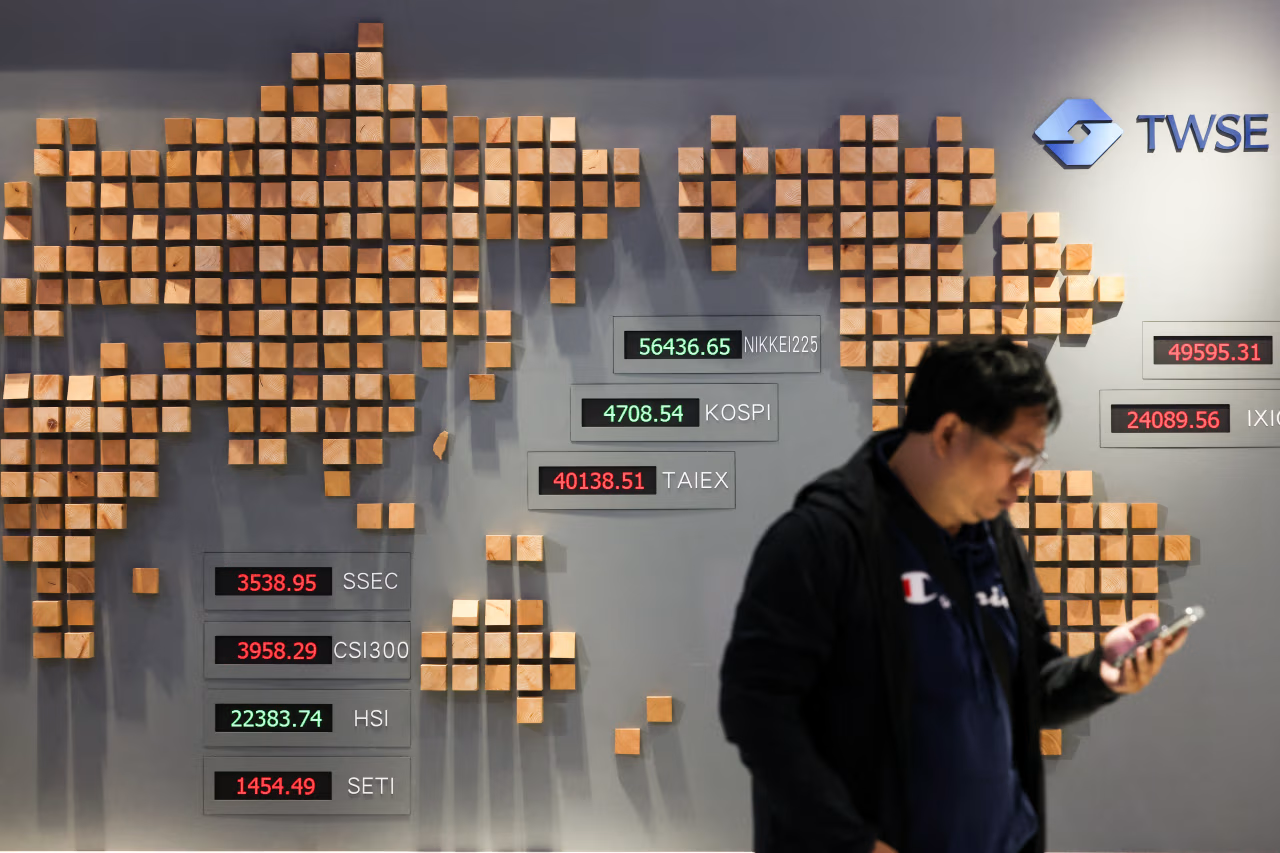
东京——随着黄仁勋事件的发酵,恐慌与狂喜席卷全球股市,显示出投资者对人工智能繁荣的持久性变得多么焦虑。
TOKYO—Panic and euphoria swept global stock markets as the Jensen Huang drama unfolded, showing just how angsty investors have become over the durability of the artificial-intelligence boom.
然而,深入研究亚洲发布的经济数据,目前来看,该技术带来的经济爆发依然强劲,尽管人们对回调风险以及人工智能低迷可能有多严重的担忧正在加深。
Dig into the economic data coming out of Asia, however, and for now at least the economic burst from the technology is still going strong, even as worries deepen about the risk of a pullback and how bad an AI slump could get.
美国经济也仍在感受人工智能的顺风效应。修正后的数据显示,第三季度经通胀调整后的年化增长率为4.3%,快于最初报告的3.4%。非住宅建筑投资(包括数据中心)以16%的速度增长。
The U.S. economy is also still feeling the AI wind in its sails. Revised figures showed the economy grew at an inflation-adjusted, annual rate of 4.3% in the third quarter, faster than the 3.4% first reported. Investment in nonresidential buildings, which includes data centers, grew at a 16% rate.
美国及全球的数据中心建设严重依赖台湾半导体、韩国存储芯片以及来自中国、日本、新加坡等国的高科技设备出口。
The data-center build-out in the U.S. and around the world leans heavily on exports of Taiwanese semiconductors, South Korean memory chips and high-tech equipment from countries including China, Japan and Singapore.
出口数据几乎没有显示出对这些人工智能相关产品的需求正在放缓。如果有的话,订单簿表明需求仍在加速,尤其是对英伟达等公司生产的顶级芯片。
Export data give little indication that demand for these AI-linked products is slowing. If anything, order books suggest demand is still accelerating, especially for top-of-the-range chips such as those created by Nvidia.
“数据依然异常强劲,特别是台湾的数据,”East Asia Econ咨询公司负责人Paul Cavey表示,该公司提供该地区经济的数据和分析。
“The data is still extraordinarily strong, particularly for Taiwan,” said Paul Cavey, who runs East Asia Econ, a consulting firm that provides data and analysis on the region’s economies.
出口红利的主要受益者是制造人工智能繁荣核心产品的芯片制造商。韩国三星电子和SK海力士,以及台湾台积电的丰厚利润,显示了这些公司在将硅谷的人工智能梦想变为现实方面发挥的关键作用。
The big beneficiaries of the export bonanza are the chip makers that manufacture the product at the center of the AI boom. Bumper profits at South Korea’s Samsung Electronics and SK Hynix, as well as Taiwan Semiconductor Manufacturing Co., show the critical role these companies play in bringing Silicon Valley’s AI dreams to life.
出口收入的增长不仅反映了半导体和其他组件出货量的大幅上升,也反映了随着需求螺旋式上升,其价格的大幅飙升。
Growth in export earnings reflects not just a sharp rise in shipments of semiconductors and other components but a steep run-up in their price as demand spiraled.
一些经济学家表示,芯片价格近期趋于平稳,是人工智能热潮可能已见顶的早期迹象。经济学家和国际货币基金组织等机构担心的是,亚洲乃至全球经济正变得过度依赖人工智能产业来驱动增长。一旦投资狂热失去动力,这可能让世界陷入脆弱境地。
Some economists say the recent leveling off in chip prices is an early sign the AI boom could be cresting. The worry for economists and institutions such as the International Monetary Fund is that Asia and the global economy more broadly are becoming too reliant on the AI industry to drive growth. That could leave the world vulnerable if and when the investment frenzy loses steam.
亚洲经济体不仅向美国等地出口数据中心的核心组件,自身也日益成为数据中心枢纽。这一点在东南亚尤为明显,马来西亚、泰国等国的数据中心如雨后春笋般涌现。
Asian economies aren’t just exporting the essential components of data centers to the U.S. and elsewhere. Increasingly, they are turning into data-center hubs themselves. That is especially true in Southeast Asia, where data centers are springing up in countries including Malaysia and Thailand.
然而,随着美国寻求阻止中国人工智能实验室在海外获取美国算力,这一趋势可能很快结束。英伟达要求该地区合作伙伴暂停向马来西亚、泰国、新加坡和印度尼西亚发货。美国还收紧了出口管制,以限制中国获取最先进芯片。数据中心建设的回撤将移走区域增长的一个关键引擎。
That trend could soon be over, however, as the U.S. seeks to block Chinese AI labs from accessing U.S. computing power overseas. Nvidia ordered partners in the region to pause shipments to Malaysia, Thailand, Singapore and Indonesia. The U.S. also tightened export rules to throttle Chinese access to the most advanced chips. A pullback in data-center construction would kick away a key engine of regional growth.
随着人工智能前景的起伏,亚洲市场今年经历了一场令人心惊胆战的过山车行情。这种热情吸引了新投资者入场,并激发了选股狂热。经济学家表示,股市上涨帮助支撑了疲软的国内消费,但若股市持续下跌,可能会放大消费者的谨慎情绪。
Asian markets have been on a stomach-churning ride this year as AI’s fortunes have ebbed and flowed. The excitement has pulled in new investors and stoked stock-picking fever. The gains have helped prop up subdued domestic spending, but could magnify consumer restraint in a sustained stock slide, economists say.