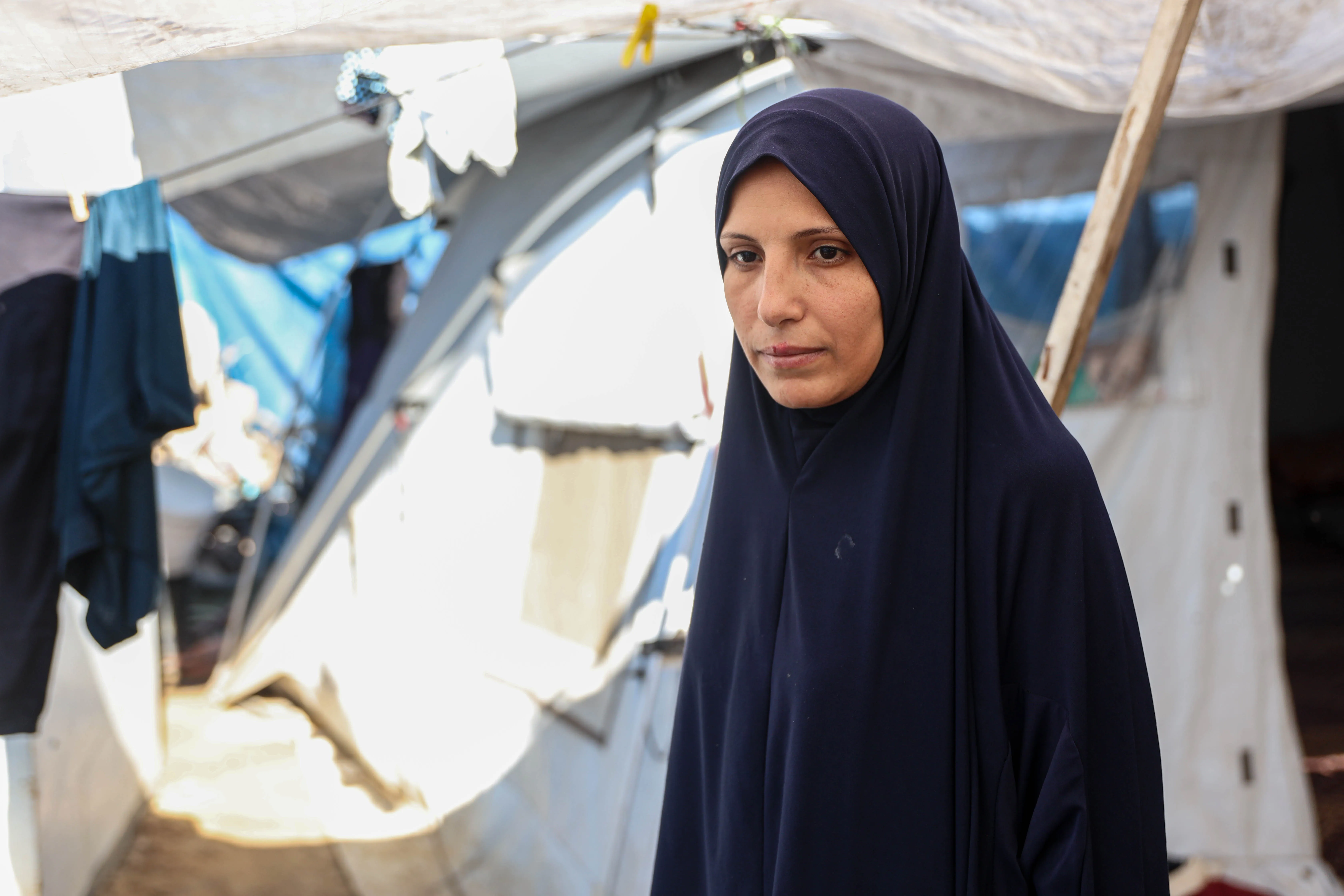
代尔巴拉赫,加沙地带 — — 来自加沙北部贝特拉希亚的六个孩子的母亲、流离失所者马纳尔·阿布·拉比收到了世界粮食计划署(WFP)将削减对该飞地粮食援助的消息,她对接下来几天可能发生的事情感到恐惧。
Deir el-Balah, Gaza Strip — Manal Abu Rabie, a displaced mother of six from Beit Lahiya in northern Gaza, received news that the World Food Programme (WFP) was cutting food assistance to the enclave with fear about what is to follow in the coming days.
自以色列于周三关闭进入该飞地的边境口岸以来,加沙一直面临着鸡蛋、面粉和洋葱等主要主食的严重短缺。食品和其他必需品的价格飙升,有能力的家庭一直在大量囤积,以应对可能的长期封锁。
Gaza has suffered from severe shortages of key staples such as eggs, flour and onions after Israel closed border crossings into the enclave on Wednesday. The prices of food and other essentials have skyrocketed, and families who can afford to do so have been bulk buying, in anticipation of a prolonged blockade.
世界粮食计划署宣布削减粮食援助后,一捆面包的价格从5谢克尔涨至12谢克尔(约合1.60美元至3.90美元)。
After the WFP announced cuts to food aid, the price of a bundle of bread rose from 5 to 12 shekels (around $1.60 to $3.90).
阿布·拉比一直在努力为家人提供食物,她说如果在援助削减宣布后她所需的支持被削减,她几乎没有后备方案。
Abu Rabie has already been struggling to provide food for her family and says she has little to fall back on if the support she needs is reduced after the announcement of aid cuts.
她说:“我们刚刚开始说‘谢谢上帝’,现在他们却想切断我们的食物和饮用水。”“我们正在重新陷入饥饿。我们正在饿死。”周一,世界粮食计划署宣布,由于资金短缺,它被迫将加沙每月获得粮食援助的人数从160万减少到110万,使大约50万人失去援助。
“We were just beginning to say, ‘Thank God,’ and now they want to cut off our food and drink,” she said. “We are going back to starvation. We are dying of hunger.”On Monday, the WFP announced that a funding shortfall had forced it to reduce the number of people receiving monthly food assistance in Gaza from 1.6 million to 1.1 million, leaving around 500,000 people without support.
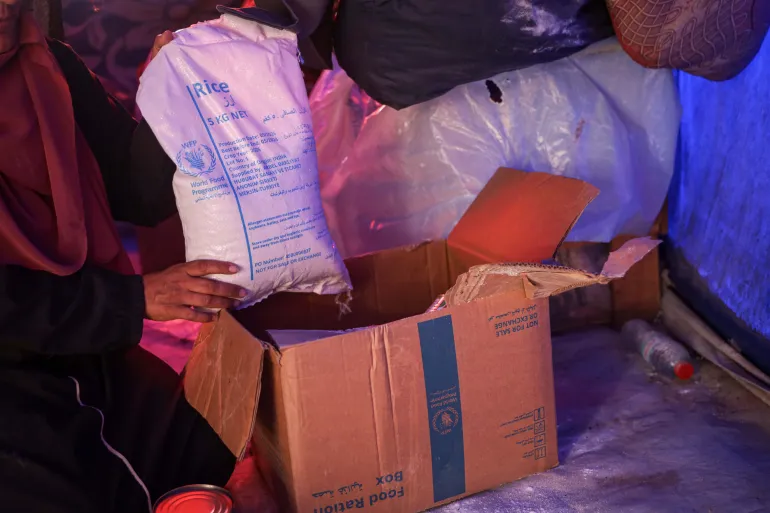
该机构还将粮食配给减半,这意味着获得援助的家庭将只能获得一份粮食包,而不是两份,同时还会获得一小袋小麦粉。
The agency is also halving food rations, meaning families receiving assistance will get one food parcel instead of two, alongside a smaller bag of wheat flour.
每日提供的热餐数量将从25万份减少到15万份,而现金援助将减少7.5万家庭的受助规模。世界粮食计划署表示,这些削减是由资金不足驱动的,尽管人道主义需求仍在持续。
The number of hot meals provided daily will fall from 250,000 to 150,000, while cash assistance will be reduced for 75,000 families. The WFP said the cuts were driven by a lack of funding, despite continued humanitarian needs.
连续第六天暂停向加沙运送援助物资是另一个发展,这加剧了人们对食品、燃料和药品供应及可负担性的不确定性。
The suspension of aid shipments into Gaza for a sixth consecutive day, which is a separate development, has added to uncertainty about the availability and affordability of food, fuel and medicine.
阿布·拉比,39岁,居住在加沙中部代尔·巴拉赫的萨拉姆营,依赖粮食援助,包括含有扁豆、大米、面粉和食用油的食品包裹。
Abu Rabie, 39, who lives in al-Salam camp in Deir el-Balah, central Gaza, relies on food assistance, including parcels containing lentils, rice, flour and cooking oil.
随着物价上涨,她的家庭已经难以负担基本食品,而被包含在世界粮食计划署食品包裹中的一小瓶食用油现在售价为10谢克尔(3.20美元),这对她来说已经超出了承受能力。“情况非常困难。我买不起任何东西,”她说。
Her family is already struggling to afford basic food items as prices rise, with a small bottle of cooking oil, which is included in WFP food parcels, now costing 10 shekels ($3.20), is beyond her means. “It is very difficult. I cannot afford to buy anything,” she said.
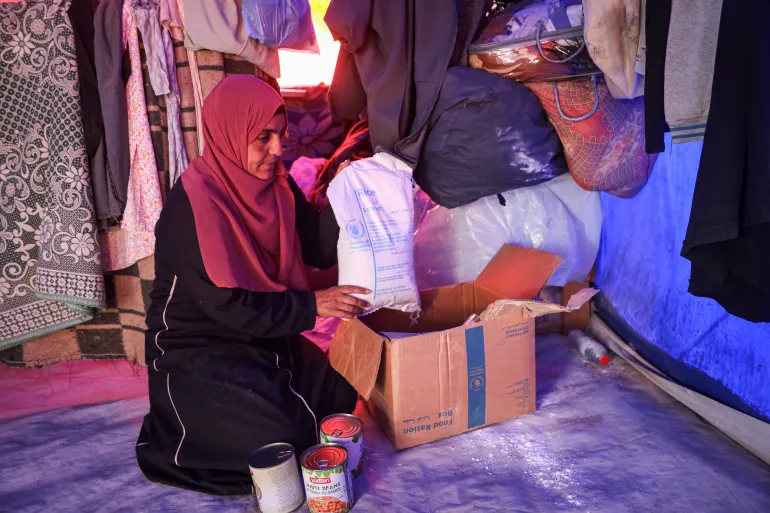
她患有高血压、糖尿病和心脏病。别无选择,她被迫依靠援助包裹中的食物度日,这加重了她的消化问题。
She has high blood pressure, diabetes and heart disease. With no alternative, she is forced to live off the food provided in aid parcels, aggravating her digestive problems.
“如果援助停止,数量减少,我们怎么熬过一天?我们只能吃沙子。那将是我们剩下的全部,”她说。
“If the assistance stops and the quantities become smaller, how are we supposed to get through the day? We’ll have to eat sand. That is all that will be left for us,” she said.
“我发誓,我的儿子向我要东西,而我给不了他。我的丈夫受伤了,我也生病了。”即将到来的冬天正在加剧她的焦虑。阿布·拉比说,她的家庭没有毛毯也没有床垫。
“I swear to God, my son asks me for things, and I cannot get them for him. My husband is injured, and I am sick.”The approaching winter is adding to her anxiety. Abu Rabie said her family had no blankets or mattresses.
“我说,‘上帝,请不要让冬天来临’,因为我们没有毛毯也没有床垫,”她说。“没有食物也没有水。只有上帝知道我们是怎么熬过来的。”加沙政府媒体办公室周一发表声明警告称,世界粮食计划署计划中的削减可能会加剧人道主义危机,导致数十万巴勒斯坦人面临更严重的粮食不安全。
“I say, ‘God, please don’t let winter come’, because we have no blankets and no mattresses,” she said. “There is no food and no drink. God knows how we are managing.”In a statement issued on Monday, Gaza’s Government Media Office warned that the WFP’s planned cuts could worsen the humanitarian crisis and leave hundreds of thousands of Palestinians facing greater food insecurity.
该办公室呼吁联合国和国际社会提供紧急资金,以维持救援项目。它还将援助进入加沙的限制所导致的后果归咎于以色列,并呼吁开放所有过境点,以便人道主义物资能够不间断地进入。
The office called on the United Nations and the international community to provide urgent funding to sustain relief programmes. It also held Israel responsible for the consequences of the restrictions on aid entering Gaza, and called for all crossings to be opened to allow humanitarian supplies to enter without interruption.
声明还敦促阿拉伯和伊斯兰国家以及国际组织提供财政支持,并帮助促进食品、医疗用品和其他必需品的运送。
The statement urged Arab and Islamic countries, as well as international organisations, to provide financial support and help facilitate the delivery of food, medical supplies and other essential items.
世界粮食计划署(WFP)方面则将其计划中的削减归因于资金短缺,而非人道主义需求的下降,并呼吁捐助方提供额外支持。
The WFP, meanwhile, has attributed its planned reductions to a funding shortfall rather than a decline in humanitarian needs, appealing to donors for additional support.
来自加沙城舒贾耶亚社区的流离失所母亲兰达·阿尔-瓦尔(Randa al-War)有三个孩子,她说世界粮食计划署的粮食援助是她们的生命线。
Randa al-War, a displaced mother of three originally from Gaza City’s Shujayea neighbourhood, said food assistance from the WFP is a lifeline.
她目前与家人居住在代尔·巴拉赫的萨尔苏尔营地,并表示他们未收到其他组织的任何援助。
She now lives with her family in Sarsour camp in Deir el-Balah and said they receive no assistance from other organisations.
“我们依赖世界粮食计划署。没有面包,没有面粉,我们无法生存。这些孩子需要吃东西,”她说。
“We depend on the World Food Programme. We cannot live without bread, without flour. These children need to eat,” she said.
阿尔-瓦尔说,她们每隔两到三个月就会收到一次粮食包裹,其中包括面粉和食用油,大约能维持一个月。
Al-War said the food parcels which her family receives every two or three months, including flour and cooking oil, last around a month.
“如果粮食包裹送来,我们就能熬过一天。如果送来,孩子们就能吃上饭。如果不送来,就没有食物,”她说。
“We get through the day if the food parcel comes. If it comes, the children eat. If it doesn’t, there is no food,” she said.
她担心世界粮食计划署的削减可能会让她们失去所依赖的支持。她表示,从市场购买食物并不是一个现实的替代方案,因为她因受伤无法工作,而她的丈夫也有健康问题。
She fears that the WFP’s cuts could leave her family without the support it relies on. Buying food from the market is not a realistic alternative, she said, because neither she nor her husband can work as she is injured and he has health problems.
“我无法工作,我的丈夫也无法工作,”她说。“我们仅靠世界粮食计划署和粮食包裹生存。”阿尔-瓦尔表示,进一步削减的前景让她感到恐惧,担心孩子们再次面临饥饿。
“I cannot work, and my husband cannot work,” she said. “We are living only on the World Food Programme and the food parcels.”Al-War said the prospect of further cuts has left her frightened that her children will face hunger again.
“我们害怕会发生饥荒,因为我们有孩子。我们将无法为他们提供任何东西,”她说。“我们不仅仅是害怕……我们感到恐惧,饥荒将会再次回来。”商业船运的暂停正在加剧那些已经因战争和以色列对加沙的围封而面临购买力下降和物价上涨的家庭的压力。
“We are afraid there will be famine, because of our children. We will not be able to provide them with anything,” she said. “We are not just afraid… we are terrified that famine will return.”The suspension of commercial shipments is adding to the pressure on families already struggling with reduced purchasing power and rising prices caused by the war and Israel’s siege on Gaza.
居住在加沙的经济专家拉米·阿尔-扎伊格(Rami al-Zayigh)表示,过境点的持续关闭正在限制一个本来就面临持续短缺的地区的物资供应,推高物价,并进一步加重家庭的负担。
Rami al-Zayigh, a Gaza-based economic expert, said the continued closure of crossings was restricting the supply of goods in a territory already facing persistent shortages, pushing prices higher and placing further pressure on families.
“问题不仅仅是供应短缺,”阿尔-扎伊格说。“每当过境点关闭时,商人和卖家就会提高价格,导致公民恐慌。公民是这些措施的最大受害者。”蔬菜和水果在当地市场变得越来越稀缺,过去一周鸡蛋的价格上涨了约300%。
“The issue goes beyond a shortage of supply,” al-Zayigh said. “Whenever the crossings close, traders and sellers raise prices, creating panic among citizens. The citizen is the biggest victim of these measures.”Vegetables and fruit were becoming scarce in local markets, and the price of eggs had risen by about 300 percent over the past week.
阿尔-扎伊格表示,蔬菜和水果尤其容易受到供应中断的影响,因为它们可能在几天内变质。
Vegetables and fruit are particularly vulnerable to interruptions in supply as they risk spoiling within days, al-Zayigh said.
他引用加沙官方报告称,该地区的食品储备估计只能维持大约两周。他警告说,对进入加沙的货物持续限制可能带来进一步的经济和健康后果,尤其是对儿童和老年人。
Citing official reports from Gaza, he said food stocks in the territory were estimated to be sufficient for only about two weeks. He warned that continued restrictions on goods entering Gaza could have further economic and health consequences, particularly for children and older people.
对于依赖援助的家庭来说,援助减少、收入有限和价格上涨的叠加效应,使他们获取日常餐食的途径变得更少。阿尔-瓦尔表示,家庭不应该为了生存所必需的东西而不得不乞讨。
For families who rely on aid, the combination of reduced assistance, limited income and higher prices leaves fewer ways to secure daily meals. Al-War said families should not have to beg for the essentials they need to survive.
“我们想像世界其他地方一样生活。我们不想为这些东西乞讨。这些东西应该对我们可得,而不需要我们去申请,”她说。
“We want to live like the rest of the world. We do not want to beg for these things. They should be available to us without us having to ask,” she said.
“我们是人类。我们想活着、吃饭、喝水。我们想过有尊严的生活。”
“We are human beings. We want to live, eat and drink. We want a dignified life.”