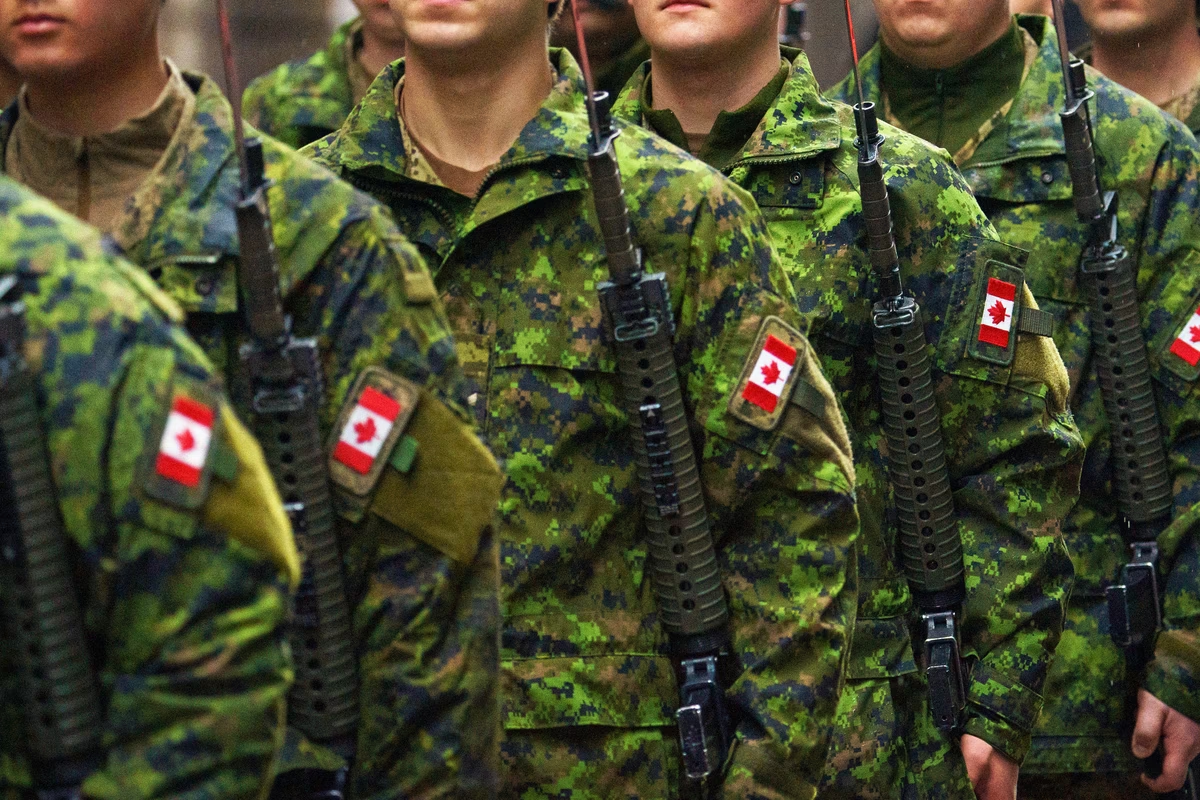
与美国脱钩说起来容易做起来难。作者:菲利普·拉加塞突然间,加拿大正处于国防繁荣之中。就像其他几十年来一直削减武装力量的北约国家一样,加拿大正试图在面对日益增长的国际安全威胁以及经常把朋友当作敌人的白宫的情况下,快速建设其军队。在缺乏值得信赖的美国领导力的情况下,许多盟友正在努力变得更加自力更生。但这说起来容易做起来难,尤其是对于加拿大而言,它与美国军队的融合程度超过了任何其他美国盟友。
Decoupling from the U.S. is easier said than done. By Philippe Lagassé Suddenly, Canada is in the middle of a defense boom. Like other NATO countries that have skimped on their armed forces for decades, Canada is trying to quickly build up its military in the face of both rising international-security threats and a White House that regularly treats friends like foes. In the absence of trustworthy American leadership, many allies are working to become more self-reliant. But this is easier said than done, especially for Canada, which has enmeshed its own self-defense with the U.S. military more than any other American ally.
自1957年加拿大和美国建立北美航空航天防御司令部以在冷战期间共同防御北美大陆以来,加拿大军队与美国的联系日益紧密。否则规模较小、资金不足的加拿大武装部队被设计为能够与美国 counterparts 并肩部署,并与之实现无缝互操作。这使得加拿大能够以相对较低的成本,在两国共同利益的前提下作出有价值的军事贡献。
Since 1957, when Canada and the United States established the North American Aerospace Defense Command to jointly defend the continent during the Cold War, the Canadian military has grown closer to America’s. The otherwise small and underfunded Canadian Armed Forces is structured to deploy alongside its U.S. counterparts and to interoperate seamlessly with them. This has allowed Canada to make valuable military contributions in both countries’ interest at relatively low cost.
在特朗普重返白宫之前,加拿大几乎没有人担心两国军队关系如此紧密。前总理特鲁多政府已签订价值数十亿美元的美国制造军事能力合同,包括新型监视飞机、加拿大新舰艇上的作战系统以及88架F-35战斗机。这些投资使加拿大免去了研发尖端装备的成本,并使加拿大军队能够与美国军队互换操作。只要美国仍然是一个友好的盟友,加拿大就能获得极大的利益。
Until Donald Trump’s return to the White House, few in Canada were worried about how deeply intertwined the two militaries had become. Former Prime Minister Justin Trudeau’s government had contracted for billions of dollars’ worth of American-made military capabilities, including new surveillance planes, the combat system on Canada’s new warships, and 88 F-35 fighter aircraft. These investments have spared Canada the cost of developing cutting-edge equipment and allowed Canadian forces to operate interchangeably with the U.S. military. As long as the United States remained a benign ally, Canada was getting a great deal.
特朗普彻底动摇了加拿大人的思维定式。他屡次声称要将加拿大变为美国的第51个州,还拿“特鲁多州长”这类称呼开玩笑,这些言论从起初的怪异逐渐演变为令人担忧的信号;而他无端发起的贸易战也给加拿大企业和消费者带来了巨大损失。去年初,在担任总理的最后几次演讲之一中,特鲁多曾警告称,特朗普“希望看到加拿大经济彻底崩溃,这样就能更容易将我们吞并”。一直以来与加拿大保持军事与经济合作的美国,如今竟摇身一变成了威胁。
Trump has shaken Canadian thinking. His repeated talk of making Canada the 51st U.S. state and his jokes about “Governor Trudeau” went from weird to worrisome, and his unprovoked trade war has hurt Canadian businesses and consumers. Early last year, in one of his final speeches as prime minister, Trudeau warned that Trump wants “to see a total collapse of the Canadian economy, because that’ll make it easier to annex us.”Canada’s longtime military and economic partner had suddenly become a threat.
特鲁多的继任者马克·卡尼总理则试图通过安抚特朗普来应对这一局面。他着手解决美国长期以来的不满——即加拿大国防开支水平偏低的问题,并反复强调维持军事合作的重要性。卡尼已将加拿大国防开支提高至国内生产总值的2%,还答应了特朗普提出的要求:即北约成员国须在2035年前将国防开支提升至本国GDP的5%。
Trudeau’s successor, Prime Minister Mark Carney, has responded in part by trying to appease Trump. He has addressed long-standing American complaints about Canada’s limited defense spending and has emphasized the importance of continued military cooperation. Carney has increased Canada’s military expenditures to 2 percent of the country’s GDP and agreed to Trump’s demand that NATO countries spend at least 5 percent of their GDP on defense by 2035.
此外,卡尼还表示,其政府正在与美方商谈参与特朗普提出的“金色穹顶”导弹防御系统计划的相关事宜。即便在关税争端持续之际,卡尼仍试图争取特朗普的支持:他提出打造一个经济联系更为紧密的“北美堡垒”的构想,以此抵御中国经济影响力的扩张。据悉,卡尼手下的国防部长曾对美国国防部长皮特·赫格塞斯表示,在大陆防御事务上,加拿大正与美国“步调一致”。
Carney has also said that his government is in talks about taking part in Trump’s plans for a Golden Dome missile-defense system. Even amid the tariff fight, Carney has been trying to win the president over by pitching a vision of deeper economic integration with the U.S.—a so-called Fortress North America—to help push back against China’s economic influence. Carney’s defense minister reportedly told the U.S. Defense Secretary Pete Hegseth that Canada is “moving in lockstep” with the U.S. on continental defense.
然而,卡尼也在试图减少加拿大对美国军事的依赖。他去年宣布,“新的安全威胁”需要“几代人以来对军队的最大投资”。与其将国家军事资本预算的70%以上用于采购美国装备,他的政府计划在十年内将加拿大70%的国防合同转交给加拿大企业。他的政府还一直在通过与欧洲和太平洋盟友谈判新协议,来多元化加拿大的工业伙伴关系。这包括选择一架瑞典制造的空中监视预警飞机,而不是美国制造的那款,并重新考虑该F-35战机机队——也许改为购买一些瑞典萨博“鹰狮”战斗机。
Yet Carney is also trying to reduce Canada’s dependence on the U.S. military. He announced last year that “new security threats” necessitated “the biggest investments in our military in generations.”Instead of spending more than 70 percent of the country’s military-capital budget on American equipment, his government plans to route 70 percent of Canada’s defense contracts to Canadian firms within a decade. His government has also been diversifying Canada’s industrial partnerships by negotiating new agreements with European and Pacific allies. This has included selecting a Swedish airborne-surveillance early-warning aircraft instead of an American one, and rethinking that fleet of F-35s—perhaps buying some Swedish Saab Gripen fighters instead.
根据民意调查,大多数加拿大人赞赏这些努力。国内企业也有望从中受益;核心国防支出预计将从2025年的约640亿美元增长到2035年的1600亿美元。但有充分理由质疑这些雄心是否能成为现实。卡尼所承诺的支出在和平时期通常是不可想象的,如果没有新税、削减社会项目或严重债务,该国将难以兑现这些承诺。卡尼尚未说明他的政府将如何在2035年前为这些计划提供资金,而公众至今也未需要做出任何牺牲。
Most Canadians applaud these efforts, according to polls. And domestic firms are poised to benefit; core defense spending is projected to grow from about $64 billion in 2025 to $160 billion by 2035. But there are good reasons to question whether these ambitions will become a reality. The spending that Carney has pledged would normally be unthinkable during peacetime, and the country will struggle to meet these promises without new taxes, cuts to social programs, or serious debt. Carney has not said how his government will finance these plans through 2035, and the public has not had to make any sacrifices so far.
另一个问题是,加拿大的国防工业既不大也不自给自足。加拿大企业需要时间来扩大产能,以交付国产能力。这些资本成本需要长期合同的支持,而不仅仅是宏大的政治表态。
Another problem is that Canada’s defense industry is neither large nor self-sufficient. Canadian firms will need time to expand their production to deliver Canadian-made capabilities. Those capital costs require access to long-term contracts, not grand political pronouncements.
即使卡尼想出了如何为这场国内军事建设买单的办法,加拿大对美国军事的依赖也已经根深蒂固,且持续了数十年,摆脱这种依赖不仅仅需要几年的战略性支出。没有美国的支持,加拿大无法在海外发动重大军事行动,而且像大多数北约盟国一样,它在通信、指挥与控制网络、情报以及其他领域的核心能力上完全依赖于美国。为加拿大和欧洲北约盟国发展非美国的替代方案将需要前所未有的投资水平和合作。
Even if Carney figures out how to pay for this domestic military buildup, Canada’s dependence on the U.S. military runs so deep, and has been entrenched over so many decades, that pivoting away will involve more than just a few years of strategic spending. Canada cannot mount a major military operation overseas without American support and, like most NATO allies, is utterly reliant on the United States for core capabilities in communications, command and control networks, intelligence, and other areas. Developing non-American alternatives will require unprecedented levels of investment and cooperation among Canada and European NATO allies.
来自中国和俄罗斯的日益增长的威胁使得摆脱美国军事的挑战变得更加深远。尽管与美国存在微妙的紧张关系,北美的防御始终将是一项共同努力,华盛顿将始终处于领导地位。
Mounting threats from China and Russia make the challenges of disentangling from the U.S. military only more profound. Despite simmering tensions with the U.S., the defense of North America will always be a joint endeavor, with Washington in the lead.
特朗普政府已经表明,它愿意利用大陆防御关系来警告其北方邻居。5月,美国暂停了其在一个可追溯至二战时期的联合大陆防御委员会中的参与,这部分是针对卡尼在达沃斯广受好评的演讲作出的回应,他在演讲中警告称,“基于规则的秩序正在消逝。”这对加拿大来说令人担忧,因为加拿大在历史悠久的大陆防御机构中名义上与美国处于平等地位。如果更大、更强大的美国要求大陆的防御必须专门使用美国装备,比如F-35或美国制造的监视飞机,那么加拿大的选择可能会受到限制。
The Trump administration has already shown that it is willing to use the continental-defense relationship to rebuke its northern neighbor. In May, the U.S. suspended its participation in a joint board for continental defense that dates back to World War II, partly in response to Carney’s widely praised speech at Davos in which he warned that “the rules-based order is fading.”This was troubling for Canada, which is ostensibly on equal footing with the U.S. in well-established continental-defense institutions. If the larger, more powerful U.S. demands that the continent’s defense requires the exclusive use of American equipment, such as the F-35 or U.S.-made surveillance planes, Canada’s options may be limited.
尽管两国邻国之间的政治和经济紧张局势在升级,但加拿大一直在悄悄地保持与美国军队的关系稳定。情报共享、军事交流以及北美防空合作正常运作。我交谈过的大多数加拿大军事领导人认为,当特朗普不再担任总统时,两国之间的关系将在很大程度上恢复。两国的国防规划者都认识到,无论关税或敌对言辞如何,持续合作的重要性。
Notwithstanding escalating political and economic tensions between the two neighbors, Canada has been quietly keeping its relationship with the U.S. military steady. Intelligence sharing, military exchanges, and North American air-defense cooperation are operating as normal. Most of the Canadian military leaders I’ve spoken with assume that the relationship between the two countries will largely recover when Trump is no longer in office. Defense planners in both countries recognize the importance of continued cooperation, regardless of tariffs or hostile rhetoric.
特朗普可能无法单方面撤销加拿大与美国数十年来的密切军事合作,但他的总统任期确实迫使美国的北方邻国变得不那么信任和自满。加拿大可能无法完全摆脱对美国军队的依赖,但过度依赖美国的防务合作和善意已不再明智。解决这一问题所需的时间和金钱将超过加拿大人通常愿意承担的程度,但如果这能为他们带来更好的安全,加拿大人至少似乎愿意为此付出代价。
Trump may not single-handedly undo decades of close military cooperation between Canada and the U.S., but his presidency has certainly forced America’s northern neighbor to be less trusting and complacent. Canada may not be able to fully divest itself from the U.S. military, but relying too heavily on American defense cooperation and goodwill no longer seems wise. Fixing this problem will require more time and money than Canadians are typically willing to spend, but Canadians appear at least willing to pay this price if it will deliver better security for themselves.