印度尼西亚不愿加息的立场周三面临新的考验,随着双重降级威胁引发该国股市抛售、导致资本外流并给卢比带来压力,加息的押注正在增加。
Indonesia’s reluctance to raise interest rates faces a fresh test Wednesday, with bets on a hike increasing as the threat of a double downgrade to the nation’s stock market fuels capital outflows and piles pressure on the rupiah.
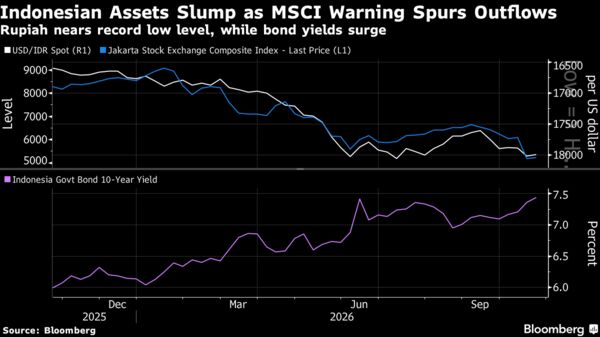
包括花旗集团、汇丰控股和彭博经济研究在内的多家经济学家,在MSCI公司上周末发出的降级警告后,将政策展望转向紧缩。该警告引发了印度尼西亚近三十年来最严重的股市暴跌。这场抛售蔓延至债券市场,并使卢比跌破每美元18,000的关键阈值。
Several economists, including at Citigroup Inc., HSBC Holdings Plc and Bloomberg Economics, shifted their outlook toward tighter policy after the shock downgrade warning late last week from MSCI Inc., which triggered Indonesia’s worst stock rout in nearly three decades. That selloff spread to bonds and tipped the rupiah past the key threshold of 18,000 per dollar.
截至周二下午晚些时候,预期加息的经济学家人数上升至19人,占总计38份回复的一半。其中17人预计加息四分之一厘,两人主张更大幅度的半点加息。基准BI利率自6月最后一次上调以来一直维持在5.75%。
As of late Tuesday afternoon, the number of economists expecting a hike rose to 19, an even split out of the total 38 responses. Seventeen of those are penciling in a quarter-point move and two call for an outsized half-point increase. The benchmark BI-Rate has been at 5.75% since the last increase in June.
这场动荡为总裁德斯特里·达马扬蒂带来了新的挑战,她一直倾向于货币干预、对冲激励等针对性措施,而非加息,因为加息将更广泛地拖累东南亚最大经济体。
The turmoil presents a fresh challenge for Governor Destry Damayanti, who has favored currency intervention, hedging incentives and other targeted measures over rate increases, which would weigh more broadly on Southeast Asia’s largest economy.
“在MSCI提案引发的卢比突然快速贬值背景下,印尼央行可能被迫加息,”大华银行经济学家恩里科·塔努维贾亚表示,他并未排除“更激进”的50个基点加息。
“BI may be forced to hike rates amid sudden and rapid depreciation of the rupiah triggered by the MSCI proposal,” said United Overseas Bank Ltd. economist Enrico Tanuwidjaja, who doesn’t rule out a “more aggressive” 50-basis point increase.
MSCI警告称,可能将印度尼西亚从新兴市场重新分类为独立市场,跳过前沿市场类别——这一步骤比官员和分析师预期的要严重得多。由于最终决定要到6月才做出,这也引发了对长期资本外流的担忧。以下是周三下午2点(雅加达时间)决策前需要关注的事项:MSCI的警告增加了货币逆风,如美元走强、美国收益率居高不下以及油价上涨,促使一些经济学家提前了加息预期。
MSCI warned it may reclassify Indonesia from emerging market to standalone status, bypassing the frontier-market category — a much more severe step than officials and analysts had expected. With a final decision not due until June, it’s also raised fears of prolonged outflows. Here’s what to look for in Wednesday’s decision at 2 p.m. Jakarta time: MSCI’s warning adds to currency headwinds, such as a stronger dollar, elevated US yields and higher oil prices, prompting some economists to bring forward rate-hike calls.
印度尼西亚央行在印尼盾严重不稳期间有着及早采取强有力行动的历史记录,今年早些时候已累计加息100个基点,其中包括5月份半个百分点的加息。
Indonesia’s central bank has a track record of early and aggressive action during periods of severe rupiah instability, delivering 100 basis points of rate hikes earlier this year, including a half-point move in May.
走弱的印尼盾也将助长输入型通胀。食品价格已经将9月份的消费价格推高至三个月高点,这为先发制人的加息提供了更有力的理由。
A weaker rupiah would also fuel imported inflation. Food prices already pushed consumer prices to a three-month high in September, strengthening the case for a preemptive hike.
联昌国际集团经济学家张裕杰、林依萍和米歇尔·谢(Michelle Chia)认为,本周加息将有助于维护政策信誉。他们预计11月还会再次加息,并补充说,随着美元储备下降,印尼央行通过货币干预来吸收进一步冲击的能力也在缩小。
A hike this week would help preserve policy credibility, according to CIMB Bhd. economists Joel Cheung, Lim Yee Ping and Michelle Chia. They expect another increase in November, adding that BI’s capacity to absorb further shocks through currency intervention is also narrowing as its dollar reserves fall.
如果股市抛售对更广泛的印尼资产造成更大损害,分析师将密切关注印尼央行遏制风险的计划。
Analysts will be watching BI’s plans to contain risks should the equity selloff do more damage to broader Indonesian assets.
高盛集团估计,明晟的重新分类可能会引发56亿美元的被动股票资金外流,如果指数提供商富时罗素采取类似行动,还将有27亿美元面临风险。今年以来,外国投资者已经从印尼股市撤出超过50亿美元。
Goldman Sachs Group Inc. estimates an MSCI reclassification could trigger $5.6 billion in passive equity outflows, with another $2.7 billion at risk if index provider FTSE Russell takes similar action. Foreign investors have already withdrawn more than $5 billion from Indonesian stocks this year.
PT Bank Danamon Indonesia经济学家伊尔曼·法伊兹(Irman Faiz)表示,虽然股票指数下调不会直接引发抛售债券,但对印尼风险的更广泛重新定价可能会提高投资者持有政府债务所要求的溢价。
While an equity-index downgrade would not directly trigger bond selling, a broader repricing of Indonesian risk could raise the premium investors demand to hold government debt, said PT Bank Danamon Indonesia economist Irman Faiz.
星展银行的拉迪卡·拉奥(Radhika Rao)表示,央行可能会提高被称为SRBI的短期证券收益率,以捍卫资金流入。央行还可能介入以稳定债券市场并遏制借贷成本的急剧上升。
The central bank could raise yields on its short-term securities, called SRBI, to safeguard inflows, said DBS Bank Ltd.’s Radhika Rao. It could also step in to stabilize the bond market and curb a sharp rise in borrowing costs.
不过,拉奥表示,本周加息不一定标志着深度紧缩周期的开始。如果印尼盾在较弱水平上企稳,且更高的债券收益率吸引了对利率敏感的投资者,动荡可能会被限制在股市之内。
A hike this week, though, wouldn’t necessarily mark the start of a deep tightening cycle, Rao said. If the rupiah stabilizes at weaker levels and higher bond yields attract rate-sensitive investors, the turbulence might be contained to equity markets.
印尼股市周二反弹,此前当局承诺采取措施以防止潜在的评级下调。不过,这些措施是否足以解决MSCI(明晟)对不透明股权结构和协同交易的担忧,仍存疑问。
Indonesian stocks rebounded on Tuesday after authorities pledged measures to stave off a potential downgrade. Questions remain, though, over whether the measures go far enough to address MSCI’s concerns over opaque shareholding structures and coordinated trading.
大华银行(UOB)表示,如果没有可信的改革,印尼资产可能会在长期内较新兴市场同行存在风险溢价。
Without credible reforms, Indonesian assets risk carrying a lasting premium over emerging-market peers, UOB said.
PT Bank Central Asia的经济学家在一份报告中写道:“市场正日益押注印尼央行将回归提供更高收益率以吸引外国投资者回流的老政策。”
“Markets are increasingly betting on BI reverting to the tried-and-true policy of offering higher yields to lure foreign investors back,” economists at PT Bank Central Asia wrote in a note.
“然而,问题在于印尼央行在评估进一步加息需求时,会继续采取被动应对的态度,还是会在调整其政策组合时更具前瞻性。”
“The question, however, is whether BI will remain reactive in assessing the need for further rate hikes or become more anticipatory in adjusting its policy mix.”