哈菲兹·赫南达(Hafidz Hernanda)于10月4日深夜,骑车行经印度尼西亚首都雅加达一条安静的街道时,另一名摩托车骑手踢了他的摩托车一脚,将他踢倒在地。又有两名男子加入殴打,施暴者殴打哈菲兹先生并威胁要杀了他。事后他们拿走了他的手机和包,抢劫似乎只是顺手牵羊。警方称正在调查,但尚未确认嫌疑人。
HAFIDZ HERNANDA was riding down a quiet street in Jakarta, Indonesia’s capital, close to midnight on October 4th when another motorcyclist kicked his motorbike, knocking him to the ground. Another two men joined the attack as the assailant beat Mr Hafidz and threatened to kill him. Afterwards they took his phone and bag, robbery seemingly an afterthought. The police say they are investigating, but no suspects have been identified.
此次袭击引人注目,因为哈菲兹先生已成为反对总统普拉博沃·苏比安托(Prabowo Subianto)的最高调组织者之一,今年早些时候曾领导学生发起两场针对其政策的抗议活动。遇袭当晚,他正从一家路边餐馆骑车返回位于印度尼西亚大学校园附近的住处,此前他在那里与其他学生活动人士开会,谋划于10月20日——普拉博沃就职两周年纪念日——发起一场示威活动。
The assault was notable because Mr Hafidz has become one of the highest profile organisers against President Prabowo Subianto, leading two protests by students against his policies earlier this year. On the night of the assault he was riding back to his home near the University of Indonesia campus from a meeting with other student activists at a roadside eatery. There, they had been plotting a demonstration against Mr Prabowo on October 20th, the second anniversary of his inauguration.
政府极力想阻止这场抗议活动举行。在哈菲兹先生遇袭后的几天里,军警官员恳请学生留在家中。一名活动人士称,有人向他行贿,条件是说服学生不上街游行。在纪念日当天上午,警方称已部署9500名警力管控示威者。如果这是意在震慑,似乎奏效了。只有几十名顽强的学生聚集在雅加达市中心,要求普拉博沃采取行动应对高物价,并回应他们所指称的其政府一长串失职表现。
It was a protest that the administration desperately sought to prevent from going ahead. In the days that followed the attack on Mr Hafidz, army and police officers pleaded with students to stay at home. One activist says he was offered a bribe if he could persuade students not to hit the streets. On the morning of the anniversary, police said that they had deployed 9,500 officers to keep demonstrators in line. If that was intended to intimidate them, it seems to have worked. Only a few dozen hardy students gathered in central Jakarta to demand that Mr Prabowo do something about high prices and what they say are a long list of failures of his administration.
普拉博沃的岳父、独裁者苏哈托在1998年因大规模示威失去权力,普拉博沃长期以来一直害怕街头。2025年8月,学生和工人因腐败和警察暴行举行的抗议活动引发数天骚乱,并要求进行更广泛的政治改革,这加剧了他的焦虑。当时,普拉博沃召开新闻发布会,接受了部分诉求。抗议活动平息后,他又削弱了自己的承诺。
Mr Prabowo, whose father-in-law, the dictator Suharto, lost power amid mass demonstrations in 1998, has long had a fear of the street. That anxiety was reinforced when protests by students and workers against corruption and police brutality in August 2025 led to days of unrest and calls for broader political reforms. At the time, Mr Prabowo called a press conference where he gave in to some of their demands. He later watered down his promises after the protests died down.
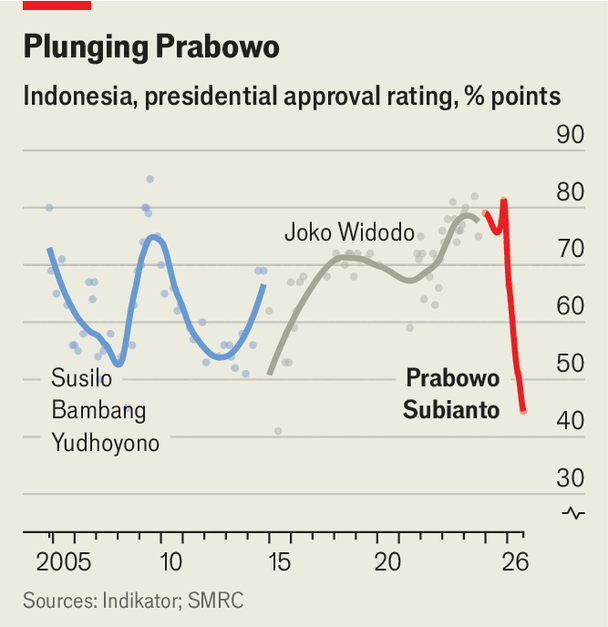
但那时普拉博沃仍享有前所未有的支持率,2025年11月的调查显示,81%的受访者批准他所做的工作。此后,他的支持率出现了创纪录的下降。10月16日发布的一项调查显示,只有45%的人表示对他的表现感到满意。这个数字会让许多西方领导人羡慕不已,但在印度尼西亚——出于文化原因,许多受访者在回答民调时不愿过于严厉——这一数字已接近历史低点。
But that was when Mr Prabowo still enjoyed unprecedented popularity, with 81% of those surveyed in November 2025 telling pollsters that they approved of the job he was doing. Since then, his approval ratings have seen record declines. In a survey released on October 16th, only 45% said that they were satisfied with his performance. That figure would be the envy of many Western leaders, but in Indonesia—where, for cultural reasons, many respondents are shy about being too damning in responses to pollsters—it is near historic lows.
不赞成普拉博沃表现的人大多将基本生活必需品价格上涨,而非他强硬的政治手段,作为不满的原因。美国对伊朗的战争推高了燃料进口成本,而强劲的厄尔尼诺现象正在导致农业产量下降。主食价格飞涨。赋予印尼食物辛辣味的小米辣,较一年前上涨了76.5%。鸡蛋、鸡肉和大米的价格也都上涨了。但推动通胀的因素——战争和天气——都超出了普拉博沃的控制范围。
Those who disapprove of Mr Prabowo’s performance mostly cite higher prices for basic necessities, rather than his heavy-handed approach to politics, as the reason for their dissatisfaction. America’s war against Iran has driven up the cost of importing fuel, while a strong El Niño is driving agricultural yields down. The prices of staple foods have soared. Bird’s-eye chilis, which give Indonesian food its kick, have risen by 76.5% compared with a year ago. The prices of chickens, eggs and rice are all up, too. But the drivers of inflation, the war and the weather, are factors out of Mr Prabowo’s control.
这让总统陷入了两难境地。他可以加倍投入那些已成为其执政标志的昂贵民粹主义项目,比如他的“免费营养餐”计划和一个由8万个国营村级合作社组成的网络。前者今年已被削减,以便为深受选民欢迎的昂贵汽油补贴提供资金。普拉博沃可能会试图通过重新扩大免费餐食计划来赢回昔日的支持者。但调查也显示,普拉博沃的标志性项目不如以前受欢迎。
That leaves the president in a bind. He could double down on the expensive populist programmes that have become his hallmark in office, like his “free nutritious meals” scheme and a network of 80,000 state-run village co-operatives. The former had been curtailed this year so as to fund expensive petrol subsidies popular with voters. Mr Prabowo might try to win back his former supporters by ramping the free meals programme back up. But the surveys also suggest that Mr Prabowo’s signature programmes are less popular than before.
因此,可能会推出新的福利发放。10月13日,总统极具影响力的弟弟哈希姆·佐约哈迪库苏莫提议,向每位公民免费发放一部手机。他辩称,这些手机若与免费银行账户挂钩,将把印尼未开户人群纳入正规金融体系。毫无疑问,这也会让普拉博沃赢得许多选民的好感。
New handouts may therefore follow. On October 13th the president’s influential younger brother, Hashim Djojohadikusumo, proposed that every citizen be given a free mobile phone. Linked to a free bank account, the phones would bring Indonesia’s unbanked into the formal financial system, he argued. It would also, no doubt, endear Mr Prabowo to many voters.
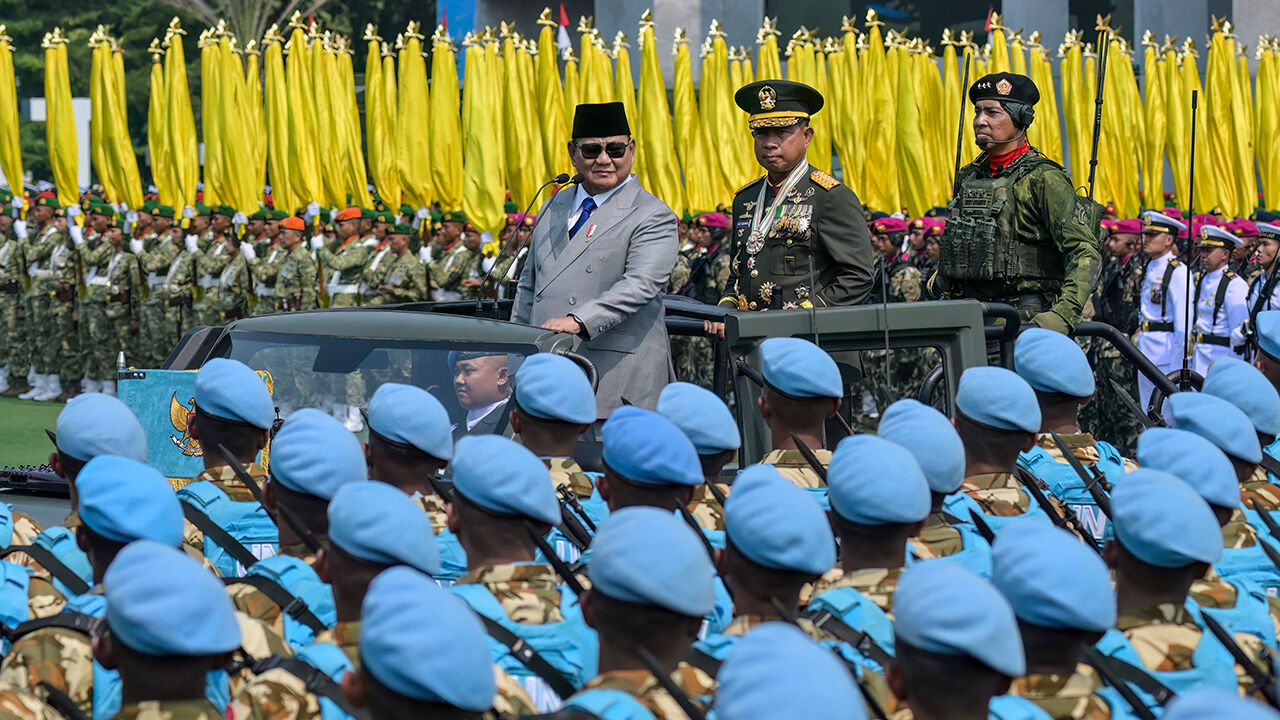
另一种可能是,支持率下降的普拉博沃会镇压异见和政治反对派。没有确凿证据表明哈菲兹遭袭是由其政府指使的,但这并未阻止学生活动人士暗示这是政府所为。考虑到普拉博沃自己的过往,这种可能性难以排除。作为苏哈托麾下的特种部队指挥官,普拉博沃在1997年和1998年绑架了数十名学生活动人士。他承认做过这事,并声称所有人都被完好无损地送回。但有些人从此杳无音讯。
Another possibility is that a less popular Mr Prabowo will crack down on dissent and political opposition. There is no clear evidence that Mr Hafidz’s assault was directed by his administration, but that has not stopped student activists from implying that it was. The possibility is hard to dismiss given Mr Prabowo’s own past. As a special forces commander under Suharto, Mr Prabowo kidnapped dozens of student activists in 1997 and 1998. He admits doing so and says that he returned them all unharmed. But some were never heard from again.
街头并非总统面临的唯一反对来源。外国投资者和本地大亨也正在倒戈。主要股指在10月16日暴跌近12%,今年以来累计下跌40%,成为今年全球表现最差的股指(实际上也是自他就职以来两年的最差表现)。外资正在逃离这个曾经充满希望的新兴市场。投资者指责监管不确定性和缺乏透明度。本地大亨,尤其是华裔大亨,表示担心普拉博沃的心腹会对他们进行敲诈勒索。他们一直在把资金转移到国外,而不是在国内投资。
The street is not the only source of opposition to the president. Foreign investors and local tycoons are turning against him, too. The main stock index sank by nearly 12% on October 16th and is down by 40% so far this year, making it the world’s worst performer this year (and, indeed, in the two years since his inauguration). Foreign capital is fleeing what was once a promising emerging market. Investors blame regulatory uncertainty and a lack of transparency. Local tycoons, particularly those who are ethnically Chinese, say that they fear shakedowns by Mr Prabowo’s lieutenants. They have been stashing money abroad rather than investing it at home.
动荡让政党大佬们暗中酝酿针对总统的行动。对普拉博沃最令人担忧的,莫过于他与前任佐科·维多多出现裂痕的迹象。两人曾是对手,但在2024年大选中联手,佐科之子吉布兰·拉卡布明·拉卡作为普拉博沃的竞选搭档加入总统竞选名单,助两人大获全胜。如果这两位重量级人物决裂,普拉博沃在2029年下届大选中寻求连任的任何希望都将化为泡影。
The turmoil has allied political party bosses quietly eyeing moves against the president. The most concerning for Mr Prabowo must be the signs of a rift with his predecessor, Joko Widodo. The two were once rivals but teamed up in the 2024 election, when Gibran Rakabuming Raka, Mr Widodo’s son, joined Mr Prabowo’s presidential ticket as his running mate. That gave them a landslide victory. A falling-out between the two heavyweights would make any prospect of winning a second term at the next presidential election, in 2029, a fantasy.
《改革周刊》通讯作者凯文·奥鲁克表示,如果普拉博沃的民调支持率持续低迷,他可能不会等待选民的裁决,而是利用即将到来的宪法修正程序废除总统直选制。总统和副总统将改由议会选举产生,就像2004年之前那样,这将让普拉博沃避免就其表现面临全民公投,并通过幕后交易赢得第二个任期。但这样做必然会引发他似乎极力想要避免的街头抗议。■
Kevin O’Rourke of “Reformasi Weekly”, a newsletter, says that if Mr Prabowo’s poll numbers remain underwater, he may not wait for voters’ verdict. Instead, he could use an upcoming constitutional amendment process to end direct presidential elections. The president and vice-president would then be elected by parliament, as was the case until 2004, allowing Mr Prabowo to avoid a referendum on his performance and win a second term through backdoor deals. But to do so would surely spark the kind of street protests he seems so desperate to avoid. ■