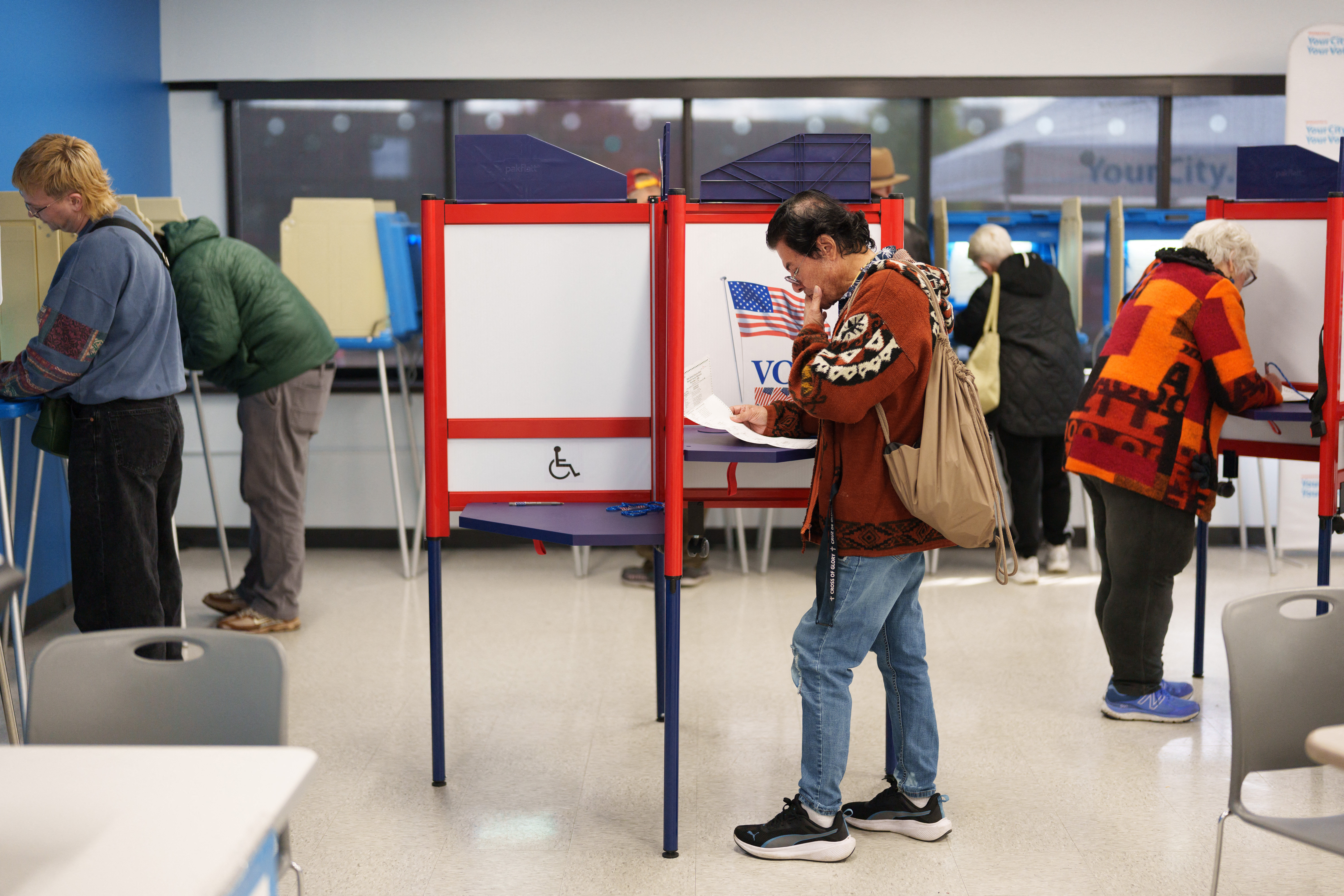
唐纳德·特朗普的支持率已跌至历史低点。民主党选民的热情高涨。在通用国会选票问题上,民主党占据明显优势。按大多数衡量标准,民调指向今年11月可能出现类似“蓝色浪潮”的局面。许多人心中的疑问是:这些民调是否可信。
Donald Trump’s approval rating has hit a record-low. Democratic enthusiasm levels are off the charts. The party holds a clear edge on the generic congressional ballot question. By most measures, the polls point to something like a blue wave this November. The question, for many, is whether they can be trusted.
有理由担忧。除了备受瞩目的失误——其中最著名的是选出特朗普的2016年总统大选——近几个选举周期还见证了民调回复率暴跌、加权和投票率假设存在缺陷,以及恶意行为者增多,更别提固定电话消失带来的挑战了。
There is reason for concern. In addition to high-profile misses — the most prominent among them, the 2016 presidential contest that elected Trump — recent election cycles have witnessed cratering survey response rates, flawed weighting and turnout assumptions, and a rise in bad-faith actors, not to mention the challenge of vanishing landline phones.
今年,少数几起事件进一步动摇了信心。民调预测阿卜杜勒·埃尔-赛义德将在密歇根州民主党参议员初选中轻松获胜——他仅以一个百分点的优势获胜。在威斯康星州民主党州长初选中,民主社会主义者弗朗西斯卡·洪在选前民调中领先两位数——她以微弱劣势落败。而在洛杉矶市长选举的一项民调——在候选人之一、市长凯伦·巴斯在社交媒体上宣传后广为传播——结果被证实完全是虚假的。
This year, a handful of episodes have further undermined confidence. Polls predicted a slam-dunk victory for Abdul El-Sayed in Michigan’s Democratic Senate primary — he won by one percentage point. Francesca Hong, the democratic socialist running in Wisconsin’s Democratic primary for governor, held a double-digit lead in pre-election surveys — she narrowly lost. And a poll in the Los Angeles mayoral race — which spread widely after one of the candidates, Mayor Karen Bass, touted it on social media — turned out to be entirely bogus.
后来据报道,这场骗局民调的策划者称,这是一个“短期社会实验”,旨在考察民调数字如何能在“未经独立核实的情况下在政治信息生态系统中传播”。然而,这些民调失误并不反映行业的变化。现在有了接触民众的新方法,也有了针对最难触达选民的新核算方式。这些修正似乎奏效了;你可能没意识到,民调在很大程度上准确预测了过去两次中期选举的结果。
The later reported that the individual behind the sham poll said it was part of a “short-term social experiment”to examine how polling numbers could “spread through the political information ecosystem without independent verification.”The polling misfires, however, don’t reflect the changes in the industry. There are new methods of reaching people, and new ways to account for the most elusive voters. Those corrections have seemingly paid off; you may not realize it, but the polls largely nailed the results of the past two midterms.
尽管如此,民调并非用于预测。它们代表某一时间点的快照,能让人洞察公众情绪和选民最关心的问题。
Still, polls aren’t meant to be predictive. They represent a snapshot in time, offering insight into public sentiment and voters’ most pressing concerns.
“当然,鉴于2016年以及2020年的一些民意调查结果出现偏差,人们确实存在担忧,”马凯特法学院民意调查项目的负责人查尔斯·富兰克林说道。“在过去十年里,我们一直在努力改进这些调查中的误差控制机制,但最终我们无法强制人们参与民意调查;因此,这种担忧始终存在。”为了探讨与中期选举相关的民意调查问题——以及这些调查可能高估了民主党支持率的说法——我们邀请了四位顶尖民意调查专家参加圆桌讨论:自2012年起担任马凯特法学院民意调查项目负责人的查尔斯·富兰克林;曾在民意调查公司Bellwether Research担任负责人、为共和党客户提供服务的克里斯汀·马修斯;总部位于华盛顿特区的民主党智库Searchlight Institute的分析部门主管夏洛特·斯韦西;以及总部位于伦敦的PF Global公司的民意调查部门负责人塞布·赖德(该公司是POLITICO的合作伙伴,负责在美国和英国开展民意调查)。
“Certainly, given the polling misses in 2016 and, to some extent, 2020, there's an obvious fear factor,” says Charles Franklin, director of the Marquette Law School Poll. “We've done a lot over this past decade to try to improve the control we have over those kinds of errors, but ultimately we can't force people to do polls, and so this remains always a background fear factor.”To explore the questions surrounding the midterm election polls — and claims they might be overestimating Democratic support — we convened a roundtable of top pollsters: Franklin, the director of the Marquette Law School Poll since 2012; Christine Matthews, who has worked with Republican clients as president of Bellwether Research, a public opinion polling firm; Charlotte Swasey, director of analytics at Searchlight Institute, a D.C.-based Democratic think tank; and Seb Wride, head of polling at London-based PF Global, POLITICO’s polling partner which conducts polls in the U.S. and the UK.
迈克·约翰逊议员最近表示:“我们都不应该再相信民意调查的结果了,因为它们的准确性实在太差了;这一点我们都清楚。”在民主党阵营中,也有一些人认为这些民意调查可能低估了下个月即将到来的支持浪潮的规模。那么,对于目前看到的这些民意调查结果,你们对其可靠性有多大信心呢?
Speaker Mike Johnson said recently: "None of us should put any stock in polls anymore because they are wildly inaccurate; we all know that.”On the Democratic side these days, you can find voices that think perhaps the polls are underestimating the size of the wave that's supposed to be coming next month. So, what's your level of confidence in the reliability of the polling that we're seeing at this moment?
克里斯汀·马修斯:从历史数据来看,我们在选举周期内观察到了民意调查的误差情况。总体而言,2018年和2022年的中期选举中的民意调查误差比过去几次大选中的误差要小。因此,作为民意调查专家,我们在中期选举中的调查准确性方面做得稍微好一些。
Christine Matthews: Historically, one thing that we've looked at is polling error over election cycles. Writ large, the polling error has been smaller for the past two midterms, 2018 and 2022, than it has been for the past general elections. So, as pollsters, we've done a slightly better job overall with polling accuracy in the midterms.


话虽如此,我们该在多大程度上信任民调?我认为你必须逐个审视具体的民调和民调机构。就我而言,我对美联社-NORC民调、《纽约时报》民调或CNN民调的信任度,要远高于那些在某个州发布的民调——当我访问该民调公司的网站时,根本找不到负责实施民调的团队成员名单。
That being said, how much should we trust polls? I think you have to look at individual polls and pollsters. I, for example, have a lot more trust in the AP-NORC poll, or the New York Times poll, or the CNN poll than I do a poll that comes out in a state and I go to the website of the polling firm, and there's no people listed as the team conducting the poll.


夏洛特·斯韦西:民调出现一些偏差完全有可能。但要让迈克·约翰逊迎来一个“好年份”,民调必须出现极其巨大的偏差,那在实践中几乎是前所未有的。我们并非凭空捏造这些民调。我们有总统所属政党在中期选举年表现如何的历史记录。如果仅看这一点——甚至不看民调——总统所属政党都会失去席位,除非刚刚发生了“9·11”事件。
Charlotte Swasey: It's entirely possible that the polls are a little bit wrong. But they would have to be so dramatically wrong for Mike Johnson to have a good year, that it would be practically unprecedented. We're not pulling these polls completely out of a hat. We have the historical records about how the party of the president does in a midterm year. If you look at that alone — and you don't even look at the polls — the party of the president loses seats, unless Sept. 11 has just happened.
查尔斯·富兰克林:考虑到2016年,以及在一定程度上2020年出现的民调偏差,显然存在一种恐惧心理。提出担忧很容易,而最大的担忧依然是非随机无应答——在本例中是共和党受访者过少——而今年,或许是受激励的民主党人以某种方式过度应答。过去十年里,我们做了大量工作试图改善对这类误差的控制,但归根结底我们无法强迫人们参与民调,因此这始终是一个背景性的恐惧因素。
Charles Franklin: Certainly, given the polling misses in 2016 and, to some extent, 2020, there's an obvious fear factor. It's easy to raise concerns, and the biggest of those remains non-random non-responses — in this case, too few Republicans responding — and this year, maybe excited Democrats somehow over-responding. We've done a lot over this past decade to try to improve the control we have over those kinds of errors, but ultimately we can't force people to do polls, and so this remains always a background fear factor.
但我认为,当你看到跨民调机构的一致性——无论来自较保守的民调公司还是较倾向民主党的公司——我对我们在各公司、各州之间看到的广泛一致性印象更深。如果你看看全国范围内的参议院和州长民调,那里也呈现出很大的一致性。
But I think when you look at the consistency across polling, coming from more conservative polling firms or more Democratic firms, I'm more impressed with the broad consistency we're seeing across companies and across states. If you look at Senate and gubernatorial polls around the country, you're seeing a lot of consistency there as well.
克里斯汀,民调专家帕特里克·鲁菲尼发布了一张有趣的图表,展示了在哪些州,坚定的共和党选民在民调中最难接触。在共和党在民调中被严重或中度低估的州中,有堪萨斯州、内布拉斯加州、爱荷华州和俄亥俄州。换句话说,这些可能决定参议院控制权的红州。您是否看到任何类似的证据,可能暗示今年这些州对民主党来说可能是“愚人金”?
Christine, the pollster Patrick Ruffini posted a fascinating graphic about the states where strong Republicans were hardest to reach in the polls. Among the states where Republicans were heavily or moderately underrepresented in polls are Kansas, Nebraska, Iowa and Ohio. So, in other words, the red states that could very well determine control of the Senate. Are you seeing any evidence like this that might suggest some of these states are fool's gold for Democrats this year?
马修斯:我不知道它们是不是“愚人金”,但我并不同意他的评估。事实上,今天早上我正和我们的一项民调为此感到焦虑。我确实认为,在这些红州中,基础共和党选民的不回应是一个问题。
Matthews: I don't know if they're fool's gold, but I don't disagree with his assessment. In fact, I was stressing out about that this morning with one of our polls. I do think that non-response among base Republican voters in some of these red states is a problem.
这并不意味着进行民调的民调机构没有对此进行处理。我们正在处理。粗制滥造的民调,也许那是个问题。但如果你在某种程度上对此进行处理,希望这已经被纳入民调之中。
Doesn't mean that the pollsters conducting the polls aren't managing for that. We are. Sloppy polls, maybe that’s a problem. But if you're managing for it to some degree, hopefully that's baked into the polling.
富兰克林:在过去10年里,我们在方法论上所做的一件事是,将威斯康星州从划分为五个大地理区域转变为划分为100多个区域——从最共和党、最支持特朗普的地区到最不支持的地区。因此,今年,实际上在过去几年里,我们对样本选择的政治地理有了更多的控制。
Franklin: One of the things we've done methodologically over those last 10 years is shift from stratifying [Wisconsin] into five big geographic regions to stratifying it into a little over 100 regions — stratified from the most Republican, pro-Trump areas to the least. So, this year, and actually for the last several years, we've had a lot more control over the political geography of the sample selection.
这并不完美,因为我们仍可能从那些最倾向共和党的地区获得一组无代表性的共和党人。但在样本选择的预分层程度上,我们已经远远超越了以往的水平。这是民调机构如何针对合理的担忧、以及我们过去在非随机、无回应问题上所遇到的困境做出调整的一个很好的例子。尽管如此,你做了所有这些工作,但当拿回样本时,你仍会有焦虑时刻,心想:“噢,我们在这个层里是否样本不足?”
It’s not perfect, because we could still be getting an unrepresentative set of Republicans from those most Republican areas. But we're miles beyond the level of pre-stratification in the sample selection. That's a good example of how pollsters have adjusted to the legitimate concerns, and the problems we've had in the past of non-random, non-response. Still, you do all of those things, but you have those anxiety moments when you get the sample back and you go, “Oh, are we under in this stratum?”
塞布,作为一名在大西洋两岸都从事民调工作的民调专家,你在调查中是否看到了任何显著的相似点或差异,无论是在美国还是英国,就议题或公众优先事项而言?
Seb, as a pollster who's been working on both sides of the Atlantic, are you seeing any striking similarities or differences in what your surveys are finding here or in the UK, in terms of issues or public priorities?
塞布·赖德:在英国,我们过去也经历过不少民调失误。我想说的是,人们对失误的记忆非常深刻。他们记得2016年英国脱欧公投没有被正确预测,尽管实际上结果很大程度上在误差范围内。他们会记得这里或那里对不同政党支持率的高估,我们也经历过不少竞选末期局势急剧变化的情况。
Seb Wride: In the UK, we've had our fair share of polling misses in the past. What I would say is, people remember the misses really, really well. They remember that Brexit wasn't called correctly in 2016, even though it was actually largely in the margin of error. They'll remember overstatements of different parties here and there, and we've had our fair share of late closing in the races as well.
至于议题方面,我看到的是横跨大西洋两岸、现任执政者面临的挑战具有共性。特朗普和我们自己这几位首相——过去几年里我们换了好几位——都面临着维持强大联盟的相同挑战。负担能力和生活成本问题无处不在。
As to the issues, I’m seeing commonalities in the challenges that are facing incumbents across the Atlantic. Both Trump and our own collection of prime ministers — we've had a fair few in the last few years — have faced the same challenges in maintaining a strong coalition. Affordability and cost of living come up everywhere.
今年的民调数据告诉我们,关于曾经势头强劲的奥巴马联盟——或者关于唐纳德·特朗普2024年获胜似乎正在开启的政治重组现状——有什么信息?
What does the polling data tell us this year about the once-ascendant Obama coalition — or about the state of the realignment that Donald Trump's 2024 win seemed to be ushering in?
富兰克林:我们确实看到了共和党在西班牙裔选民中的支持较2024年有所衰退。年轻人也是相当明显。非大学学历白人中也出现了显著下滑。一方面,你可以把这看作是唐纳德·特朗普在2024年为赢得连任而组建的联盟,这确实有很大的道理。
Franklin: We're certainly seeing decay in Republican support from 2024 among Hispanic voters. Young people considerably, also. Significant slippage among non-college whites. On the one hand, you can think of that as a coalition that Donald Trump put together in 2024 to win re-election, and there’s certainly a lot of truth to that.
但我也认为这里有一个共同的故事:民众对通胀和生活成本的担忧,自2022年春季(如果不是2021年秋季)以来,一直位居我们最重要议题榜单之首。这一议题主要导致了拜登政府的失败和低支持率。它连同移民问题,推动了特朗普在2024年的当选。但现在,形势逆转了,由于同样的经济原因、同样的基本生活成本担忧,它正在损害共和党和总统。
But I also think there’s a common story here: People's concerns with inflation and the cost of living have been at the top of our most important issue chart since the spring of 2022, if not the fall of 2021. That issue primarily contributed to the Biden administration's failure and low approval ratings. It powered Trump's election in 2024, along with immigration. But now, the shoe is on the other foot, and it's damaging the Republicans and the president for the same economic reasons, the same basic underlying concerns about the cost of living.
这是某些群体先向一个方向移动、现在又向相反方向移动的问题?还是无论群体如何,许多人都在对那些感知到的经济困难做出反应?
Is this a matter of groups who moved in one direction and now are moving away? Or is it the fact that lots of people, regardless of group, have been responding to those perceived economic difficulties?
斯韦西:当我们谈论群体移动时,也存在一个潜在假设,即群体是同质的。特别是在中期选举年,这一群所谓的西班牙裔选民,并不等同于在总统大选年或以往选举中投票的那一群。这些并非铁板一块的群体。
Swasey: When we talk about group movement, there's also this underlying assumption that groups are homogenous. Especially in a midterm year, this set of, let's say, Hispanic voters is not the same set who voted in the presidential year, or in prior elections. These things aren't firm blocs.
我们可以对特定人群中的趋势做出估计。但必须考虑到,我们讨论的是中期选举中的趋势,这通常比总统大选年略显平淡。这更多是对总统的一种反应。也许如果你是特朗普的支持者,这次你不会出来投票。这使我们难以对这些趋势做出宽泛的断言。
We can make estimates about trends among particular populations. But you have to account for the fact that we're talking about trends in a midterm, which is usually a slightly less exciting year than a presidential one. It's more of a reaction to the president. Maybe if you're a fan of Trump, you're not going to show up this time. It complicates our ability to make broad statements about these trends.
马修斯:我认为不能只看一次选举就说“那是一次重组”。更大的趋势告诉我们,民众对国家治理现状存在大量不满——走错方向的比例、消费者信心、对在该经济环境下能否出人头地的担忧、通胀、能否买得起房、负担得起医疗保健。
Matthews: I don't think that you can look at one election and say, “That's a realignment.”What the larger trends are telling us is there's an enormous amount of dissatisfaction with the way things are being run in this country — the wrong track numbers, the consumer sentiment, concerns about getting ahead with this economy, inflation, being able to buy a house, afford health care.
这些担忧在好几个选举周期里催生了大量情绪。再加上尤其年轻的选民以及其他自称独立人士的人增多,你基本上就有了一个寻求一些缓解和一些解决方案的选民群体。
These concerns have driven a lot of sentiment for several election cycles. Combine that with the rise of particularly young voters and others who say they're independent, and you basically have a cohort of voters looking for some relief and some solutions.
他们将成为我们的摇摆选民。他们将是那些来回摇摆的人——如果他们得不到那种缓解,他们就会转向别处。
They're going to be our swing voters. They're going to be the people who move back and forth — and if they don't get that relief, they're going somewhere else.
赖德:我真正看到(一次重组)发生的唯一方式,是那种不满被民主党所拥有,就像特朗普在2016年将那种不满据为己有一样。只有这样,它才不会仅仅是对当下掌权者的短暂拒绝。
Wride: The only way I really see [a realignment] happening is if that disaffection is owned by the Democratic Party, the way that Trump took ownership of it in 2016. That's how it becomes less than a flash in the pan rejection of whoever's in there right now.
人们有具体的事情可以指出来,作为特朗普如今要对经济负责的理由,比如伊朗战争。人们确实把现任政府的所作所为与他们的感受、与他们在加油站被惩罚的方式联系在一起。但目前,我不确定民主党人是否正在占据那个空间,并成为那种不满转化为一个更持久、能持续赢得选举的联盟的载体。
People have tangible things to point to as reasons that Trump has been responsible for the economy now, like the Iran war. People do tie the actions of the current government to the way that they're feeling, and the way that they're being punished at the pump. But at the moment, I'm not sure that the Democrats are claiming the space and becoming the vehicle for that disaffection to translate into a longer-lasting coalition that keeps winning elections.
在这场竞选活动的最后几周,是否有某一个交叉表、投票人口群体或问题——也许是正确方向、错误方向或通用国会选票——是我们应该密切关注的?
Is there a single cross-tab or voting demographic or question — perhaps right track, wrong track or generic congressional ballot — that we should be watching closely in the final weeks of this campaign?
马修斯:过去,曾经是“关心你”。哪位候选人或者哪个政党关心像你这样的人?鉴于我们看到的这种程度的愤世嫉俗,我不知道那是否是我今天会追踪的东西。如果你,尤其是作为一名共和党人,在“关心像你这样的人”上取得进展,你当时就差不多稳操胜券了。
Matthews: Back in the day, it used to be “cares about you.”Which candidate or which party cares about people like you? With this level of cynicism that we see, I don't know that that is what I would track today. If you, as a Republican in particular, edge forward on “cares about people like you,” you were kind of golden.
怀德:我们都提到了大家知道很有意思的人口群体:年轻人和西班牙裔选民。我们一直在重点研究的一个群体是MAGA身份认同。这非常有意思,因为它代表了共和党今后所面临的挑战,即究竟是远离特朗普时代,还是继续走下去。
Wride: We've all mentioned the demographics that we know are interesting: the young people, the Hispanic voters. One that we've been looking at a lot is MAGA identity. It’s really interesting because it represents the challenge that faces the Republican Party going forward here, which is whether to step away from the Trump era or to keep it going.
我们看到了一个相当一致的趋势:那些曾投票给特朗普、后来又说“我不认同MAGA运动”的人,几乎总是在进一步远离特朗普。他们似乎是不满情绪集中落脚的所在。这是一个很有意思的群体。我不确定它是否一定能告诉你这场选举是赢是输,但也许它能告诉我们一些关于共和党方向以及迈向2028年的信息。
We've seen pretty consistent trends of people who voted for Trump and then say, “I don't identify with the MAGA movement.”They're pretty much always moving further away from Trump. They seem to be the concentration of where the disaffection is landing. It's an interesting group. I'm not sure if it will necessarily tell you whether this election is won or not, but maybe it will tell us something about the direction of the Republican Party and towards 2028.
马修斯:这个交叉分析可能对应的就是如今不认可特朗普的特朗普选民。
Matthews: The cross-tab might be Trump voters who now disapprove of him.
富兰克林:而在这里,你会看到大量的党派忠诚,尽管存在这种分歧。我们在威斯康星州的民调中,看到那些非MAGA共和党人有略多一些的倒戈,他们约占威斯康星州共和党可能投票者的17%。我们看到有20%的人倒戈支持民主党州长候选人——这相当可观,尽管不到共和党选民的五分之一。但党内的这种分裂相当明显,如果你看共和党内不认可特朗普的人,也会看到类似的分裂。
Franklin: And there you see an awful lot of party loyalty, despite that disagreement. There’s a little more crossover in our Wisconsin polling of those non-MAGA Republicans, who make up about 17% of Republican likely voters in Wisconsin. We're seeing a 20% crossover to the Democratic gubernatorial candidate — that's pretty sizable, even though it's less than one in five Republican voters. But that division within the party is fairly clear, and you've got a similar one if you look at Trump disapprovers within the GOP.
有意思的是,我们在民主党人身上并没有看到民主社会主义者与非民主社会主义者之间同样的分裂。
Interestingly, we're not seeing that same division among Democrats between democratic socialists and non-democratic socialists.
斯韦西:对于那些毕生致力于每次都审视整份民调的人来说,这是个棘手的问题。就我而言,我最感兴趣的是“通用国会投票”与“具名国会投票”之间的差异——后者能提供关于特定候选人的具体指标。我关注这一点,是为了衡量特定民主党候选人相对于基准线的表现如何,这能很好地表明你在全国性波动之上还能额外获得多少个百分点。
Swasey: This is a tough question for people who've dedicated their lives to looking at the whole survey every time. On my end, I'm most interested in the difference between a generic congressional ballot and a named congressional ballot — you get these specific indicators about particular candidates. I'm looking at that for an indicator of how well specific Democrats are doing over the baseline, and that gives you a pretty good indicator of how many additional points on top of that national swing you're picking up.
这不是一个人口统计学指标,所以它无法说明一切。但当你看到那里存在巨大差距时,它就开始显示:特定民主党候选人的表现将优于这种广泛的反共和党、反特朗普浪潮。
It's not a demographic, so it doesn't tell you everything. But when you see a really big gap there, it starts to give an indicator that there is going to be overperformance by particular Democratic candidates over this sort of broad anti-Republican, anti-Trump swing.
克里斯汀,我对你提到的不再关注“哪位候选人关心你”这一问题的时间点很感兴趣。你大概是在什么时候停止关注的?
Christine, I'm fascinated by the point you were making about when you stopped paying attention to the “which candidates care about you” question. Around what time would you say that was?
马修斯:在我们做的民调中,这曾经非常重要。全国性民调也总会问这个问题,然后你会对比米特·罗姆尼和贝拉克·奥巴马。我也不太确定,大概是10年前吧。所以,是特朗普时代的开始?马修斯:是的,我想特朗普时代把这事儿彻底搞砸了。
Matthews: It used to be so important in the polls that we did. The national polls always asked it too, and then you’d sort of look at Mitt Romney versus Barack Obama. I don’t know, I’d say 10 years ago. So, the beginning of the Trump era? Matthews: Yeah, I'd say the Trump era sort of blew that out of the water.
夏洛特,你最近写道:“民调已成为骗子、撒谎者和欺诈者的游乐场。” 是什么让你得出这个结论?如果真是这样,我想知道我们对2028年总统大选以及届时将发生的事情应该有多担心?
Charlotte, you recently wrote: "Polling has become a playground for grifters, liars, and frauds.”What led you to that conclusion? And if that's the case, I wonder how nervous we should be about the 2028 presidential election and what's going to happen then?
斯韦西:让我得出这个结论的原因是,制作可疑甚至完全虚假的民调变得太容易了——还有人们的新闻消费习惯。
Swasey: The thing that led me to that conclusion is how easy it's gotten to make a dubious or a literally fake poll — and also, just people's habits of news consumption.
这很有意思,因为问题并不完全出在信誉良好的民调机构,甚至不出在信誉良好的汇总机构身上。《纽约时报》和CNN的民调相当不错。他们投入大量时间,用自己的招牌担保,做任何稍微有点可疑的事都是巨大的声誉风险。问题的根源不在这儿。根源在于那些试图闯入这一领域、或者纯粹为了博取点击率的人,比如那项在洛杉矶市长选举中搞的社会实验式民调,诸如此类。
It's interesting because it's not exactly a problem with reputable pollsters or even with reputable aggregators. The New York Times and CNN polls are quite good. They spend a lot of time, they have their name on it. It's a big reputational risk to do anything even vaguely dubious. That is not where this problem originates. Where it originates is folks who are either trying to break into the space or just trying to get clicks, like the poll that was a social experiment in the Los Angeles mayoral race, things like that.
这才是我真正担心2028年会出现的情况。我们衡量总统初选和大选的能力固然有难度,但并没有从根本上出错。我认为整个讨论都在谈人们如何非常、非常仔细地思考怎样把这事做好、如何把误差考虑进去。我担心的本质上是信息污染,即那些旨在扭曲预测市场、或者纯粹是满天飞的虚假信息。特别是在初选阶段,要告诉选民他们看到的关于心仪候选人的信息不是真的,会非常困难。
That is what I'm actually worried about for 2028. Our ability to measure a presidential primary and a presidential election is difficult, but there's nothing strictly wrong with it. I think this whole conversation has talked about ways in which people are thinking very, very carefully about how to do that properly, how to account for errors. What I'm concerned about is essentially information pollution, things that are either intended to skew prediction markets or just straight misinformation flying around. It would be really difficult, especially in a primary, to tell people that what they're seeing about their preferred candidate isn't real.
预测市场的兴起对民调有什么影响?它们已被证明是一种颠覆性力量吗?它们会不会有一天取代选举民调?
Does the rise of prediction markets have any implications for polling? Have they proved to be a disruptive force? Could they one day replace election polling?
赖德:我真没遇到多少给它们太大信任的人。原因在于,它们是在民调之后变动,并没有在任何有意义的层面上领先于民调。我想总会有时刻,民调失准而预测市场说中了,会有人过度痴迷于此并大喊“这就是未来吗?”但现实是,预测市场只是告诉你正在发生的信息,它们无法告诉你什么新东西。
Wride: I've not really met people who give them that much credence. The reason is that they move after polls, not before them in any meaningful way. I'd imagine there will be times where the poll will miss and the prediction market will get it right, and there'll be people who over-obsess over that and say, "Is this it?”But the reality is that prediction markets just tell you the information that’s going on. They can't tell you something new.
即使在预测市场能够完美精准预测每一次选举结果的世界里,民调仍有其存在的意义:它能告诉你事情为何发生,哪些议题才是关键。所以我还不担心自己的工作。
Even in a world where prediction markets turn out to be a perfectly acute prediction of every electoral outcome, there'll still be a role for polling to tell you why things are happening, the issues that matter. So I'm not yet worried about my job.
富兰克林:在威斯康星州,8月的民主党初选就是一个很好的例子。预测市场一直认为之前的领跑者大约有90%的胜算,直到投票结束时间,随后在当晚急剧下跌。
Franklin: Here in Wisconsin, with the Democratic primary in August, we had a good example of that. The prediction markets continued to believe that the previous frontrunner had around a 90% chance of winning right up until poll closing time, and then precipitously dropped through the evening.
所以,如果你指望预测市场有什么特殊的预知能力,答案是不行。它们也没预见到这一点。民调也全都预测错了——但如果你期待预测市场聚合那些民调无法获取的信息,那么它在选举夜开始看到选票计票结果之前都没有变动,这正好说明这些东西有着真正的局限性。
So, if you're looking for prediction markets for a special clairvoyance, nope. They didn't see that coming either. The polls all got it wrong as well — but if you’re looking for the prediction markets to aggregate information that's not available through polling, the fact that it didn't move until we actually started seeing vote returns coming in on election night is a good example that these things have real limits.
另一方面,即使预测市场在预测选举胜者方面做得不错——这当然是有用的信息——它们几乎对解释这些事情为何发生毫无帮助。同样在威斯康星州的初选中,民调显示一位明显的领跑者最终以4000票之差落败。但民调也显示了她可能落败的原因。选前民调中有很多内容,提出了非常合理的情景,即结果可能不同,并为这场竞选提供了宝贵的洞察,尽管民调并未选出最终的获胜者。
The other side is, even if prediction markets do a good job of forecasting election winners — which is certainly useful information — they do virtually nothing to explain why those things are going on. Again, in the Wisconsin primary, polls showed a clear frontrunner who ultimately lost by 4,000 votes. But the polls also showed why she might lose. There was a lot in the pre-election polling that raised very plausible scenarios in which the outcome was different, and provided valuable insight into that race, even though it didn’t have the eventual winner.
斯韦西:我并不特别担心预测市场会颠覆这个行业。正如塞布所说,它们更像是民调的消费者,而非在民调之上产生额外信息的生成者。关于它们的准确性,曾有过一些争论。有人做过研究,声称它们在关注度较低的选举中相当准确。我倾向于将其归因于选举相对稳定这一事实。如果你看看过往的选举结果,花五分钟在电子表格里就能得出相当接近的结果,所以我不清楚它们是否比这更好。
Swasey: I'm not particularly worried about prediction markets taking down the industry. Like Seb said, they appear to be consumers of polls more than generators of additional information on top of polls. There's been a little bit of back and forth about their accuracy. Some folks have done research that claims they're pretty accurate in undercovered elections. I tend to attribute that to the fact that elections are relatively stable. If you look at past election results, you can get pretty close with five minutes in a spreadsheet, so I'm not clear that they're better than that.
对于这些重头戏竞选,这肯定是一个使情况复杂化的因素。我习惯认为民调会影响竞选支出决策、竞选策略决策或公众情绪。现在却要影响这个既非上述任何一种、却又对民调输入高度敏感的二级市场,感觉有点奇怪。
For these big ticket races, it is certainly a complicating factor. I'm used to thinking of polling as something that is affecting either campaign spending decisions or campaigning decisions or public sentiment. It's a little strange to be affecting this secondary market that is none of those things, but is highly sensitive to polling inputs.
马修斯:每个选举周期,总会有人问“民调死了吗?民调完了吗?民调师完了吗?”我们甚至还没谈到的最新话题是合成访谈——也就是说你根本不访谈真人,而是训练 AI 模型来模拟它们预期的一组随机样本对某些事物会如何回应。
Matthews: Every election cycle, it's “Is polling dead? Is polling done? Are pollsters finished?”The latest thing that we haven't even talked about is synthetic interviewing — which means you don't actually interview any real people, you train AI models to simulate how they’d expect a random sample of people to respond to certain things.
关于合成访谈的研究表明,它无效。这也不是我会使用的东西,所以我不会花大量时间去思考它。但这是那种“民调师会不会被 AI 取代?”的问题之一,我认为答案也是不会。
The research that's been done on synthetic interviews is that it is not effective. And it's not something I would ever use, so I'm not going to spend a ton of time thinking about it. But it's one of those questions where, “Oh, could pollsters be replaced by AI?”And I think the answer to that is also no.
塞布,关于数据中心、AI 以及公众对它们的情绪,我们并没有大量过往的民调证据可供参考。作为一个深入其中的人,你发现了什么?有什么让你感到意外的吗?
Seb, we don't really have a vast body of past evidence of polling about data centers and AI and public sentiment surrounding them. As somebody who has been under the hood there, what are you finding? Is anything surprising you?
赖德:我现在实际上正在路上,试图与数据中心即将进驻地区的人们交谈,这非常有趣。我们一直在追踪人们对人工智能的态度,在2022年和2023年这样做是件稍微有点奇怪的事情。但过去六个月,态度发生了急剧而迅速的变化。
Wride: I'm actually on the road right now, trying to speak to people in areas where data centers are coming in, which has been really interesting. We've been tracking attitudes toward AI for a while, and it was a slightly weird thing to be doing back in 2022 and 2023. But there has been a precipitous and rapid change in the last six months.
这常常是一个地方性问题。人们常常关注州长和议会。但这一切都汇聚成一个正在改变本次选举的大问题——那就是腐败,还有可负担性。数据中心是另一个影响可负担性的因素,民主党人可以指着它说:“看,这是一个会推高电费、大量耗水的机器,即将进入你们地区,并导致可负担性问题。”这大概能解释为什么你会看到像迈克·罗杰斯(密歇根州共和党参议院候选人)这样的人与之保持距离。
Quite often, it's a local issue. Quite often, they're looking at governors and they're looking at councils. But it's all playing into one big problem that is changing things in this election — which is corruption, it's affordability. Data centers are yet another thing affordability [crutch], something that Democrats can point to and say, "Look, this is an energy bill-raising, water-guzzling machine that's coming into your area, and that's going to cause affordability issues.”It probably explains why you see people like Mike Rogers [the Republican Senate nominee in Michigan] distancing themselves from it.
但关键是腐败。对于很多住在数据中心即将进驻地区的人来说,他们之所以来到这里的原因非常不透明。数据中心进驻的透明度不足,让他们产生一种事情在幕后发生、自己并不完全清楚原因的看法。
But the key thing is corruption. For a lot of people who live in areas where data centers are coming in, the reasons that they got there are very unclear. The transparency around them arriving has been unclear, and it's forming this perspective that things are happening off-screen for them, and they're not entirely sure why.
你提到,大约从六个月前开始出现了一种可辨识的变化。你能指出一个单一的转折点吗,还是说只是感觉有什么东西变了?
You mentioned that it's a recognizable change dating back to about six months ago. Is there a single inflection point that you'd point to, or is there a sense that something has changed?
赖德:它开始带有党派身份。当这种情况发生时,尤其是在美国,辩论双方就会固化下来。如果你知道民主党反对数据中心,而共和党支持数据中心,那么你就会开始站队。这种情况今年开始出现。它显然也因为推广的规模而成为一个大话题,每个摇摆州都有一个可以指着的例子。这就是这种情况发生的部分原因。
Wride: It started to adopt a partisan identity. When that happens, particularly in America, it calcifies onto either side of the debate. If you know that the Democrats are against data centers and Republicans are for them, then you start to take your own side on it. That started to happen this year. It obviously became a big talking point because of the scale of the rollout as well, and every one of the swing states has an example that they can point to. That's part of the reason that this happened.
但随后,就在最近几周,人们对它的担忧程度出现了一个拐点。几件事在一周内同时发生——实验室里的人出来表示这将毁灭世界,这以一种让我相当惊讶的方式引起了广泛关注。紧接着特朗普说他们将称之为“超级智能”而不是“人工智能”,这也引起了广泛关注。
But then, very recently in the last few weeks, there was an inflection point in how worried people were about it. Several things happened all at once in one week — the people coming out of labs and saying that this is going to destroy the world, that really cut through in a way that I was quite surprised about. Followed by Trump saying that they were going to call it superintelligence rather than artificial intelligence, that cut through, too.
某事被讨论得越多,特别是当它已经处于党派争论的空间里时,它未来成为一个议题的可能性就越大。如果人工智能及对人工智能的态度在2028年扮演非常重要的角色,我不会感到惊讶。如果它在2026年扮演重要角色,我会感到惊讶,但如果它在某些竞选中扮演次要角色,我不会感到惊讶。
The more something's talked about, and particularly when it's in a partisan space already, the more that it's going to be an issue going forward. I would not be surprised if AI and attitudes towards AI played a very significant role in 2028. I would be surprised if it played a significant role in 2026, but I wouldn't be surprised if it plays a minor role in some races.
每到这个时候,抨击民调师就成了一种时尚。而且当民调师本身就很难做。你们不仅面临固定电话的减少、回应率的暴跌、技术变革、深度两极分化、不信任、怨恨,现在似乎还有大量恶意行为者涌入。
At this time of year, it's fashionable to rage at pollsters. And it’s already a tough time to be a pollster. You're not only confronted with the decline of landlines, nosediving response rates, technological change, deep polarization, mistrust, resentment, and now what seems to be this flood of bad faith actors.
您如何看待民调的未来?我们是否必须接受这个充满不可靠、低质量民调的混乱世界,还是说未来还有希望出现不同的局面?
What do you think the future of polling looks like? Do we have to resign ourselves to this chaotic world that's filled with unreliable, low-quality polls, or is there hope for something different going forward?
富兰克林:哦,我们真可怜,因为我们有批评者。给我看看谁没有批评者。记者们从事的也是很大程度上相同的行业。奇怪的是,并非每个记者都受到世界上所有人的广泛钦佩。
Franklin: Oh, woe is us because we have critics. Show me people who don't have critics. Journalists are in much the same business. Oddly enough, not every journalist is widely admired by everyone in the world.
这在一定程度上是因为社会更加两极分化,以及随之而来的更加残酷的政治言论,无论是在网上还是来自公职人员。但我认为在某些方面,这是做生意必须付出的代价。
Some of this is the more polarized society and the more brutal political rhetoric that goes with it, both online and from office-holders. But I think in some ways, it's the price of doing business.
斯韦西:这很像民主——这是我们拥有的最糟糕的制度,除了其他所有制度之外。这是我们与选民对话的方式。目前可能有数百万人通过民意调查让自己的声音进入政治,告诉我们他们的想法。
Swasey: It's much like democracy — this is the worst system we have, except for every other system. This is the way by which we talk to voters. There are probably, at this point, millions of people who get their voice into politics and tell us what they think via polling.
这些人不在媒体行业。他们没有其他途径表达观点。这才是民意调查发挥作用的重要部分。我们花费大量时间和精力担心“马拉松式竞选”预测的准确性,但这只是这一工具效用的一小部分。
These are people who are not in the media. They're not sharing their opinions any other way. That is the important part of what polling does. We spend a lot of time and a lot of energy worrying about horse race accuracy, but that is a tiny fraction of the utility of this tool.
现在牢记这一点非常重要,因为大家都极度聚焦于准确性。如果我们看到一种回归趋势,即从信誉良好的来源获取民调结果,我也不会感到惊讶。也许会回归专业权威,而不是目前这种任何人都能成立公司、到处发布数据的高度民主化局面。完全有可能出现变化,但我不指望民调会消失。
It's really important right now to keep that in mind, when everyone is laser-focused on accuracy. I also wouldn't be surprised if we saw a pullback towards getting polling results from reputable sources. Maybe a return to expertise rather than the intense democratization of anyone having a firm, putting stuff up wherever. It's entirely possible we'll see shifts, but I don't expect it to go away.
赖德:这设想了一个没有民调的世界,我实在无法想象那会是什么样。你唯一能了解民众想法的洞察,就是每隔几年的一次选举,而我们都知道,那也不是人们思考和感受事物方式的良好代表。在许多方面,选举是一个单一的二元选择题,将100个议题一次性压缩进红或蓝的选项里。这不是一个很好的指标,无法显示人们真实的立场。
Wride: It imagines that there is a world without polling, and I really can't see what that would be. The only insight you'd ever get into what people think in a country would be every couple of years in an election, which we all know is also not a great representation of the way that people think and feel about things. In many ways, it's a single binary choice question that captures 100 issues at once, into red or blue. That's not a very good indicator of where people are.
我看好民调能在当前面临的所有挑战中存活下来,原因在于我认为总会有时刻,企业、决策者或政客会想:“我想知道人们对此怎么看。”除了做民调,他们还能做什么?这真的是我们获得这种洞察的唯一途径。
The reason I'm bullish about polling surviving all of the challenges it's facing at the moment is because I think there's always going to be a time when businesses or policymakers or politicians think, “I wonder what people think about that.”And what are they going to do besides poll? That is really the only way we get that insight.
你如何评价今年媒体对民调的报道?我们是彻底失败了?还是负责任地行事?抑或介于两者之间?你可以尽情抨击,这是你的机会。
How would you rate the media coverage of polling this year? Are we failing miserably? Are we acting responsibly? Are we somewhere in between? You're allowed to just lash out, this is your opportunity.
富兰克林:十年来,对民调的条件反射式回应总是“民调失效了,它不管用了。”自2016年以来,我一直与这种说法共存。如果我试图解释民调中更详细的部分,那就更难让人理解。对记者来说,写起来也更难,因为这更复杂。更难吸引受众,因为大多数人并不那么“极客”,不想了解详细的第二层或第三层内容。
Franklin: For 10 years, the knee-jerk response to polling is “Polling is broken. It doesn't work.”I've lived with that since 2016. If I try to explain more detailed parts of the polling, that's harder to get across. It's harder for a journalist to write about, because it's more complicated. It's harder to draw an audience in, because most people aren't so geeky that they want the detailed second or third layer.
从某种意义上说,是的,世界一直就是这样。要越过头条进入更复杂的细节,一直都很难。但我做过一些采访,第一个问题就是“为什么民调如此错误?”,而那次选举中,民调显然并没有出错。我认为,这是对同一个故事一遍又一遍地重复的沮丧。
In one sense, yes, the world's always been like that. It's always been hard to get past the headline and into more complicated details. But I have done interviews where the first question is “why were the polls so wrong?” in an election where the polls were demonstrably not wrong. That, I think, is a frustration with the same storyline repeated over and over and over again.
下面是一个快速问答环节。在剩下的几周里,有哪个州或议题值得关注?要么是因为它臭名昭著地难以调查;要么是因为关于它的劣质民调层出不穷;要么是因为近期历史让你怀疑民调是否真的捕捉到了地面上的情况?
Here’s a lightning round question. What is a state or an issue to watch in the remaining weeks, either because it's notoriously hard to survey; or there's a proliferation of bad polling about it; or because recent history leads you to wonder if the polling may not really be capturing what's happening on the ground?
赖德:我们都知道,可负担性很重要,关于可负担性的民调数量极多,你可以随意挑选。但我之前也说过,另一个重要的问题是腐败,而我看到关于腐败的民调远远不够。这是我最想看到的,因为当我们与选民谈论影响他们投票的因素时,这个问题不断出现。
Wride: We all know that affordability matters, and there is a ton of polling on affordability. You're spoilt for choice there. But the other thing that matters is corruption, as I said earlier, and I don't see nearly as much polling around that. That's the thing that I'm most interested to see, because it keeps coming up when we talk to voters about what's shaping their vote.
斯韦西:对我来说,是得克萨斯州。这是一个非常容易进行民调的州。人口众多。你不会遇到样本限制的问题。但那里有庞大的西班牙裔人口,而且该州像里奥格兰德河谷这样的地区非常难以触达。这是一个很容易得出看似不错实则糟糕的民调的州,我对那里的民调状况持续感到焦虑。当你必须进行双语民调时,也会遇到问题,这更难、成本更高。
Swasey: For me, it's Texas. It's a state where it is very easy to fill a poll. It's very populous. You're not going to run into sample constraints. But you have this large Hispanic population, and you also have areas of the state like the Rio Grande Valley that are very hard to reach. It's a state where it's really easy to get a bad poll that seems fine, and I am persistently anxious about the state of polling there. You also run into problems when you have to do things bilingually, and that is harder and more expensive.
马修斯:我选医疗保健。如果你看皮尤研究中心最近对选民进行的最新调查,以及共和党、民主党和独立选民表示今年对他们重要的议题,医疗保健对共和党选民的重要性在过去几年里显著上升。
Matthews: I'm gonna go with healthcare. If you look at the latest survey that Pew Research conducted on the electorate, and if you look at the issues that Republican, Democratic and independent voters say are important to them this year, health care has increased in salience for Republican voters significantly over a couple years.
共和党候选人不谈论医疗保健。他们谈论减税,谈论性别认同问题。这会带来什么后果?越来越关心医疗成本的共和党选民,他们的共和党候选人却不投放相关广告,会发生什么?这些共和党选民会不会在医疗保健议题上冒险支持民主党人?这是一个在我看来没人正在思考的问题。
Republican candidates are not talking about health care. They're talking about taxes. They're talking about gender identity issues. What happens with that? What happens with Republican voters who increasingly care about health care costs, and their Republican candidates are not airing ads on it? Are these Republican voters going to take a chance on Democrats on the health care issue? That’s a question to me that I don't know that anybody else is thinking about.
富兰克林:我将深入交叉表,说说独立选民,他们是我今年真正感兴趣的群体。他们规模不大,但在竞争激烈的州,他们对于让某个党派突破50%至关重要。在威斯康星州,我们是45%支持民主党、45%支持共和党,但有10%是独立选民。两党必须争取到一些独立选民才能超过50%。
Franklin: I'll go into the cross-tabs and say independent voters are really interesting to me this year. They're a modest group, but in competitive states they're kind of critical to putting one party over 50%. In Wisconsin we're 45% [Democratic] and 45% [Republican] but 10% independent. Parties have got to get some of those independents to pass 50%.
无论是在我们的州级民调还是全国民调中,我们看到的情况都是:今年,独立选民对共和党极其负面——对总统非常负面,对经济非常担忧,在通用国会选票或具体竞选中严重倾向民主党。这是一个变数很大的群体,他们的立场可能会发生变化。在现在到选举日之间,这种变化可能不止一次。但我持续关注其他机构的民调以及我们自己的民调,情况看起来非常一致:这些独立选民是今年最不满、最愤世嫉俗的选民之一。
What we've seen in both our state and our national polls is that independents are incredibly negative towards the GOP this year — very negative to the president, very concerned about the economy and leaning heavily towards Democrats on the generic ballot or on specific races. It's a volatile group, and it could shift. It could shift more than once between now and Election Day. But I am looking consistently at other people's polls as well as ours, and it looks very consistent that these independents are among the sourest of the sour voters this year.
这种态度会保持下去并转化为民主党的优势吗?还是说这是一种反现任者情绪?正如夏洛特刚才所说,“把这些混蛋赶出去”。如果是这种情况,那么它受益和受损的对象可能就不会那么单一了。
Does that maintain itself and result in a Democratic edge? Or is it an anti-incumbency thing? Throw the bums out, as Charlotte said earlier. If it is, then it might not be as uni-directional in who it helps and hurts.