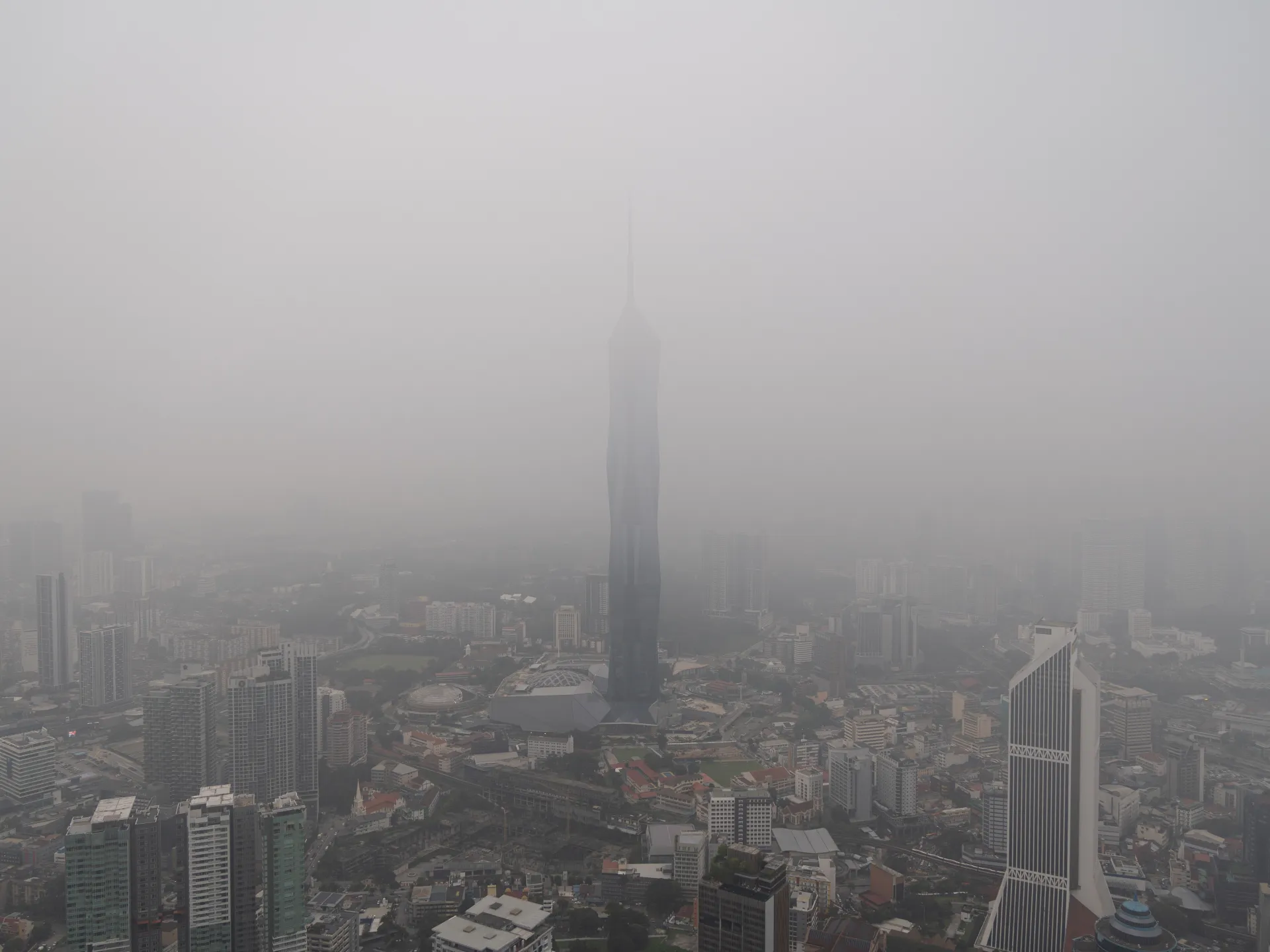
随着印度尼西亚十年来最严重的野火产生的有毒烟霾在过去两个月里笼罩了马来西亚和新加坡的天空,要求追究法律责任的呼声日益高涨。
As toxic haze from Indonesia’s worst wildfires in a decade clouded skies across Malaysia and Singapore over the past two months, a growing clamour of voices has demanded legal accountability.
理论上,一套国内法与国际法交织的拼凑体系,使得东南亚各国政府有可能让污染者为跨境烟霾负责,其中大部分烟霾被归咎于印度尼西亚棕榈油种植园主为开垦土地而焚烧。
In theory, a patchwork of domestic and international laws makes it possible for Southeast Asian governments to hold polluters responsible for cross-border haze, most of which has been blamed on land clearing by Indonesian palm oil plantation owners.
实际上,围绕国家主权的敏感性、缺乏执法机制,以及取证面临的现实困难,使得法律行动举步维艰,甚至不可行。
In practice, sensitivities around national sovereignty, a lack of enforcement mechanisms, and the practical challenges of evidence collection make legal action difficult, if not infeasible.
文件上,东南亚国家承诺共同努力防治跨境空气污染,依据的是2002年签署的《东盟跨境烟霾污染协定》。
On paper, Southeast Asian countries are committed to working together to prevent cross-border air pollution under the ASEAN Agreement on Transboundary Haze Pollution, signed in 2002.
这项具有法律约束力的条约承诺东南亚国家联盟(东盟)11个成员国通过“协调一致的国家努力和加强区域及国际合作”来应对烟霾问题,这一问题已困扰该地区数十年。
The legally binding treaty commits the 11 members of the Association of Southeast Asian Nations (ASEAN) to tackle haze, a recurring issue for decades, through “concerted national efforts and intensified regional and international co-operation”.
然而,该协定并未包含由国际法院等司法机构强制执行的条款——国际法院要求所有当事方均同意接受其管辖权——对条约解释和适用的分歧只能通过谈判解决。条约的落实进度也极其缓慢。
However, the agreement does not contain provisions for enforcement by a judicial body such as the International Court of Justice, which requires all parties to consent to its jurisdiction, and disagreements over interpretation and application can only be settled through negotiation. Implementation of the treaty has also moved at a snail’s pace.
条约的协调办公室设在印度尼西亚首都雅加达,直到今年4月才正式开门办公,距离最初设想已过去近四分之一世纪。
The treaty’s coordinating office, located in the Indonesian capital, Jakarta, only opened this April, nearly a quarter-century after it was envisioned.
“几十年来,应对烟霾的举措主要集中在外交接触、紧急灭火和保护公众健康措施上,”绿色和平东南亚区域战略家王加俊(Heng Kiah Chun,音译)对半岛电视台表示。
“For decades, the response to haze has largely focused on diplomatic engagement, emergency firefighting, and measures to protect public health,” Heng Kiah Chun, a regional campaign strategist for Greenpeace Southeast Asia, told Al Jazeera.
“虽然这些努力是必要的,但它们并未充分解决根本原因,包括森林和泥炭地破坏、不可持续的土地利用方式以及企业问责不力,”Chun说。
“While these efforts are necessary, they have not sufficiently addressed the underlying causes, including forest and peatland destruction, unsustainable land-use practices and inadequate corporate accountability,” Chun said.
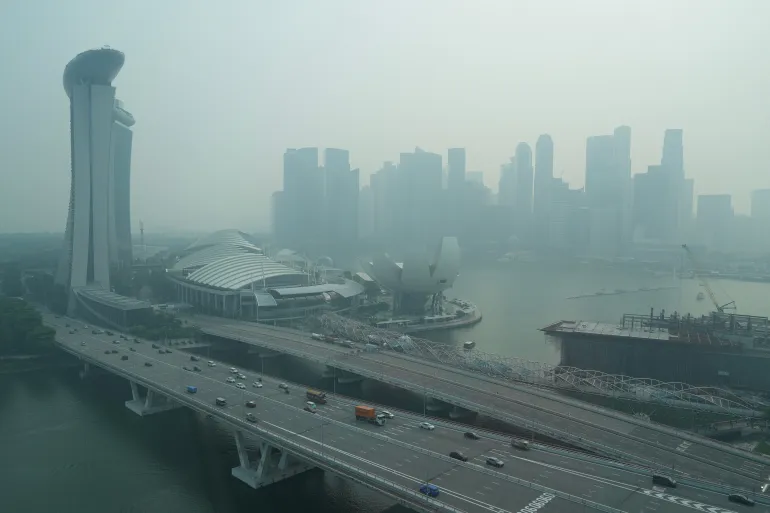
浓雾笼罩新加坡中央商务区后的天际线,摄于2026年10月9日 [David Hu/AP] 马来西亚和新加坡因霾害导致主要人口中心跻身全球空气质量最差榜单前列,但两国均未批评印度尼西亚,转而提供协助灭火;据估计,大火已烧毁群岛内逾200万公顷(约500万英亩)土地。
A thick haze obscures the skyline behind the Central Business District in Singapore, on October 9, 2026 [David Hu/AP] Malaysia and Singapore, where haze has propelled major population centres to the top of global tables for poor air quality, have refrained from criticising Indonesia, instead offering assistance to fight the fires, which are estimated to have burned more than 2 million hectares (about 5 million acres) of land in the archipelago.
雅加达在接受外部援助问题上释放出矛盾信号,官员们在欢迎援助提议与坚称自行应对火灾之间反复摇摆。
Jakarta has given mixed signals on accepting outside assistance, with officials vacillating between welcoming the offers and insisting they can handle the fires themselves.
马来西亚伊斯兰科学大学副教授兼法律专家Mohd Hazmi Mohd Rusli表示,东南亚长期以来对共识与不干涉的强调阻碍了行动。
Mohd Hazmi Mohd Rusli, an associate professor and legal expert at Universiti Sains Islam Malaysia, said Southeast Asia’s long-standing emphasis on consensus and noninterference has hampered action.
“经济利益和外交考量也发挥了作用,”Rusli告诉半岛电视台。
“Economic interests and diplomatic considerations also play a role,” Rusli told Al Jazeera.
“马来西亚和新加坡在处理敏感的双边和地区事务时,一贯倾向于通过外交接触而非直接对抗,这反映了东盟更广泛的协商与共识偏好。”Rusli补充道,与其谈判新的法律框架,东盟应通过独立监测、更明确的合规程序、更强的企业问责以及更有力的国内执法,来强化现有条约。
“Malaysia and Singapore have traditionally favoured diplomatic engagement over direct confrontation in managing sensitive bilateral and regional issues, reflecting ASEAN’s broader preference for consultation and consensus.”Rather than negotiate new legal frameworks, ASEAN should strengthen its existing treaty “through independent monitoring, clearer compliance procedures, greater corporate accountability and stronger domestic enforcement”, Rusli added.
随着外交努力收效甚微,关注点日益转向各国利用具有域外效力的国内法律这一可能性,这种做法由新加坡首创。
With diplomatic efforts having little impact, attention has increasingly turned to the possibility of countries using domestic laws with extraterritorial reach, an approach pioneered by Singapore.
根据2014年《跨境烟霾污染法》,新加坡当局有权起诉在海外从事污染活动的污染者,违规者每天可被处以10万新元(约合7.83万美元)的罚款,最高可达200万新元(约合156万美元)。
Under the 2014 Transboundary Haze Pollution Act, Singaporean authorities are empowered to prosecute polluters for activities taking place overseas, with violators liable for fines of 100,000 Singapore dollars ($78,300) a day up to a maximum of 2 million Singapore dollars ($1.56m).
该法案还授权新加坡国家环境局发出通知,指令公司停止在其土地上焚烧。
The act also enables the city-state’s National Environment Agency to issue notices directing companies to cease burning on their lands.
在今年的野火季节,该局已向10家印尼公司发出此类通知。但迄今为止,尚无公司真正根据新加坡法律被起诉。
The agency has issued such notices to 10 Indonesia-based firms during this year’s wildfire season. But to date, no company has actually been prosecuted under the Singaporean law.
取证挑战 虽然该立法允许当局通过气象数据、卫星图像和地图识别疑似污染者,但如果没有来自印尼的第一手证据,检方在任何案件中都很难确立有罪“超出合理怀疑”。
Evidentiary challenges While the legislation allows authorities to identify suspected polluters through meteorological data, satellite imagery, and maps, prosecutors would likely struggle to establish guilt beyond a reasonable doubt in any case without firsthand evidence from Indonesia.
新加坡国立大学(NUS)法学院环境法专家陈启仁(Alan Khee-Jin Tan,音译)告诉半岛电视台:“只有印尼当局自己调查并对这些公司采取行动,并与新加坡分享证据,才能获得此类直接证据。”
“Such direct evidence can only be obtained if the Indonesian authorities themselves investigate and take action against these very companies and share their evidence with Singapore,” Alan Khee-Jin Tan, an expert in environmental law at the National University of Singapore (NUS) Faculty of Law, told Al Jazeera.
“这些公司最可能的‘辩护’是火灾起于其特许经营区之外,并蔓延至其持有的土地。”马来西亚政府表示可能考虑制定类似新加坡的法律,但警告实施将很困难。
“The most likely ‘defence’ the companies will take is that the fires started outside their concessions and spread into their holdings.”Malaysia’s government has said it could consider legislation similar to the Singaporean law, but cautioned that implementation would be difficult.
2023年,马来西亚政府放弃了针对跨境烟霾立法的提案,理由是难以获取起诉所需的证据。法律行动也有引发外交紧张的风险。
In 2023, the government abandoned proposals for a law against cross-border haze, citing the difficulty of obtaining evidence for prosecution. Legal action also risks inflaming diplomatic tensions.
2016年,新加坡和印尼陷入外交争端,起因是新加坡环境局试图传唤一家与烟霾有关的印尼公司的董事接受询问。
In 2016, Singapore and Indonesia became embroiled in a diplomatic dispute after the city-state’s environmental agency attempted to summon the director of an Indonesian company linked to the haze for questioning.
印度尼西亚时任环境部长西蒂·努尔巴亚·巴卡尔指责新加坡未表现出“相互尊重”,新加坡官方否认了这一说法。最新一季烟霾期间,紧张局势也时有升温。
Indonesia’s then environmental minister, Siti Nurbaya Bakar, accused Singapore of not showing “mutual respect”, a suggestion denied by officials in the city-state. Tensions have flickered during the latest haze season, too.
周三,印度尼西亚总统普拉博沃·苏比安托抨击那些“喜欢侮辱”其国家因火灾问题的国家,同时承诺将揭露他声称也应对危机负责的外国公司。
On Wednesday, Indonesian President Prabowo Subianto hit out at countries that “like to insult” his nation over the fires, while pledging to expose foreign companies that he claimed were also responsible for the crisis.
普拉博沃表示,政府高度重视此事,当局已逮捕被认定纵火的个人,但将“加强我们的应对”。
Prabowo said his government took the issue seriously, with authorities arresting individuals found to have started fires, but it would “step up our response”.
这位印尼领导人的言论是在马来西亚一名政客上周称印尼应因烟霾问题在东盟内被视为“弃儿”之后发表的。
The Indonesian leader’s remarks came after a Malaysian politician last week said that Indonesia should be treated as an “outcast” within ASEAN over the haze.
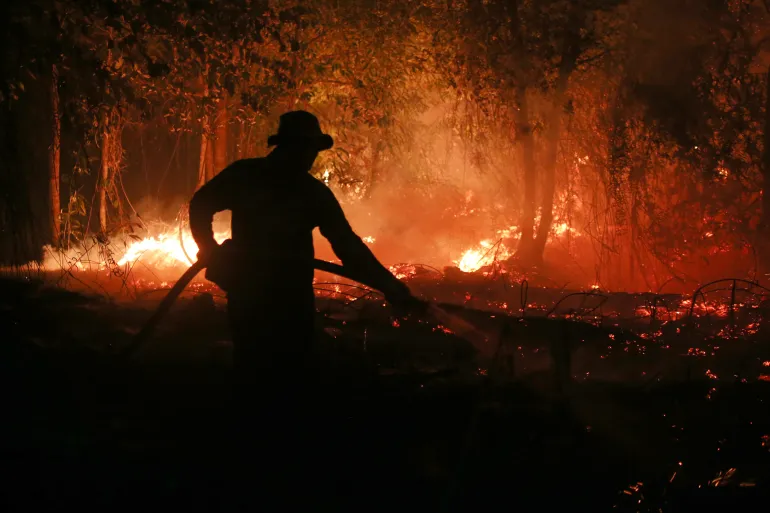
一名消防员于2026年9月5日在印度尼西亚中加里曼丹省普朗皮绍的一片燃烧着的泥炭林中喷水灭火 [Regina Safri/AP] 新加坡国立大学法学专家谭表示,虽然新加坡当局无需雅加达协助即可对印尼公司发起测试性起诉,但除非印尼当局先采取行动,否则他们不太可能这样做。
A firefighter sprays water in an attempt to extinguish a wildfire burning through a peatland forest in Pulang Pisau, Central Kalimantan, Indonesia, on September 5, 2026 [Regina Safri/AP] NUS law expert Tan said that while Singaporean authorities could launch a test-case prosecution against Indonesian companies without Jakarta’s assistance, they are unlikely to do so unless Indonesian authorities act first.
他说:“实际上,他们很可能只会对印尼当局已明确认定并指控为肇事者的那些公司采取行动”,并补充说,起诉失败也可能暴露该立法毫无威慑力。
“Practically, they are likely to proceed only against those companies which the Indonesian authorities have themselves clearly identified and charged as perpetrators,” he said, adding that a failed prosecution could also expose the legislation as toothless.
“否则,新加坡采取的任何行动在印尼人眼中都会显得是单方面的,并可能引发政治争议。” 新加坡管理大学法学副教授陈庆文表示,印尼未能采取更有力行动是解决问题的根本绊脚石,但各国也可以强化自身的法律法规。
“Otherwise, any action that Singapore takes would appear to the Indonesians to be unilateral, and could be politically controversial.”Eugene Tan Kheng Boon, an associate professor of law at Singapore Management University, said Indonesia’s failure to take stronger action was the ultimate stumbling block to a resolution, but countries could also strengthen their own laws and regulations.
谭对半岛电视台表示:“这可能包括要求在该地区销售并用于其他产品的棕榈油等大宗商品,必须获得可持续采购认证。”
“This could include requiring commodities such as palm oil sold in the region and used in other products to be certified to be sustainably sourced,” Tan told Al Jazeera.
他表示:“该地区的消费者还可以抵制购买那些对雾霾负有责任的公司的产品。”
“Customers in the region can also boycott purchasing items from companies that are responsible for the haze,” he said.
“为这些污染企业提供融资的银行也应成为执法打击的目标。”亚洲环境法研究所所长马修·贝尔德表示,该地区最需要的是更强的政治意愿。
“Banks that finance these polluters should also come within the enforcement crosshairs.”Matthew Baird, director of the Asian Research Institute for Environmental Law, said that stronger political will in the region was needed above all else.
贝尔德对半岛电视台表示:“各国政府确实必须坐下来共同研究真正有效的战略选项,就像中国政府为治理北京空气污染所做的那样——他们确实降低了空气污染,但花了30年时间和大量资金。”
“Governments really have to sit together and work on really good strategic options, like the Chinese government did for air pollution in Beijing, where they were able to reduce air pollution – but it took 30 years and a lot of money,” Baird told Al Jazeera.
“东南亚各国政府必须行动起来,还必须促使企业改变行为,这需要时间、努力,可能还需要大量诉讼。”贝尔德说。
“Governments in Southeast Asia have to do it, and they have to get companies to change their behaviour, and that takes time, effort, and probably a lot of litigation,” Baird.
他补充说,这将涉及“追究董事的责任、将董事送进监狱、追究公司的责任,并确保它们履行义务”。“因为在每个国家,焚烧土地实际上都构成刑事犯罪。”
This would involve “holding directors to account, sending directors to jail, holding companies to account, and making sure that they fulfil obligations”, he added. “Because in every country, it is actually a criminal offence to burn land.”