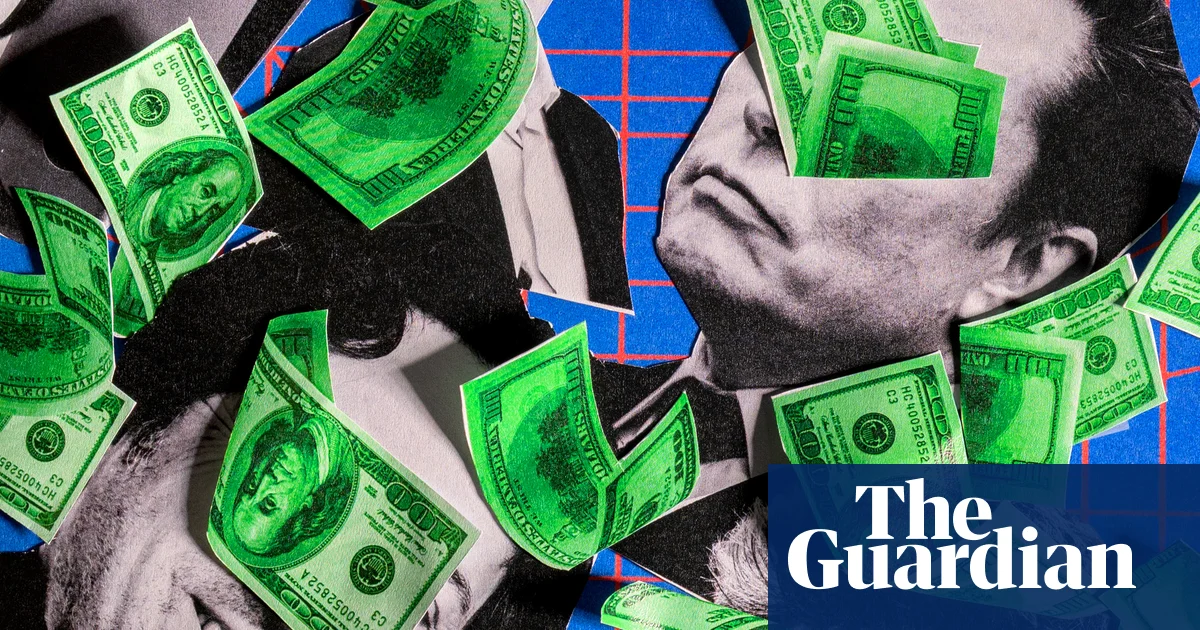
“公众对AI行业的反感已蔓延至其领袖身上。” 插图:Guardian Design/Getty Images数据中心、AI以及对开发这些技术的亿万富翁的反感,让美国人对大型科技公司失望竞选广告以一条清澈、宁静的溪流开场,画面骤变,溪水变成污泥般的褐色,两座混凝土数据中心猛然落在两岸。另一座设施重重砸在宁静的郊区公园上,两座更多的设施碾压着绿色牧场,灾难片般阴森的配乐轰鸣。
‘The public distaste for the AI industry extends to its leaders.’Illustration: Guardian Design/Getty Images Datacenters, AI and distaste for the billionaires developing it has soured Americans on big tech The campaign ad begins with a clear, idyllic stream that suddenly turns sludge-brown as two concrete datacenters slam onto its banks. Another facility thuds down on a peaceful suburban park, and two more crush-green pastures as an ominous soundtrack to a disaster movie blares overtop.
“它们正在吞噬我们的河流。我们的社区。我们的农田,”一位低沉的旁白说道。“因为布伦特·泰勒制定了法律,允许数据中心接管田纳西州。”这则由民主党倾向的“三星政治行动委员会”(Three Star Pac)出资、针对田纳西州共和党国会候选人的攻击广告,是全美150多则聚焦数据中心或人工智能行业的中期选举竞选广告之一。
“They’re coming for our rivers. Our neighborhoods. Our farmland,” a deep-voiced narrator says. “Because Brent Taylor wrote the law allowing datacenters to take over Tennessee.”The attack ad, paid for by the Democrat-aligned Three Star Pac and targeting a Tennessee Republican congressional candidate, is one of more than 150 midterm election campaign commercials across the US focused on datacenters or the artificial intelligence industry.
在辩论会和集会上、在邮寄传单和网络广告中,蓬勃发展的AI行业已占据舞台中央,共和党和民主党候选人都试图说服选民,他们的对手会把这些不受欢迎的设施建在选民自家后院。
At debates and at rallies, in mailers and online ads, the burgeoning AI industry has taken center stage, as both Republican and Democratic candidates try to convince voters that their opponents will put the unpopular facilities in voters’ backyards.
不仅仅是数据中心——公众对AI的焦虑、对开发AI的亿万富翁的反感,以及对监控摄像头等侵入性技术的抵制,已让科技行业成为本选举周期无处不在的“反派”。正如此前的大型制药业,候选人正竭力与大型科技公司划清界限。
And it’s not only datacenters – the public anxiety over AI and distaste for the billionaires developing it, as well as backlash over encroaching tech like surveillance cameras, has turned the tech industry into a ubiquitous villain this election cycle. As with big pharma before it, candidates are straining to distance themselves from big tech.
科技行业的污名甚至迫使知名共和党人背离唐纳德·特朗普的挺AI路线,在得克萨斯州竞选联邦参议员的肯·帕克森呼吁放缓发展。在田纳西州,泰勒的竞选团队播放了自己的电视广告,声称他在科技和数据中心问题上立场强硬。
The stigma of the tech industry has even forced prominent Republicans to break with Donald Trump’s pro-AI party line, with candidates like Ken Paxton, campaigning for US Senate in Texas, calling for a slowdown. In Tennessee, Taylor’s campaign ran its own television spot that claimed he was tough on tech and datacenters.
以科技为主题的竞选广告与支持和反对人工智能的政治行动委员体系同步涌现,这些委员会合计花费数亿美元,以影响选举并支持候选人。惊人的支出规模将科技推到了中期选举的前沿,尽管民调显示,经济、民主和医疗保健等问题在选民中仍被认为更为重要。
The campaign ads focused on tech have sprung up alongside an ecosystem of pro- and anti-AI political action committees, which have collectively spent hundreds of millions of dollars to influence elections and back candidates. The breathtaking amount of spending has pushed tech into the forefront of the midterms, even as polls show issues like the economy, democracy and healthcare still rate as more important among voters.
由科技亿万富翁资助的超级政治行动委员会是本轮选举周期中支出最高的组织之一。由OpenAI总裁格雷格·布罗克曼和风险投资家马克·安德里森成立的“引领未来”已筹集超过7500万美元,以支持科技友好型候选人。埃隆·马斯克向共和党事业投入了3.66亿美元,超过了他在2024年总统选举中的支出。人工智能资金也被注入支持监管的政治行动委员会,以抵消放松监管团体的影响。
Super Pacs funded by tech billionaires are among the top spenders in this election cycle. Leading the Future, formed by OpenAI president Greg Brockman and venture capitalist Marc Andreessen, has raised more than $75m to back tech-friendly candidates. Elon Musk has sunk $366m into Republican causes, more than he spent on the 2024 presidential election. AI money has also been funneled into pro-regulation Pacs seeking to counteract the influence of deregulation groups.
包括马斯克向各个亲共和党政治行动委员会的捐款在内,科技行业及其领袖已花费超过5亿美元,以影响2026年的选举和选民提案。
Including Musk’s contribution to various Republican-aligned Pacs, the tech industry and its leaders have spent more than half a billion dollars to influence elections and ballot proposals in 2026.
如此巨额支出、游说和广告的累积效应是,科技问题和科技行业在中期选举中的渗透程度远超美国以往选举,标志着美国选民对人工智能热潮的反应将迎来首次重大考验。
The cumulative effect of such vast spending, lobbying and advertising is that tech issues and the tech industry have become far more pervasive in the midterms than previously seen in US elections, marking the first major test of how American voters will react to the AI boom.
数据中心与鸟群 对人工智能潜在社会影响的担忧在过去一年中日益加剧,反弹在选民愤怒有具体目标的地方最为激烈。没有哪个目标比科技行业万亿美元基础设施建设的一部分——庞大的数据中心设施——更为突出。尽管竞选活动曾提及人工智能监管和对技术风险的担忧,但候选人反复且具体地将数据中心称为对选民的真实、具体威胁。
Datacenters and Flock Concern over AI’s potential effect on society has grown over the last year, and the backlash has been most intense where there is a physical target for voters’ ire. None of those targets have loomed larger than the sprawling datacenter facilities that are part of the tech industry’s multitrillion-dollar infrastructure build-out. Although campaigns have nodded to AI regulation and fears over the technology’s risks, it is datacenters that candidates have repeatedly and specifically called out as a real, tangible threat to constituents.
“数据中心现在几乎是全国每一场竞选中的议题,”支持人工智能监管组织“公共优先行动”(Public First Action)的负责人、前国会议员布拉德·卡森说。
“Datacenters are now a campaign question in nearly every race in the nation,” said Brad Carson, the head of a pro-AI-regulation group Public First Action and a former congressman.
对数据中心日益增长的敌意也体现在全国范围的抗议和民调中。皮尤研究中心上个月的一项民调显示,自1月以来,认为数据中心对环境、能源成本和生活质量有害的美国成年人比例在各个群体中都急剧上升。只有4%的受访者认为这些设施对环境或家庭能源成本有益。
The growing animosity toward datacenters has also been reflected in nationwide protests and polling. A Pew Research poll from last month showed that the percentage of US adults who believe that datacenters are bad for the environment, energy costs and quality of life has spiked upwards across demographics since January. Only 4% of respondents believe the facilities will be good for the environment or home energy costs.
数据中心已经变得如此“毒化”,以至于一些候选人甚至开始把这些设施当作贬义词来攻击对手。
Datacenters have become toxic enough that some candidates have even begun using the facilities as an epithet to tar their rivals.
“数据中心德里克给亿万富翁和贪婪的公司提供了20亿美元的减税。推高我们的电费,摧毁俄亥俄州农场,”民主党国会竞选委员会针对俄亥俄州共和党候选人德里克·梅林的攻击广告宣称。
“Data Center Derek gave the billionaires and greedy corporations a $2bn tax break. Driving up our electric bills, destroying Ohio farms,” declared a Democratic Congressional Campaign Committee attack ad against Ohio Republican candidate Derek Merrin.
根据政策追踪公司MultiState的数据,美国至少有20名州长候选人呼吁对数据中心实施暂停令,而36场州长竞选中支持这些项目且不要求加强监管的候选人不足10人。
At least 20 candidates for governor across the US are calling for moratoriums on datacenters, according to policy tracking firm MultiState while fewer than 10 candidates across 36 gubernatorial races are backing the projects without any calls for increased regulations.
除了数据中心,公众对能自动扫描车牌的AI驱动型Flock监控摄像头的反对情绪也蔓延到了竞选活动,包括关键摇摆州的竞选。在密歇根州,民主党参议员候选人阿卜杜勒·埃尔赛伊德投放了一则聚焦Flock的广告,指责他的共和党对手迈克·罗杰斯支持这些摄像头,是在推动监控国家。在得克萨斯州,民主党人詹姆斯·塔拉里科也同样公开反对该公司及其数据收集行为。
Along with datacenters, the public backlash against AI-enabled Flock surveillance cameras that automatically scan license plates has also bled into campaigns, including in key battleground races. In Michigan, Democratic US Senate candidate Abdul El-Sayed ran a Flock-focused ad that accused his Republican opponent Mike Rogers of pushing a surveillance state by backing the cameras. In Texas, Democrat James Talarico has similarly spoken out against the company and its data collection.
“Flock公司的摄像头在德克萨斯州根本没有存在的必要,”塔拉里科上个月在一次集会上这样说道。该州的共和党州长格雷格·阿博特出人意料地同意他的观点,并于8月份禁止州政府机构购买Flock公司的摄像头。在其他地方,相关立法不仅针对科技基础设施本身,还针对那些推动这些技术发展的亿万富翁们。在加利福尼亚州,选民正在考虑一项提案:该提案要求对任何净资产超过10亿美元的居民征收一次性5%的财富税。
“Flock cameras have no place in Texas,” Talarico said last month at a rally. The state’s Republican governor, Greg Abbott, surprisingly agrees with him, blocking state agencies from spending on Flock cameras in August Elsewhere, legislation has targeted not just tech infrastructure but the billionaires behind it. In California, voters are considering a ballot measure that would levy a one-time 5% wealth tax on any resident of the state worth more than $1bn.
该州的超级富豪们迅速组织起来反对这项税收措施,他们筹集了超过3.4亿美元的资金,并每天花费超过100万美元来反对这项法案;仅谷歌联合创始人谢尔盖·布林就至少捐出了1.02亿美元来反对这项税收。
The state’s ultra-rich have feverishly mobilized against it, raising more than $340m and spending more than $1m a day to fight the measure. Google co-founder Sergey Brin alone has contributed at least $102m to oppose the tax.
这种对科技行业的普遍抵制让科技行业的领导者们陷入了困境:这些公司不仅面临来自内部和外部的批评,而且如果接受更严格的政府监管或停止数据中心的建设,他们的业务发展将会受到严重威胁。
The collective backlash against the tech industry has put its leaders in a bind. Companies are facing internal and external criticism of their products and politics, but accepting more intense government regulation or halting datacenter construction would threaten their growth.
这种抵制至少导致了一家公司的策略发生了改变——OpenAI在过去几个月里逐渐与“Leading the Future”组织保持距离;布罗克曼也撤回了原本计划向该组织捐赠的2500万美元。然而,马斯克、布林以及其他科技巨头们仍在继续努力,试图影响选民的投票结果。
The pushback has caused a shift in at least one company’s calculus – OpenAI has distanced itself from Leading the Future in recent months, and Brockman backed out of a planned $25m donation to the Pac. Musk, Brin and other tech moguls, however, have doubled down on their efforts to swing votes their way.
“他们遇到的任何问题,都认为只要投入更多资金就能解决,”支持AI监管的组织“Pac Guardrails Alliance”的政治总监查尔斯·布莱特勒说道,“但他们现在意识到,他们的想法遭到了强烈的反对。”
“They have never met a problem that they didn’t think they could solve by throwing more money at it,” said Charles Blaettler, political director of pro-AI-regulation Pac Guardrails Alliance. “They’re realizing there’s an intense backlash to their ideas.”
当前科技行业的政治格局与美国上次举行中期选举时相比已经发生了巨大变化:如今估值高达2万亿美元的Anthropic公司成立仅有一年;OpenAI当时还没有公开发布ChatGPT;马斯克也尚未与唐纳德·特朗普的竞选团队结盟。
AI spending boom and backlash The political landscape of the tech industry is vastly different from the last time the US held midterm elections. Anthropic, now potentially set to go public at a more than $2tn valuation, was just one year old in 2022.
自该时期以来,科技行业变得日益根深蒂固,并决心塑造监管政策。
OpenAI had not publicly released ChatGPT. Musk had not yet allied himself with Donald Trump’s campaign.
与此同时,美国民众对人工智能将影响从个人关系到经济再到选举等一系列议题的负面看法日益浓厚,多项民调显示,民众也普遍反对在社区建设数据中心。据今年早些时候的一项盖洛普民调显示,更多美国人反对在本地区建设数据中心,而反对在本地区建设核电站的人数更少。
The tech industry has become increasingly entrenched in government and determined to shape regulation in the period since. Tech leaders have simultaneously built up immense campaign finance and lobbying arms that have come into full force in this year’s midterms. Meanwhile, Americans feel negatively about how AI will affect a range of issues from personal relationships to the economy to elections, multiple polls show as well as broadly opposing datacenters in their communities.
公众对人工智能行业的厌恶情绪也延伸至其领导人,民调显示美国公众普遍认为执行长如埃隆·马斯克、OpenAI CEO 山姆·阿尔特曼以及 Anthropic CEO 多里奥·阿尔莫代(Dario Amodei)不值得信赖且讨厌。
More Americans oppose a datacenter being built in their area than oppose a nuclear power plant, according to a Gallup poll from earlier this year. The public distaste for the AI industry also extends to its leaders, with polls showing that the US generally views executives such as Musk, OpenAI CEO Sam Altman and Anthropic CEO Dario Amodei as untrustworthy and unlikeable.
“人们对这项技术走向以及谁在掌控它的方向存在着深深的焦虑,”Blaettler 说。“人们感觉自己在生活中已失去任何主体性。”
“There’s this very deep-seated sense of anxiety people have about the direction this technology is taking and who’s in control of it,” Blaettler said. “People just feel like they don’t have any agency in their lives anymore.”
科技行业的巨额支出主要流向了共和党,但也激发了新一类旨在反制“Leading the Future”等团体的亲人工智能监管政治行动委员会(Pac)的兴起。这些亲监管 Pac 奇特地也从人工智能公司和持不同政见的工作者手中获得资金。Anthropic 向 Carson’s Public First Action 捐赠超过 4000 万美元,而 Guardrails Alliance 及其关联非营利组织则筹集了超过 1150 万美元。
The enormous spending from the tech industry has largely flowed to Republicans, but it has also inspired a new category of pro-AI-regulation Pacs that have formed to counter groups like Leading the Future. Some of these pro-regulation Pacs have received money, counterintuitively, from AI companies and workers with different views on how government should oversee the technology. Anthropic contributed more than $40m to Carson’s Public First Action, while the Guardrails Alliance and its associated non-profit have raised more than $11.5m.
在6月纽约第12国会选区的民主初选中,针对这一类型战斗的早期测试之一,亲AI和反AI阵营(包括卡森的阵营)共计花费2400万美元,主要针对主张严格监管的候选人亚历克斯·布雷斯(Alex Bores)。所有支出的结果难以确定,布雷斯在人多的候选人中排名第二,却输给同样主张严格监管的米卡·拉斯希(Micah Lasher)。选举结束后,拉斯希试图与anthropic和OpenAI的支出保持距离。
One of the early tests for this type of battle was in the Democratic primary for New York’s 12th congressional district in June, where pro- and anti-AI groups, including Carson’s, cumulatively spent $24m on the race – largely targeting candidate Alex Bores, who was running on a pro-regulation platform. The result of all the spending was hard to determine, with Bores coming second in a crowded field and losing to similarly pro-regulation candidate Micah Lasher. After the vote, Lasher sought to distance himself from both Anthropic and OpenAI’s spending.
“我有个消息要告诉那两家对本届国会选区结果极为关注的大型AI公司,”拉斯希在6月表示。“我不会再听从你们在保护我们的孩子、我们的工作、我们的环境方面的指示。”
“I have some news for the two big AI companies who’ve taken such an unusual interest in who won this congressional seat,” Lasher said in June. “I won’t be taking my cues from either of you when it comes to protecting our kids, our jobs, our environment.”
虽然亲AI和反AI竞选的支出狂热为本届中期选举中关于科技的争论提供了资金,但亲监管政党的领导人表示,这些议题是选民本就关心且自发围绕的问题。AI产业长期宣传称其产品将带来丰裕和富裕的乌托邦时代,但本届选举显示,普通选民对其能否真正受益于繁荣深感怀疑。
While the spending frenzy on pro- and anti-AI campaigns has helped fund some of the fights over tech in the midterms, leaders of pro-regulation Pacs say these are issues that voters already organically care about and are mobilizing around. The message from the AI industry has for years been that their products will usher in a utopian era of abundance and affluence, but this election cycle has shown there is deep skepticism from everyday voters that they will benefit from the boom.
“如今大街上的人大多对AI持负面态度,”卡森说。“这已经是常态。”
“It’s now a world where most people on the street have a view about AI,” Carson said. “And it’s mostly negative.”