
捷克决策者面临艰难抉择,需决定下月是否加息,在应对全球压力与避免进一步推高已大幅上涨的市场借贷成本之间权衡,捷克央行副行长扬·弗赖特(Jan Frait)表示。
Czech policymakers face a tough decision on whether to raise interest rates next month, weighing a response to global pressures without adding fuel to a robust jump in market borrowing costs, according to a deputy central bank governor.
在时隔四年于6月首次加息后,布拉格的央行官员将于11月5日讨论是否再度收紧政策。弗赖特称,触发上次加息的国内因素依然存在,只是“略有减弱”,但辩论可能集中在能源成本上升带来的风险加剧上。
After the first hike in four years in June, central bankers in Prague will discuss whether to tighten policy again on Nov. 5. While the domestic factors that triggered the previous increase still exist, albeit “slightly softer,” the debate will likely center on intensified risks from higher energy costs, Jan Frait said.
弗赖特周三在接受采访时表示,加息基准利率的理由“相对充分”,但官员们也必须考虑更高的市场利率如何收紧融资条件及其对实体经济的影响。会议前局势仍可能变化,结果尚非“板上钉钉”。
The arguments for raising the benchmark are “relatively strong,” but officials also have to consider how higher market rates are tightening financing conditions and their impact on the real economy, Frait said in an interview on Wednesday. The situation can still change before the meeting and the outcome isn’t a “done deal” yet.
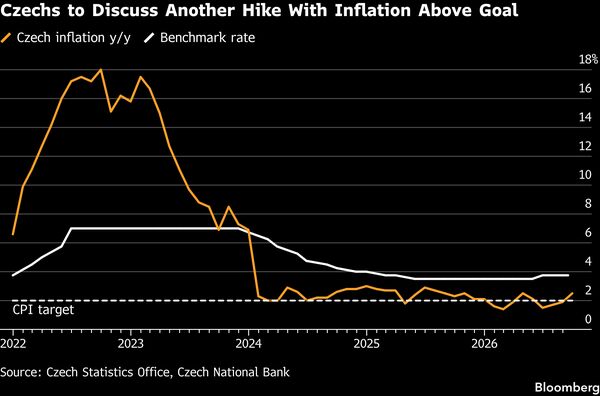
他说:“显然我们将讨论是否加息,但会非常审慎,因为也存在不利因素。辩论可能主要围绕全球经济和地缘政治局势带来的通胀压力。我们将权衡金融市场的发展在多大程度上缓解了这些潜在的外部通胀压力。” 捷克通胀上月突破2%目标,受密切关注的核心通胀升至3.1%。这加上石油和天然气价格近期飙升,促使一些分析师修正利率预期,预测11月将加息25个基点至4%。
“It’s clear we will discuss whether to increase rates or not, but very carefully, because there are also factors against it,” he said. “The debate will be probably mainly about inflationary pressures from the global economy and the geopolitical situation. And we will weigh how much the developments in financial markets are mitigating these potential external inflationary pressures.”Czech inflation breached the 2% target last month, with the closely watched core measure rising to 3.1%. That, combined with a fresh spike in prices for oil and natural gas, has prompted some analysts to revise their outlook for rates and predict a quarter-point hike to 4% in November.
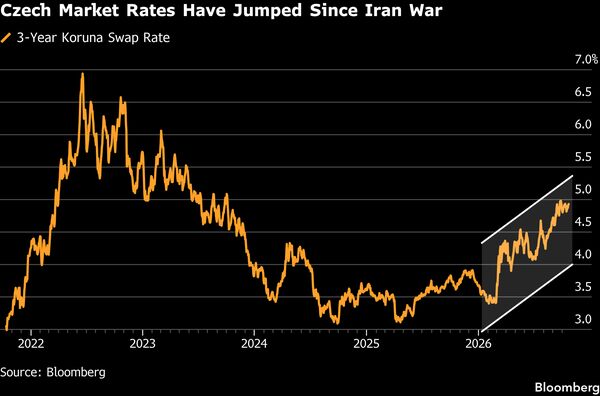
不过,弗赖特表示,相对较高的短期利率和长期市场利率正带来限制性融资条件,未来可能成为抑制通胀的因素。作为抵押贷款基准的三年期掉期利率自伊朗战争爆发以来已上涨约150个基点,本周交投于4.9%附近。
Still, Frait said that relatively high short-term rates and long-term market rates are delivering restrictive financing conditions and may be an anti-inflationary factor down the line. The three-year swap rate, a benchmark for mortgages, has increased by about 150 basis points since the start of the Iran war, trading near 4.9% this week.
最新数据仍显示信贷活动相对强劲,尽管新增抵押贷款已出现一些放缓的早期迹象,Frait表示。较高的市场利率可能进一步抑制住房贷款,但企业贷款(包括投资贷款和经营性贷款)依然相当强劲,这是保持谨慎的理由。
The latest data still show relatively strong credit activity, although there are some early signs of slowing dynamics in new mortgages, Frait said. Higher market rates may further curb housing loans, even as corporate lending, both investments and operating credit, remains quite robust and is a reason for continued caution.
Frait表示:“我们既不能也不愿忽视能源价格,但应避免为国内经济中看起来已经过度上涨的长期市场利率再添把火。”他此言旨在反驳市场对未来一年将大幅加息的押注。
“As much as we can’t and we will not ignore energy prices, we should avoid adding more fuel to what already looks like excessive increases in longer market rates in the domestic economy,” said Frait, pushing back against market bets on aggressive hikes over the next year.
据这位副行长称,再等待一段时间的风险并不大,因为短期和长期利率已经相当高,加上克朗依然强劲,其综合效应是抑制通胀的。
The risks from potentially waiting for a bit longer aren’t very strong, because short-term and long-term rates are already quite high and their effect, in combination with the still strong koruna, is anti-inflationary, according to the deputy governor.
他说:“我不认为我们面临犯重大即时错误的风险。但如果我们看到贷款活动没有放缓、国内需求保持强劲且工资要求在增长,当然我们将不得不做出反应。”央行还需要评估国外利率的市场预期,尤其是主要经济体的预期,因为它们可能影响克朗汇率。强势货币正发挥抑制通胀的作用,但Frait表示,“不合理”地试图不惜一切代价通过利率差进一步推强克朗。
“I don’t think we are facing the risk of making a major immediate error,” he said. “But if we see that lending activity isn’t slowing, domestic demand remains strong and wage demands are growing, of course we will have to react.”The central bank also needs to assess market expectations for rates abroad, especially in major economies, because they may affect the koruna’s exchange rate. A strong currency is having an anti-inflationary effect, but it “doesn’t make sense” to try to strengthen the koruna further via the interest rate differential “at any cost,” Frait said.
他说,市场定价显示未来12个月将加息四次、每次25个基点,“有点令人费解”,且不一定反映出对政策利率走向的真实预期。相反,这种定价可能部分与市场的某些流动性问题有关,或与对某些分析模型结果的机械套用有关。
Market pricing showing four 25 basis-point rate hikes over the next 12 months “is a little bit of a mystery” and it doesn’t necessarily reflect true expectations about where the policy rate will be, he said. Rather, the pricing could be partially related to some liquidity issues in the market or to mechanical application of outcomes of some analytical models.
“至少目前,我认为没有理由上调利率100个基点,”弗赖特说道。“如果经济继续保持良好的发展势头、保持相对强劲和有韧性,而全球通胀压力依然存在的话,即便是上调50个基点也会显得有些突然(即:这样的加息幅度可能会对经济造成不必要的冲击)。”
“I don’t see reasons for 100 basis points, at least for now,” Frait said. “If the economy remains in a favorable mode, stays relatively strong and resilient, and at the same time global inflation pressures persist, even 50 basis points would be a little bit abrupt for me.”