美国对亚洲的原油出口量即将创下多年来的新低——伊朗战争扰乱了全球航运秩序,导致前往亚洲的原油运输费用飙升至近8000万美元(每桶)。
US crude oil exports to Asia are set to hit multi-year lows after the Iran war disrupted global shipping and pushed the cost to lease a tanker for the Pacific journey to a record of almost $80 million.
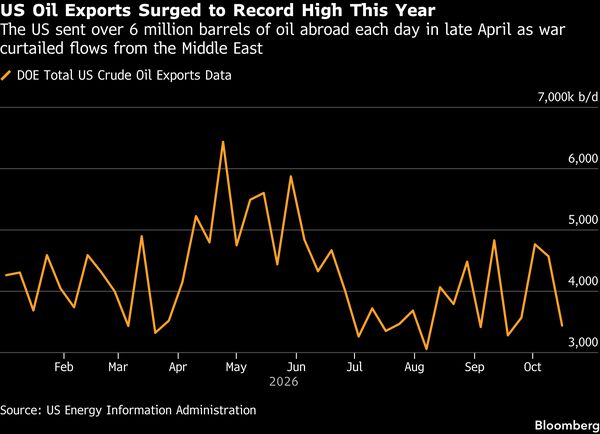
据不愿公开姓名的交易员透露,亚洲炼油厂本月订购的11月到货的美国原油数量大幅减少了约50%,降至2400万至2600万桶。如果这种订单减少的趋势持续到月底,根据Kpler和Vortexa的船舶追踪数据,这将是七年来的最低水平。
Asian refinery orders for US crude for delivery in November tumbled roughly 50% to 24 million to 26 million barrels this month sequentially, according to traders who asked for anonymity because they weren’t authorized to publicly comment. If that pace of orders holds through the end of this month, it would mark a seven-year low, based on ship-tracking data from Kpler and Vortexa.
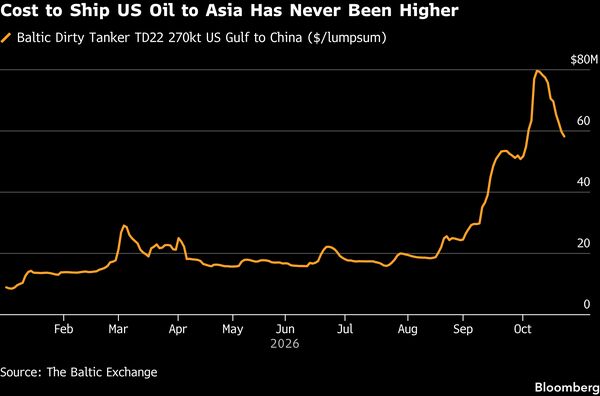
根据波罗的海交易所(Baltic Exchange)的数据,自2月底美伊冲突爆发以来,从美国墨西哥湾沿岸运往中国的原油运输费用已上涨了两倍多,截至周四已达到近6000万美元;月初时这一费用甚至达到了7960万美元——在冲突发生前的五年里,运输费用平均仅为每桶800万美元左右。
The tanker rate along the US Gulf Coast-to-China route has more than tripled since the US-Iran conflict erupted in late February to almost $60 million as of Thursday, according to Baltic Exchange figures. Earlier in the month, it touched $79.6 million, an unprecedented ruction in a market where rates averaged less than $8 million in the half decade before the conflict.
目前,租用大型原油运输船进行为期30天的运输所需的费用相当于建造一艘新船舶成本的一半。这些高昂的运输费用尚未包括原油本身的价格(目前原油价格约为每桶100美元)。
As it stands, leasing the largest class of crude carriers for the 30-day voyage is equivalent to half the cost of building a brand-new vessel. Those eye-watering rates doesn’t include the cost of the oil itself, which is trading around $100 a barrel.
“目前市场最关注的问题就是运输费用,”Valero Energy公司石油交易部门负责人Randy Hawkins在分析师电话会议上表示,“由于运输费用过高,炼油厂从墨西哥湾沿岸向亚洲运输每桶原油的实际成本高达30至35美元,是去年的七倍。”
“The main story right now in the market is freight rates,” Randy Hawkins, Valero Energy Inc.’s head of oil trading, said during as conference call with analysts. Tanker rates are so inflated that refiners are effectively spending $30 to $35 to haul each barrel of crude from the Gulf Coast to Asia, or as much as seven times what they shelled out last year, Hawkins said.
虽然11月交易周期的结束并非绝对的截止日期,这为交易者留下了在最后时刻抢购原油的机会;不过至少有一位要求匿名的市场参与者认为,11月运往亚洲的美国原油订单数量在交易周期结束后可能会回升至4000万桶左右。不过,Vortexa对这种市场逆转的可能性持怀疑态度。
To be sure, the end of the November trading cycle isn’t a hard deadline, which leaves some leeway for traders to snap up last-minutes cargoes. At least one market participant who asked to remain anonymous said Asia-bound US cargoes for November may recover to as much as 40 million barrels in post-cycle trades. Vortexa, however, is skeptical that such a turnaround is imminent.
“目前我们没有看到任何迹象表明短期内原油产量会大幅增加,从而导致价格大幅上涨,”Vortexa公司的资深分析师罗希特·拉托德(Rohit Rathod)表示。亚洲需求的下降似乎正在对美国原油价格产生连锁反应。
“We don’t currently see evidence of a near-term surge that would push those volumes significantly higher,” said Rohit Rathod, a senior Vortexa analyst. The drop in Asian demand appears to be rippling across US crude pricing.
根据Link Data Services的数据,截至周三,在Magellan East Houston交易中心,用于出口的二叠纪盆地原油价格比基准期货合约高出25美分,而六周前这一价格还超过了3美元。
Export-bound Permian Basin oil was trading for 25 cents above the benchmark futures contract at the Magellan East Houston hub as of Wednesday, down from more than $3 six weeks earlier, according to Link Data Services.
从墨西哥湾深水井中开采的“Mars”级原油(属于中等酸度、适合出口的原油类型,其性质与中东原油相似)的价格溢价已从3月底的17.50美元骤降至6美元。
Medium sour export grade Mars, which is pumped from deepwater wells in the Gulf of Mexico and is similar to Middle Eastern crude, has seen its premium to futures plunge to $6 from $17.50 in late March.
Valero公司的霍金斯(Hawkins)指出,阻碍全球油轮运力供应的一个因素是:在波斯湾,越来越多的小型油轮被用于运输原油;这些小型油轮在霍尔木兹海峡遭遇伊朗袭击的风险较低。这些小型油轮将原油运送到阿曼湾后,再由更大的油轮将原油转运出去。
Valero’s Hawkins said one factor hindering global tanker availability has been the increased use of smaller vessels to pick up crude in the Persian Gulf that are less likely to be hit by Iranian fire in Strait of Hormuz. Once they’ve traversed the waterway, their cargoes are transferred to larger vessels waiting in the Gulf of Oman.
霍金斯表示:“在阿曼湾进行的这种‘船对船’原油转运方式效率极低,严重影响了全球航运效率,导致运输相同数量的原油需要更多的油轮。此外,保险费用和高昂的燃料成本也在推高运输成本。”
“The inefficient process of this ship-to-ship transferring that they’re doing of crude oil in the Gulf of Oman is really tying up global shipping and to require more tankers to move the same amount of oil,” Hawkins said. Insurance rates and high fuel costs also are driving up freight costs, he added.
Vortexa公司的拉托德进一步指出:“导致原油价格波动的主要因素仍然是高昂的运输成本,这继续挤压了长途运输的套利空间。因此,亚洲买家从美国墨西哥湾沿岸采购原油的积极性已经减弱。”
“The primary factor remains high freight costs, which continue to squeeze arbitrage economics for long-haul routes,” Vortexa’s Rathod said. “The incentive for Asian buyers to source from the US Gulf Coast has diminished.”