西班牙瓦伦西亚:近期欧洲的抗议浪潮留下了两个极具冲击力、在网络上疯传的暴力与欢愉并存的场景。当利摩日历史悠久的市政厅陷入火海时,新世界管弦乐团正在巴黎市中心的共和国广场演奏古典音乐(直到音乐家们被警察催泪瓦斯驱散)。
VALENCIA, Spain: The recent wave of protests in Europe have left us with two striking, viral spectacles of violence and joy. As Limoges’ historic town hall went up in flames the Orchestre du Nouveau Monde was playing classical music in Paris’ central Place de la Republique (until the musicians were tear-gassed by police, that is).
这两个场景提供了截然不同的视角来审视抗议活动。燃烧的市政厅呈现出一幅极具冲击力的毁灭图景;管弦乐团则展现了反权威的集体团结。两者都无法讲述完整的故事,但它们的对比引发了重要问题:哪个画面将来代表这场抗议?谁决定我们看到什么?
Both scenes offer radically different ways of seeing the protests. The burning town hall offers a powerful image of destruction; the orchestra, of anti-authoritarian collective solidarity. Neither tells the whole story, but their contrast raises important questions: Which image will come to represent the protests, and who decides what we see? France’s demonstrations began with students protesting deteriorating school conditions, including staff shortages and dilapidated buildings.
法国的示威活动始于学生抗议学校条件恶化,包括人手短缺和楼宇破败。但抗议迅速与对生活成本和公共服务的更广泛愤怒交织在一起。
But they quickly intersected with broader anger over living costs and public services.
这场动荡也是更广泛的欧洲时刻的一部分。同一个周末,西班牙、意大利、比利时、葡萄牙和阿尔巴尼亚民众走上街头。诉求包括工资过低、能源价格上涨和住房负担不起,每个国家都有其特定背景。
The unrest also formed part of a wider European moment. On the same weekend, people took to the streets in Spain, Italy, Belgium, Portugal and Albania. Grievances include low wages, rising energy prices and unaffordable housing, each within its own national context.
这些是独立的动员,而非单一的协调运动。然而,它们揭示了在万物——包括大规模抗议运动——都可能“病毒式传播”的时代,不同斗争是如何被呈现的。集会还是骚乱?关于意义的争夺始于语言。
These were separate mobilisations, not a single coordinated movement. Yet they reveal how different struggles are being represented in an age where everything – including a mass protest movement – can go viral. A RALLY OR A RIOT? The battle over meaning starts with language.
周一(10月19日),欧盟委员会谴责抢劫行为“不可接受”,同时强调必须保护和平抗议。
On Monday (Oct 19), the European Commission condemned looting as “unacceptable” while stressing that peaceful protest must be protected.
在欧洲议会,中间偏右的欧洲人民党在欧洲保守派和改革主义者的支持下,将动荡定性为意识形态威胁,提议举行一场题为“法国、意大利和比利时:激进极左翼团体最新的反民主暴力行径”的辩论。
In the European Parliament, the centre-right European People’s Party, backed by the European Conservatives and Reformists, has framed the unrest as an ideological threat, proposing a debate titled “France, Italy and Belgium: Latest anti-democratic violence by radical far-left groups”.
这些干预反映了一场更广泛的争论:示威活动究竟应被主要理解为社会不满的表达,还是对公共秩序的挑战。欧洲各国政界领袖一直试图主导这场辩论。
These interventions reflect a broader contest over whether demonstrations should be understood primarily as expressions of social grievances, or as challenges to public order. Political leaders across Europe have sought to steer this debate.
在法国和意大利,埃马纽埃尔·马克龙和焦尔吉娅·梅洛尼区分了民众的示威权利与暴力不法分子。
In France and Italy, Emmanuel Macron and Giorgia Meloni distinguished between people’s right to demonstrate and violent delinquents.
然而,其他政客如法国极右翼领导人玛丽娜·勒庞则将责任归咎于极左翼和移民。在西班牙,马德里大区主席伊莎贝尔·迪亚斯·阿尤索指责“反民主左翼”,而阿尔巴尼亚社会党籍总理埃迪·拉马则称抗议者被“反法西斯主义”激进化。
However, other politicians such as French far-right leader Marine Le Pen have blamed the far left and immigrants. In Spain, Madrid’s regional leader Isabel Diaz Ayuso pointed to the “anti-democratic left”, while Albania’s socialist Prime Minister Edi Rama described the protesters as being radicalised by “antifa”.
我们给这些集会起的名字——集会、骚乱、抗议——至关重要,因为它塑造了公众和政策层面对民主社会中何为合法的认知。这进而决定了人们将接受何种应对方式——特别是何种程度的暴力和镇压——来处理这些活动。
The name we give to these gatherings – rally, riot, protest – matters greatly, as it shapes public and policy perceptions of what is legitimate in democratic societies. This, in turn, decides what kind of response – in particular what level of violence and repression – people will accept in addressing them.
无论媒体的政治立场如何,在政治话语和主流媒体中,破坏性抗议通常都被负面呈现。其做法是将抗议与暴力、意识形态极端主义和对民主合法性的威胁联系起来,从而抹黑抗议者及其诉求。
Disruptive protests are typically presented negatively in both political discourse and in the mainstream media, regardless of an outlet’s political stance. This happens by connecting protest to violence, ideological extremism and threats to democratic legitimacy, thus discrediting protesters and their demands.
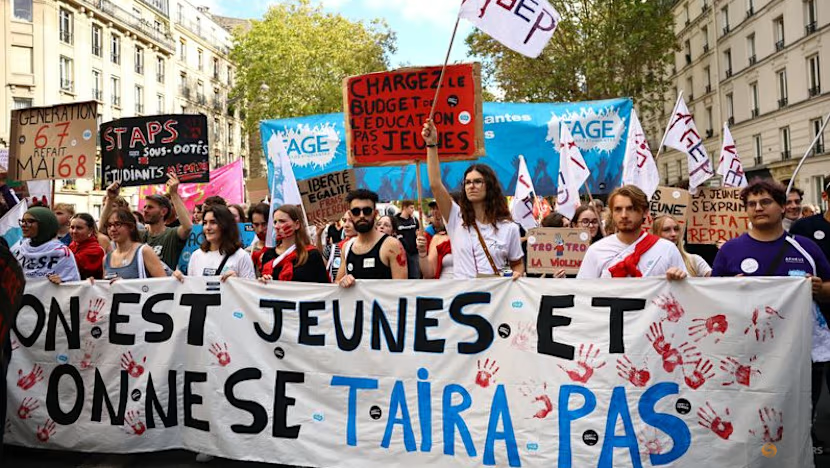
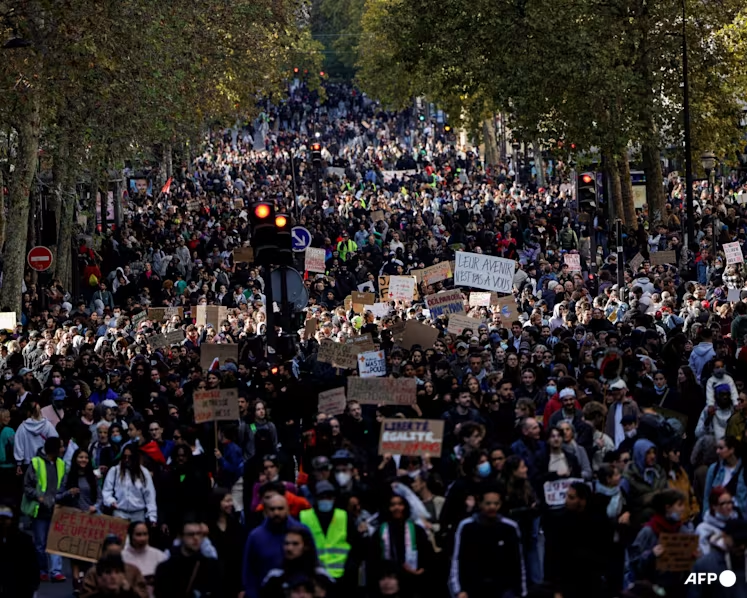
这意味着孤立的暴力事件可以代表整个示威或运动。10月17日,超过50万抗议者走上法国各地街头,但这些历史性的、和平的示威活动完全被随后发生的抢劫报道所掩盖。
This means isolated violence can come to represent an entire demonstration or movement. On Oct 17, over half a million protesters took to the streets across France, but these historic, peaceful demonstrations have been completely eclipsed by media coverage of the looting that ensued.
2026年10月17日,抗议者在巴黎游行,示威反对“生活成本高企”,这是全国动员号召的一部分,汇聚了表达愤怒的各方群体。
Protesters march during a demonstration against the "high cost of living", in Paris on Oct 17, 2026, as part of a nationwide call for mobilisation bringing together various groups expressing their anger.
Z世代抗议符号 在共和国广场,新世界管弦乐团汇聚了数百名音乐家,演奏了《贝拉恰奥》等广为人知的反法西斯颂歌,以及《复仇者联盟》和《饥饿游戏》的配乐。
GEN Z PROTEST SYMBOLS At Place de la Republique, the Orchestre du Nouveau Monde brought together hundreds of musicians to play popular, well-known pieces like the anti-fascist anthem Bella Ciao, along with songs from The Avengers and The Hunger Games.
这场音乐会当然没有让冲突消失。它提供的是另一种视角,不再仅仅将其视为警察与混乱人群的对抗,而是将其视为一场集体的抵抗表演。
The concert did not, of course, make the conflict disappear. What it offered was another way to see it, not simply as a confrontation between police and disorderly crowds, but as a collective performance of resistance.
Z世代的文化符号在制造病毒式传播的奇观方面也发挥了关键作用。在法国,学生们装扮成蝙蝠侠、查基等动漫角色现身。有人装扮成“佩佩蛙”抗议,或手持《海贼王》海盗旗,将欧洲的示威活动与全球Z世代抗议的符号联系起来,从波特兰到加德满都。
Gen Z’s cultural symbols have also played a key role in generating viral spectacles. In France, students have appeared dressed as Batman, Chucky and other anime characters. People have protested dressed up as Pepe the Frog or holding the One Piece pirate flag, connecting Europe’s demonstrations to the symbols of global Gen Z protests, from Portland to Kathmandu.
一些参加10月17日抗议活动的学生告诉《世界报》:“生气没用,所以我们不如带着微笑去做。”
Some students attending the October 17 protests told Le Monde “there’s no point in getting angry, so we might as well do it with a smile”.
这正是关键所在:无论是梗图还是奇观,都能将快乐、幽默和俏皮置于中心,让不满在抗议者自己的条件下变得可见,并产生能与负面媒体报道抗衡的病毒式传播图像。
And that is precisely the point: Both memes and spectacle can put joy, humour and playfulness at the centre, making grievances visible on the protesters’ own terms and generating viral images that compete with negative media coverage.
利摩日的大火和巴黎的音乐会并非相互竞争的真相,两者也不应相互抵消。这些事件的共同点在于将抗议构建为病毒式传播的奇观,为摄像机、数字平台和遥远的受众精心策划。
The fire in Limoges and the orchestra in Paris are not competing truths, and neither should cancel the other out. What these events have in common is the framing of protests as viral spectacles, staged for the cameras, digital platforms and distant audiences.
燃烧的建筑和大型音乐会易于被镜头捕捉,而围绕住房、生活成本和公共服务恶化的斗争则不然。理解抗议因此意味着要看清传播最远、最快、最容易的那幅图像之外的东西。这意味着要追问是谁挑选了它们,当它们病毒式传播时,服务于谁的叙事。
A burning building and a massive concert are easy to capture on camera, while struggles over housing, the cost of living and the deterioration of public services are not. Understanding protest therefore means looking beyond the image that travels furthest, fastest and most easily. It means asking who selected them, and whose account they serve when they go viral.
萨拉·加西亚·桑塔马里亚是瓦伦西亚大学新闻学助理教授。本评论首发于《对话》。
Sara Garcia Santamaria is Assistant Professor in Journalism Studies at the Universitat de Valencia. This commentary first appeared on The Conversation.