法国正陷入金融危机,这一点很明确。但究竟为何如此,却并不那么清晰。
France is in a financial crisis. That much is clear. What isn’t so clear is exactly why.
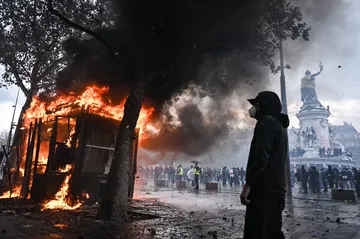
即便如此提问也显得有些荒唐。上周末的破坏和暴力令人震惊,即便考虑到法国人向街头和路障进发的著名倾向。明年总统选举最有可能的赢家是玛丽娜·勒庞,她从父亲手中继承了法国的极右翼运动——其父是一名毒害性的否认大屠杀者和纳粹同情者。她最接近的竞争者是老资格的左翼硬派社会主义者让-吕克·梅朗雄,他曾提议焚烧政府债务。投资者会逃离这样一个国家,难道不是显而易见吗?
This seems silly even to ask. The destruction and violence last weekend were appalling, even given the famous French willingness to take to the streets and the barricades. The most likely winner of next year’s presidential election is Marine Le Pen, who inherited France’s far-right movement from her father, a poisonous Holocaust denier and Nazi-sympathizer. Her closest competition comes from the veteran hard-left socialist Jean-Luc Melenchon, who has proposed setting fire to government debt. Isn’t it obvious that investors would flee from such a nation?
但情况并非如此简单。法国债务的收益率仍低于英国(本周之前甚至低于美国)的收益率。其赤字占国内生产总值的比重仅为美国的一半左右。中国的初级赤字更高。政府债务略高于国内生产总值,且高于欧元区的平均水平。意大利的则高得多。此外,如果真是债券警戒者愤怒的根源,他们的目标本应是日本,因为日本的政府债务已超过国内生产总值的三倍。
But it’s not that clear. The yield on French debt is still lower than that of the UK (and until this week, lower than US yields). Its deficit, as a share of gross domestic product, is barely half that of the US. China operates a higher primary deficit. Government debt is slightly more elevated than GDP, and above the average for the euro zone. Italy’s is much higher. Besides, if this were really what was making the bond vigilantes mad, their target should be Japan, where government debt is more than triple GDP.
法国仍受益于其能够以极低利率借款的优势,因此其利息支出占国内生产总值的比重也低于许多其他国家。超过三分之二的电力来自核能(而德国为零),这使其在当今最严重的成本上升方面,比欧洲其他任何国家都更不易受到冲击。
France is still benefiting from the absurdly low yields at which it was able to borrow, so its interest payments are also lower as a share of GDP than many others. With more than two-thirds of its electricity generated by nuclear power (compared to zero in Germany), it is less exposed to the most serious rising cost of the day than any other country in Europe.
法国的政治局面丑陋不堪,选民内部的深层分裂(尤其是由移民问题引发的分裂)必将在明年春天迎来清算时刻。但法国绝非孤例。德国的“选择党”在最近几周赢得了一场州选举,看起来对国际市场的敌意甚至更甚。然而,意大利总理梅洛尼执政四年的经验表明,即使是来自比勒庞更具法西斯色彩血统的激进右翼民粹主义者,一旦掌权也能并且确实会表现得务实。
France’s politics are hideous, and the deep divisions within the electorate (driven in particular by immigration) must come to a reckoning next spring. But it’s scarcely alone in this. Germany’s Alternative für Deutschland, which has won a state election in recent weeks, looks even more hostile to international markets. However, the experience of four years’ rule in Italy by Giorgia Meloni, who comes from an even more alarmingly fascist lineage than Le Pen, shows that aggressive right-wing populists can and do behave pragmatically once in power.
在学生抗议演变为纵火和破坏活动之前,该国的债务已遭受全面的投机性攻击。这究竟是否改善了勒庞的民调表现尚不清楚,但预测市场早已将她视为热门人选,且立场未动。
The nation’s debt was already under full-blooded speculative attack before student protests spiraled into arson and vandalism. It’s not yet clear whether this has improved Le Pen’s polling performance, but prediction markets already had her as favorite and haven’t budged.
平实地说,这场危机长期以来一直是潜伏的威胁,之所以全面爆发,是因为美国债券收益率大幅上升(这既非马克龙总统之过,也非法国任何他人之过)迫使全球借贷方的核算逻辑发生转变。这笔账对法国算不清,因为其福利国家显而易见地负担不起,最重要的是因为它身处欧元区。欧元的根本缺陷依然未修复,即使在2010至2012年那场生存危机之后也是如此——这意味着法国的问题在欧洲其他地方重演的风险切实存在。
Prosaically, this crisis was long a simmering threat, and only boiled over because a sharp rise in US bond yields (no fault of President Emmanuel Macron or anyone else in France) has forced a shift in the mathematics for borrowers across the world. That arithmetic doesn’t add up for France because its welfare state is plainly unaffordable, and most importantly because it is part of the euro zone. The euro’s fundamental flaws remain unfixed, even after the existential crisis it suffered from 2010 to 2012 — which means there is a real risk that French problems will be repeated elsewhere in Europe.
法国的福利国家 向公民征收的税收很多。税收占GDP的44.2%,为主要发达国家之最。这扼杀了通过增税化解危机的任何希望。
The French Welfare State France collects a lot from its citizens. Tax takes 44.2% of GDP, the most of any major developed country. That thwarts any hope to resolve a crisis with tax hikes.
法国政府给出的回报一直极为慷慨,甚至可以说过于慷慨。退休年龄为62岁,是所有大型发达经济体中最小的。美国和日本要等到67岁。来自强硬左翼和右翼的抗议迫使马克龙政府放弃将退休年龄提高到64岁(以国际标准衡量仍然很低)的计划,直到明年大选之后。法国并非唯一一个人口老龄化、越来越难以负担养老金的国家,但法国的慷慨以及反对削减福利的激烈政治阻力,使相关数字特别难以协调。
The state has been extremely — even exceedingly — generous in return. The retirement age is 62, the lowest of any of the biggest developed economies. The US and Japan make people wait until 67. Protests from the hard left and right forced the Macron government to back down from a plan to raise this to 64 (still low by international standards) until after next year’s election. France is not unique in having an aging population that is growing ever harder to finance, but its largesse and the intense political opposition to rolling it back make the numbers particularly hard to reconcile.
这些承诺使巴黎方面几乎没有回旋余地,尽管其他国家的财政问题更为明显。法国最大的障碍是自1999年以来,它一直没有控制自己的货币。几十年来,民众一直对伴随而来的高生活成本感到愤怒,这种愤怒越来越多地蔓延到街头。
These commitments give Paris very little room for maneuver, even if other countries have a more obvious financial problem. Its greatest handicap is that since 1999, it hasn’t controlled its own currency. The citizenry has been angry for decades about the accompanying high cost of living that is increasingly spilling into the streets.
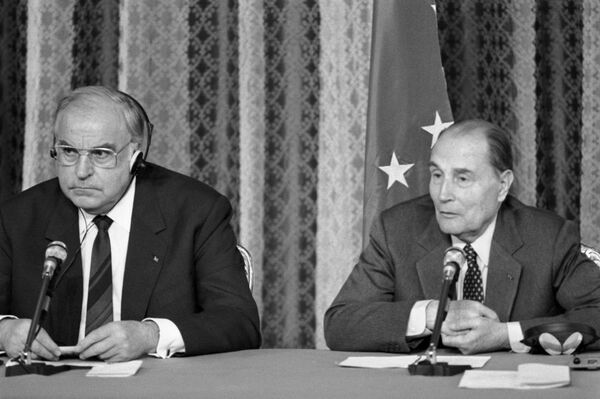
法国是创建欧元的领导者;1990年,时任法国总统弗朗索瓦•密特朗要求建立货币联盟,作为同意两德统一的条件。作为一种政治概念而非经济概念,共同货币将确保一个更大、更强大的德国把欧洲其他国家的利益放在心上。
The Euro Zone France was a leader in creating the euro; monetary union was the demanded by President Francois Mitterrand in 1990 in return for agreeing to German reunification. A political concept more than an economic one, the common currency would ensure that a bigger and more powerful Germany kept the interests of the rest of Europe at heart.
但欧元始终不完整,因为单一货币没有伴随共同的财政政策。全球金融危机后,由于经济衰退导致税收减少,以及需要支撑持有大量欧洲政府债券的受困银行,外围国家陷入预算困境,欧元的结构性缺陷暴露无遗。
But it was always incomplete, as there was no common fiscal policy to go with the single currency. Once peripheral countries ran into budget difficulties after the Global Financial Crisis, thanks to lower tax revenues in the recession and the need to prop up stricken banks that held huge quantities of European government debt, the structural flaw was laid bare.
通过禁止个别政府通过货币贬值来解决债务问题,欧元区让其成员国受到比英国或瑞士等欧元区以外国家严格得多的金融市场纪律约束。
By barring individual governments from devaluing their currency to deal with a debt problem, the euro zone subjected its members to much tighter financial market discipline than countries outside it, like the UK or Switzerland.
例如,2011年西班牙经历了一场严重危机,导致政府垮台,而当时其未偿主权债务仅占GDP的40%。英国——当时也是欧盟成员国——的对应数字是94%。但英国保留了自己的货币,从未受到冲击。事实上,欧元区进入2011年时赤字仅占其总GDP的4%,不到美国的一半,当时美国的赤字约为10%。货币的束缚造成了这些问题。
For example, Spain suffered a severe crisis in 2011 that led to the government’s collapse when its outstanding sovereign debt was only 40% of GDP. The equivalent for the UK — also a member of the European Union at the time — was 94%. But Britain had retained its own currency and never came under attack. Indeed, the euro zone entered 2011 with a deficit of only 4% of its total GDP, less than half that of the US, which then stood at about 10%. The currency straitjacket created the problems.
这场危机本可能迫使必要的改革,以建立连贯的财政政策。当动荡持续两年之际,欧洲央行按兵不动,期间希腊、爱尔兰、葡萄牙、西班牙和意大利的政府相继倒台,寄望于政客们最终建立起所需的机构。欧洲金融稳定基金(EFSF)以及随后的欧洲稳定机制(ESM)被加入这一堆字母缩写之中,作为防止失序的支撑手段,但财政联盟并未实现。法国当前的困境清楚表明,问题并未解决。
The crisis might have forced the necessary reforms to create a coherent fiscal policy. The European Central Bank held back while the upheaval raged for two years, felling governments in Greece, Ireland, Portugal, Spain and Italy, in the hopes that politicians would at last create the needed institutions. The EFSF (European Financial Stabilization Facility) and then the ESM (European Stability Mechanism) were added to the alphabet soup as ways to backstop disorder, but fiscal union didn’t happen. French difficulties now make clear that the problems are unresolved.
去年,面对来自俄罗斯日益增长的威胁和美国支持力度的下降,欧洲大陆需要重新武装所引发的热议唤起了人们的希望,认为这将随之带来用于防务目的的共同借款。但这一希望尚未实现。
Last year’s excitement over the need for the continent to rearm in the face of growing threats from Russia and falling support from the US awakened hope that it would bring common borrowing for defense purposes in its wake. It’s yet to come to fruition.
在政治上更易实现的银行业联盟或资本市场联盟也同样未能实现,因为欧元区成员国寻求扶持本国龙头企业。2012年时任欧洲央行行长马里奥·德拉吉承诺“不惜一切代价”拯救欧元,此后进展陷入停滞。这一承诺缓解了眼前的危机,但也保证了财政协调不会发生。
Neither have the more politically attainable banking or capital markets unions, as euro-zone members seek to boost national champions. Progress stalled after the 2012 “whatever it takes” pledge by Mario Draghi, then head of the ECB, that the central bank would rescue the euro at any cost. It alleviated the immediate crisis, but guaranteed that fiscal alignment wouldn’t happen.
尽管如此,欧洲央行是这场危机中无可争议的赢家。作为欧元区唯一一个能够迅速采取行动的统一机构,它的承诺就已足够。
European Central Bank Nevertheless, the ECB was the undisputed victor of the crisis. As the euro zone’s sole coherent institution with the ability to act swiftly, its promise was enough.
但那场胜利可能被误解。对于一个拥有印钞权力的机构来说,解决金融危机并不困难。拥有17个成员国的欧元区作为一个整体,即使各国利益一致(而它们显然并不一致),也无法迅速行动。
But that victory can be misunderstood. It’s not difficult for a body with the power to print money to resolve a financial crisis. The euro zone as a whole, with 17 members, couldn’t move fast even if national interests were aligned (which they emphatically weren’t).
此后的失误加剧了法国日益严重的危机。2022年7月,欧洲央行推出了一项新机制——“传导保护工具”,允许其在没有预设限额的情况下购买主权债券,以阻止不同成员国的收益率差距过大。当时和现在一样,美国收益率大幅上升,这导致意大利和西班牙收益率相对于德国国债的利差出现扩大。
Missteps since then contributed to the growing crisis in France. In July 2022, the ECB introduced a new mechanism, the Transmission Protection Instrument, allowing it to buy sovereign bonds with no preset limit, in a bid to stop different members’ yields from moving too far apart. Then, as now, US yields were rising sharply, and that had prompted a bulge in the spread at which Italian and Spanish yields traded compared to German bunds.
布鲁金斯学会的罗宾·布鲁克斯认为,它具有补贴欧元区风险较高信贷“利差交易”的持久效果,投资者可以借此大快朵颐高收益率,因为他们知道如果债券价格下跌过多,央行会出手相助。他说:“欧洲央行纾困高负债国家的记录意味着,投资者认为,在世界形势不好的时候,欧洲央行会把他们从困境中解救出来。结果就是我们现在所处的境地。”
Robin Brooks of the Brookings Institution argues that it had the lasting effect of subsidizing a “carry trade” in the euro zone’s riskier credits, in which investors could feast on high yields knowing that the central bank would be there to help if bond prices fell too far. “The ECB’s track record of bailing out high-debt countries means investors think it’ll buy them out of their positions in bad states of the world,” he says. “The result is where we are now.”
布鲁克斯指出,今年6月,法国债券获得了有史以来最大的月度外资流入。当时,油价正在下跌,伊朗和美国签署了一份谅解备忘录。他认为,投资者当时在“重新加载欧洲央行补贴的利差交易”,预期情况将保持良好。然而,战争出现了恶化。利差交易者需要解除大量积压的债务。出现大规模抛售也就不足为奇了,这造成了可能引发危机的那种突然错位。
Brooks points out that French bonds received their biggest monthly inflow of foreign money ever this June. At the time, oil prices were falling and Iran and the US had a memorandum of understanding. He suggests that investors were “reloading their ECB-subsidized carry trade” in the expectation that conditions would stay fair. Instead, the war took a turn for the worse. Carry traders needed to unwind a big overhang of debt. It should be no surprise that a major selloff resulted, creating the kind of sudden dislocation that can cause a crisis.
这增加了风险蔓延到其他地区的风险,对他来说:“这一切的根源在于欧洲央行,它过去为限制收益率而采取的行动补贴了这种利差交易。”这场危机需要在法国解决。如果交战的政治派别不能就削减福利国家的方式达成一致,债券市场的严厉惩罚似乎不可避免。
That raises the risk of contagion elsewhere and, for him: “At the root of all this sits the ECB, which subsidizes this carry trade through its past actions to cap yields.”This crisis will need to be resolved in France. If the warring political factions cannot agree on a way to trim the welfare state, severe punishment from the bond market looks inevitable.
但它的根源在布鲁塞尔和法兰克福,以及对福利国家的种种假设——这些假设早在当前的愤怒情绪出现之前就已存在。尽管政治时机与欧元区的缺陷共同作用,使法国率先到达危机临界点,但更多国家会相继陷入危机,直到欧洲以某种方式解决近三十年来一直损害着单一货币、并随之损害整个欧洲一体化工程的矛盾。这要么意味着遵循经济逻辑,让各国交出其对自己财政支出的更多控制权——说得委婉些,这绝非易事——要么就是迈出危险的一步,试图拆解欧元。这是一个巨大的两难困境,但法国街头的抗议者不会对此抱有同情。
But it has its roots in Brussels and Frankfurt, as well as assumptions about the welfare state that long predate the current anger. And while a combination of political timing and the flaws in the euro zone have ensured that France reaches crisis-point first, more will follow until Europe somehow resolves the contradictions that have vitiated the single currency, and with it the entire European project, for almost three decades. Either that means following economic logic and getting countries to surrender much more control over their own spending, which will not be easy (to put it mildly) — or taking the perilous step of trying to undo the euro. It’s a big dilemma, but the protesters on French streets will not sympathize.