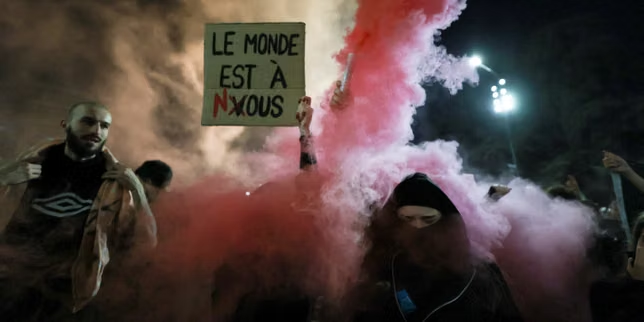
意大利的街头正把目光投向法国。“人人都恨警察,”参与者用法语高喊,他们无视了抗议禁令。在10月24日周六一场让数千人走上米兰街头的自发游行中,许多人想到的不仅是这些口号,还有阿尔卑斯山另一侧正在成形的社会运动的画面。自10月17日以来,意大利以自己的方式走上了与邻国相似的轨迹。
Italian streets were looking at France. "Everyone hates the police," chanted participants – in French – as they defied the protest ban. In a spontaneous march that brought thousands into the streets of Milan on Saturday, October 24, many were thinking not only of the slogans, but also of the images from the social movement taking shape on the other side of the Alps. Italy, in its own way, had followed a trajectory similar to that of its neighbor since October 17.
在一场大型学生集会的周边,青少年——大多来自郊区——袭击了米兰标志性大教堂杜莫附近的多家商铺,这一带是露天奢侈品购物中心。相关画面引发了要求加强安全措施的呼声,尤其针对未成年人,而提出这些呼声的政府自四年前上台以来,以其镇压性的立法产出而引人注目,其规模为四年来所未见。一周后,尽管有直升机监视和大量警力部署,街头并未空无一人。米兰出现了平静的集会,而都灵、博洛尼亚和罗马则爆发了冲突,并伴有警察暴力。
On the sidelines of a large student rally, teenagers – mostly from the suburbs – had attacked several businesses near the Duomo, Milan's emblematic cathedral, which serves as an open-air luxury shopping center. The footage triggered a flurry of calls for tougher security measures, targeting minors in particular, from a government that has stood out for a repressive legislative output unmatched since it came to power four years ago. One week later, despite helicopter surveillance and a heavy police presence, the streets did not remain empty. While Milan saw calm gatherings, clashes erupted in Turin, Bologna and Rome, marked by police violence.