
高盛集团指出,随着日本政策环境的变化降低了全球收益率上升时日元大幅贬值的风险,日元正成为对冲人工智能驱动的市场冲击更有效的工具。
The yen is becoming a more effective hedge against an artificial intelligence-driven market shock as changes in Japan’s policy backdrop reduce the risk of the currency weakening sharply when global yields rise, according to Goldman Sachs.
“尽管全球大环境仍指向日元进一步走弱,但日元现在看起来比过去几年更像是顺周期投资组合的有吸引力的对冲工具,”包括策略师卡马克夏·特里维迪在内的高盛分析师在10月23日发布的报告中写道。
“The yen now looks like a more attractive hedge for procyclical portfolios than it has been over recent years, despite the global backdrop still arguing for further JPY weakness,” strategists including Kamakshya Trivedi wrote in a note dated Oct. 23.
这一判断源于日元在上周全球科技股抛售期间再次展现出其传统避险特性。周四日元兑美元飙升0.9%,周五一度升至一个多月以来的最高水平,因对人工智能投资热潮的担忧拖累股市下跌,并引发美债急剧反弹。随后随着美国收益率企稳,日元回吐了部分涨幅。
The call comes after the yen showed renewed signs of its traditional haven characteristics during last week’s global tech stock rout. It surged 0.9% against the dollar Thursday and briefly reached its strongest level in more than a month Friday as concerns over the AI investment boom drove equities lower and sparked a sharp Treasury rally. The currency subsequently pared some of those gains as US yields stabilized.
高盛认为,人工智能热潮使美国股市和美元特别容易受到增长前景恶化的冲击。一种同时推低股票和债券收益率的冲击,将创造历史上最有利于日元的市场环境。
Goldman argues that the AI boom has left both US equities and the dollar particularly exposed to a deterioration in the growth outlook. A shock that pushes stocks and bond yields lower at the same time would create the type of market environment that has historically been most favorable for the yen.
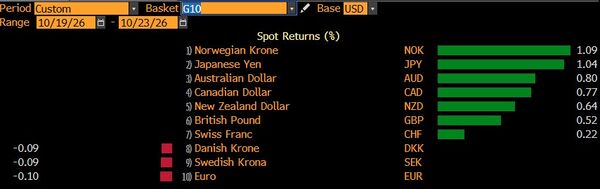
高盛还指出,有早期迹象表明,当全球收益率上升时,日元变得不那么脆弱。策略师们表示,近期日元因收益率上升而走弱的幅度,比过去六到七年更为有限,这可能反映了日本国内政策设定带来的贬值压力减小。
There are also early signs that the currency is becoming less vulnerable when global yields move higher, according to Goldman. Yen weakness in response to rising yields has been more limited recently than over the past six to seven years, which the strategists said likely reflects reduced depreciation pressure from Japan’s domestic policy settings.
这与2022年形成对比,当时日本央行维持收益率曲线控制,而全球借贷成本飙升。高盛表示,这种关系的变化意味着,日元“作为对冲工具持有应不那么痛苦,即使套息收益仍为负值”。
That marks a contrast with 2022, when the Bank of Japan maintained yield-curve control as global borrowing costs surged. The changing relationship means the yen “should be a less painful hedge to hold, even if carry remains negative,” Goldman said.
更具建设性的国内政策背景、日元的低估值以及货币干预的高风险,也有助于限制美元兑日元的潜在上行空间,改善了持有日元作为对冲工具的不对称性。
A more constructive domestic policy backdrop, the yen’s cheap valuation and elevated risk of currency intervention are also helping limit the potential upside in dollar-yen, improving the asymmetry of holding the Japanese currency as a hedge.
在短期内,高盛继续看好卖出欧元兑日元,称几乎没有明显的国内催化剂能推动日元大幅升值,且日本央行在10月30日政策决定公布时以鹰派信息令市场感到意外的门槛很高。
In the near term, Goldman continues to favor selling the euro against the yen, saying there is little obvious domestic catalyst for significant yen appreciation and a high bar for the BOJ to surprise markets with a hawkish message at its Oct. 30 policy decision announcement.
不过,从更长的时间跨度来看,策略师们认为美元兑日元交易是防范风险情绪恶化的更有效保护手段。“做空美元/日元应是对冲普遍增长动荡,或具体而言,对冲广泛的人工智能冲击的最有效手段,”他们写道。
Over a longer horizon, however, the strategists see the dollar-yen trade as the more effective protection against a deterioration in risk sentiment. “Short USD/JPY should be the most effective hedge against general growth wobbles or, specifically, a broad AI shock,” they wrote.