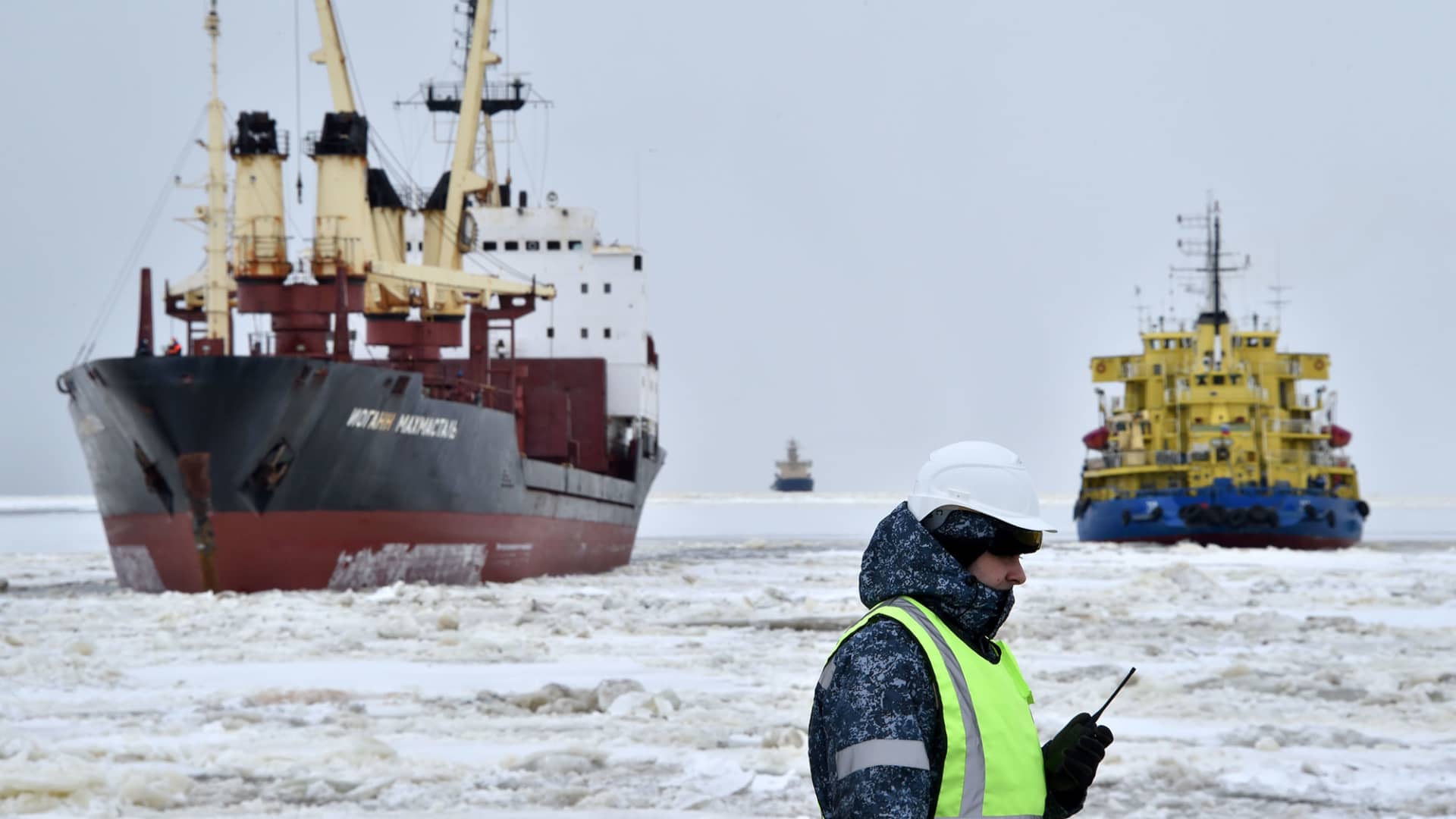
中国和俄罗斯正在加强对北极航运航线的控制,将这个迅速变暖的地区变成了与欧洲博弈的新地缘政治战场。
China and Russia are tightening their grip on Arctic shipping routes, turning the rapidly warming region into a new geopolitical battleground with Europe.
莫斯科和北京上周同意扩大北极航运走廊的货运量,增加双方港口间的航运服务,并深化极地船舶建造合作。
Moscow and Beijing last week have agreed to expand freight traffic along Arctic shipping corridors, increase services between their ports and deepen cooperation on building polar vessels.
此前欧盟发布了新的北极战略,旨在遏制俄罗斯和中国在该地区日益增长的影响力,随后双方达成了上述协议。
The agreement came after the EU unveiled a new Arctic strategy aimed at countering growing Russian and Chinese influence in the region.
尽管这些竞争性举措凸显了这个曾经偏远的地区正在变成一块战略宝地,但分析人士表示,鉴于莫斯科控制着主要航运走廊,而北京的商业影响力与日俱增,欧洲挑战新兴中俄伙伴关系的能力依然有限。
Although the competing moves underscore how the once-remote region is turning into a strategic prize, analysts said that Europe's ability to challenge the emerging China-Russia partnership remains limited, given Moscow's control over the main shipping corridor and Beijing's growing commercial clout.
“欧洲无法在任何有意义的时间范围内现实地挑战中俄对北极航运的主导地位。”法国外贸银行企业与投资银行亚太、中东及非洲首席经济学家艾丽西亚·加西亚-埃雷罗表示。她补充道,这是因为莫斯科控制着北方海路,包括航运许可、过境费和庞大的核动力破冰船队,而北京则提供开发该走廊所需的货源、船舶和产业能力。
Europe cannot realistically challenge Chinese and Russian dominance of Arctic shipping in any meaningful timeframe. Alicia Garcia-HerreroAPAC & MEA Chief Economist, Natixis CIB That's because Moscow controls the Northern Sea Route, including shipping permits, transit fees and a vast fleet of nuclear icebreakers, while Beijing provides the cargo, vessels and industrial capacity needed to develop the corridor, she added. Europe, by contrast, has limited icebreaker capacity and Arctic infrastructure, leaving it with little leverage to challenge the partnership despite its position as a major destination market.
相比之下,欧洲的破冰船能力和北极基础设施有限,尽管作为主要目的地市场,但几乎没有筹码来挑战这一伙伴关系。新的地缘政治断层线?
A new geopolitical fault line? The Northern Sea Route offers itself as an increasingly attractive alternative, as Middle East disruptions expose vulnerabilities in established shipping corridors.
随着中东动荡暴露了既有航运走廊的脆弱性,北方海路正成为一个日益有吸引力的替代选择。
Cargo traveling between Asia and Europe through the Northern Sea Route could have its journey shortened to between 18 to 22 days, down approximately 35% from the 28 to 35 day journey through Suez, according to data provided by Fertmax FZCO.
据Fertmax FZCO提供的数据,通过北方海路在亚欧间运输货物,航程可缩短至18至22天,比经苏伊士运河28至35天的航程减少约35%。
For Moscow, the route offers an opportunity to redirect energy exports toward Asia as Western sanctions constrain its access to European markets, said industry watchers whom CNBC spoke to.
对于莫斯科而言,这条航线提供了一个将能源出口转向亚洲的机会,因为西方制裁限制了其进入欧洲市场,接受CNBC采访的业内观察人士表示。
On the other hand, it provides Beijing another trade artery that could reduce reliance on traditional maritime chokepoints.
另一方面,它为北京提供了另一条贸易动脉,可能减少对传统海上咽喉要道的依赖。
David Roche, a veteran strategist at Quantum Strategy & Geonomics, said the Arctic's importance lies less in its potential to transform global shipping than in the deepening economic dependence between Russia and China.
Quantum Strategy & Geonomics的资深战略家大卫·罗奇表示,北极的重要性不在于其改变全球航运的潜力,而在于俄罗斯和中国之间经济依赖的加深。
"The significance of the arctic route is for Russian energy shipments to China, which will increase China's control over Russia in terms of Russia's dependence on China to sell its energy to compensate for losses of its gas markets in Europe," Roche highlighted.
“北极航线的意义在于俄罗斯向中国的能源运输,这将增加中国对俄罗斯的控制,就俄罗斯依赖中国出售能源以弥补其在欧洲天然气市场损失而言,”罗奇强调说。
The EU has acknowledged the growing challenge, highlighting the region's strategic value in its strategy, as mentioned by EU foreign policy chief Kaja Kallas last week.
欧盟已承认日益严峻的挑战,正如欧盟外交与安全政策高级代表卡娅·卡拉斯上周提到的,在其战略中强调了该地区的战略价值。
With Russia and China increasing their footprint and ambition, the Arctic has become a front line of global power competition.
随着俄罗斯和中国扩大其在该地区的足迹和野心,北极已成为全球大国竞争的前沿。卡娅·卡拉斯 欧盟外交与安全政策高级代表 欧洲能否反击?欧洲并非完全没有筹码。
Kaja KallasForeign Policy Chief, European Union Can Europe fight back? Europe isn't entirely without leverage. The EU's new strategy calls for expanding European icebreaker capacity, strengthening maritime surveillance and developing infrastructure linking Arctic trade networks to European markets.
欧盟的新战略呼吁扩大欧洲破冰船能力,加强海上监视,并开发将北极贸易网络与欧洲市场连接起来的基础设施。
It also proposes a maritime security hub and greater protection for undersea cables, reflecting growing concerns about Russian military activity and threats to critical infrastructure.
它还提议设立海上安全枢纽,并加强对海底电缆的保护,反映出对俄罗斯军事活动和关键基础设施面临威胁的日益担忧。
Yet those strengths may not be enough to overturn the structural advantages enjoyed by Moscow and Beijing, said experts.
然而,专家表示,这些优势可能不足以扭转莫斯科和北京所享有的结构性优势。
Garcia-Herrero said Europe's leverage largely rests on its position as a major destination market and the presence of large shipping companies that have avoided the Arctic because of environmental and commercial risks.
加西亚-埃雷罗表示,欧洲的筹码主要建立在其作为主要目的地市场的地位,以及大型航运公司因环境和商业风险而避开北极的现状之上。
Without a sustained industrial push that the EU has only begun to discuss, Europe can raise the commercial and regulatory costs of the route, but cannot prevent or replace the China-Russia partnership that now operates it.
如果没有欧盟才刚刚开始讨论的持续产业推动,欧洲只能提高该航线的商业和监管成本,却无法阻止或取代目前运营该航线的中俄伙伴关系。Natixis CIB亚太及中东非地区首席经济学家Alicia Garcia-Herrero表示,欧洲还面临一个战略困境:与这一新兴走廊接触可能会加深其对俄罗斯控制基础设施的依赖,即使它正寻求削弱莫斯科的经济影响力。
Alicia Garcia-HerreroAPAC & MEA Chief Economist, Natixis CIB Europe also faces a strategic dilemma: engaging with the emerging corridor could deepen its reliance on Russian-controlled infrastructure, even as it seeks to reduce Moscow's economic influence. Fertmax FZCO's former global head of research, Daeijin Lee said Western operators face sanctions, insurance and compliance complications that make the route considerably less attractive than it is for Chinese companies.
Fertmax FZCO前全球研究主管Daeijin Lee表示,西方运营商面临制裁、保险和合规方面的复杂问题,这使得该航线对其吸引力远不如对中国公司。他说:“北极提供的是多元化,而非独立。”全球贸易的威胁?
"The Arctic gives diversification, not independence," he said. A threat to global trade?
尽管受到地缘政治的高度关注,北极在全球航运中仍是一个边缘角色。
For all the geopolitical attention, the Arctic remains a marginal player in global shipping.
Roche估计,北极贸易目前约占全球航运的0.3%,到2030年可能达到约1%。
Roche estimates Arctic trade accounts for roughly 0.3% of global shipping today and could reach about 1% by 2030.
俄罗斯国家原子能集团Rosatom的数据以及CNBC基于联合国贸易和发展会议数据的测算同样支持0.3%这一数字:2025年有3702万吨货物通过北方海路过境,而2024年全球海运贸易总量为127.2亿吨。
Data from Russian state nuclear corporation Rosatom and CNBC calculations based on UN Trade and Development figures similarly supports the 0.3% figure, with 37.02 million tonnes of cargo transiting the Northern Sea Route in 2025 compared to the 12.72 billion tonnes of global seaborne trade in 2024.
据高北物流中心统计,其中仅320万吨货物(不足十分之一)涉及全程过境航行的船只,而非源自或终止于俄罗斯北极地区的货运。
Only 3.2 million tonnes of that cargo, or less than a tenth, involved vessels transiting the entire route, rather than shipments originating or terminating in the Russian Arctic, according to the Centre for High North Logistics.
但最新的2026年9月CHNL数据显示,交通量可能正在回升。
But traffic may be picking up, the latest September 2026 CHNL data showed.
数据显示,截至9月底,该航线记录了104个确认的过境航次,运送货物估计达370万吨,超过了2025年整个航运季记录的320万吨。
The route recorded 104 confirmed transit voyages carrying an estimated 3.7 million tonnes of cargo by the end of September, exceeding the 3.2 million tonnes recorded during the entire 2025 navigation season.
现有交通量很大一部分由俄罗斯石油、液化天然气和其他大宗商品组成,而非国际集装箱货运。
Much of the existing traffic consists of Russian oil, liquefied natural gas and other commodities rather than international container shipments.
然而,该航线也面临重大的商业障碍。冰况限制了大半年的航行,而专用船舶、保险费和俄罗斯过境费可能会抵消航程缩短带来的节省。
However, the route also faces significant commercial hurdles. Ice conditions restrict navigation for much of the year, while specialized vessels, insurance premiums and Russian transit fees can erode savings from shorter voyages.
Kpler分析师马修·赖特表示,由于运营商需要可靠的全年服务,该航线仍不适合取代既定的航运走廊。
Matthew Wright, an analyst at Kpler, said the route remains poorly suited to replacing established shipping corridors because operators need reliable, year-round services.
李某同样预计,北极主要将发展为特定高价值货物的季节性快速航线,而非苏伊士运河的替代方案。不过,从长远来看,气候变化可能会改变这一平衡。
Lee similarly expects the Arctic to develop primarily as a seasonal express route for selected high-value cargo rather than a replacement for Suez. However, climate change could shift the balance in the long-term.
发表在《WMU海事学报》上的一项研究预测,极地冰层融化可能会使北方海路的年过境运力在2050年增加到1.27亿至4.63亿吨之间。
A study published in the WMU Journal of Maritime Affairs projected that melting Polar ice could increase the Northern Sea Route's annual transit capacity to between 127 million and 463 million tonnes by 2050.