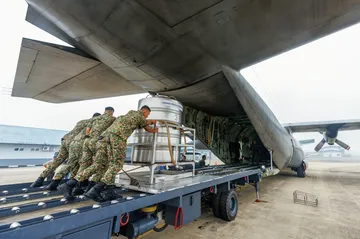
在东南亚上空实施的人工增雨任务,在扑灭野火和驱散笼罩该地区数月的烟霾方面收效甚微,暴露了人工干预天气的局限性。
Cloud-seeding missions in the skies above Southeast Asia have done little to snuff out wildfires or disperse the haze that’s cloaked the region for months, exposing the limitations of attempts to modify the weather.
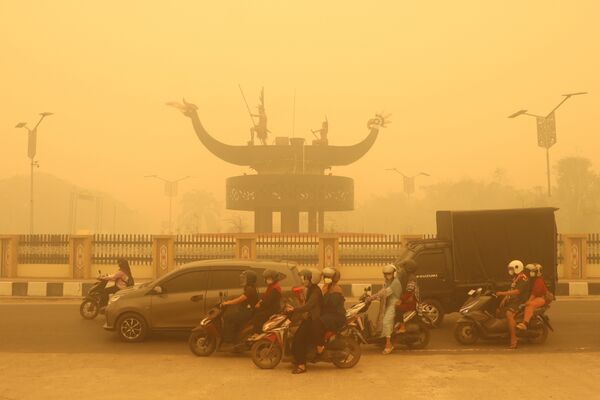
印度尼西亚和马来西亚今年合计开展了100多次行动,试图通过人工增雨来对抗极端干旱——厄尔尼诺现象加剧了这一干旱,导致苏门答腊岛和婆罗洲岛上的土壤干裂。十年来最严重的野火季节产生的有毒烟雾,扰乱了油棕收成,迫使学校停课,并将邻国新加坡和吉隆坡的空气质量降至不健康水平。
Between them, Indonesia and Malaysia have conducted more than 100 operations this year in an attempt to engineer rain to combat extreme dryness – exacerbated by El Niño – that has parched soils across the islands of Sumatra and Borneo. Toxic smog from the worst wildfire season in a decade has disrupted oil palm harvests, forced schools to close and reduced air quality to unhealthy levels in neighboring Singapore and Kuala Lumpur.
但这些耗资巨大的任务——甚至包括使用干冰来打破将烟雾困在地面附近的暖空气层——迄今几乎未带来持久成效。随着各国投入更多资金试图改变日益无常的降雨模式,这引发了一个问题:当天气处于极端状态时,此类投资的回报如何。
But the costly missions – which even included the use of dry ice to break up areas of warm air that trap smog near the ground – have so far brought little in the way of lasting results. As countries spend more trying to alter increasingly erratic rainfall patterns, that raises questions about the payoff for such investments when weather is at its extremes.
墨尔本莫纳什大学教授、世界气象组织天气改造专家组联合主席史蒂文·西姆斯表示:“有时会有很大的政治压力,要求采取一些在科学上可能并无充分依据的行动。”
“Sometimes, there’s a lot of political pressure to do things that may not be really well-founded scientifically,” said Steven Siems, a professor at Monash University in Melbourne, Australia, and co-chair of an expert team on weather modification at the World Meteorological Organization.
据世界气象组织称,随着天气变得更加多变,全球对人工增雨技术的需求近年来有所增长。这包括东南亚地区,该技术主要用于补充水库水位、辅助农作物生长,以及在每年的野火季节驱散烟霾。
Worldwide, demand for cloud-seeding technology has grown in recent years as the weather becomes more volatile, according to the WMO. That includes Southeast Asia, where the technique is used primarily to replenish reservoirs and aid crop development, as well as for dispersing smog during the annual wildfire season.
但热带地区面临额外挑战。在赤道附近,云层形态变化比较凉爽的中纬度地区更为迅速,而后者拥有更成熟的研究来量化增雨作业带来的降水增量。
But tropical regions face additional challenges. Nearer the equator, cloud formations change more rapidly than in cooler mid-latitude regions, where more established research exists to quantify increases in precipitation as a result of seeding.
“马来西亚和印度尼西亚所针对的携雨云层存在‘非常大的自然变异性’,”西姆斯说。特别是在热带地区,从播种到降水增加的“完整科学序列”“尚未真正向更广泛的科学界证明”,他补充道。
“There’s just so much natural variability” in the rain-bearing clouds being targeted in Malaysia and Indonesia, Siems said. In the tropics specifically, the “full sequence of science” – from seeding to higher precipitation – “hasn’t really been demonstrated for the wider scientific community,” he added.
今年,东南亚大片地区降雨特别稀少。据天气分析公司大气G2(Atmospheric G2)的数据显示,与30年平均水平相比,印度尼西亚从6月到10月25日仅收到正常降水量的五分之一,马来西亚则为三分之一。在这种异常干燥的条件下,云播种的效果自然受到限制。
This year, rain has been particularly scarce across swaths of Southeast Asia. Against a 30-year average, Indonesia received just a fifth and Malaysia a third of normal levels from June through Oct. 25, data from weather analytics firm Atmospheric G2 showed. In such abnormally dry conditions, the effectiveness of cloud seeding is naturally limited.
“顾名思义,云播种首先需要有云,”印度尼西亚气象气候与地球物理局天气改造作业主任布迪·哈尔索约(Budi Harsoyo)说。“当大气条件干燥时,适合的云层,例如积云,很难找到。”哈尔索约没有提供今年干预措施可能产生多少降雨量的定量估计。他说,该局评估其任务时,会将飞行路径和播种地点与雷达和卫星数据进行比较,以确定降雨是否可能受到云播种的影响。
“As the name suggests, cloud seeding requires clouds in the first place,” said Budi Harsoyo, director of weather-modification operations at Indonesia’s Meteorology, Climatology and Geophysics Agency. “When atmospheric conditions are dry, suitable clouds, such as cumulus clouds, are very difficult to find.”Harsoyo didn’t provide a quantitative estimate of how much rainfall this year’s interventions might have generated. To assess its missions, he said, the agency compares flight paths and seeding locations with radar and satellite data to determine whether rainfall may have been influenced by the cloud seeding.
不那么传统的是,印度尼西亚还试用了干冰来释放地面附近的霾。与云播种不同,该技术旨在迅速冷却周围空气,削弱温度逆增,使烟雾扩散。
Less conventionally, Indonesia has also trialed the use of dry ice to free haze trapped near the ground. Unlike cloud seeding, the technique is aimed at rapidly cooling the surrounding air, weakening temperature inversions and allowing the smog to disperse.
本月在南苏门答腊省进行首次试飞后,该局报告称,能见度局部有所改善,细颗粒物空气污染浓度下降。但它补充说,还需要进一步评估,以确定改善有多少是归因于干冰,而不是其他大气因素。
After the first trial flight over South Sumatra province this month, the agency reported localized improvements in visibility and a decline in the concentration of fine-particle air pollution. However, it added that further evaluation was needed to determine how much of the improvement was attributable to dry ice rather than other atmospheric factors.
与此同时,两国仍在推进人工增雨行动。据气象局数据,截至10月23日,印度尼西亚今年已实施56次行动,涉及777架次飞行。这几乎是去年飞行架次的三倍,也是2024年总数的七倍多。这种扩大力度的做法是在干燥大气条件导致云层形成有限的情况下进行的。
In the meantime, both countries are pressing on with their cloud-seeding efforts. As of Oct. 23, Indonesia had conducted 56 operations this year, involving 777 flights. That’s nearly triple the number of flights last year and more than seven times the total for 2024, according to data from the weather agency. The expansion comes despite limited cloud formations as a result of the dry atmospheric conditions.
执行此类任务成本不菲:印度尼西亚气象局官员哈尔索约表示,假设每天飞行约两小时,每天成本在2亿至3亿印尼盾(约合1.11万至1.66万美元)之间。私营运营商的报价通常高出40%左右,以覆盖税收、薪资及其他成本。
Flying such missions isn’t cheap: in Indonesia, they cost the agency between 200 million and 300 million rupiah ($11,100-$16,600) a day, assuming around two hours of flying time, Harsoyo said. Private operators generally charge up to 40% more to cover taxes, salaries and other costs.
马来西亚《星报》本月初援引天然资源与环境可持续部部长阿瑟·约瑟夫·库鲁普的话报道,马来西亚单次人工增雨行动的平均成本约为10万林吉特(约合2.45万美元)。据国家气象局MetMalaysia数据,该国今年迄今已实施65次行动,为十年来最多。
In Malaysia, a single cloud-seeding operation costs, on average, some 100,000 ringgit ($24,500), local newspaper The Star quoted Natural Resources and Environmental Sustainability Minister Arthur Joseph Kurup as saying earlier this month. The country has carried out 65 operations so far this year, the most in a decade, according to data from MetMalaysia, the national weather agency.
MetMalaysia运营副总监安本·丁当表示,这些行动“不仅针对烟霾,还旨在提高水位和水坝蓄水量”。他补充说,每次任务都通过雷达观测云团增长情况进行评估,飞行员也会飞入刚播撒催化剂的云层,观察驾驶舱挡风玻璃上是否凝结额外水汽。
They’re conducted “not only for the haze, but also to increase water levels and for dams,” said Ambun Dindang, MetMalaysia’s deputy director general for operations. Each mission is assessed by observing the growth of a cloud on radar, he added, as well as by pilots who fly into recently seeded clouds to observe additional moisture on the cockpit windshield.
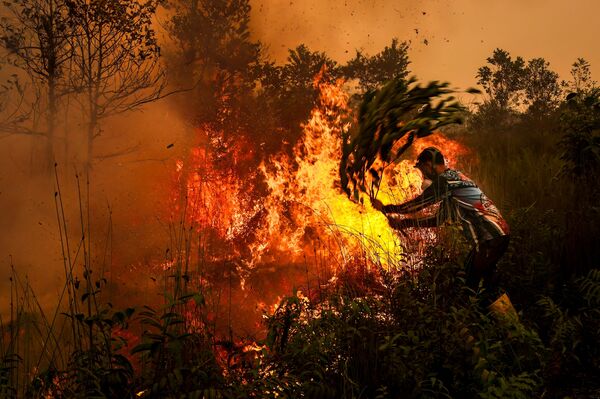
当然,天气修正技术只是印尼当局试图扑灭野火的一种手段。此外,该国还在地面部署了消防员,并从空中实施了水力灭火。
Of course, weather-modification techniques are just one way that Indonesian authorities are attempting to put out the wildfires. In addition, the country has deployed firefighters at ground level and conducted water bombing from the air.
哈尔索约说:“首要任务仍是从源头扑灭火灾。野火不能仅靠单一干预手段来应对。”
“The top priority is still to extinguish the fires at their source,” Harsoyo said. “Wildfires can’t be tackled through a single intervention alone.”