
油价飙升与人工智能热潮正在扩大货币市场的分化,加深了大多数新兴亚洲货币的跌幅,同时为韩元等货币提供了缓冲。
Surging oil prices and the AI boom are widening a currency-market divide, deepening losses across most emerging Asian currencies while providing a buffer for others, such as the Korean won.
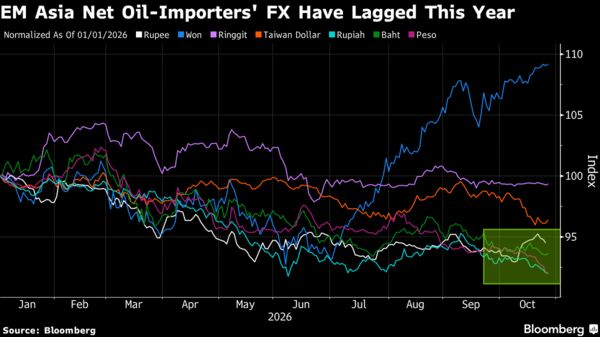
菲律宾比索作为今年亚洲表现最差的货币,周二兑美元跌至新低,高油价打击了这一净能源进口国。印度尼西亚盾徘徊在历史低位附近,泰铢接近18个月低点。相比之下,韩元交投于两年高位左右,成为该地区表现最优的货币。
The Philippine peso, Asia’s worst-performing currency this year, hit a new low against the dollar Tuesday as high crude prices hurt the net energy importer. Indonesia’s rupiah is hovering near its record low and Thailand’s baht is near an 18-month trough. The won, by contrast, is trading around a two-year high, making it the regional outperformer.
马来西亚林吉特表现较好,得益于该国的人工智能产业敞口及净能源出口地位。投资者表示,这些走势正为更大程度的地区分化奠定基础,凸显了长期积累科技实力的国家所享有的优势。
The Malaysian ringgit has fared better, helped by the nation’s AI exposure and net energy exports. The moves are setting the stage for greater regional divergence, investors say, underscoring the edge enjoyed by nations that have spent years building up their tech capabilities.
“受益于科技出口繁荣的经济体,其货币应保持相对韧性,”Gama Asset Management SA全球宏观投资组合经理Rajeev De Mello表示。“缺乏这种抵消因素的经济体,将日益容易受到更高能源进口账单和更紧缩的全球金融条件的冲击。” 能源价格飙升推高了依赖能源进口经济体的进口成本,恶化其贸易平衡。布伦特原油价格周五升至每桶117美元,为4月以来最高水平。周二油价维持高位,约为每桶114美元。
“Economies benefiting from the technology export boom should see their currencies remain relatively resilient,” said Rajeev De Mello, global macro portfolio manager at Gama Asset Management SA. “Those without this offset will be increasingly vulnerable to higher energy import bills and tighter global financial conditions.”Surging energy prices increase import costs for energy-dependent economies, worsening their trade balances. Brent prices rose to $117 per barrel on Friday, the highest level since April. They remain elevated at about $114 on Tuesday.
该地区央行已介入捍卫本国货币。印度尼西亚央行直接干预即期和远期市场,并增加套期保值激励以吸引外资组合流入。菲律宾中央银行上周意外加息50个基点,旨在抑制通胀并通过扩大与美联储的利差来支撑比索。
Central banks in the region have stepped in to defend their currencies. Bank Indonesia has directly intervened in the spot and forward markets and increased hedging incentives to attract foreign portfolio flows. Bangko Sentral ng Pilipinas surprised markets with a 50-basis-point rate hike last week, seeking to contain inflation and bolster the peso by widening its rate gap over the Federal Reserve.
“如果贬值压力加剧,外汇干预力度可能会加大;如果通胀风险变得更加持久,进一步加息也不能排除,”华侨银行策略师Christopher Wong表示。“归根结底,央行可以帮助抑制过度的外汇波动,但其扭转贬值压力的能力依然有限。”
“FX intervention may be stepped up if depreciation pressures intensify, while further rate hikes cannot be ruled out if inflation risks become more persistent,” said Christopher Wong, a strategist at Oversea-Chinese Banking Corp. “Ultimately, central banks can help temper excessive FX volatility, but their ability to reverse depreciation pressures remains limited.”
高能源价格带来的压力已超越亚洲范围。随着中东局势升级,埃及镑在本周的离岸交易中跌至历史低位。乌干达央行动用储备捍卫先令,后者于周一跌至新低,此举违背了总统约韦里·穆塞韦尼不得动用国家缓冲资金为此目的的指令。
The pressure from higher energy prices extends beyond Asia. The Egyptian pound fell to a record low in offshore trading this week as Middle East tensions escalated. Uganda’s central bank tapped its reserves to defend the shilling as it sank to a fresh low on Monday, defying a directive from President Yoweri Museveni not to use the country’s buffers for that purpose.