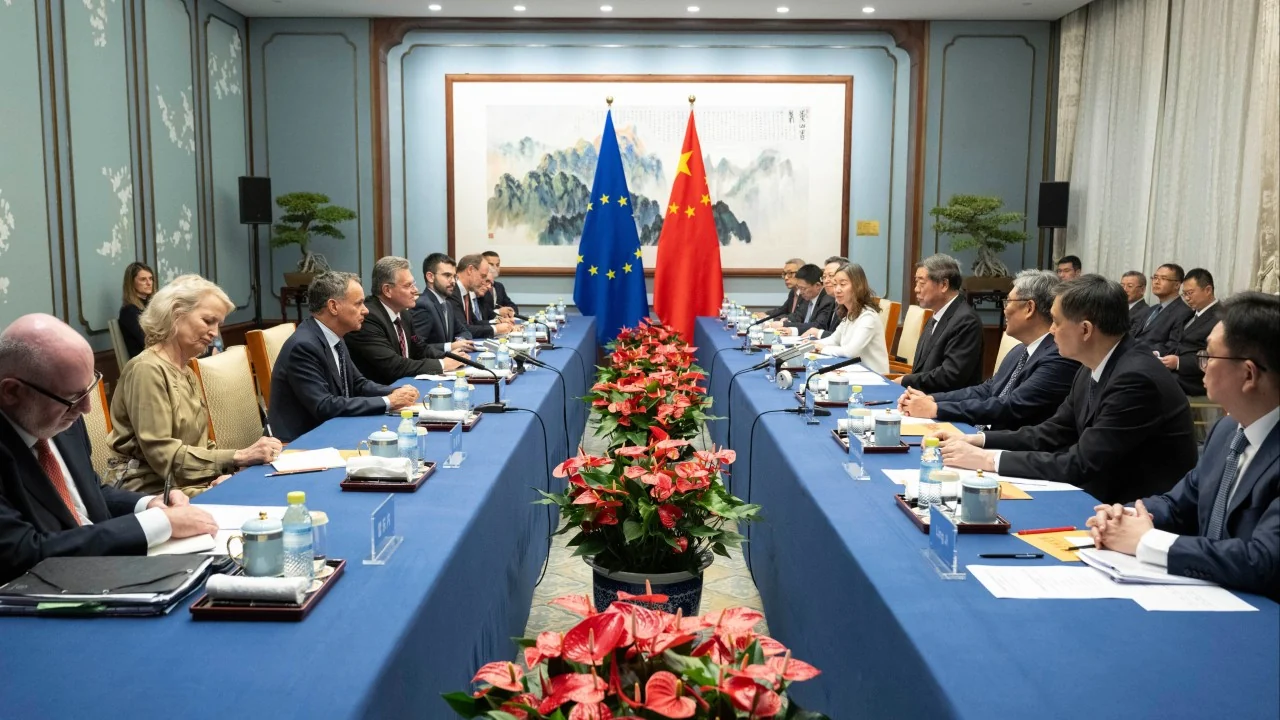
本月初,欧中贸易紧张局势有所缓和,双方在北京达成协议,将中国混合动力汽车出口限制在每年 35 万辆的配额内。2024 年欧盟对中国纯电动汽车征收关税后,混合动力车进口激增。该配额将使今年预计销售的 80 万辆混合动力车减少一半以上,若不加限制,这一数字很快可能超过 100 万辆。
Earlier this month, simmering trade tensions between the EU and China ease as the two sides reached an agreement in Beijing limiting hybrid car exports from China to an annual quota of 350,000 units. After the European Union imposed tariffs on fully electric cars from China in 2024, hybrid imports surged. The quota would result in more than a halving of the 800,000 hybrid cars expected to be sold this year, a figure which may soon exceed a million if unchecked.
该配额可能迫使中国调整产品结构,向高端市场倾斜,以实现每年 35 万辆混合动力车配额的价值最大化,而在为期四年的协议期内,该上限每年仅能增长 6%。
The quota would likely shift China’s product mix towards the premium segment to maximise the value of the 350,000 hybrid cars allowed per year, a cap which can rise by only 6 per cent a year during the four-year agreement.
欧洲面临的挑战不仅限于混合动力车,而是涉及所有电动汽车。与早期主要互补德国高端品牌的日本和韩国大众市场进口车不同,欧洲预计将面临来自中国的高端电动汽车,其价格仅为欧洲同类产品的一小部分,却可能提供更优越的功能和性能。
Europe’s challenge goes beyond hybrids to all electric vehicles. Unlike the earlier mass-market Japanese and Korean imports which largely complemented the premium German brands, Europe can expect high-end EVs from China offered at a fraction of the price of their European counterparts, while potentially delivering superior features and performance.
宝马和奔驰长期主导全球汽车行业的高端细分市场。在电动汽车时代,它们不愿在关税和配额的保护下沦为主要在欧洲销售汽车。当一位德国驾驶员发现,自己昂贵的奔驰电动车不如一位瑞士访客驾驶的更便宜的中国电动车时,会感到强烈的反差。
BMW and Mercedes-Benz have long been dominant in the premium segment of the car industry globally. In the EV era, they would not want to be reduced to selling cars mainly in Europe under the protection of tariffs and quotas. A German driver would find it jarring when his expensive Mercedes EV is not as good as a cheaper Chinese EV driven by a Swiss visitor.
限制中国电动汽车进口在长期内无益于欧盟消费者或车企。相反,欧洲企业必须利用中国的供应链,成为世界级的电动汽车制造商,从而能在中国、欧洲以及世界任何其他地方与中国电动汽车企业竞争。
Limiting Chinese EV imports does not help EU consumers or carmakers in the long term. Instead, European companies must leverage China’s supply chain to be world-class EV makers that can compete with Chinese EV companies, in China, in Europe and anywhere else in the world.
关税和配额本身并不能限制中国品牌电动汽车在欧洲的扩张。正如德国汽车制造商在中国制造了其在当地销售的大多数汽车一样,中国车企也将越来越多地在欧盟境内生产汽车。作为保护幼稚产业的经典工具,关税和配额可以为欧洲车企争取到喘息空间,以增强竞争力。
Tariffs and quotas do not by themselves restrict the expansion of Chinese-branded EVs in Europe. Chinese carmakers will increasingly make cars within the EU, just as German car companies manufacture in China most of the cars they sell there. Tariffs and quotas, the classic tools for protecting infant industries, can buy European carmakers breathing space to become more competitive.
既然连美国现在都在借鉴中国的产业政策,欧盟也就无需将关税和配额粉饰为在“新自由主义全球化”下实现公平竞争环境的方式。欧洲有其自身的经济模式。一些欧洲经济体长期以来一直以协同市场经济(以长线资本为特征)的形式运行,这不同于由资本市场主导的美国自由市场经济。长期的银行和利益相关者融资使企业能够通过经济低迷期进行投资,以换取长期表现。
Since even the US now borrows from China’s industrial policy, the EU need not dress up tariffs and quotas as a way to level the playing field under neoliberal globalism. Europe has economic models of its own. Some European economies have long operated as coordinated market economies characterised by patient capital, distinct from the US’ liberal market economy dominated by the capital market. Long-term bank and stakeholder financing lets firms invest through downturns for long-term performance.
尽管美国凭借互联网和人工智能等激进创新蓬勃发展,但其电信设备产业已被部分掏空,从而将这一领域拱手让给中国和欧洲企业。诺基亚和爱立信仍在全球范围内与华为技术公司竞争。德国汽车产业的实力建立在其协同市场经济的基础之上,这种经济受季度财报沉浮的影响较小。欧洲企业现在需要借助这种耐心,来吸收中国的供应链优势并获得可持续的竞争力。
While the US has thrived on radical innovations such as the internet and artificial intelligence, its telecoms equipment industry is partly hollowed out, leaving the field to Chinese and European companies. Nokia and Ericsson still compete with Huawei Technologies worldwide. The strength of the German auto industry has been built on its coordinated market economy, which is less subject to the vicissitudes of quarterly earnings. European companies now need to draw on that patience to absorb China’s supply-chain advantages and gain sustainable competitiveness.
欧洲汽车公司应在中国生产电动汽车以供全球出口。中国拥有世界上最发达的电动汽车产业生态系统,随着燃油车销量崩溃、电动汽车占据主导地位,外国品牌在中国正失去地位,因此在中国生产电动汽车是当务之急。欧洲企业可以在中国设立研发机构,聘请顶尖的中国电动汽车工程师。欧盟可以通过一套平行配额制度来支持其汽车工业——即对欧洲企业在中国生产的汽车设立单独的、额外的配额——作为过渡措施。
European car companies should make EVs in China for global export. China has the world’s most developed EV ecosystem, and foreign brands are losing ground there as petrol-car sales collapse and EVs take over, so making EVs in China is a top priority. European firms can set up research in China and hire top Chinese EV engineers. The EU could support its car industry with a parallel quota system – a separate, additional quota on cars that European firms make in China – as a transition measure.
全球化的欧洲汽车制造商应能够从任何地方向全球销售电动汽车,首先是从中国向欧盟出口。
Globalised European carmakers should be able to sell EVs to the world from anywhere, starting with exports from China to the EU.
与中国的贸易逆差,例如在化工领域,并不自动使中国负有责任。事实上,乌克兰战争引发的高能源价格,再加上伊朗战争的叠加影响,使欧洲的化工行业失去竞争力。德国化工公司通过在中国扩张可以保持竞争力。欧洲长期依赖廉价的俄罗斯能源,而非更快地转向核能和绿色能源,这只能怪自己。限制进口无法使欧洲工业保持竞争力,连贯的能源政策才能。
Trade deficits with China, say in the chemical sector, do not automatically make China guilty. In fact, high energy prices arising from the Ukraine war, compounded by the Iran war, make the chemical industry in Europe uncompetitive. By expanding in China, German chemical companies can stay competitive. Europe has only itself to blame for long relying on cheap Russian energy, rather than moving faster towards nuclear and green energy. Restricting imports cannot keep European industries competitive; a coherent energy policy will.
欧盟一直不赞成通过产业政策扶持国家冠军企业,而是正在权衡一项拟议的“杀手锏”机制,该机制将允许欧洲委员会迅速拒绝被视为构成威胁的外国公司进入市场。这种封锁可能会让贸易逆差不那么显眼,但无法解决欧洲企业缺乏竞争力的根源。欧盟也不应仅仅因为欧洲企业因不可持续的投入成本而被迫将生产从欧盟转移到中国就予以惩罚。
The EU has frowned on promoting national champions through industrial policy, and is instead weighing a proposed “kill switch” that would allow the European Commission to swiftly deny market access to foreign companies deemed threatening. Such a lockout may make trade deficits less glaring but it would not address the roots of why European companies are not competitive. Nor should the EU punish European companies just because they are compelled by unviable input costs to shift production from the EU to China.
与其将中国拒之门外,欧盟应积极实施全球化的产业政策——将欧洲的耐心资本与中国的供应链相结合——使欧洲企业成为世界一流的电动汽车制造商。
Instead of keeping China out, the EU should actively apply a globalised industrial policy – pairing European patient capital with China’s supply chain – to make European companies world-class EV makers.