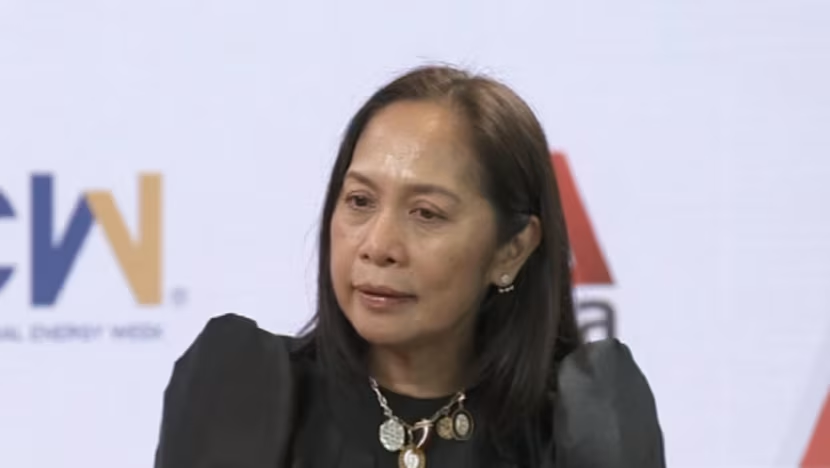
新加坡:菲律宾能源部长莎伦·加林周二(10月27日)表示,东南亚为应对又一次重大能源中断所做的准备可能需要数年时间,各国正在努力加强基础设施并建立应急燃料储备。
SINGAPORE: Southeast Asia’s efforts to prepare for another major energy disruption could take years, as countries work to strengthen their infrastructure and build up emergency fuel supplies, the Philippines’ Secretary of Energy Sharon Garin said on Tuesday (Oct 27).
加林在新加坡国际能源周(SIEW)间隙接受CNA采访时表示,尽管东南亚国家联盟(东盟)已达成协议,成员国在供应短缺时相互援助,但并非所有国家都准备好应对另一场危机。
Speaking to CNA on the sidelines of Singapore International Energy Week (SIEW), Ms Garin said that while the Association of Southeast Asian Nations (ASEAN) has an agreement for member states to assist one another during supply shortages, not all countries are ready to respond to another crisis.
在中东冲突造成供应中断后,该地区仍在应对能源供应的不确定性。
The region is still grappling with uncertainty over energy supplies following disruptions caused by conflict in the Middle East.
“我们正在对最近的一场危机做出反应,而被动反应(的方式)无法解决长期问题,”她说。
“We're reacting to a recent crisis, and reactionary (approaches) cannot solve a long-term problem,” she said.
“我认为这更像是再次给所有人敲响的警钟。”以菲律宾为例,该国已开始建设其首个政府燃料储备设施,并修订法规以保护消费者免受价格突然飙升的影响。
“I think this is more of a wakeup call for everyone all over again.”The Philippines, for instance, has begun constructing its first government fuel stockpiling facility and revising regulations to protect consumers from sudden price surges.
“我们必须修订我们的法律、我们的基础设施。我们甚至必须修订我们的资金安排,”加林说。
“We have to revise our laws, our infrastructure. We have to revise even our funding,” Ms Garin said.
她补充说,东盟可能需要数年时间才能更好地为另一次重大能源供应中断做好准备。
She added that ASEAN would likely take several years to be better prepared for another major energy supply disruption.
东盟电网需要双边协议 加林还表示,讨论已久的东盟电网能否取得进展,将取决于各个国家就跨境电力连接达成协议。
ASEAN POWER GRID REQUIRES BILATERAL AGREEMENTS Ms Garin also said that progress on the long-discussed ASEAN power grid would depend on individual countries reaching agreements on cross-border electricity connections.
东盟成员国本月早些时候就区域电网的强化谅解备忘录(MOU)达成共识。
ASEAN member states reached a consensus on an enhanced memorandum of understanding (MOU) for the regional power grid earlier this month.
加林表示,希望该文件能在11月于马尼拉举行的东盟峰会上最终敲定。
Ms Garin expressed hope that the document would be finalised at the ASEAN Summit in Manila in November.
她称这一共识是一项里程碑式的成就,但强调这并不意味着新连接线的建设会立即开始。
She described the consensus as a landmark achievement but stressed that it did not mean construction of new connections would begin immediately.
她说:“这更像是一种政治宣言或共同体宣言,即我们都一致认为我们需要一个东盟电网,需要在我们之间共享电力。”
“It's more of a political or a sense of community declaration, that we are all in agreement that we need an ASEAN power grid, that we need to share power among ourselves,” she said.
“但如何落实这个项目?从根本上说,这必须取决于一国与另一国之间的关系。不能仅仅因为我们有了一份强化版谅解备忘录,所有人就会立刻开始建设。”对菲律宾而言,这意味着要与马来西亚、印度尼西亚和新加坡就潜在的电力互联进行双边协议谈判。
“But how do you implement the project? Basically, it has to be the relationship between one country and another. It is not just because we have an enhanced MOU that everybody will start building now.”For the Philippines, this would mean negotiating bilateral agreements on potential electricity connections with Malaysia, Indonesia and Singapore.
在被问及菲律宾与印度尼西亚之间潜在的海底电力连接时,加林女士表示,两国的电价监管差异必须加以协调,同时两国还必须就合适的基础设施路线达成一致。
Asked about a potential undersea power connection between the Philippines and Indonesia, Ms Garin said differences in electricity pricing regulations would have to be reconciled, while both countries would have to agree on a suitable infrastructure route.
该项目的商业可行性也至关重要,包括确定由哪个国家供电、由哪个国家购电。她说:“我们必须确保对开发商来说,这项投资是值得的。”
The project’s commercial viability would also be crucial, including determining which country would supply the electricity and which would purchase it. “We have to make sure that for the developers, it's worth the investment,” she said.
液化天然气仍将是菲律宾能源结构的一部分 尽管外界对燃料价格波动存在担忧,加林女士表示,随着菲律宾扩大可再生能源发电,液化天然气(LNG)将继续在该国能源结构中发挥作用。她说,液化天然气将提供灵活的发电能力,以支持可再生能源。
LNG TO REMAIN PART OF PHILIPPINES' ENERGY MIX Despite concerns over fuel price volatility Ms Garin said liquefied natural gas (LNG) would continue to play a role in the Philippines’ energy mix as the country expands renewable energy generation. She said LNG would provide flexible power generation capacity to support renewable sources.
她说:“我们拥有的可再生能源越多——它们更便宜,而且因为是本土资源,在某种意义上也更可靠——我们就越需要某种能够跟随负荷变化的技术。”
“The more renewables we have, which are cheaper and more reliable in the sense that they're indigenous, we will need a certain technology that will follow the load,” she said.
“因为当没有阳光或没有风时,总得有东西来调节。”菲律宾的目标是到2030年将可再生能源在其发电结构中的占比提高到35%,到2040年提高到50%。
“Because when there's no sun or there's no wind, something has to adjust.”The Philippines aims to increase the share of renewable energy in its power generation mix to 35 per cent by 2030 and 50 per cent by 2040.
然而,加林女士表示,随着菲律宾寻求确保可靠的电力供应,该国的天然气使用量也在增加。她说:“我们不会把天然气从我们的能源结构中移除。”需要加强区域能源合作加林女士表示,东盟整体拥有充足的能源资源,但需要加强协调,以确保各国能够互补。
However, Ms Garin said the country’s use of natural gas is also increasing as it seeks to ensure a reliable electricity supply. “We're not removing gas from our energy mix,” she said. GREATER REGIONAL ENERGY COOPERATION NEEDED Ms Garin said ASEAN has sufficient energy resources collectively, but greater coordination is needed to ensure countries can complement one another.
她指出,该地区能源资源多样,一些国家拥有丰富的水电、天然气或石油资源,而菲律宾则拥有可观的太阳能和地热潜力。
She pointed out that the region has diverse energy resources, with some countries rich in hydropower, gas or oil, while the Philippines has significant solar and geothermal potential.
她说,她已要求东盟能源中心评估各成员国的可用资源,并研究各国如何能够更好地相互支持。
She said she has asked the ASEAN Centre for Energy to assess the resources available in each member state and examine how countries could better support one another.
加林女士表示,尽管东盟电网等协议有助于加强和巩固区域能源安全,但能源贸易的决定权仍掌握在各国政府手中。
While agreements such as the ASEAN Power Grid could help strengthen and solidify regional energy security, Ms Garin said decisions on energy trade remain with individual governments.
“每个国家的行为属于其(自身)自主权。东盟作为一个机构不能凌驾于其成员国的主权之上,”她说。
“The behaviour of each country is their (own) autonomy. ASEAN as an institution cannot dictate over the sovereignty of its member states,” she said.