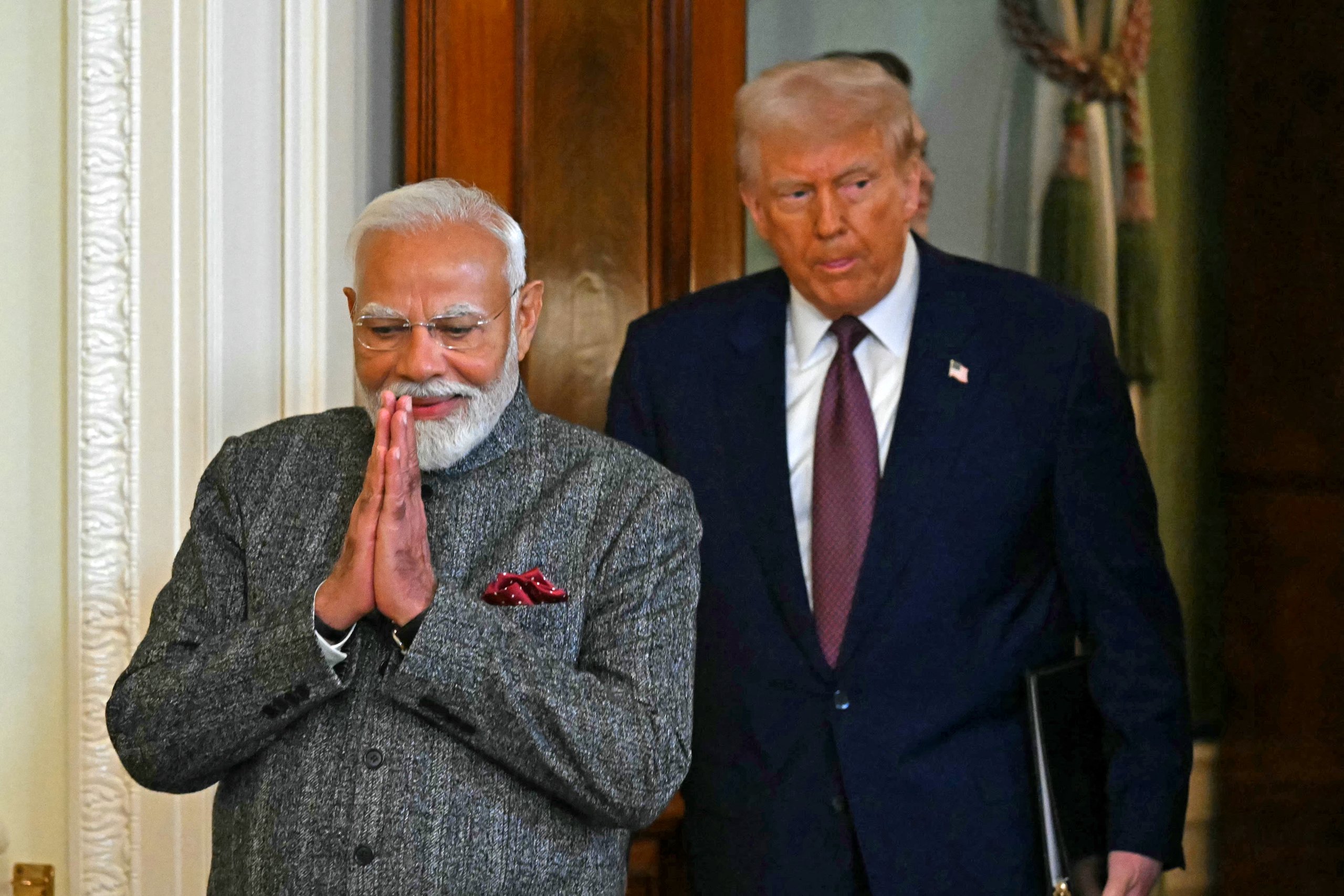
新德里,印度 —— 站在美国总统唐纳德·特朗普身旁,印度总理纳伦德拉·莫迪赞誉不断。
New Delhi, India — Standing next to United States President Donald Trump, Indian Prime Minister Narendra Modi delivered praise after praise.
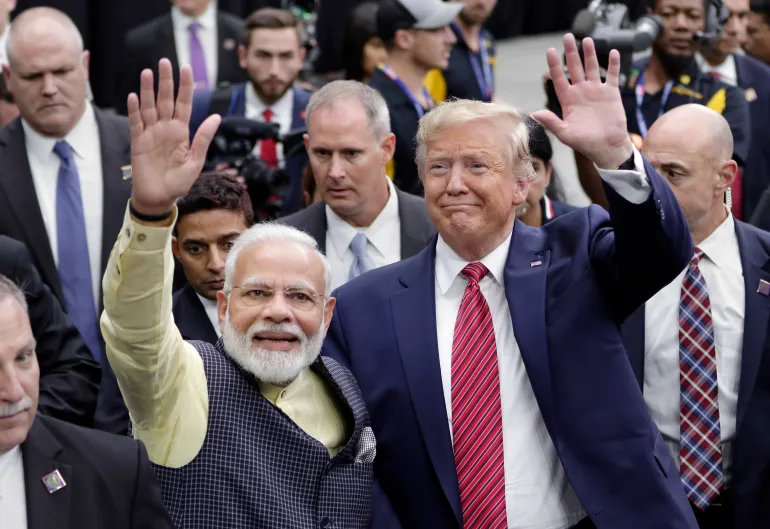
“每次[见面],他都一如既往:热情、友善、平易近人、精力充沛,且充满幽默感,”他在德克萨斯州休斯顿一座挤满了5万多名印裔美国人的体育场举行的联合集会上这样评价特朗普。
“Every time [we meet], he has been the same: warm, friendly, accessible, energetic, and full of wit,” he said of Trump, as they addressed a joint rally in a Houston, Texas, stadium packed with more than 50,000 Indian Americans.
那是2019年,2020年美国总统大选前夕,特朗普面临重大选举考验 —— 寻求连任第二任期。莫迪实际上是在动员印裔美国人社区 —— 美国最富有的侨民群体 —— 支持他。
That was in 2019, ahead of the 2020 US presidential vote, when Trump was facing a major electoral test – seeking re-election to a second term. Modi was, in effect, galvanising support for him among the Indian-American community, the wealthiest diaspora in the US.
莫迪甚至借用了自己成功竞选时的一句口号,高呼:“Abki baar, Trump sarkaar!”,印地语意为“这一次,特朗普政府。”但特朗普输了。
Modi even borrowed a line from his own successful election campaigns, saying: “Abki baar, Trump sarkaar!”, Hindi for “This time, a Trump government.”But Trump lost.
七年后,随着特朗普为可能导致其在国会大幅失席、从而严重削弱其立法议程的艰难中期选举做准备,新德里与华盛顿的关系截然不同。
Seven years later, as Trump prepares for difficult midterm elections that could see him lose significant numbers in the US Congress, potentially crippling his legislative agenda, New Delhi’s equation with Washington could not be more different.
印度官员近几周来非但没有背书特朗普,反而在双边关系遭遇一系列挫折之际,比以往任何时候都更直接地批评其政府。许多分析人士认为,莫迪政府现在或许实际上更希望看到一个在中期选举中受挫的特朗普。
Far from endorsing Trump, Indian officials have in recent weeks been more direct than ever in their criticism of his administration, amid a series of setbacks to bilateral ties. And many analysts believe the Modi government may now actually prefer a Trump chastened by midterm losses.
印度长期以来在华盛顿享有两党支持。然而传统上,新德里的战略界在共和党总统执政时往往感觉更自在。
India has long enjoyed bipartisan support in Washington. Yet traditionally, New Delhi’s strategic community has often felt more comfortable with Republican presidents in power.
在冷战接近尾声的罗纳德·里根执政时期,印度与美国在经历了数十年的互不信任后重置了关系,此前新德里与莫斯科保持着紧密关系。随后,在2006年至2008年乔治·W·布什执政期间,印美达成了里程碑式的民用核协议。尽管印度不是《不扩散核武器条约》(NPT)的签署国,但获准获得全球核技术和核燃料。在布什任内,印美还签署了重大军事协定,包括允许美军舰船和飞机在印度基地加油和获得后勤保障。
It was under Ronald Reagan, as the Cold War wound down, that India and the US reset ties after decades of mistrust amid New Delhi’s strong relationship with Moscow. Then, between 2006 and 2008, under George W Bush, India and the US struck a landmark civil nuclear deal. India was allowed access to global nuclear technology and fuel despite not being a signatory to the Non-Proliferation Treaty (NPT). Under Bush, India and the US also signed major military pacts, including allowing US ships and planes refuelling and logistical access to Indian bases.
相比之下,新德里常认为美国民主党政府对印度的人权记录更为苛刻。
By contrast, New Delhi has often seen US Democratic administrations as more critical of India’s human rights record.
随着美国领导人特朗普与印度总理莫迪之间展现出的明显亲密关系,印美友好关系延续共和党总统传统的势头似乎将在特朗普任内继续。印度总理甚至称特朗普为“白宫里印度最好的朋友”。但从印度的角度来看,“特朗普2.0”截然不同。
The tradition of friendly ties with US Republican presidents appeared set to continue under Trump, amid visible bonhomie between the US leader and Modi. The Indian prime minister even called Trump “India’s best friend in the White House”. But Trump 2.0 has been very different, from India’s perspective.
差异之大,以至于新德里选择打破一项长期坚持的做法。印度通常在幕后、低调地与友好国家处理分歧问题。但数月来在一系列问题上的紧张局势,迫使印度采取了对白宫更公开批评的基调。
So different that New Delhi has chosen to break with a long-held practice. India usually addresses divisive issues with friendly nations quietly, behind the scenes. But months of tensions on a string of issues have pushed India to adopt a more openly critical tone towards the White House.
上个月,在纽约的一个活动上,印度外交部长苏杰生(S Jaishankar)对特朗普政府给出了尖锐、直率的评价:它在“恐怖主义”问题上对印度的关切漠不关心;对宿敌巴基斯坦示好;并推行“以自我为中心”的贸易政策,对全球南方造成了不成比例的伤害。
Last month, speaking at an event in New York, India’s foreign minister, Minister of External Affairs Minister S Jaishankar, shared a pointed, blunt assessment of the Trump administration: It has been an insensitive partner to India’s concerns over “terrorism”; has warmed to its archrival Pakistan; and has pursued “self-centred” trade policies that have disproportionately hurt the Global South.
他说:“国家不应如此以自我为中心,以至于你只活在自己的世界里,自行做出决定,然后说,‘嗯,我并不想让你的日子难过’。”
“Countries should not be so self-centred that you’re in your own world and take your decision, and say, ‘Well, it was not my intention to make your life difficult’,” he said.
两国首都之间最大的分歧点之一,是一项难以捉摸的贸易协定,该协定本可为印度带来缓解——印度是特朗普关税体制下受冲击最严重的国家之一。
One of the biggest sticking points between both capitals is an elusive trade deal that could bring relief to India, among the worst-hit countries under Trump’s tariff regime.
本月初,印度财政部长、公司事务部长尼尔马拉·西塔拉曼表示,谈判已陷入“僵局,超出此限,双方再做让步或争取都将非常困难”。
Earlier this month, India’s finance minister, Minister of Corporate Affairs Nirmala Sitharaman, said that the negotiations had reached a “plateau beyond which giving or taking might be very difficult”.
特朗普的“让美国再次伟大”(MAGA)运动也屡屡将矛头指向印度人和印裔美国人,使用种族主义陈词滥调,指责他们通过H-1B签证计划等项目在美国“窃取”工作岗位。美国社交媒体上的反印言论达到历史高位。而在其第二个任期伊始,特朗普便将许多无证印度移民戴着镣铐锁链遣返回国——这一画面在印度引发愤怒。
Trump’s Make America Great Again (MAGA) movement has also often targeted Indians and Indian Americans, using racist tropes, accusing them of “stealing” jobs in the United States via programmes like the H-1B visa schemes. Anti-Indian rhetoric on US social media is at an all-time high. And early in his second term, Trump sent many undocumented Indian immigrants back home shackled in chains – a visual that stirred outrage in India.
总部设在华盛顿特区的卡内基国际和平基金会南亚项目主任米兰·瓦伊什纳夫表示,印度政府“能够容忍与美国政府在真正的政策问题上存在分歧”。然而,“来自该政府以及其许多媒体盟友和社交媒体盟友对印度和印裔美国人的攻击,触动了痛处,”他说。
Milan Vaishnav, director of the South Asia programme at the Washington, DC-based Carnegie Endowment for International Peace think tank, said the Indian government “can tolerate genuine policy differences with a US administration”. However, “the attacks on India and Indian Americans coming from this administration, and many of their allies in the media and on social media, have struck a nerve,” he said.
瓦伊什纳夫与其他分析人士一样告诉半岛电视台,尽管新德里近期发出批评声音,“莫迪政府在回应上表现出了令人钦佩的克制”。
Vaishnav, like other analysts, told Al Jazeera that despite recent criticism coming from New Delhi, “the Modi government has shown admirable restraint in its response”.
自特朗普于2025年重返白宫以来,美印关系陷入了一系列似乎永无止境的危机之中。
Since Trump returned to office in 2025, the US-India relationship has been beset by a seemingly never-ending series of crises.
刺激因素包括:惩罚性的美国关税和停滞的贸易谈判;华盛顿施压印度停止购买俄罗斯石油;特朗普反复声称他调解了2025年印巴停火,遭新德里否认;尽管印度对“恐怖主义”表示担忧,美国仍与巴基斯坦关系走近;美国提高H-1B专业技术工人签证费用,以及特朗普更广泛的移民打击行动波及印度工人。
Some of the irritants are: punitive US tariffs and stalled trade negotiations; Washington’s pressure on India to stop buying Russian oil; Trump’s repeated claims that he mediated an India-Pakistan ceasefire in 2025, which New Delhi rejects; closer US ties with Pakistan despite India’s concerns over “terrorism”; higher H-1B specialised worker visa fees in the US, and Trump’s wider immigration crackdown affecting Indian workers.
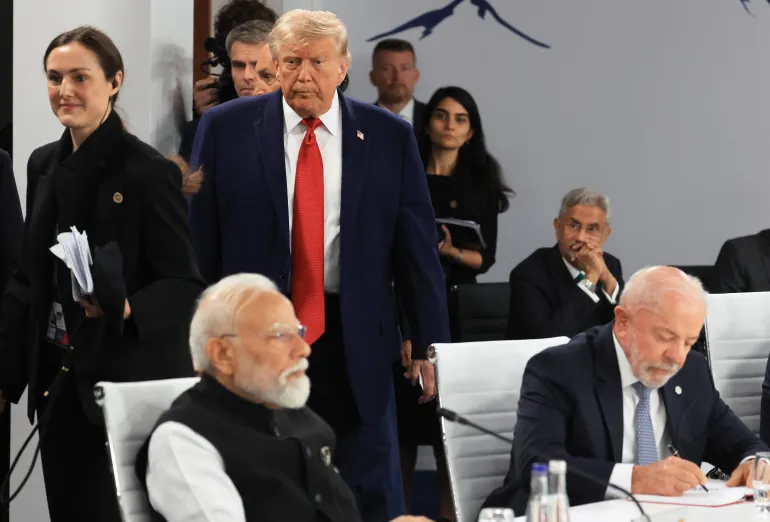
一度,印度是面临特朗普征收最高关税税率的国家之一。美国最高法院2月裁决推翻特朗普对多国征收的全面关税后,其政府迅速转向其他工具,包括新征收的10%全球关税。
At one point, India was among the countries facing the worst Trump-imposed tariff rates. After the US Supreme Court in February struck down Trump’s sweeping tariffs on numerous nations, his administration swiftly turned to other tools, including a new 10 percent global tariff.
上个月,特朗普签署一项法律,据此美国可对购买俄罗斯石油的印度等国家征收高达100%的关税。然而,他暂停了该法案的实施,以避免在11月的中期选举前推高美国国内能源价格,同时保持与俄罗斯就莫斯科在乌克兰的战争进行谈判的进程。
Last month, Trump signed a law under which the US can impose up to 100 percent tariffs on countries like India that buy Russian oil. However, he paused it to avoid driving up energy prices in the US ahead of November’s midterm elections, while keeping negotiations with Russia over Moscow’s war in Ukraine on track.
美国国务卿马尔科·鲁比奥本周访问了印度金融中心孟买,但未去首都新德里。他在接受《印度快报》采访时表示:“这些关税都不是为了惩罚或伤害印度。”
US Secretary of State Marco Rubio, who visited India’s financial hub Mumbai this week, but skipped the capital, said in an interview with The Indian Express that “none of these tariffs are meant to punish or harm India”.
鲁比奥辩称,华盛顿的“更广泛的外交政策,不幸的是,涉及俄罗斯和乌克兰之间正在进行的一场战争”,并补充说:“特朗普暂停关税的原因之一,是因为他明白这将对与印度这一极其重要的关系产生非常不利的影响。”
Rubio argued that Washington’s “broader foreign policy, unfortunately, involves a war going on between Russia and Ukraine” — and added that “one of the reasons why [Trump paused the tariff] is because he understands that it would have a very detrimental impact on a very important relationship with India”.
但鲁比奥并未排除类似措施在一段时间后卷土重来的可能。“我认为总统正非常努力地寻求平衡……但这将是一个挑战,”他说道。
But Rubio did not rule out that similar measures would return in a matter of time. “I think the president is trying very hard to balance that… but it will be a challenge”, he remarked.
总部位于布鲁塞尔的国际危机组织高级分析师普拉文·东蒂告诉半岛电视台:“在特朗普2.0时期,华盛顿关于印度的两党共识似乎已告终结。”
Praveen Donthi, a senior analyst at the Brussels-based International Crisis Group, told Al Jazeera: “Under Trump 2.0, the bipartisan consensus on India seems to have ended in Washington.
“华盛顿的这种情绪过于强烈,不能仅归因于特朗普总统个人;这指向更广泛的美国建制派,”东蒂说。
“The sentiment [in Washington] seems too strong to be attributed solely to President Trump; it points to the broader American establishment,” Donthi said.
他指冷战时期的紧张关系表示,特朗普政府采取的措施“让印度战略界对美国的不信任感重燃”。
The measures undertaken by the Trump administration “have brought back distrust of the US among the Indian strategic establishment”, he said, referring to Cold War-era tensions.
即将到来的美国中期选举对特朗普至关重要。如果他在总统任期最后两年失去对国会的控制权,将赋予民主党更大权力来审查其政府的政策。
The upcoming US midterm elections are crucial for Trump. If he loses control of Congress for the final two years of his presidency, it would give Democrats more power to scrutinise his administration’s policies.
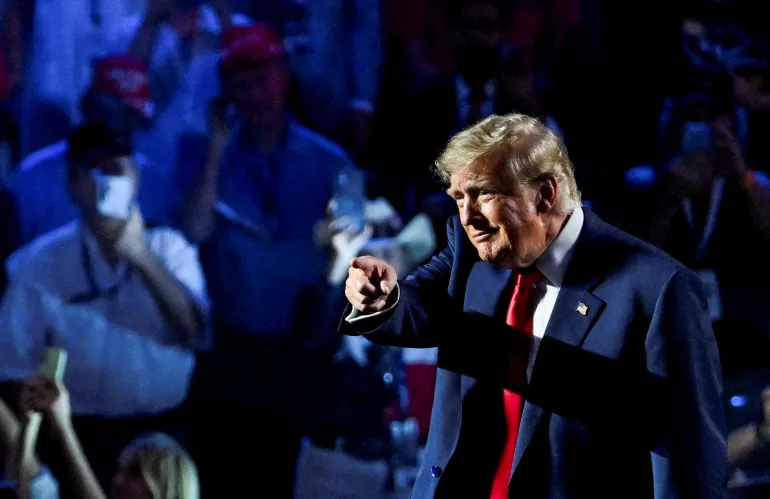
由于今年二月爆发的美以对伊朗战争引发全球能源危机,导致美国汽油价格创下历史新高,特朗普面临其政治生涯中最低的支持率。
Trump is facing the worst approval ratings of his political career amid record-high gas prices in the US due to the global energy crisis triggered by the US-Israel war on Iran, which began in February this year.
卡内基国际和平基金会的瓦伊什纳夫表示,“一个受挫的特朗普将符合印度的利益”。
Vaishnav, of Carnegie Endowment, said that “a chastened Trump would be in India’s interests”.
他说:“国会山上有许多民主党人,更不用说共和党人,都对该政府处理美印关系的方式感到愤怒。虽然他们可能对印度的政治、经济和外交政策有批评,但他们真心相信强大的美印伙伴关系的合理性。”他表示,由民主党主导的国会可能会对华盛顿的外交政策产生“缓和影响”。
“There are many Democrats on Capitol Hill, not to mention Republicans, who are livid with this administration’s handling of US-India ties,” he said. “While they might have their criticisms of India’s politics, economics, and foreign policy, they genuinely believe in the logic of a strong US-India partnership.”A Democrat-dominated Congress could have a “moderating impact” on Washington’s foreign policy, he said.
但专注于南亚问题的华盛顿分析师迈克尔·库格尔曼表示,他怀疑特朗普的外交政策会受到选举结果的影响,“至少在涉及印度问题上不会”。
But Michael Kugelman, a Washington-based analyst on South Asia, said he doubts Trump’s foreign policy would be affected by the election results, “at least not when it comes to the question of India”.
库格尔曼指出,特朗普正步入其总统任期的最后阶段——他依法无法竞选第三届——并且“在与新德里打交道时,他将继续推行他认为最能促进美国经济利益的政策”。
Kugelman noted that Trump is entering the last era of his presidency – he cannot legally run for a third term – and “he is going to continue to pursue a policy that he would think could best advance US economic interests” when it comes to dealing with New Delhi.
“如果他认为这意味着要威胁对印度加征关税,他就会那么做。”危机组织的东蒂告诉半岛电视台,新德里希望特朗普卸任后双边关系能够改善,“并且华盛顿能采取更耐心、更具战略性的做法”。
“If he thinks that could entail threatening additional tariffs on India, then he would do that.”Crisis Group’s Donthi told Al Jazeera that New Delhi would hope that bilateral relations improve after Trump leaves office, “and that [Washington] can take a more patient, strategic approach”.
但他同时表示,一个削弱的特朗普未必会给印度带来喘息空间,“因为在给印度施压的必要性上,似乎存在更广泛的共识(在特朗普阵营的共和党人中)”。
But, meanwhile, he said, a weakened Trump might not necessarily bring relief to India, “as there seems to be broader consensus [among Trump-aligned Republicans] on the need to pressure India”.
对新德里而言,这种局面标志着与短短几年前相比发生了戏剧性的转变。
For New Delhi, that landscape marks a dramatic shift from just a few years ago.
两年前,特朗普赢得2024年大选几天外交部长苏杰生满面春风地说:“许多国家今天对美国感到紧张,但说实话——我们[印度]不是其中之一。”如今,那些笑容已不复存在。
Two years back, days after Trump had won the 2024 election, Foreign Minister Jaishankar said, with a wide smile, that “many countries are nervous about the US today, but let’s be honest — we [India] are not one of them”. Today, those smiles are gone.