日本推动扩大与孟加拉国的工业和港口合作,分析人士认为,这可能将这个南亚国家转变为区域贸易门户,连接东南亚和更广泛的印太市场,同时使达卡的经济关系多元化。
Japan’s push to expand industrial and port cooperation with Bangladesh could transform the South Asian country into a regional trade gateway, analysts say, connecting markets in Southeast Asia and the wider Indo-Pacific while diversifying Dhaka’s economic ties.
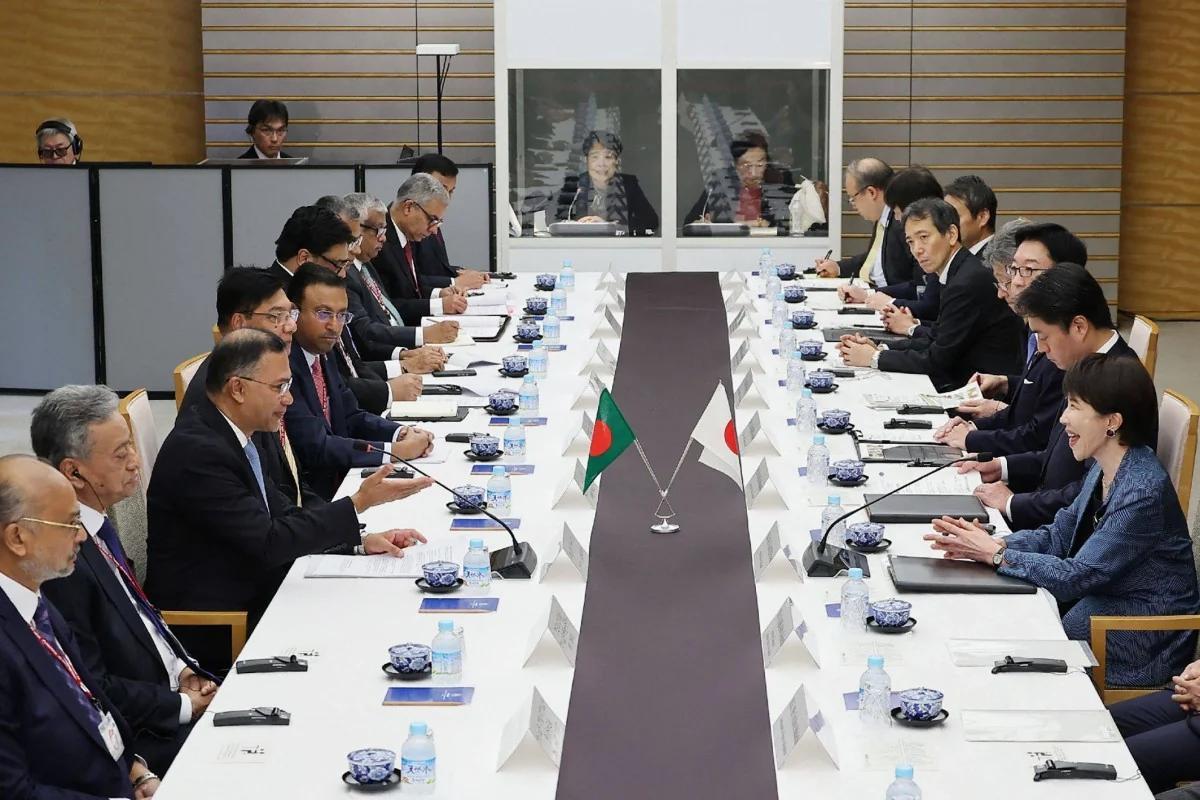
该计划是在孟加拉国总理塔里克·拉赫曼本周对日本进行正式访问期间宣布的。拉赫曼欢迎东京承诺在未来五年投资60亿美元,这可能有助于振兴因能源短缺而受挫的经济,并减少其对成衣出口的严重依赖。
The plan was announced during Bangladeshi Prime Minister Tarique Rahman’s official visit to Japan this week. Rahman welcomed Tokyo’s pledge of US$6 billion in investment over the next five years, which could help revive an economy hit by energy shortages and reduce its heavy reliance on garment exports.
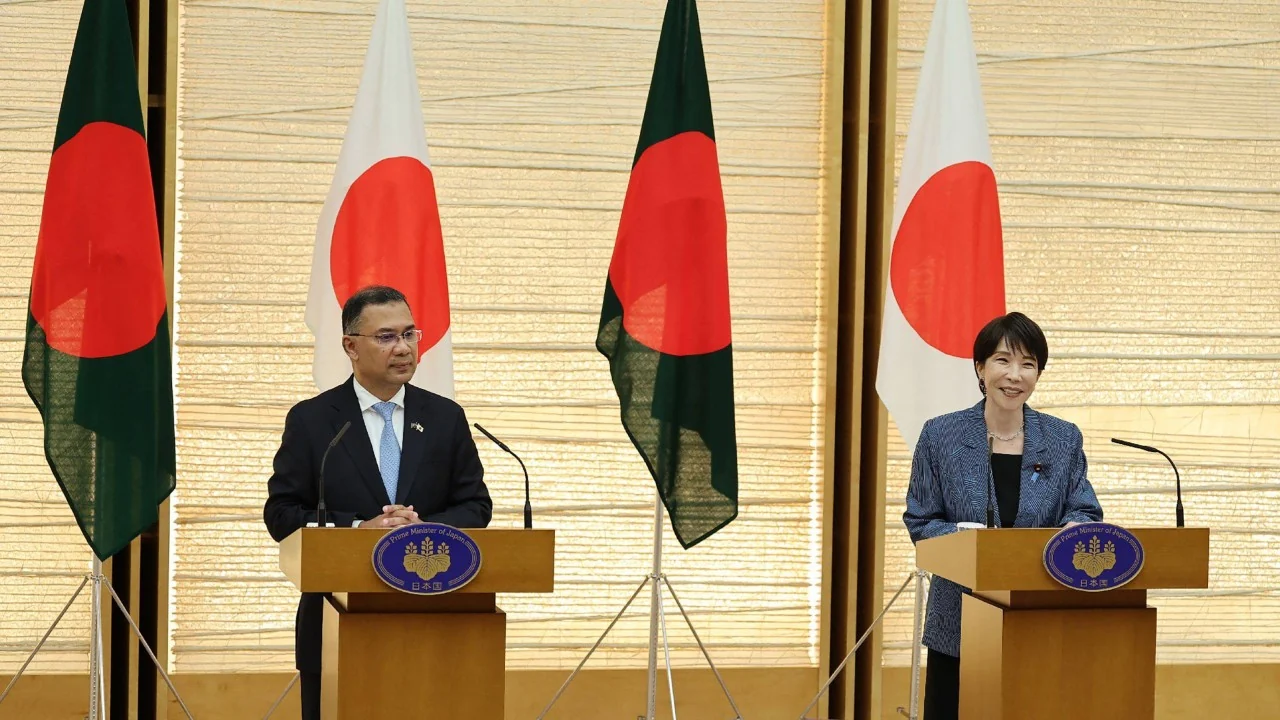
“我们的雄心很明确:将两国间的友谊转化为经济增长、机遇和共同繁荣的强大引擎,”拉赫曼周二在东京与日本首相高市早苗举行的联合记者会上表示。拉赫曼于10月26日至29日对日本进行为期四天的正式访问。
“Our ambition is clear: to turn this friendship between our two nations into a powerful engine of economic growth, opportunity and shared prosperity,” Rahman said on Tuesday at a joint press conference in Tokyo with Japanese Prime Minister Sanae Takaichi. Rahman is on a four-day official visit to Japan from October 26 to 29.
分析人士指出,达卡争取日本投资的举措,与今年早些时候当选的新政府的目标一致,即通过摆脱对中国和印度的传统依赖,获得更大的战略自主权。
Analysts noted that Dhaka’s push for Japanese investment aligned with the goals of its new government, elected earlier this year, to gain greater strategic autonomy by looking beyond its traditional reliance on China and India.
“更重要的是,他们希望实现多元化并寻求投资,”印度O.P.金德尔全球大学国际事务教授斯里拉达·达塔说。“他们一直无法摆脱对成衣行业的[依赖]。”“他们可能把日本视为一个值得信赖的投资伙伴,”她补充道。
“More importantly, they want to diversify and seek investments,” said Sreeradha Datta, a professor of international affairs at O.P. Jindal Global University in India. “They have not been able to diversify from [reliance on] the ready-made garments sector.”“They are probably looking at Japan as a trustworthy investment partner,” she added.
孟加拉国正努力恢复疫情前的增长,由于中东供应中断引发的能源危机加剧了其工业困境。国际货币基金组织预测,该国2026-27财年国内生产总值增长率为3.2%,低于4月份早先预测的4.3%。
Bangladesh is struggling to revive its pre-pandemic growth, as an energy crisis sparked by Middle East supply disruptions has exacerbated its industrial woes. The International Monetary Fund has projected the country’s gross domestic product growth at 3.2 per cent for the 2026-27 financial year, down from an earlier forecast of 4.3 per cent made in April.
高市早苗与拉赫曼发表联合声明称,两国将把2014年启动的“孟加拉湾工业增长带倡议”(即“大B倡议”)升级为更广泛的“大B共享繁荣”框架,旨在维护两国经济自主权并应对地缘政治风险。
A joint statement by Takaichi and Rahman said the two countries would upgrade their 2014 Bay of Bengal Industrial Growth Belt Initiative, known as Big-B, into a broader “Big-B for Shared Prosperity” framework aimed at safeguarding their economic autonomy and addressing geopolitical risks.
该倡议聚焦于孟加拉国的马塔巴里深水港。该港口在日本大量投资下建设,预计其处理大型商船的能力将提升达卡的出口物流,同时为包括印度东北部各邦(经特里普拉邦)在内的邻国内陆市场提供海上通道。
The initiative centres on Bangladesh’s Matarbari deep-sea port. Developed with heavy investment from Japan, the port’s capacity to handle large commercial ships is expected to boost Dhaka’s export logistics while offering maritime access to neighbouring landlocked markets, including India’s northeastern states via Tripura.
达塔表示:“印度非常乐见孟加拉国扩大与日本的伙伴关系。印度认为日本不会在该地区做任何损害印度利益的事。”她补充说,新德里不太可能将达卡争取战略自主的举动视为威胁。
“India is more than happy that Bangladesh expands its partnership with Japan. India believes Japan will not do anything in the region that is not in India’s interest,” Datta said, adding that New Delhi is unlikely to view Dhaka’s push for strategic autonomy as a threat.
她还补充道:“拉赫曼访日向中国传递的信号,恐怕比向印度更强烈。”
“Rahman’s visit to Japan is probably a bigger message to China than India,” she added.
总部位于新德里的智库“全球贸易研究倡议”创始人阿杰·斯里瓦斯塔瓦表示,港口扩建不太可能损害中国利益。
Ajay Srivastava, founder of the Delhi-based think tank the Global Trade Research Initiative, said the port expansion was unlikely to hurt China.
斯里瓦斯塔瓦说:“日本的投资可能减少孟加拉国对单一伙伴的依赖,增强其议价能力。但中国仍将是机械和货物的重要供应国,而印度的地理位置使其成为区域贸易和运输的核心。”
“Japan’s investment could reduce Bangladesh’s reliance on any single partner and strengthen its bargaining power. But China will remain an important supplier of machinery and goods, while India’s geography makes it central to regional trade and transportation,” Srivastava said.
他表示,虽然新德里可能欢迎改善其通往东北部通道的项目,但鉴于中日关系紧张,北京可能会对东京日益增长的影响力持更谨慎的态度。
While Delhi might welcome projects that improved access to its northeast, Beijing might take a more cautious view of Tokyo’s growing influence amid strained Sino-Japanese ties, he said.
印度是孟加拉国的主要基本商品和原材料供应国——包括棉纱、石油产品和工程产品——而中国一直是基础设施建设的关键融资方和建设伙伴,涉及桥梁、铁路网络和电站等项目。
India is a major supplier of essential commodities and raw materials to Bangladesh – including cotton yarn, petroleum products and engineering goods – while China has been a key financier and construction partner for infrastructure, from bridges and rail networks to power stations.
近年来,东京与达卡之间的关系不断推进。2023年,两国将双边关系提升为“战略伙伴关系”,随后于今年2月签署了经济伙伴关系协定,降低了关税壁垒。
Ties between Tokyo and Dhaka have been advancing in recent years. In 2023, the two countries upgraded ties to a “strategic partnership”, followed by an economic partnership agreement in February that lowered tariff barriers.
ESSEC商学院经济学副教授贾默斯·林表示,孟加拉国仍是一个信贷受限的发展中国家,会欢迎来自日本的外国投资,尤其是因为日本很可能被视为“在经济和政治上保持中立”。
Jamus Lim, an associate professor of economics at ESSEC Business School, said Bangladesh remained a credit-constrained developing country that would welcome foreign investment from Japan, particularly as it was likely to be viewed as “economically and politically neutral”.
他指出,日本有着在亚洲各地提供金融支持的悠久历史,这一模式被称为“雁行模式”,即由一个领先经济体带动区域发展,其他国家依次跟进。
He noted that Japan had a long history of extending financial support across Asia under what is known as the “flying geese model”, where a lead economy drives regional development that is sequentially followed by others.
海上安全合作也随着贸易一同扩大。日本外务省周一表示,双方已互换照会,涉及一笔21.2亿日元(1340万美元)的赠款,用于向孟加拉国海岸警卫队提供巡逻艇,以在孟加拉湾开展海上监视和搜救行动。
Maritime security cooperation has expanded alongside trade. Japan’s Ministry of Foreign Affairs said on Monday that notes were exchanged for a 2.12 billion yen (US$13.4 million) grant to supply the Bangladesh coastguard with patrol vessels for maritime surveillance and search-and-rescue operations in the Bay of Bengal.
斯里瓦斯塔瓦说:“达卡最好的做法是把商业理由讲清楚:更强的港口、更多的工厂和更广泛的市场准入。这将有助于它吸引投资,同时保留做出自身战略选择的空间。”驻伦敦的地缘政治分析师普里亚吉特·德布萨卡尔表示,尽管东京通过开发一条连接南亚和东南亚的关键贸易走廊而获益,但日本的合作无法取代地区性的依赖关系,例如从印度跨境进口能源。德布萨卡尔说:“他们将不得不谨慎地平衡各种关系。”
“Dhaka’s best approach is to make the commercial case clearly: stronger ports, more factories and wider market access,” Srivastava said. “That would help it attract investment while preserving room to make its own strategic choices.”Priyajit Debsarkar, a London-based geopolitical analyst, said that while Tokyo gained by developing a key trade corridor bridging South and Southeast Asia, Japanese cooperation could not replace regional dependencies, such as cross-border energy imports from India. “They will have to balance things carefully,” Debsarkar said.
德布萨卡尔指出,过去一年里,围绕进入印度东北部各邦的通道——这些邦通过狭窄的西里古里走廊(即“鸡脖子”)与印度大陆相连——的激烈言论引发了反弹,并在德里触发了安全辩论。前总理谢赫·哈西娜在两年多前因大规模学生抗议而下台后逃往印度,此后紧张局势骤然升级。
Debsarkar noted that heated rhetoric over the past year regarding access to India’s northeastern states – connected to the Indian mainland via the narrow Siliguri Corridor, or “Chicken’s Neck” – sparked backlash and triggered security debates in Delhi. Tensions flared following the ousting of former prime minister Sheikh Hasina, who fled to India after being toppled in mass student protests over two years ago.
德布萨卡尔还表示,对德里而言,拉赫曼访问日本带来的一线希望在于,东京可能说服达卡维持有利于地区发展的密切跨境关系。
For Delhi, the silver lining of Rahman’s Japan visit was the prospect Tokyo could convince Dhaka to maintain close cross-border ties that benefit regional development, Debsarkar added.