美国国家航空航天局(NASA)上一次在近地轨道测试载人登月舱时,是这样做的:首先,一枚土星5号火箭从佛罗里达州肯尼迪航天中心发射升空,搭载三名宇航员、一艘阿波罗飞船和一个登月舱。随后他们进入轨道,宇航员驾驶了两艘飞船。然后他们返回地球。那次直截了当的任务完成于57年前,即阿波罗9号飞行期间。
The last time the folks at NASA tested a crewed lunar lander in low-Earth orbit, here’s how they did it. First, a Saturn 5 rocket lifted off from the Kennedy Space Center (KSC) in Florida carrying three astronauts, an Apollo spacecraft, and a lunar module. Then they got to orbit and the astronauts flew both ships. Then they came home. That straightforward mission was accomplished 57 years ago, during the flight of Apollo 9.
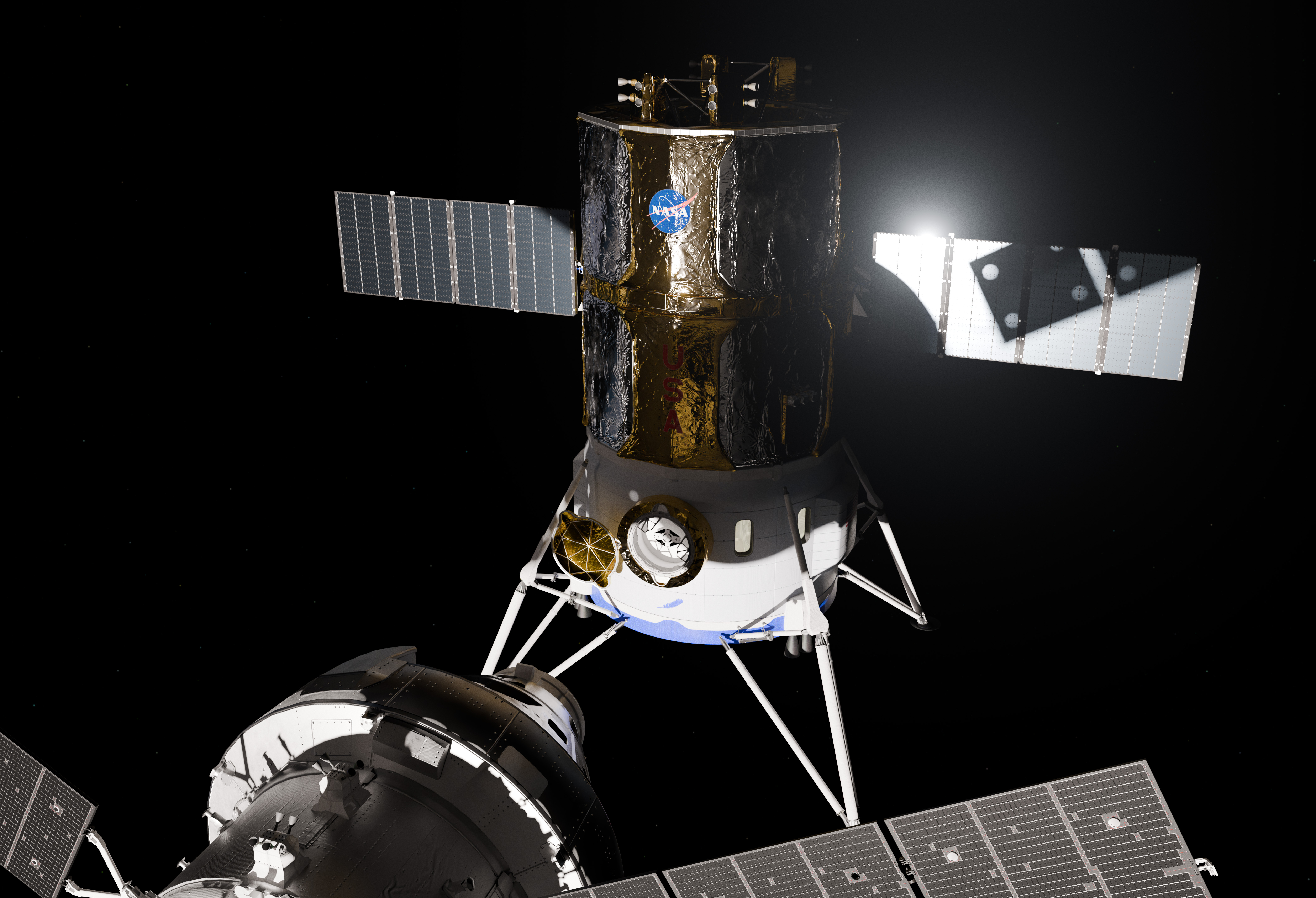
NASA下一次尝试类似任务——计划于2027年夏季进行的阿耳忒弥斯3号飞行——时,情况将复杂得多。首先,一枚不载人的蓝色起源新格伦火箭将从肯尼迪航天中心发射,将该公司的“蓝月”着陆器送入轨道。然后,NASA将发射其名称平淡的太空发射系统(SLS)月球火箭,搭载四名阿耳忒弥斯3号宇航员乘坐猎户座飞船。随后,乘组将与“蓝月”交会、对接并进入其中,在返回猎户座之前检查其各系统。
The next time NASA attempts something of the kind—during the planned flight of Artemis III in the summer of 2027—things will be a lot more complicated. First an uncrewed Blue Origin New Glenn rocket will launch from KSC carrying the company’s Blue Moon lander into orbit. Then NASA will launch its prosaically named Space Launch System (SLS) moon rocket, carrying the four Artemis III astronauts aboard an Orion spacecraft. Then the crew will rendezvous with the Blue Moon, dock with it and enter it, checking out its systems before returning to the Orion.
之后,SpaceX将发射一枚星舰火箭,搭载其自己的星舰着陆器,该着陆器同样不载人。宇航员也将与那艘飞船交会并对接,但不会进入,因为它尚未配备生命支持系统。然后他们将分离,乘组将在猎户座上再花几天时间进行测试。从首次升空到溅落,所有这些工作将耗时长达17天。只有该任务一切顺利,NASA才能实现其在2028年阿耳忒弥斯4号飞行期间将宇航员送上月球表面的目标——并在此过程中赢得与中国的新一轮太空竞赛。
Then SpaceX will launch a Starship rocket carrying its own Starship lander, which will also be uncrewed. The astronauts will rendezvous and dock with that ship too, but not enter it since it will not yet be equipped with a life support system. Then they will separate and the crew will spend a few more days running tests on the Orion. All of that work will take up to 17 days from first liftoff to splashdown. And only if everything goes just right with that mission can NASA achieve its goal of landing astronauts on the lunar surface during the 2028 flight of Artemis IV—and in the process, win a new space race with China.
10月23日,美国宇航局局长贾里德·艾萨克曼与副局长阿米特·克沙特里亚、阿耳忒弥斯项目负责人杰里米·帕森斯在肯尼迪航天中心举行了一场长达两小时的马拉松式新闻发布会,详细介绍了阿耳忒弥斯三号和四号任务的计划,承认面临的障碍相当大,但坚称目标是可以实现的。如今的NASA资金紧张、时间线漫长,或许已不是当年那个凭借充裕预算和满库火箭、仅在1968年至1972年间就完成了九次载人阿波罗登月任务的NASA,但它的成功不会逊色。
On Oct. 23, NASA Administrator Jared Isaacman—along with Associate Administrator Amit Kshatriya and Artemis Program Manager Jeremy Parsons—conducted a marathon two-hour press conference at KSC, detailing plans for Artemis III and IV, conceding that the hurdles are considerable, but insisting the goals are within reach. The current NASA, with its tight funding and long timelines, may not be the old NASA that used its generous budgets and garage full of rockets to pop off nine crewed Apollo lunar missions just from 1968 to 1972, but it will be no less successful.
艾萨克曼说:“在那段短得惊人的时间里,几代人曾只存在于科幻小说书页中的雄心,变成了人类最伟大的成就;而在数十亿年里,地球孕育的生命第一次踏上了另一个世界。”“如今,在把宇航员(重新)送上月球这项要求极高且危险的事业中,NASA必须承担近乎不可能的任务……只有这样,我们才能让阿耳忒弥斯4号拥有最大可能,在2028年安全、成功地把美国人送回月球表面。”
“In that remarkably short span of time, the ambitions of generations once confined to the pages of science fiction became humanity's greatest achievement, and for the first time in billions of years, life born on Earth would set foot on another world,” said Isaacman. “Now, in this incredibly demanding and dangerous business of putting astronauts [back] on the moon, NASA must own the near impossible…That is how we give Artemis IV the greatest possible chance of safely and successfully returning Americans to the lunar surface in 2028.”
阿耳忒弥斯3号的极端复杂性,部分源于NASA在2021年和2023年作出的两项决定,部分则源于已知火箭技术的简单局限。如果工程物理是完美的——而工程物理从来不会完美——登月乘组本可以只用一艘航天器抵达月球、着陆、点火升空并返回家园。但一艘能完成所有这些任务、并且坚固到足以重返地球大气层的航天器,会重得根本无法进行月球着陆及随后的升空。
The extreme complexity of Artemis III is owing in part to a pair of decisions NASA made in 2021 and 2023 and in part to the simple limits of known rocket technology. If the engineering physics were perfect—and engineering physics are never perfect—a lunar crew could use just one spacecraft to get to the moon, land, blast back off, and return home. But a spacecraft that could do all of those jobs and remain robust enough to reenter the Earth’s atmosphere would simply be too heavy for a lunar landing and subsequent liftoff.
于是,如同阿波罗时代一样,任务将分由两艘飞船承担——一艘轻量级飞船负责着陆和升空,一艘在轨运行的母船负责在月球探索结束后把乘组带回地球。阿波罗计划期间,NASA选中格鲁曼飞机工程公司建造其矮胖、四条腿、高23英尺的登月舱(LM)。那是一艘结构简单、重心低的飞船,确保在月球表面有稳定的立足点。
Instead, as in the Apollo days, the job will be divided between two ships—one lightweight one to perform the landing and liftoff and one orbiting mothership to bring the crew home when the lunar exploration is done. During Apollo, the space agency selected Grumman Aircraft Engineering to build its squat, four-legged 23-ft. tall, lunar module (LM). It was a simple ship with a low center of gravity, ensuring a stable foothold on the lunar surface.
格鲁曼于1962年签下合同,并及时交付,用于阿波罗9号及其后的任务。2021年,NASA同样授予了一份载人月球航天器合同——这次给了SpaceX及其“星舰”着陆器。这一决定令人费解。
Grumman inked the contract in 1962 and delivered the goods in time for Apollo 9 and the missions that followed. In 2021, NASA similarly awarded a contract for a crewed lunar spacecraft—this time to SpaceX and its Starship lander. The decision was a headscratcher.
“星舰”是一个类似筒仓的圆柱体,带有锥形鼻锥,高165英尺,与其说让人想到真正的航天器,不如说让人想起1953年那本关于丁丁月球冒险的插画书。阿波罗宇航员曾用一架九级梯子下到月球表面。而乘坐“星舰”的阿耳忒弥斯宇航员将使用电梯。批评者和竞争对手对这一方案群起而攻之——尤其是因为这台巨型机器可能在月球上倾覆的风险——2023年,NASA发布了第二份合同,这次给了蓝色起源,该公司承诺建造一个更接近低矮的阿波罗登月舱的着陆器。
Starship is a silo-like cylinder with a tapered nose cone, measuring 165 ft. tall, calling to mind less an actual spacecraft than the 1953 illustrated book about Tintin’s adventures on the moon. Apollo astronauts used a nine-rung ladder to get down to the lunar surface. Artemis astronauts aboard Starship will use an elevator. Critics and competitors pounced on the plan—not least because of the risk that the giant machine could tip over on the moon—and in 2023, NASA issued a second contract, this time to Blue Origin, which promised to build a lander more in keeping with the low-slung Apollo lunar module.
两家公司都继续生产各自的着陆器,且都将有机会在历史性的阿耳忒弥斯4号任务中飞行——胜者将由两艘飞船在阿耳忒弥斯3号任务期间的表现决定。
Both companies have continued to produce their landers and both will get a shot to fly on the historic Artemis IV mission—with the winner to be determined by the performance of the ships during Artemis III.
但两家公司都进展不顺。自2023年以来,SpaceX已发射了14艘“星舰”,直到2026年9月才首次实现地球轨道飞行。与此同时,蓝色起源的“新格伦”火箭从2025年1月到2026年4月共发射三次,随后在2026年5月对其第一级发动机进行测试时,发射台上发生大规模爆炸。这场灾难对蓝色起源而言是一次重大挫折,尤其是发射台基础设施本身在爆炸中部分被毁。此后该公司一直在拼命努力以求反弹,在10月23日的新闻发布会上,NASA高层称赞了其努力。
But neither company has had an easy go of things. SpaceX has launched 14 Starships since 2023, only achieving Earth orbit for the first time in September 2026. Blue Origin’s New Glenn rocket, meanwhile, launched three times from January 2025 to April 2026, before a massive explosion on the launch pad during a test of its first stage engines occurred in May 2026. The disaster marked a major setback for Blue Origin, not least because the pad infrastructure itself was partially destroyed in the blast. The company has been working feverishly since to rebound, and at the Oct. 23 press conference, the NASA brass praised its efforts.
“蓝色起源的新格伦团队在五月事故后重返飞行方面取得的进展令世界惊叹,”帕森斯说。“我们与他们密切合作。我们有超过100名NASA团队成员参与重返飞行……我看到蓝色起源动员了一支绝对的大军,日夜不停地工作。”假设该公司能保持这一进度,它很有可能成为阿尔忒弥斯三号竞标的赢家。这部分是因为其竞争对手SpaceX在该任务中不会飞行其星际飞船登陆器的完整版本,而是相当于一艘配备对接口的原型船,仅用于测试猎户座飞船和星际飞船能否在轨道上会合并对接。
“Blue Origin's New Glenn team has amazed the world with their progress for return to flight after the incident in May,” said Parsons. “We're working closely with them. We have over 100 NASA team [members] engaged throughout return to flight…and I have seen Blue Origin mobilize an absolute army working around the clock.”Assuming the company can maintain that pace, it stands a good chance of being the winner in the Artemis III sweepstakes. That’s partly because its rival, SpaceX, will not fly a full-up version of its Starship lander during the mission, but rather what amounts to a boilerplate ship equipped with a docking port that will test only whether the Orion and the Starship can meet and link up in orbit.
蓝色起源的蓝月亮登陆器也不会是一辆完全运行的车辆,但它将拥有一个功能正常的乘员舱,允许阿尔忒弥斯三号宇航员进入并进行测试。
Blue Origin’s Blue Moon lander won’t be a fully operational vehicle either, but it will have a functioning crew compartment that will allow the Artemis III astronauts to enter and run tests.
“他们将打开舱门。他们将进入登陆器。他们将评估环境控制系统、生命支持系统,”帕森斯说。“我们将确认航天器能够保持适当的大气压力,我们还将测试紧急场景、双车辆控制,并让我们的任务控制团队接受考验。”尽管新闻发布会上充满信心,但NASA没有人假装阿尔忒弥斯三号任务没有大量的环节和许多可能出错的事情,直到航天机构能够安排2028年阿尔忒弥斯四号登陆。
“They're going to open up the hatch. They're going to enter the lander. They're going to evaluate the environmental controls, the life support systems,” says Parsons. “We'll confirm that the spacecraft can maintain the right atmospheric pressure, and we're also going to test emergency scenarios, dual vehicle control, and we're going to put our Mission Control teams through their paces." For all of the confidence expressed at the press conference, no one at NASA pretends that the Artemis III mission doesn’t have a lot of moving parts and a lot of things that could go badly wrong before the space agency can tee up the 2028 Artemis IV landing.
即使该任务完全成功,NASA仍将要求两款竞争性航天器执行一次无人月球着陆和起飞,以进一步证明其能力。只有在那之后,登陆器才会获得载人认证。
And even if the mission does completely succeed, NASA will still require both competing spacecraft to execute an uncrewed lunar landing and liftoff to prove their mettle further. Only then will the landers be certified to carry crew.
两家公司能否在“阿耳忒弥斯3号”发射与2028年底“阿耳忒弥斯4号”飞行之间最长18个月的时间内完善工程技术并完成无人飞行任务,目前尚不确定。艾萨克曼本人表示相信目标日期能够实现,不会滑到2029年或更晚。但他也承认,自阿波罗计划以来,美国航天局多年来的不确定性——优先事项从天空实验室转向航天飞机,再转向国际空间站,以及那些耗资巨大却始终毫无进展的反反复复的重返月球计划——使该机构落在了后面,尤其是在与中国持续竞争的背景下。
Whether the two companies can perfect the engineering and fly the uncrewed missions in the maximum 18 months that will elapse between the launch of Artemis III and the flight of Artemis IV at the end of 2028 is uncertain. Isaacman, for one, expresses confidence that the target date can be met without slipping into 2029 or later. But he acknowledges that NASA’s years of uncertainty since the Apollo program—with priorities shifting from Skylab to the shuttle to the International Space Station, and with start-stop programs to return to the moon that burned through money but never got anywhere—have set the agency back, especially as it concerns the ongoing competition with China.
“今天我们正处于一场新的太空竞赛之中,尽管积累了几十年的知识、技术也取得了非凡的进步,这场竞赛本不必如此胶着,”他说。“这就把我们带到了今天所处的时刻,因为容忍和捍卫现状的意愿已经走到了尽头。我们是为了使命而来,是为了交付世界对历史上最有成就的航天机构的期望。”
“Here we are today, very much in a new space race, and despite decades of accumulated knowledge and extraordinary advancements in technology, this race will be much closer than it ever needed to be,” he says. “That brings us to the moment we find ourselves in today, because the appetite for tolerating and defending the status quo has reached its conclusion. We are here for the mission, and to deliver the outcomes the world expects of the most accomplished space agency in history.”