在即将到来的特大城市时代,非洲未来的繁荣取决于大幅提升城市规划水平。
Africa’s future prosperity depends on getting a lot better at urban planning, in a looming era of mega cities.
这是世界银行周四发布的一项新研究得出的评估结论。该研究发现,无序的城市扩张正在使企业发展趋于碎片化,推高了企业和工人的成本,并阻碍了生产力的提高。
That’s the assessment of a new World Bank study published on Thursday, which found that unplanned urban expansion was fragmenting business development, raising costs for firms and workers and stunting productivity.
预计到2050年,该地区城镇人口将几乎翻一番,达到17亿,更好的规划和基础设施投资是非洲最大的机遇,也是最大的挑战。
With the number of people living in cities and towns across the region expected to almost double to 1.7 billion by 2050, better planning and infrastructure investment is Africa’s biggest opportunity and largest challenge.
世界银行首席知识官帕斯卡尔·多诺霍在该研究的前言中写道:“现在关于城市发展地点和方式的决策,可以在未来几十年里帮助创造就业机会、提高生产力并吸引私人投资。尽早塑造城市扩张,莫让今天的选择成为明天的制约。”该研究指出,由于多年的失控城市扩张,该地区面临着错失由迅速增长的劳动力带来的机遇的风险。
“Decisions made now about where and how cities grow can help create jobs, raise productivity, and attract private investment for decades to come,” World Bank Chief Knowledge Officer Paschal Donohoe wrote in the foreword to the study.“Shape urban expansion early, before today’s choices become tomorrow’s constraints.”The study, , describes aregion that risks missing out on the opportunities presented by a rapidly growing workforce because of years of uncontrolled urban expansion.
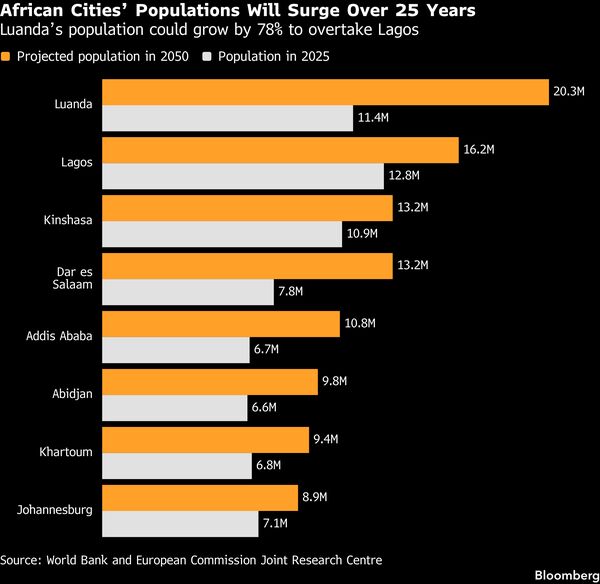
研究发现,到本世纪中叶,安哥拉首都罗安达的人口将增长78%,达到约2000万人,超越尼日利亚的拉各斯成为该地区最大的大都市;非洲人口超过700万的城市将至少达到15个,而2025年时这一数字为5个。
It found that by the middle of the century, the Angolan capital Luanda will have grown its population by 78% to around 20 million people, leapfrogging Nigeria’s Lagos as the region’s biggest metropolis, with at least 15 cities in Africa having populations of more than 7 million, compared with five in 2025.
这种杂乱无章的发展意味着,撒哈拉以南非洲的城市工人平均支付的交通费用比其他地区的城市居民高出42%,并且花费了大量时间在上下班途中。
That haphazard development means that sub-Saharan Africa’s urban workers on average pay 42% more for transport than city dwellers in other regions, and spend far more of their time getting to and from work.
世界银行表示:“工作岗位分布较为分散,未能形成能够刺激生产力的关键地带密集中心。”这“既阻碍了私人投资,也妨碍了通常与高人口密度相关的集聚经济的实现。”糟糕的公共服务也是一个制约因素。在整个撒哈拉以南非洲,71%的企业报告称面临断电困扰,四分之一的企业缺乏供水,同样比例的企业将交通视为开展业务的“重大或非常严重的制约因素”。
“Jobs are spread thinly rather than forming dense centers in key locations that can stimulate productivity,” the World Bank said. This “stymies both private investment and the realization of the agglomeration economies that are typically associated with high levels of population density.”Poor public services are also a constraint. Across sub-Saharan Africa, 71% of firms report struggling with electrical outages and one in four lack water supplies, with the same proportion ranking transport as “a major or very severe constraint” to doing business.
与发达经济体相比,该地区还严重缺乏受过培训的建筑师和城市规划师。
The region also faces a severe lack of trained architects and urban planners compared with advanced economies.
*为了解决这些缺陷,世界银行表示,应允许非洲城市筹集更多自有税收收入,向市镇下放决策权并直接借款。
To tackle these shortcomings, the World Bank said African cities should be allowed to raise more of their own tax revenue, devolve decision-making to the municipalities and borrow directly.
世界银行表示:“除了南非之外,亚的斯亚贝巴实际上依然是撒哈拉以南非洲唯一通过合同债务为大量基础性实体基础设施融资的城市。”
“Beyond South Africa, Addis Ababa remains virtually the only sub-Saharan African city to have financed substantial amounts of foundational physical infrastructure through contractual debt,” the World Bank said.