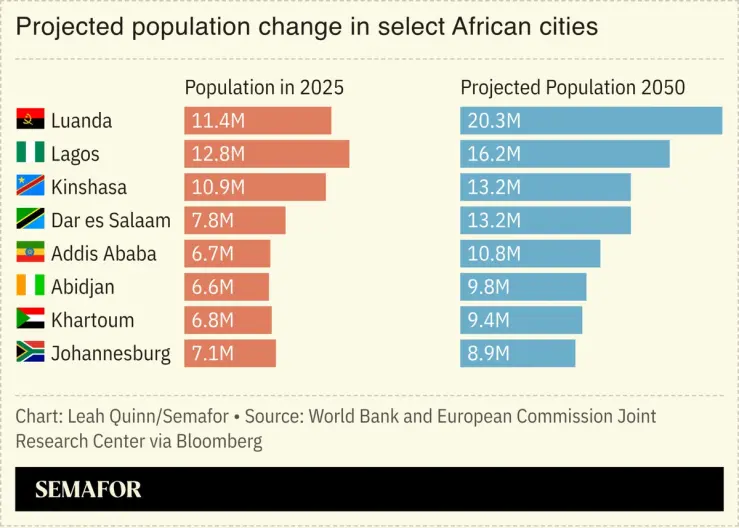
世界银行一份新报告称,撒哈拉以南非洲城市必须投资于城市规划,为其快速增长的人口创造就业机会。预计到2050年,非洲城市人口将几乎翻倍,达到17亿,其中罗安达、拉各斯和金沙萨预计将引领增长。
Sub-Saharan African cities must invest in urban planning to create jobs for their rapidly growing populations, a new World Bank report said. Africa’s urban population is projected to nearly double to 1.7 billion by 2050, with Luanda, Lagos, and Kinshasa expected to lead the growth.
世界银行表示,城市化意味着寻找工作的年轻人数量激增,这要求政策制定者设计出能够“聚集企业、工人、土地、基础设施、服务和连通性”的环境。例如,尼日利亚的商业首都拉各斯是非洲科技和金融中心之一,但仍缺乏建设现代城市所需的许多关键基础设施——比如高效的交通。报告称,如果城市规划者对当今未开发的土地做出正确决策,这一基础设施缺口便是吸引私人投资的“重要机遇”。
Urbanization suggests a surge in the number of young people seeking jobs, creating the need for policymakers to design environments that can “concentrate firms, workers, land, infrastructure, services, and connectivity,” the bank said. For example, Lagos, Nigeria’s commercial capital, is one of Africa’s centers of tech and finance, but it still lacks much of the essential infrastructure — like efficient transportation — that make for a modern city. This infrastructure deficit is an “important opportunity” to attract private investment if urban planners make the right decisions about today’s underdeveloped lands, the report said.