北京:中国的人工智能泡沫终于破灭了吗?中国AI股票一度大幅上涨的行情已失去大部分动能,一轮猛烈的抛售引发疑问:市场对这项技术的热情,是否已把股价推高到企业盈利无法支撑的水平。
BEIJING: Has China’s artificial intelligence bubble finally burst? A once-soaring rally in Chinese AI stocks has lost much of its momentum, with a sharp sell-off raising questions about whether enthusiasm for the technology has pushed share prices beyond what companies' earnings could justify.
不过,尽管这轮下跌引发了关于AI投资泡沫是否正在泄气的争论,分析人士对CNA表示,股价下跌并不一定意味着中国更广泛的AI雄心遭遇挫折,也不意味着其他市场将迎来类似的回调。
But while the decline has fuelled debate over whether an AI investment bubble is deflating, analysts told CNA that falling share prices do not necessarily signal a setback for China’s broader AI ambitions - or suggest that other markets are headed for a similar correction.
截至周四(10月29日),追踪上海证券交易所50家主要科技与创新企业的中国科创50指数,已在四个月内下跌超过40%,市值蒸发约4800亿美元。
As of Thursday (Oct 29), China’s STAR 50 Index, which tracks 50 major tech and innovation companies on the Shanghai Stock Exchange, had fallen more than 40 per cent over four months, wiping out some US$480 billion in market value.
这一跌幅的规模,令外界重新审视:在AI上的巨额支出能否转化为更高的利润,以及这轮逆转对中国科技雄心以及更广泛的全球AI投资热潮意味着什么。
The scale of the decline has brought renewed scrutiny as to whether heavy spending on AI can translate into higher profits, and what the reversal means for China’s tech ambitions and the wider global AI investment boom.
“这轮抛售似乎主要是对预期的重新定价,但同时也促使人们更加审视变现能力、盈利能力和资本效率,”特许另类投资分析师协会(CAIA)大中华区分会执行委员会成员黄伟麟(Stephen Wong)表示。该协会是一家总部位于美国的全球性另类投资行业专业机构。
“The sell-off appears to be primarily a repricing of expectations, but it is also prompting more scrutiny of monetisation, profitability and capital efficiency,” said Stephen Wong, an executive committee member of the Greater China Chapter of the Chartered Alternative Investment Analyst (CAIA) Association, a US-based global professional body for the alternative investment industry.
分析人士表示,尽管股价下跌可能使部分中国企业更难融资,但这轮下行不太可能打乱北京更广泛的AI雄心——这些雄心继续受益于政府支持。
While falling share prices could make it harder for some Chinese firms to raise funds, the downturn is unlikely to derail Beijing's broader AI ambitions, analysts said - which continue to benefit from government support.
中国AI股涨势为何失去动能这轮抛售之前,中国股市经历了约两年的上涨行情,部分受AI热情推动,科技股大幅飙升,尤其是在半导体和机器人等行业。尽管经历了大幅回调,估值仍然偏高。一张插图,显示一个机器人正在触摸显示的外汇和股市图表。
WHY CHINA'S AI STOCK RALLY IS LOSING STEAM The sell-off follows a roughly two-year rally in Chinese equities, fuelled in part by enthusiasm for AI that sent technology shares soaring, particularly in sectors such as semiconductors and robotics. Despite the steep correction, valuations remain elevated. An illustration of a robot touching forex and stock market charts displayed.
据路透社报道,截至10月26日,科创50指数的市盈率仍约为其成分股公司过去12个月合计盈利的100倍——较近250倍的峰值有所下降。
As of Oct 26, the STAR 50 was still trading at around 100 times the combined earnings of its constituent companies over the past 12 months - down from a peak of nearly 250 times, according to Reuters.
这表明投资者仍在为未来的增长支付可观的溢价——如果盈利未能达到预期,股票将变得脆弱。
That suggests that investors are still paying a substantial premium for future growth - leaving shares vulnerable if earnings fail to meet expectations.
在线交易平台OANDA的高级市场分析师黄凯文表示,中国股市尤其容易受到投资者情绪逆转的影响。
Kelvin Wong, senior market analyst at online trading platform OANDA, said Chinese equities have been particularly exposed to a reversal in investor sentiment.
黄凯文援引高盛的数据指出,在中国内地上市的A股和香港上市的H股中,AI相关股票约占市值的42%和交易活动的57%。
Citing Goldman Sachs figures, Wong noted that AI-related stocks accounted for about 42 per cent of market capitalisation and 57 per cent of trading activity across mainland-listed A shares and Hong Kong-listed H shares.
“这种集中程度使得市场在投资者开始获利了结时尤其脆弱,”他说。
“That level of concentration leaves the market particularly vulnerable when investors begin taking profits,” he said.
除了投机性交易之外,分析师还指出了一个更为根本的担忧:中国的人工智能热潮能否转化为可持续的利润。
Beyond speculative trading, analysts also pointed to a more fundamental concern: whether China’s AI boom can translate into sustainable profits.
“这不仅仅是过度估值的修正,”法国外贸银行亚太区高级经济学家吴卓殷表示。
“It goes beyond the correction of excessive valuation,” said Gary Ng, senior economist for Asia Pacific at Natixis.
“投资者正在质疑需求能否转化为更高的利润,尤其是在资本支出持续攀升的情况下,”他说。他指的是资本支出,即用于设备和基础设施的开支。
“Investors are questioning whether demand can turn into higher profits, especially as capex continues to climb,” he said, referring to capital expenditure, or spending on equipment and infrastructure.
OANDA的黄凯文指出了中国科技公司和企业之间的激烈竞争——并警告称,即使对AI算力的需求不断增长,激进的定价也可能挤压利润率。
OANDA’s Wong pointed to intense competition among Chinese tech companies and firms - warning that aggressive pricing could squeeze profit margins even as demand for AI computing capacity grows.
分析师表示,地缘政治的不确定性也增加了压力——中国供应商面临美国限制其设备用于美国数据中心的前景,这可能限制它们接触海外客户。
Geopolitical uncertainty has also added to the pressure, analysts said - with Chinese suppliers facing the prospect of US restrictions on their equipment being used in American data centres, which could potentially limit access to overseas customers.
研究机构Gavekal Dragonomics的中国研究副主任Christopher Beddor表示,此次下跌是更广泛的区域性抛售和近期市场流动性枯竭的一部分。
Christopher Beddor, deputy China research director at research firm Gavekal Dragonomics, said that the downturn was part of a wider regional sell-off and a recent drain of market liquidity.
他说:“市场也确实担忧中国部分AI公司的盈利前景,因为它们难以将开放权重模型变现。”他指的是那些底层参数公开可供他人使用和改编的AI模型。
“There are also real concerns about the earnings prospects for some of China's AI companies as they struggle to monetise open-weight models,” he said, referring to AI models whose underlying parameters are publicly available for others to use and adapt.
中国AI雄心的真正考验 尽管跌幅剧烈,分析师警告不要将股市下跌误读为中国AI雄心遭遇更广泛的挫折。
THE REAL TEST FOR CHINA’S AI AMBITIONS Despite the sharp decline, analysts cautioned against mistaking a stock market downturn for a broader setback to China’s AI ambitions.
他们说,更直接的风险在于,投资者信心走弱是否会让中国科技企业更难融资——尤其是那些支出高、收入有限的企业。
The more immediate risk, they said, is whether weaker investor confidence could make it harder for Chinese technology firms to raise capital - particularly those with high spending and limited revenues.
Natixis的Ng表示:“这将使融资在估值和时间上更加困难,特别是对于那些在没有即时收入的情况下烧钱的公司。”
“It will make fundraising harder in terms of valuation and delay, especially for firms that are burning cash without immediate revenue,” said Ng from Natixis.
但他补充说,战略重要企业很可能继续获得大量国家支持,这使得小型参与者更容易受到下跌的冲击。
But he added that strategically important firms would likely continue to benefit from substantial state support, leaving smaller players more vulnerable to the downturn.
CAIA协会的Wong表示,此次回调也可能使投资者更加挑剔,从而可能拖慢一些项目的进度,并促使商业模式较弱的公司进行整合。
Wong from the CAIA Association said the correction could also make investors more selective, potentially slowing some projects and encouraging consolidation among companies with weaker business models.
Wong说,中国AI产业仍可动用政府支持的基金、银行贷款、企业债券和私人投资——降低了其对股市融资的依赖。
China's AI industry could still draw on government-backed funds, bank lending, corporate bonds and private investment, Wong said - reducing its dependence on stock market fundraising.
他补充道:“关键的区别在于支持一个产业的发展,与为每一位投资者创造有吸引力的回报,这是两码事。”
“The key distinction is between supporting the development of an industry and generating an attractive return for every investor,” he added.
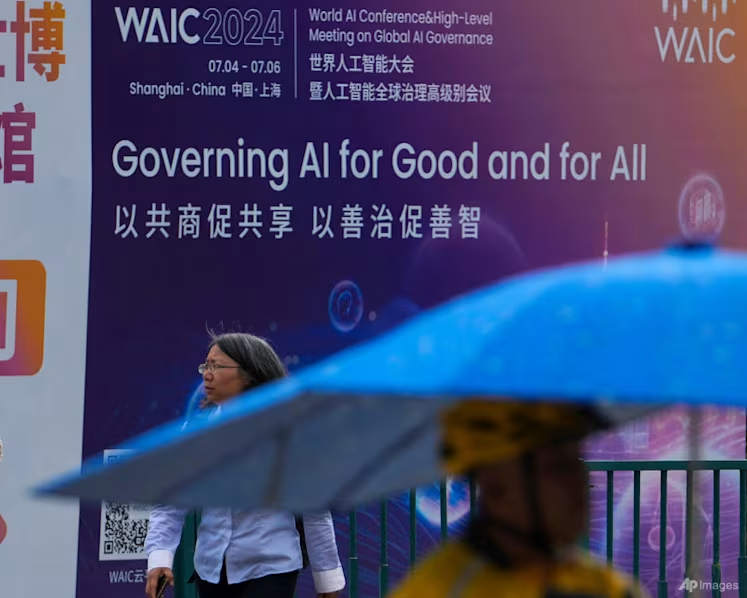
人们在上海走过一块宣传2024年世界人工智能大会(WAIC)暨全球人工智能治理高级别会议的广告牌,摄于2024年7月3日。()“政府支持可以促进基础设施、研究和能力建设,但它本身无法确保每家公司都开发出可持续的商业模式,也无法确保每一项证券都代表良好的价值。”高华德纳摩(Gavekal Dragonomics)的贝多尔表示,对融资的影响可能在未来一两个季度内显现——他预计低迷将抑制股市上市。
People walk past a billboard promoting the 2024 World Artificial Intelligence Conference (WAIC) and High-Level Meeting on Global AI Governance in Shanghai, China, on Jul 3, 2024. (File photo: AP/Andy Wong)“Government support can facilitate infrastructure, research and capacity building, but it cannot by itself ensure that every company develops a sustainable business model or that every security represents good value.”The impact on financing could become apparent over the next quarter or two, said Beddor from Gavekal Dragonomics - who expects the downturn to dampen stock market listings.
但对于中国更长远的人工智能雄心而言,贝多尔指出了一个更大的障碍:获取先进芯片。
But for China’s longer-term AI ambitions, Beddor pointed to a bigger hurdle: access to advanced chips.
他说:“对中国人工智能雄心的真正制约不是融资,而是获取芯片。”
“The real constraint on China's AI ambitions is not financing but access to chips,” he said.
美国出口管制限制了中国企业获取一些最复杂的外国制造人工智能处理器,这些处理器对于训练和运行日益强大的人工智能模型至关重要。
US export controls have restricted Chinese firms' access to some of the most sophisticated foreign-made AI processors, which are crucial for training and running increasingly powerful AI models.
尽管北京已加大力度开发国产替代品,但中国芯片制造商在生产足够数量的先进人工智能处理器以满足需求方面仍面临挑战。人工智能抛售潮会蔓延吗?
While Beijing has stepped up efforts to develop homegrown alternatives, Chinese chipmakers still face challenges in producing advanced AI processors in sufficient quantities to meet demand. COULD THE AI SELL-OFF SPREAD?
中国人工智能股市的崩盘给其他地方的投资者提出了一个问题:类似的清算是否迫在眉睫,特别是在美国,科技巨头已向人工智能投入数十亿美元?
China's AI stock market rout has raised a question for investors elsewhere: Could a similar reckoning be looming, particularly in the US, where technology giants have poured billions into artificial intelligence?
OANDA的黄俊杰(Wong)将中国的抛售描述为估值和融资风险的早期预警,而非全球人工智能需求疲软的信号。
OANDA’s Wong described the Chinese sell-off as an early warning of valuation and financing risks, rather than a sign that global demand for AI was faltering.
他说:“中国的经验表明,当投资者开始质疑支撑长期上涨的盈利假设时,情绪逆转可以有多快。”但分析师警告不要在这两个市场之间划等号。
“China's experience demonstrates how quickly sentiment can reverse when investors begin questioning the earnings assumptions underpinning an extended rally,” he said. But analysts cautioned against drawing direct parallels between the two markets.
黄说,微软、Alphabet、亚马逊和Meta等美国大型科技公司已经建立了能够产生可观收入和现金流的企业,这为它们支持人工智能投资提供了更强的财务基础。贝多尔对于将两个市场进行类比也更为谨慎。
Major US technology companies like Microsoft, Alphabet, Amazon and Meta have established businesses generating substantial revenue and cash flow, Wong said - giving them a stronger financial base to support AI investment. Beddor was also more cautious about drawing parallels between the two markets.
他说:“中国股市有自己的节奏,与美国市场相当不同,有时甚至与中国经济的基本面也不一样。”
“China's stock market marches to the beat of its own drum, which is quite different from US markets and sometimes even the underlying Chinese economy,” he said.
“但很难把中国股市的情况直接套用到美国市场的未来上。”在亚洲其他地区,人工智能相关企业截然不同的命运凸显了为何该行业不能被当作单一的投资类别来对待。
“But it's hard to do a clean read-across from China's stock market to the future of US markets.”Elsewhere in Asia, the contrasting fortunes of AI-related companies underscore why the sector cannot be treated as a single investment category.
在韩国,芯片制造商SK海力士和三星电子本周公布了创纪录的季度营业利润,这得益于人工智能系统所用存储芯片的强劲需求。
In South Korea, chipmakers SK Hynix and Samsung Electronics reported record quarterly operating profits this week, buoyed by strong demand for memory chips used in AI systems.
2026年10月16日,在韩国首尔举行的第28届半导体展览会上,人们排队参观SK海力士的展台。
People queue to visit the SK Hynix booth at the 28th Semiconductor Exhibition in Seoul, South Korea, on Oct 16, 2026.
对投资者而言,关注焦点日益集中在人工智能支出的增长是否有收入和利润的增长相匹配。
For investors, the focus is increasingly on whether rising AI spending is matched by growth in revenue and profits.
OANDA的黄指出,美国大型科技公司令人失望的盈利预测、收紧的融资环境以及疲软的半导体需求,都可能成为引发人工智能股票更广泛重新评估的潜在触发因素。
Wong from OANDA pointed to disappointing earnings forecasts from major US technology companies, tighter financing conditions and weaker semiconductor demand as potential triggers for a broader reassessment of AI stocks.
CAIA协会的黄表示,投资者还应把目光投向上市科技股之外,因为对人工智能需求的预期反映在从数据中心、公司债券到私募信贷和电力基础设施等各种投资中。
Wong from the CAIA Association said investors should also look beyond listed technology shares, as expectations about AI demand are reflected in investments ranging from data centres and corporate bonds to private credit and power infrastructure.
他说:“这些敞口可能以不同的速度作出反应,因此按资产类别来看似乎实现了多元化,但仍可能掩盖了对同一经济驱动因素的集中。”
“These exposures may react at different speeds, so apparent diversification by asset class may still conceal concentration in the same economic driver,” he said.
他还强调,投资者需要区分人工智能的长期前景与个别公司是否值其当前估值。
He also stressed that investors needed to distinguish between the long-term prospects of AI and whether individual companies were worth their current valuations.
“长期主题判断正确,但证券选择、资本结构或估值判断错误,这种情况是有可能的。”
“It is possible to be right about the long-term theme but wrong about the security, the capital structure or the valuation.”