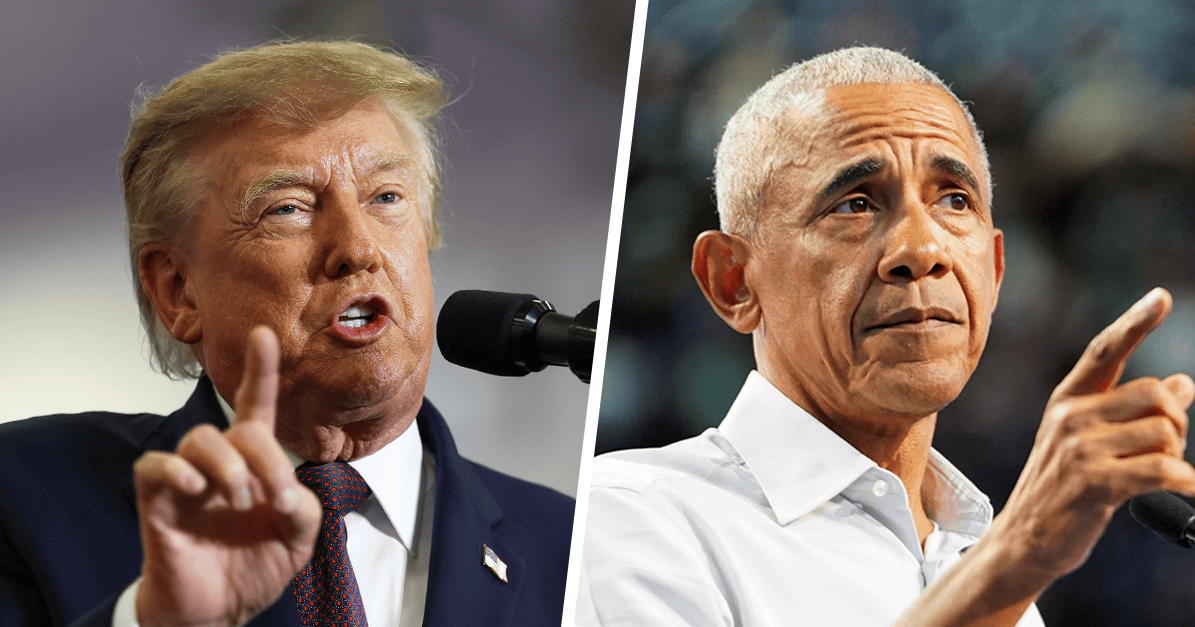
周三晚间,距离中期选举仅剩数天,我们看到了一幅过去政治与当下政治并置的分屏画面。
On Wednesday evening, just days before the midterms, we saw a split screen of the politics of the past and the politics of the present.
在俄亥俄州,唐纳德·特朗普总统再次发表了一场丑陋且漫无边际的演讲,重复了针对穆斯林政客的种族主义言论,并呼吁起诉其他人,同时为一名候选人站台造势并为其辩护,该候选人拒绝为一则利用其对手幼时遭强奸经历的攻击性广告道歉。
In Ohio, President Donald Trump once again gave an ugly and rambling speech, repeating racist remarks about Muslim politicians and calling for the prosecution of others, while stumping for and defending a candidate who refuses to apologize for an attack ad that exploited his opponent’s experience as a child rape victim.
与此同时,在佐治亚州,前总统巴拉克·奥巴马重返竞选路线,发表了他标志性的演讲之一,旨在激发选民热情,强化他们对小写“d”民主价值观的信念。
Meanwhile, in Georgia, former President Barack Obama returned to the campaign trail to deliver one of his trademark speeches, designed to energize voters and to reinforce their beliefs in small-d democratic values.
奥巴马的讲话同时也是对现任总统及其怨恨政治的严厉斥责,他论证了国家需要“重新发现我们的北极星”:“我们也需要重新发现我们身上最好的一面,因为如果我们不回归到金博士所谈论的那些极其珍贵的价值观,我们将继续在愤怒和分裂中溃烂。我不知道你们怎么想,但我厌倦了愤怒,厌倦了分裂。我想要友谊、邻里情谊、快乐和慷慨。我想要每个人卷起袖子,共同投身重建美国的事业。我想要每个人把我们的国家和世界以比现在稍好的状态交给我们的孩子。这就是我想要的。这也是你们想要的。”
Obama’s remarks also served as a scathing rebuke of the current president and his politics of grievance, making the case that the country needs to “rediscover our North Star:” We also need to rediscover what’s best in us, because if we don’t return to some of those mighty precious values Dr. King was talking about, we will continue to fester in anger and division. And I don’t know about you, but I am tired of being angry, and I’m tired of being divided. I want friendship and neighborliness and joy and generosity.
奥巴马的重新露面,或许会让那些怀念国家未由一个实施蓄意残酷、利用美国人分歧谋取私人和政治利益的政府领导的时代的人们,感到苦乐参半。
I want everybody rolling up their sleeves in the common enterprise of rebuilding America. I want everybody handing our country and our world off to our kids a little better than they are right now. That’s what I want.
对我们许多人来说,这位前总统依然让人想起美国一个更体面的时代:那时掌管联邦政府的人相信政府应当服务人民;那时美国在世界上的地位无可匹敌;那时我们的盟友能够信任我们,而我们不会向专制政权低头,也不会与战犯亲近。
That’s what you want. Obama’s re-emergence might stir up bittersweet feelings for some of us who preferred a time when the nation was not led by an administration that had practiced deliberate cruelty and exploited Americans’ differences for personal and political gain. For many of us, the former president is still a reminder of a more decent time in America: when the people running the federal government believed that it should serve the people; when America’s standing in the world was unrivaled; when our allies could trust us and we did not bow down to autocratic regimes or cozy up to war criminals.
奥巴马重返竞选舞台,并凭借提醒选民那些真正让这个国家伟大的价值观,继续具备动员选民的能力,这不必是苦乐参半的。它可以是对我们身份的提醒。它可以成为一种激励,促使我们奋斗,重置国家的道德指南针,重建特朗普及其那帮亿万富翁寡头正在拆毁的制度,并修复那些让美国保持安全、稳定和繁荣的同盟关系。
Obama’s return to the campaign trail and his continued ability to galvanize voters by reminding them of the values that truly make this country great does not have to be bittersweet. It can be a reminder of who we are. It can be an incentive to fight to reset the moral compass of our nation, to rebuild the institutions that Trump and his band of billionaire oligarchs have been dismantling, and to repair the alliances that keep America safe, secure and prosperous.
奥巴马时代并非一个世纪以前的事。信不信由你,它结束还不到10年。奥巴马还在。你也还在。
The Obama era was not a century ago. Believe it or not, it ended less than 10 years ago. Obama’s still here. You’re still here.
此刻,我想起了2024年总统大选后几天,我与蒂莫西·斯奈德——一位杰出的历史学教授——的一次谈话。当时,总统大选已判定特朗普获胜,半个国家正在面对他在白宫进行报复性回归这一想法。
In this moment, I’m reminded of a conversation I had a few days after the 2024 presidential election with Timothy Snyder, a distinguished history professor. At that point, the presidential race had been called for Trump, and half of the country was reckoning with the idea of his vengeful return to the White House.
但那时,斯奈德给任何感到绝望的人提出了这样的建议:虽然你周围的环境可能会改变,但你不必随之改变。不仅如此,你有选择抵抗这个政府试图强加于你、你的国家和你的价值观的那些变化。
But back then, Snyder had this advice for anyone who was feeling hopeless: While the circumstances around you might change, don’t have to change with it. More than that, you have the choice to resist the changes this administration tries to impose on you, your country and your values.
“自由意味着你决定你是谁,”他说。“当周围的事物发生变化时,你依然做那个人。”斯奈德的话至今仍引人共鸣,两年后,在通往这些关键中期选举的冲刺阶段,他又给了我们一个提醒。
“Freedom means you decide who you are,” he said. “And when things change around you, you continue to be that person.”Snyder’s words continue to resonate, and two years later, in the run-up to these crucial midterms, he has another reminder for us.
历史学家蒂姆·斯奈德在其 Substack 专栏“Thinking About”的新文章中指出,当前有许多事情可能让美国人感到沮丧,但正如他一贯的风格,他用六个词概括了未来六天需要发生的一切:“All of this can be solved.”(所有这一切都可以解决。)我们依然拥有能动性。我们依然拥有选票。已有超过 4200 万人在今年的选举中投出了选票,早期投票人数已超过 2018 年中期选举。按这个速度,很有可能超过 2022 年中期选举的早期投票人数。斯奈德认为,这正是所有这一切得以解决的方式。
In a new piece on his Substack, “Thinking About,” the historian identified myriad things that could cause Americans to be disheartened right now but, in typical Tim Snyder fashion, he lands on six words that encapsulate all that needs to happen in the next six days: “All of this can be solved.”We still have agency. We still have the vote. More than 42 million people have already cast a ballot in this year’s elections, surpassing the early-voter turnout for the 2018 midterms. At this rate, there’s a good chance that it will surpass the early-voter turnout for the 2022 midterms. And that, according to Snyder, is how all of this can be solved.
他写道:“只有政府能够采取行动解决这个问题,但这必须是一个由关心自由的人所推动的政府。”“由自由推动的政府可以拆分垄断,政府可以向千亿富翁征税,政府可以监管媒体和社交媒体平台。所有这一切都可以解决。”
“Only a government can act to resolve this problem, but it has to be a government animated by people who care about freedom,” he wrote. “Government animated by liberty can break up monopolies, government can tax centibillionaires, government can regulate media and social media platforms. All of this can be solved.”
斯奈德主张,即使有权势人物试图将国家推向更黑暗的未来,一个更美好的未来依然可能:“一个更美好、好得多的未来,可以取代我们的寡头们如今如此公开渴望的那些反乌托邦。要达到那里,我们将不得不行使他们如今如此公开憎恨的那些权利。”
Snyder argues that a better future is still possible, even as powerful figures attempt to push the country toward a darker one: “A better future, a far better future, can replace the dystopias for which our oligarchs now so openly long. To get there, we will have to exercise the very rights that they now so openly hate.”