今年早些时候,俄罗斯当局向一家研究鼠疫、炭疽等疾病病原体的西伯利亚研究所发出严厉警告:该所缺乏足够的去污染计划,以防细菌意外泄露。
Earlier this year, Russian authorities issued a stern warning to a Siberian institute that researches the pathogens behind bubonic plague, anthrax and other diseases: It lacked a sufficient decontamination plan in the event bacteria accidentally escaped.
几个月后,伊尔库茨克抗疫研究所因一名在该实验室工作的生物学家死于神秘肺炎而受到全球关注。
The Irkutsk Anti-Plague Institute landed in the global spotlight in recent weeks—months after the warning—when a biologist who worked at the laboratory died of a mysterious pneumonia.
在达里娅·希皮洛娃去世时,鲜为人知的是,十多年来该实验室多次因安全违规、应急计划不足以及高级官员培训缺失而被点名,使其成为潜在的危险区域。
What wasn’t widely known at the time of Darya Shipilova’s death was that for more than a decade the lab had been cited multiple times for safety violations, insufficient emergency plans and training gaps among senior officials, turning it into a potential danger zone.
这名28岁的年轻人去世后,监管该研究所的俄罗斯消费者监管机构警告该地区存在危险感染,但未提供详情。该国卫生总监前往伊尔库茨克与地方官员举行面对面会议。希皮洛娃的所有近期接触者均被隔离。
In the days after the 28-year-old died, Russia’s consumer watchdog that oversees the institute warned of a dangerous infection in the area, without giving details. The country’s surgeon general traveled to Irkutsk for an in-person meeting with regional officials. All Shipilova’s recent contacts were quarantined.
世界卫生组织本月五次向俄罗斯当局呼吁,提供更多关于伊尔库茨克发生的事情的信息,以评估希皮洛娃之死所构成的危险程度。俄罗斯官员重复了他们此前公开的说法:该实验室工作人员死于原因不明的肺炎。此后没有更新。
The World Health Organization appealed to Russian authorities five times this month for more information about what happened in Irkutsk as it tried to determine the level of danger posed by Shipilova’s death. Russian officials repeated what they had already stated publicly: The lab worker had died of pneumonia of an unknown origin. There hasn’t been an update since.
“卫生当局、医疗机构正在非常积极地向世卫组织隐瞒实际发生的事情,”阿莉莎·利托夫卡说,她是一名微生物学家,曾在俄罗斯各地的实验室工作,但出于政治原因决定离开该国。俄罗斯主要公共卫生机构和伊尔库茨克研究所均未回应置评请求。
“Health authorities, the healthcare bodies, are very actively concealing from the WHO what is actually happening,” said Alisa Litovka, a microbiologist who has worked in labs across Russia but decided to leave the country for political reasons. Neither Russia’s main public health agency nor the Irkutsk institute responded to a request for comment.
希皮洛娃去世前几周,该研究所收到了俄罗斯紧急情况部的警告,称其缺乏强大的民防计划,且对高级官员的培训已过时。
Weeks before Shipilova’s death, the institute had received a warning from Russia’s Emergencies Ministry, which said it lacked a robust civil-defense plan and that its training for top officials was out of date.
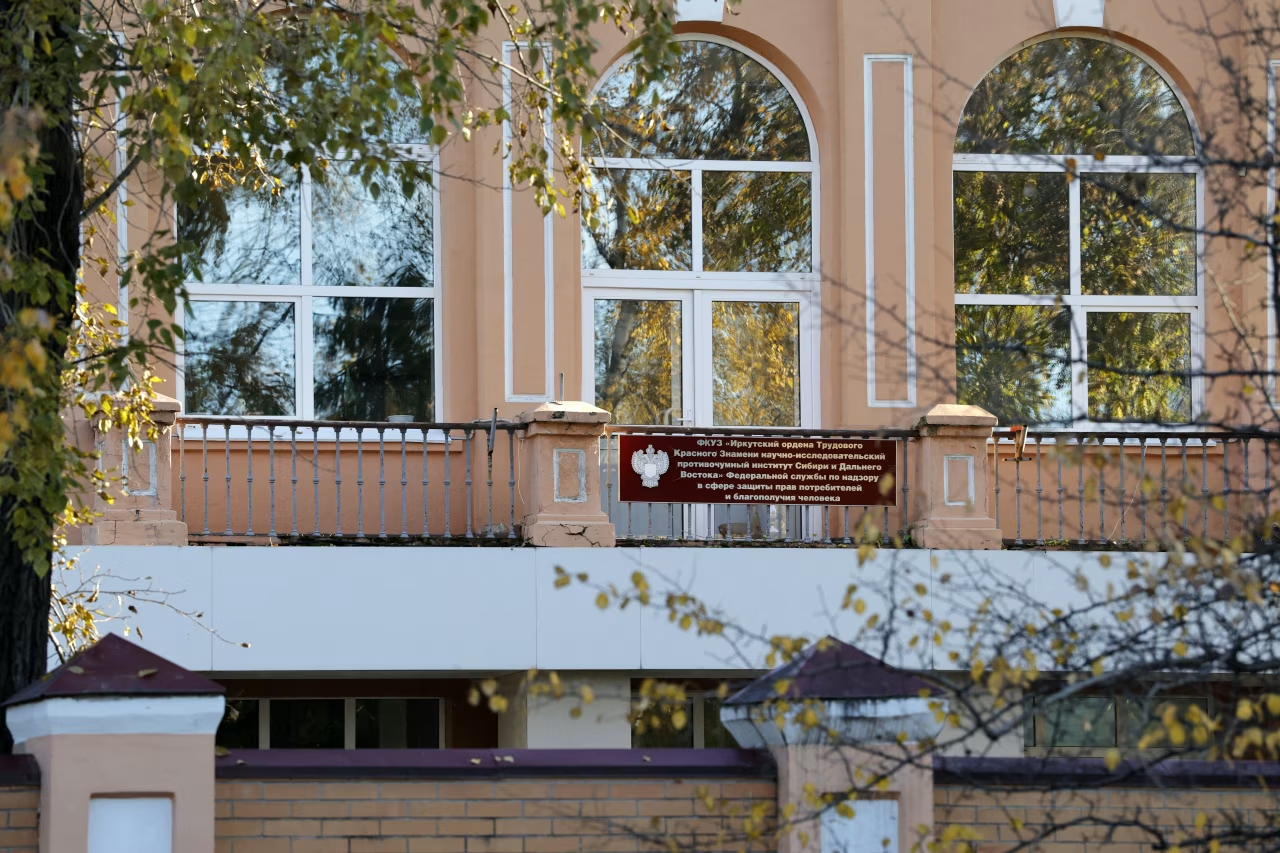
该研究所带有苏联时代的头衔,名为“伊尔库茨克红旗劳动勋章西伯利亚和远东科学研究抗疫研究所”。利托夫卡表示,在俄罗斯境内,并非只有它一家可能未能达到健康和安全标准,她补充说,自己曾在俄罗斯多家实验室工作过,那些实验室拥有训练有素的人员,在艰难条件下工作,并处于国家强加的保密氛围之中。
The institute carries the Soviet-era title, the Irkutsk Order of the Red Banner of Labour Scientific Research Anti-Plague Institute of Siberia and the Far East. It isn’t alone in potentially failing to meet health and safety standards inside Russia, said Litovka, adding that she had worked in numerous labs in Russia that had highly trained personnel working under difficult conditions and in a climate of secrecy imposed by the state.
过去,这种保密氛围阻止了其他传染病暴发的信息公开,包括2016年西伯利亚亚马尔省的炭疽暴发,官员称该暴发造成两人死亡。当时卫生当局表示,高温导致环境中天然存在的炭疽孢子变得具有传染性。利托夫卡的同事曾参与该暴发的处理工作,她指责地方官员未按计划实施炭疽疫苗接种。
In the past, that secretive atmosphere has prevented information about other infectious outbreaks from becoming public, including an anthrax outbreak in 2016 in the Siberian province of Yamal that officials said killed two people. Health authorities at the time said that high temperatures had caused naturally occurring anthrax spores in the environment to become contagious. Litovka, whose colleagues worked on that outbreak, blamed local officials for failing to administer anthrax vaccinations according to schedule.
该研究所收到的警告,网上记录显示可追溯至2015年,这些警告是在监管机构怀疑或掌握违规证据后发出的。
The warnings that the institute received, which online records show date to 2015, were issued after the regulator suspected or had evidence of a violation.
6月的一份警告称,该组织未采取任何措施对建筑物或设备进行去污染。应急部表示,该设施还缺乏去污染和解毒剂储备。
The one in June said that the organization hadn’t put in place any measures to decontaminate buildings or equipment. The facility also lacked stockpiles of decontamination and degassing agents, the Emergencies Ministry said.
9月,该研究所的民防计划因未根据新信息进行更新,以及负责民防的官员未完成其职务所需的额外培训而被点名。
In September, the institute’s civil-defense plan was cited for not having been updated to reflect new information and that the official in charge of civil defense hadn’t completed extra training for their role.
该研究所在2015年因房间缺少规定的自动火灾报警装置而触发警告。2019年,它未能为生物危害设施准备所需的安全文件。
The institute triggered a warning in 2015 for having rooms without required automatic fire alarms. In 2019, it had failed to prepare the required safety documentation for biologically hazardous facilities.
这些警报似乎并未限制该反鼠疫实验室的工作。今年夏天,该实验室参加了首次中俄联合“传染性威胁”演练,配备了流动实验室。在距离中国边境约20英里的哈巴罗夫斯克市,来自伊尔库茨克以及俄罗斯和中国其他地区的实验室工作人员为期三天,回顾了抗击传染病的最佳实践。
The alerts didn’t appear to restrict the work the anti-plague lab was doing. Over the summer, it took part in the first Russian-Chinese training exercises against “infectious threats,” replete with mobile laboratories. In the city of Khabarovsk, about 20 miles from the Chinese border, lab workers from Irkutsk and elsewhere in Russia and China spent three days reviewing best practices to fight infectious diseases.
该研究所本身成立于1934年,由约瑟夫·斯大林创办,当时苏联每年遭受数千起鼠疫病例,特别是在西伯利亚和远东地区最偏远的角落。
The institute itself was established under Joseph Stalin in 1934 at a time when the Soviet Union was suffering thousands of plague cases annually, particularly in the farthest-flung corners of Siberia and the Far East.
冷战期间,该研究所的一位院长后来成为苏联防御西方生化武器计划的奠基人之一,苏联官僚体系将该项目称为“第5号问题”。西方科学家表示,该计划很快成为苏联进攻性生物武器计划的掩护,其中通过气溶胶传播的鼠疫发挥了重要作用。
One of the institute’s directors during the Cold War rose to become a forefather of the Soviet Union’s program to develop defenses against Western biochemical weapons, a project that the Soviet bureaucracy referred to as Problem No. 5. Western scientists say that program soon turned into a cover for Soviet offensive bioweapons, in which plague, carried by aerosols, played a significant part.
该研究所与俄罗斯国防部的联系持续存在。去年,双方联手升级实验室,采购数据显示,他们使用国防部的采购资金为实验室配备了新设备。
Links between the institute and Russia’s Defense Ministry continue. Last year, they joined forces to upgrade the laboratory, using ministry procurement funds to outfit it with new equipment, procurement data shows.
由于莫斯科与西方关系恶化,美国和国际社会对俄罗斯实验室的监督已受到严重阻碍。2013年,弗拉基米尔·普京总统让俄罗斯退出了与国务院和国防部共同运行的科学合作和威胁削减计划。
U.S. and international oversight of Russian labs has been severely hampered by worsening ties between Moscow and the West. In 2013, President Vladimir Putin pulled Russia out of scientific engagement and threat-reduction programs run jointly with the State Department and the Defense Department.
“这大大降低了俄罗斯实验室对美国专家的可见性,”乔治·梅森大学沙尔政策与政府学院生物防御研究生项目教授兼主任格雷戈里·科布伦茨说。“由于制裁以及俄罗斯国际孤立程度加剧,俄罗斯入侵乌克兰后,这一情况变得更糟。”不过,俄罗斯实验室目前的条件,仍优于前苏联解体后多年内遍布前苏联各地的设施。当时的条件令人震惊,索尼娅·本·瓦格勒姆-戈姆利说,她在2000年代初曾在美国资助的合作威胁削减计划下,在东欧、南高加索和中亚地区工作。
“That dramatically reduced the visibility of Russian labs to U.S. experts,” said Gregory Koblentz, professor and director of the Biodefense Graduate Program at George Mason University’s Schar School of Policy and Government. “This situation has gotten worse following the Russian invasion of Ukraine due to sanctions and Russia’s increased international isolation.”Still, conditions in Russian labs are now better than those in facilities across the former Soviet Union in the years following its collapse. The conditions then were shocking, said Sonia Ben Ouagrham-Gormley, who worked across Eastern Europe, the South Caucasus and Central Asia under the U.S.-funded Cooperative Threat Reduction Program during the early 2000s.
“他们几乎没有生物安全设备;在实验室里,他们只是在简单的桌子上工作,没有手套箱或全套防护服。在某些情况下,”她说。
“They had almost no biosafety equipment; they worked on simple tables in the labs, with no gloveboxes or full protective suits. In some cases,” she said.
鼠疫,中世纪被称为“黑死病”,曾在欧洲造成数百万人死亡。如今,这种疾病已很罕见,全球每年报告的病例只有几百例。引起该疾病的细菌在非洲和亚洲的部分地区,包括西伯利亚,仍然存在。这种疾病可以用抗生素治愈,但前提是必须尽早接受治疗。
The plague, known in the Middle Ages as the “Black Death,” once killed millions of people in Europe. Today, the disease is rare, with a few hundred cases reported globally each year. The bacterium that causes it still exists in parts of Africa and Asia, including Siberia. The disease can be cured with antibiotics, but only if treatment is given quickly.
“关于鼠疫的一点是,它是整个全球文化时代精神的一部分,是世界上每个人都知道并且感到害怕的东西,”东北大学公共卫生与健康科学教授塞缪尔·斯卡皮诺说。
“The thing about the plague is that it’s part of the entire globe’s cultural zeitgeist, it’s the thing that everyone in the world knows about and is scared of,” said Samuel Scarpino, a professor of public health and health sciences at Northeastern University.