经历了几年的低迷后,泰国经济正显现出改善迹象。通货紧缩已让位于近 3% 的通货膨胀,而政策制定者正在上调增长预测。不过,鉴于复苏仍显温和,官员们没有理由急于行动:除非发生重大动荡,否则他们可以慢慢将利率从历史低位抬升。这是一幅令人鼓舞的图景——但只讲了故事的一部分。
After a lean few years, Thailand’s economy is showing signs of improvement. Deflation has given way to inflation of almost 3%, while policymakers are upgrading growth forecasts. With the recovery still modest, however, officials have little reason to rush: Absent a major upheaval, they can take their time lifting interest rates from historically low levels. It's an encouraging picture — but one that tells only part of the story.
强大的力量正将经济拉向不同方向。作为汽车生产中心并在半导体供应链中占据一席之地的泰国,正日益面临廉价中国商品的冲击,这些商品因撞上美国贸易壁垒而被转向东南亚。“中国冲击 2.0”给该地区带来了西方不曾面临的两难困境:如何在不招致隔壁超级大国反感的情况下保护本国产业?这很难做到。与美国和欧盟不同,这些国家必须小心翼翼。
Powerful forces are pulling the economy in different directions. The kingdom, a hub for auto production with its own niche in semiconductor supply chains, is increasingly exposed to cheap Chinese goods being diverted to Southeast Asia as they hit the US trade barrier. China Shock 2.0 presents the region with a dilemma the West doesn’t face. How do you protect your industries from China without antagonizing the superpower next door? With difficulty. Unlike America and the European Union, these countries must tread carefully.
与此同时,人工智能热潮正推动出口并吸引投资者重返该地区。泰国上月出货量超过了原本已属乐观的预测,而电子产品海外销售较去年同期激增近 70%。更光明的前景使股市成为亚洲表现较好的市场之一,基准指数有望创下十年来最佳表现。
Meanwhile, the artificial intelligence boom is powering exports and drawing investors back to the region. Shipments from Thailand exceeded already optimistic projections last month, while overseas sales of electronics climbed almost 70% from a year earlier. The brighter outlook has made the stock market one of Asia’s better performers, with the benchmark index headed for its best performance in a decade.
这就是为什么曼谷正变得谨慎乐观。副财政部长最近将当下的氛围比作他在2010年代于投资银行瑞信工作时享受的“美好旧时光”。然而,泰国对推动这一变革的力量几乎没有控制力。像大多数政府一样,它只能设法获取利益、遏制损害。这种平衡术只会越来越难。全球贸易的重塑可能塑造未来数十年的世界经济,泰国自然想分一杯羹。
That’s why Bangkok is becoming cautiously bullish. The vice finance minister recently compared the vibe with the old good days he enjoyed working at investment bank Credit Suisse in the 2010s. Yet Thailand has little control over the forces driving this transformation. Like most governments, it can only try to capture the benefits and contain the damage. That balancing act will only get harder. The remaking of global trade could shape the world economy for decades, and Thailand naturally wants a piece of the action.
但它也需要保护国内产业——以及那些在全球化早期将泰国打造成生产中心的国际制造商——免受即将到来的冲击。例如,日本企业曾大举投资寻找低成本工厂选址。它们正忧心忡忡地注视着来自中国的商品洪流,如果不考虑何时缩减在泰规模甚至撤资,那将是失职。
But it also needs to protect domestic industry — and the international manufacturers that made the nation a production hub in the early days of globalization — from the upcoming disruption. Japanese companies, for example, invested heavily in a hunt for low-cost factory sites. They’re watching the flood of merchandise from China with trepidation and would be remiss not to consider the point at which they scale back their presence or even exit.
这些跨国企业曾帮助泰国成为那个时期最具潜力的新兴市场之一,随后泰国却成为亚洲金融危机的震中。泰国正寻求重拾那份早期的活力,却不想重蹈过度扩张的覆辙。但这说起来容易做起来难。
Such multinationals helped turn Thailand into one of the most promising emerging markets of that period before it became the epicenter of the Asian financial crisis. It's some of that early vigor that the nation is seeking to recapture, without the excesses. But that’s easier said than done.
关键在于迈出正确的渐进步骤。如果在试图抵御上一轮冲击的过程中错失这一轮繁荣的红利,那将是悲剧。最近为缓冲汽车制造商免受低价中国电动汽车进口冲击而采取的措施,便反映了这种微妙的平衡。
The trick will be taking the right incremental steps. It would be tragic to miss out on a slice of this boom while trying to defend against the last one. Recent steps to cushion car makers from imports of low-priced Chinese electric vehicles reflect this delicate balance.
这些措施并不严苛,但或许足以避免崩盘。这很重要。汽车工业约占国内生产总值的3%,雇佣了超过50万人。一个高层小组上个月批准了对电动汽车消费税的调整。全进口车将适用最高税率,本地生产车辆适用最低税率,而依赖海外零部件的车型则介于两者之间。丰田汽车公司最近承诺留在该国,但希望官方持续倾听。
The measures aren't draconian, but they may be enough to stave off an implosion. That's important. The auto industry accounts for about 3% of gross domestic product and employs more than half a million people. A top-level panel last month approved changes to excise taxes for EVs. Fully imported cars will be subject to the highest rate, locally made vehicles the lowest, while models that rely on components from abroad will get something in the middle. Toyota Motor Corp. recently pledged to remain in the country, but wants officials to keep listening.
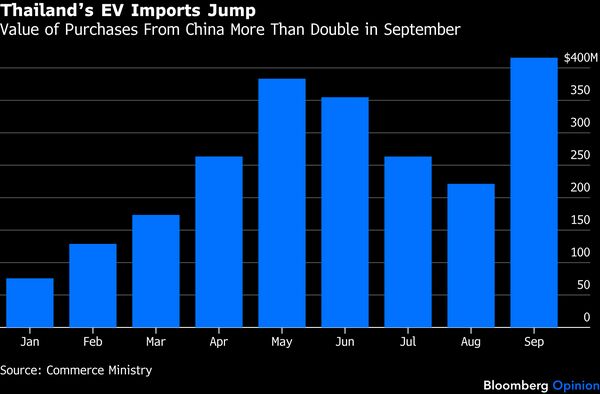
援助压力不会消失。中国上个月供应了泰国几乎所有的电动汽车进口。这种喧嚣也不会局限于汽车领域。根据国际货币基金组织的数据,亚洲正在吸收约一半从美国市场转移的中国产品。但不要指望领导人会像美国总统特朗普那样,公开批评北京或其贸易做法。他们的回旋余地小得多。中国既是它们最大的经济挑战,也是不可或缺的商业伙伴和强大的邻国。
The pressure for assistance won't go away. China supplied almost all of Thailand’s EV imports last month. Nor will the clamor be confined to autos. Asia is absorbing around half the Chinese products that have been redirected from the US, according to the International Monetary Fund. But don't look for leaders to become vocal critics of Beijing or its trade practices as US President Donald Trump has done. They have far less room to maneuver. China is their biggest economic challenge, an indispensable commercial partner and a powerful neighbor.
泰国渴望从人工智能中分一杯羹,同时也在试图为数据中心设立一些护栏。政府担心水电消耗过大,本周出台了审批项目的新规则。使用泰国工人和本地零部件的项目将受到青睐。
And as enthusiastic as Thailand is to cash in on AI, it's trying to set some guardrails around data centers. Concerned about the heavy use of water and electricity, the government this week established new rules for approving projects. Developments that use Thai workers and local components will be looked upon favorably.
泰国正在提出一些关键问题,却不斜眼看重塑全球商业的地壳式变化。决策者或许未见前方有冲击,但超出其控制的力量正在加速汇聚。请关注这个常被雷达忽略的经济体将如何应对。成为驾驭全球化下一阶段的范本,将比被铭记为危机导火索留下更好的遗产。
Thailand is asking some important questions without looking askance at tectonic shifts reshaping global commerce. Policymakers may not see shocks on the horizon, but forces well beyond their control are gathering pace. Watch how this economy, which often flies under the radar, responds. Becoming a template for navigating the next phase of globalization would be a far better legacy than being remembered as the spark of a crisis.