蒂姆·戴斯是一名记者兼分析师,过去15年来一直报道亚太地区的能源市场、可持续发展和地缘政治。
Tim Daiss is a journalist and analyst who has covered energy markets, sustainability and geopolitics in the Asia-Pacific region for the past 15 years.
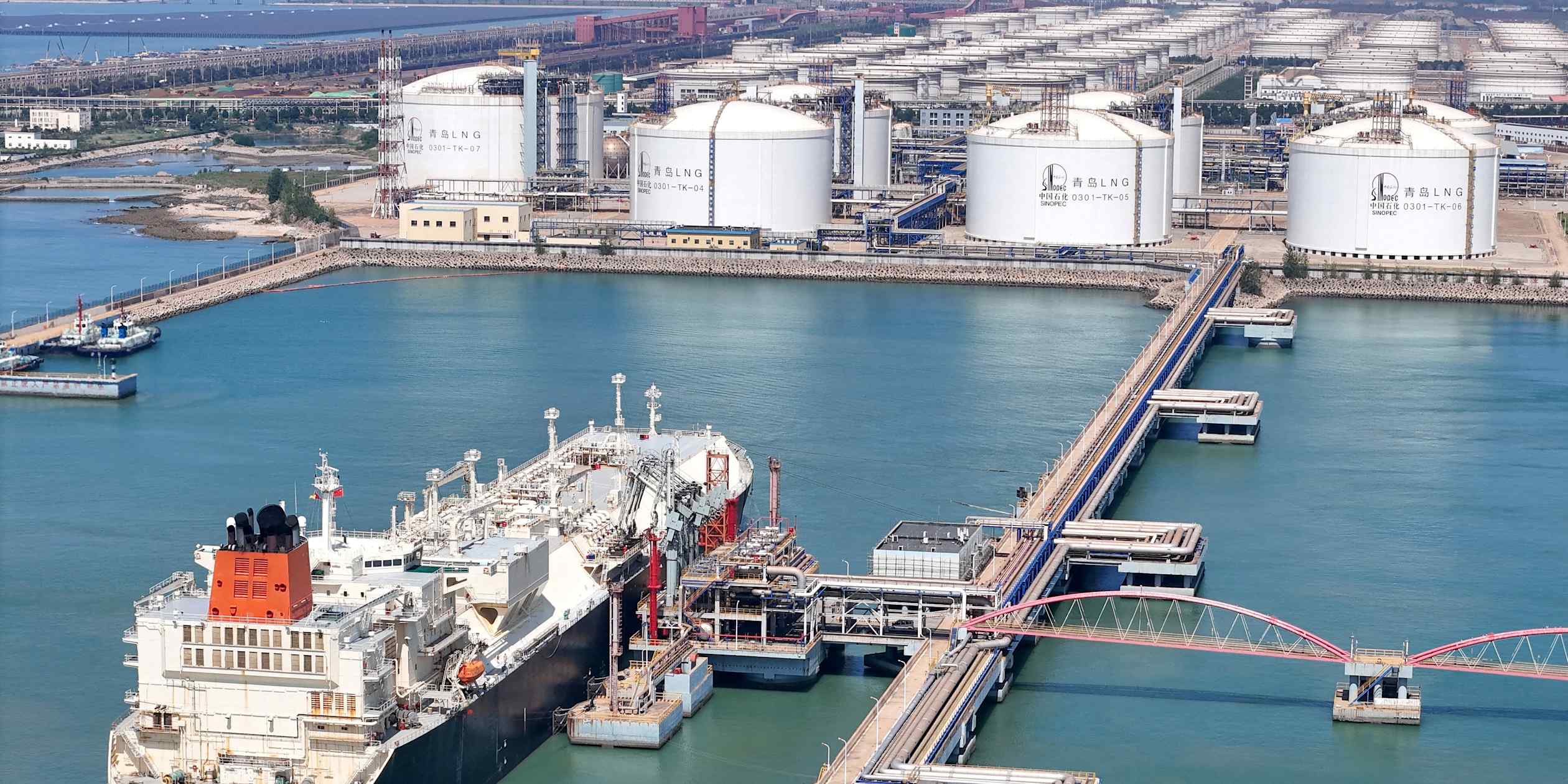
预测显示,由于中东战争引发的多年高价和供应减少,东北亚液化天然气需求将继续下降。这究竟是好消息还是令人担忧,取决于用什么替代天然气,尤其是高LNG价格是否会迫使发电商重新转向煤炭。
Forecasts show Northeast Asian liquefied natural gas demand continuing to fall because of multiyear high prices triggered by the war in the Middle East and reduced supply. Whether that is good news or cause for concern depends on what replaces gas, particularly if high LNG prices push power producers back toward coal.
根据美国能源信息署的数据,天然气用于发电时产生的碳排放量约为煤炭的一半,而煤炭是世界上最肮脏的燃烧化石燃料。更糟糕的是,研究表明,从钻探和开采到在数千公里外运往最终用户的大型海洋专用LNG油轮运输,整个天然气价值链都存在气体泄漏问题。
When used to produce electricity, gas creates around half the carbon emissions of coal, the world's dirtiest burning fossil fuel, according to the U.S. Energy Information Administration. Worse yet, research shows gas leakage across the entire gas value chain, from drilling and extraction to shipment in large ocean-going specialized LNG tankers traversing thousands of kilometers to end users.
这些问题促使总部位于巴黎的国际能源署(IEA)从几年前还提及“天然气黄金时代”,转而警告称天然气并非通往可再生能源的理想过渡燃料。
These problems caused the Paris-based International Energy Agency (IEA) to make a hard pivot from referring to the "golden age of gas" just a few years ago to warning that gas was not the ideal transition fuel to renewables.
伍德麦肯锡预测,2026年亚洲LNG需求将连续第二年下降,原因是供应中断、现货价格上涨、采购减少和燃料转换。东北亚受影响尤为严重,需求预计将从2025年的2.02亿公吨降至2026年的1.91亿吨。
Wood Mackenzie forecasts a second consecutive annual decline in Asian LNG demand in 2026, driven by supply disruptions, higher spot prices, reduced purchases and fuel switching. Northeast Asia is particularly affected, with demand forecast to decline from 202 million metric tons in 2025 to 191 million tons in 2026.
这里有一个重要的地理区别。该咨询公司预测,东南亚LNG需求将从2025年的2700万吨增至2026年的3100万吨,即使整个亚太地区需求下降。因此,该地区存在用能分歧。
There's an important geographical distinction. The consultancy forecasts Southeast Asian LNG demand rising from 27 million tons in 2025 to 31 million tons in 2026, even as broader Asia-Pacific demand falls. As such, there's a usage divergence in the region.
问题不仅仅是LNG流向东北亚中断。更大的担忧是用于替代天然气的燃料。国际能源署7月7日的《天然气市场报告》证实,通过霍尔木兹海峡的LNG流动中断导致供应紧张、价格上涨,并促使亚洲发电商转向煤炭。
The problem isn't just a stoppage of LNG flows to Northeast Asia. The bigger concern is the fuel that's being used to replace gas. The IEA's July 7 Gas Market Report confirms that disrupted LNG flows through the Strait of Hormuz have tightened supply, raised prices and encouraged Asian power producers to switch toward coal.
遗憾的是,供给经济学继续使煤炭作为一种廉价燃料替代品占据优势。路透社10月9日报道称,澳大利亚热煤目前比运往亚洲的液化天然气便宜约80%,为印度尼西亚和澳大利亚第四季度煤炭出口反弹创造了条件。
Unfortunately, supply economics continue to favor coal as an inexpensive fuel replacement. Reuters reported on Oct. 9 that Australian thermal coal is currently about 80% cheaper than LNG delivered to Asia, creating conditions for a fourth-quarter rebound in coal exports from Indonesia and Australia.
路透社指出,煤炭与液化天然气的价差达到四年来最大。高液化天然气价格为亚洲公用事业公司提供了强烈的煤炭优先动力,尤其是在冬季补库开始之际。中国江苏省淮安市华能淮阴电厂,8月3日。
Reuters identified the widest coal-to-LNG price discount in four years. Elevated LNG prices give Asian utilities a powerful incentive to favor coal, particularly as winter restocking begins. Huaneng Huaiyin Power Plant in Huai'an City, Jiangsu Province, China on Aug. 3.
根据全球能源监测机构和报道机构提供的数据,澳大利亚按价值计算位居世界最大煤炭出口国,占全球煤炭出口份额约35%(价值约558.6亿美元)。除了热煤,澳大利亚也是炼焦煤的主要全球供应国之一,炼焦煤用于钢铁生产。
Australia ranks as the world's largest coal exporter by value, accounting for about 35% of global coal export share (valued around $55.86 billion), according to data provided by global energy monitors and reporting agencies. As well as thermal coal, Australia is also a leading global supplier of coking coal, which is used in steelmaking.
作为东南亚最大经济体的印度尼西亚,按价值计算位居世界第二大煤炭出口国,占全球煤炭出口约19%至19.6%(价值约304.8亿美元)。但它仍然是世界上最大的电力部门使用热煤出口国。
Indonesia, Southeast Asia's largest economy, ranks as the world's second-largest coal exporter by value, responsible for around 19% to 19.6% of global coal exports (valued around $30.48 billion). But it remains the world's top exporter of thermal coal used in the power sector.
诚然,随着液化天然气价格处于多年高位并导致需求破坏,亚洲能源进口国转向更便宜的煤炭似乎可以理解,但有一个前提。仅限短期。一旦中东天然气供应中断问题得到解决,各国应转而远离煤炭。同时,也不应完全回归天然气。我们已经看到,天然气不再被视为理想的发电燃料。该地区可以利用这场危机加速而非阻碍其能源转型。
Admittedly, with the price of LNG at multiyear highs and creating demand destruction, Asian energy importers can be given a pass for pivoting to much-cheaper coal, but there's a caveat. Only in the short term. Once Middle Eastern gas supply stoppages are resolved, countries should pivot away from coal. At the same time, it shouldn't be a full turn back to gas. We've already seen that gas is no longer considered the ideal power generation fuel. The region can use the crisis to accelerate rather than derail its energy transition.
各国政府应将燃煤发电的临时增加与加快部署电池储能系统(BESS)相结合,同时加速太阳能和风能的开发,因为这些能源的上线速度远快于大多数常规化石燃料电力项目。亚洲可以利用液化天然气供应冲击带来的机会,但前提是各国政府迅速采取行动。
Governments should pair temporary increases in coal-fired generation with faster deployment of battery energy storage systems (BESS), while accelerating solar and wind development, which can be brought online much faster than most conventional fossil fuel power projects. Asia can take advantage of the LNG supply shock, but only if governments act fast.
然而,要实现这一转型,需要融资和投资。根据彭博新能源财经的数据,东南亚在可再生能源、电池储能系统和电网上需要3.4万亿美元。东北亚的代价甚至更高。中国需要惊人的46.3万亿美元能源系统投资才能实现脱碳目标。仅韩国就需要2.7万亿美元,而日本为实现净零目标估计需要6.7万亿美元投资。
However, financing and investment are needed to make the pivot. According to BloombergNEF, Southeast Asia requires $3.4 trillion for renewables, BESS and grids. Northeast Asia has an even higher price tag. China needs a staggering $46.3 trillion in energy system investment to reach decarbonization goals. South Korea alone needs $2.7 trillion, while Japan faces an estimated $6.7 trillion investment to reach its net-zero goals.
不过,与能源领域的大多数事情一样,这里也有一个难题。中国和东北亚面临受限的电网基础设施和过时的电力市场法规。日本和韩国则正在应对电网垄断以及新风电和太阳能项目接入长达数年的延迟。与此同时,整个地区都面临土地和关税限制、飞涨的土地成本以及隐藏的供应链摩擦。
Still, like most things related to the energy sector, there's a catch. China and Northeast Asia face restrictive grid infrastructure and outdated power market regulations. Japan and South Korea, for their part, are grappling with electrical grid monopolies and yearslong delays connecting new wind and solar projects. Meanwhile, the entire region faces land and tariff constraints, skyrocketing land costs and hidden supply chain friction.
东南亚面临不同的——或许更具挑战性的——障碍需要克服,即融资,尤其是电池储能系统投资。电池储能系统可以在供应充足时储存电力,在需要时释放。它对于太阳能和风能等间歇性可再生能源至关重要,有助于在无日照或无风时平衡电网。
Southeast Asia has different -- and perhaps even more challenging -- hurdles to overcome, namely financing, particularly BESS investment. BESS can store electricity when supply is abundant and release it when needed. It's crucial for intermittent renewable sources such as solar and wind, helping balance the grid when the sun is not shining or the wind isn't blowing.
电池储能系统还可以减少启动昂贵的燃气“调峰”电厂的需求,从而有可能降低天然气消费量和对波动性液化天然气价格的敞口。然而,如果没有足够的融资,电池储能系统将得不到充分利用,并可能迫使该地区继续依赖天然气甚至燃煤发电。
BESS can also reduce the need to fire up expensive gas-fired "peaker" plants, potentially reducing gas consumption and exposure to volatile LNG prices. Yet, without enough financing, BESS will remain underutilized and could force a continued reliance on gas and even coal-fired power generation.
这使得能源存储融资不仅仅是一个技术问题,而是东南亚能否在不重新依赖煤炭的前提下降低对进口液化天然气的依赖的关键。整个亚太地区都面临同样的挑战。当前液化天然气供应的波动暴露了该地区电力部门的脆弱性,但也创造了加速投资可再生能源、储能和更强大电网的机遇,而非仅仅用更便宜的煤炭替代昂贵的天然气。
That makes energy storage financing more than a technical problem. It's central to whether Southeast Asia can reduce its dependence on imported LNG without falling back on coal. The same challenge applies across the entire Asia-Pacific region. Current LNG supply volatility exposes how vulnerable the region's power sector is, but it's also created an opportunity to accelerate investment in renewables, storage and stronger grids rather than simply replacing expensive gas with cheaper coal.
如果政府抓住这一机遇,当前的液化天然气危机可能成为减少对煤炭和进口天然气双重依赖的催化剂。如果不这样做,亚洲就有可能用一种能源不安全取代另一种。
If governments seize that opportunity, today's LNG crisis could become a catalyst for reducing dependence on both coal and imported gas. If they don't, Asia risks replacing one form of energy insecurity with another.