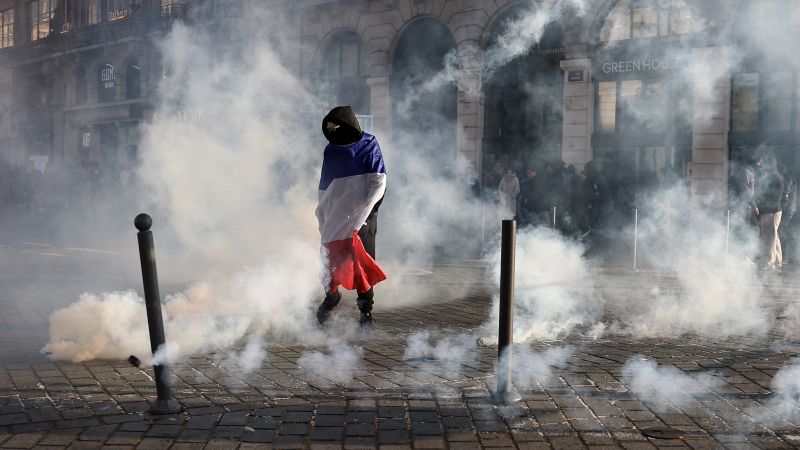
卢卡·佩蒂当时只有11岁,那是2018年11月,成千上万身穿黄马甲的男女涌上街头,占据了法国各地的环岛。
Lucas Petit was just 11 when hundreds of thousands of men and women wearing yellow vests poured onto the streets and occupied roundabouts across France in November 2018.
他的记忆已模糊不清,但与警方发生冲突的故事留下了深刻印象。如果他参加示威,他就知道会面临什么。“它帮助塑造了暴力抗议的这种整体集体形象,”他告诉CNN。
His memories are hazy, though stories of clashes with police left a lasting impression. If he ever joined a demonstration, he knew what to expect. “It helped shape this whole collective image of a violent protest,” he told CNN.
现年19岁的佩蒂属于这样一代人:对他们而言,催泪瓦斯、水炮、橡胶子弹和闪光弹是抗议时的家常便饭。
Petit, now 19, belongs to a generation for whom tear gas, water cannons, rubber bullets and stun grenades are par for the course when protesting.
“我们感到某种程度上被迫以暴力回应,因为我们面临着社会、制度、象征性的压迫,现在还有身体上的压迫,”佩蒂说。“所以我认为暴力已经常态化了。”佩蒂已经封锁了巴黎东部的学校一个多月。他是一场运动的参与者,这场运动最初要求改善法国学校的条件,此后已演变成一场集体愤怒的呐喊,将怀有不同不满的群体聚集在一起。
“We feel somewhat compelled to respond with violence because we’re facing social, institutional, symbolic and now physical oppression,” Petit said. “So I think violence has become normalized.”Petit has been blockading his school in eastern Paris for more than a month. He’s part of a movement that started out demanding better conditions at French schools and has since swelled into a collective cry of anger, bringing together groups with different grievances.
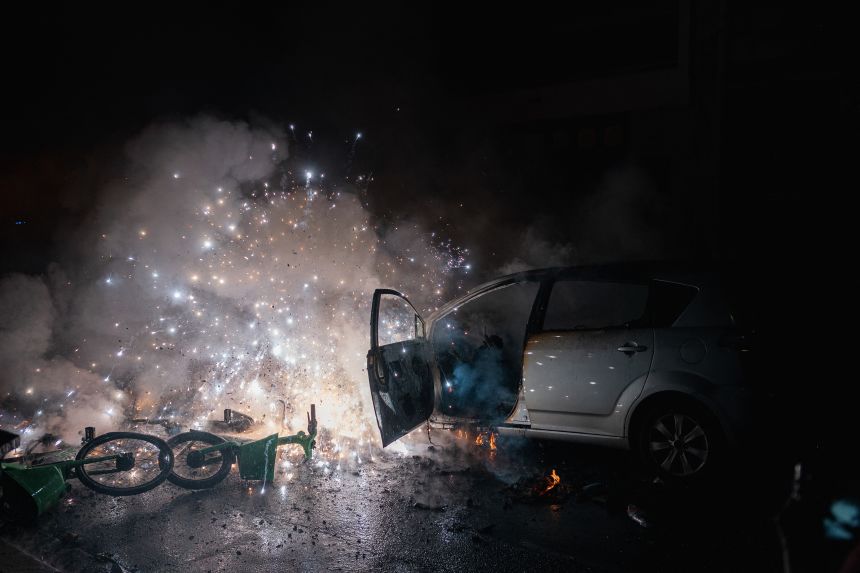
10月17日,原本以大体和平的全国性抗议为主的一天,演变成了抢劫和破坏的混乱场面:利摩日历史悠久的市政厅被烧毁;商店遭洗劫,抗议者终身致残。
On October 17, a day of largely peaceful nationwide protests morphed into chaotic scenes of looting and destruction: Limoges’s historic town hall went up in flames; shops were ransacked, and protesters were maimed for life.
机会主义的抢劫者混入其中,来自不同背景的年轻抗议者也参与其中。根据司法部的一份内部文件,10月18日至21日期间被监禁的186人中,68%年龄在25岁或以下,而52%此前无犯罪记录。近半数被归类为抢劫者。
Opportunistic looters joined in, alongside young protesters from various backgrounds. According to an internal Justice Ministry document, 68% of the 186 people jailed between October 18 and 21 were 25 or younger, while 52% had no previous criminal record. Nearly half were classified as looters.
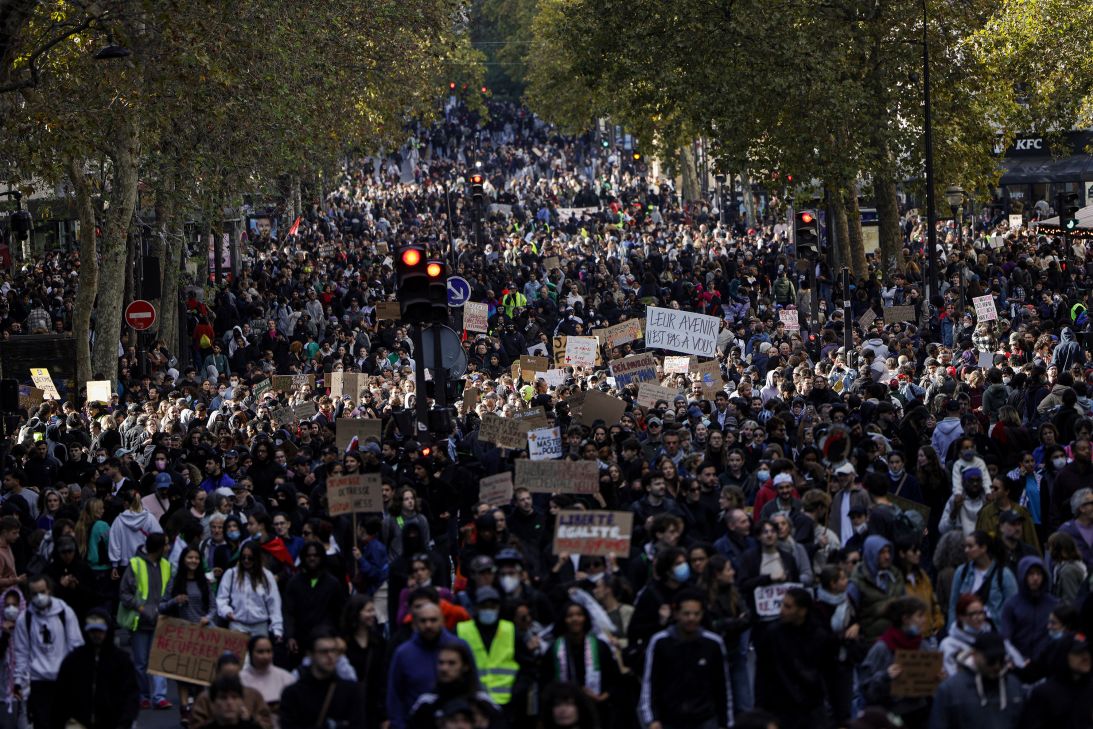
警方应对的失误有助于解释局势为何会如此失控。然而,在催泪瓦斯和烟雾背后,隐藏着部分法国抗议者行动方式的转变。
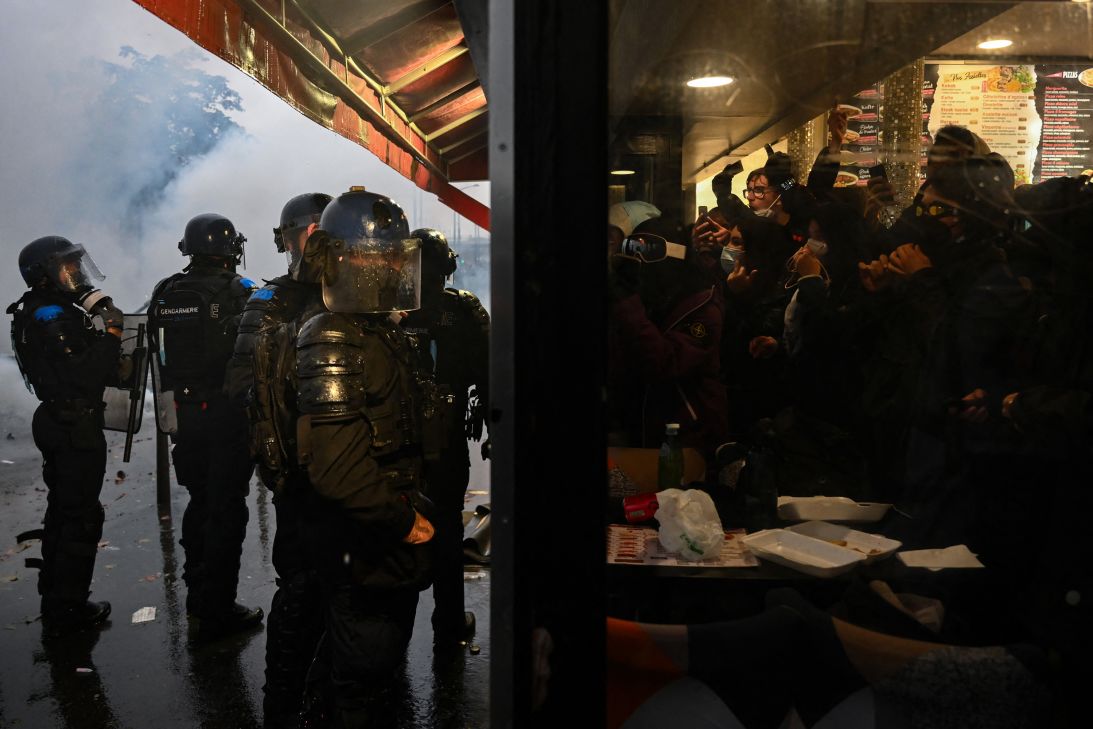
Failures in the police response help explain how the situation got so out of control. Behind the tear gas and smoke, however, lies a shift in how some French protesters operate.
在过去十年里,一些人已练就了一套应对冲突的娴熟手段。随着防暴警察调整战术和装备,示威者变得善于预判警方行动并利用安保漏洞。曾经与有组织的激进武装分子相关的手法,已传播给更年轻的一代。
Over the past decade, some have developed a savoir-faire for confrontation. As riot police have adapted their tactics and weapons, demonstrators have become adept at anticipating police maneuvers and exploiting gaps in security. Methods once associated with organized radical militants have spread to a younger generation.
“黑衣小组”战术如何扩散他们倾向于聚集在示威队伍最前端,从头到脚裹着黑色衣物,戴着面具和帽兜,因此得名“黑衣小组”。这类群体最早于20世纪80年代出现在德国。他们与无政府主义和反资本主义运动相关联,“黑衣小组”并非一个拥有正式领导层的组织,而是一套抗议战术。这些手法在2016年法国劳工抗议中声名大噪,随后在“黄背心”运动中进一步扩散。
How Black Bloc tactics spread They tend to gather at the front of demonstrations, dressed head to toe in black, masked and hooded earning them the moniker “Black Bloc.”The groups first appeared in Germany in the 1980s. Associated with anarchist and anti-capitalist movements, Black Bloc is not an organization with a formal leadership; it’s a set of protest tactics. These methods gained prominence in France during the 2016 labor protests before spreading further during the Yellow Vest movement.
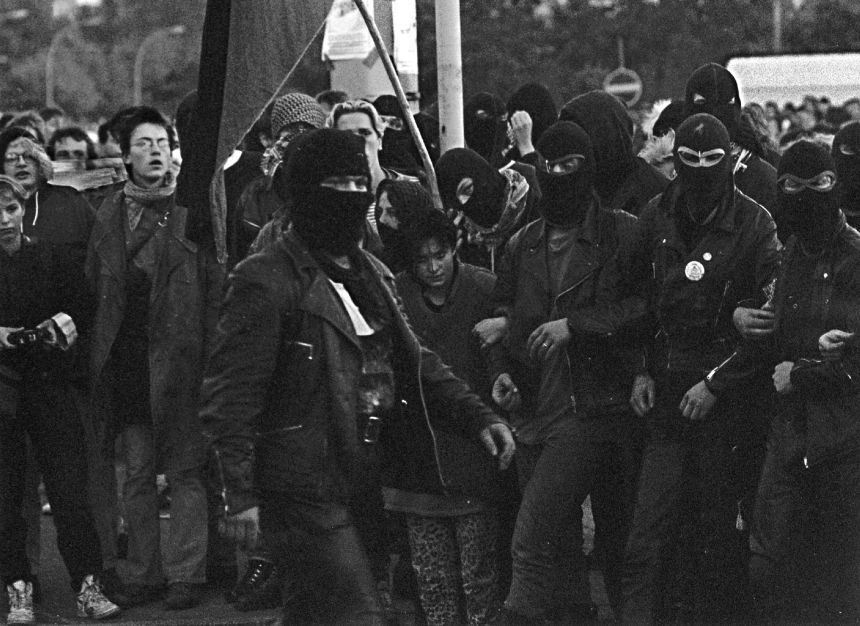
参与者隐藏身份,常以群体形式行动,有时会攻击资本主义象征,如奢侈品店。
Identities are concealed and participants often act as a group, sometimes attacking symbols of capitalism such as luxury stores.
这类抗议者常被称为“破坏者”,源自动词“casser”(意为“打碎、破坏”)——这是一个宽泛的称呼,可用于任何破坏财产者,无论其意识形态信仰为何。
These type of protesters are often referred to as “casseurs” too, from the verb “casser,” meaning “to break” – a broad term that can be applied to anyone who vandalizes property regardless of their ideological beliefs.
“许多原本并非来自极左翼的年轻人,现在正在采用‘黑衣小组’战术,”研究激进左翼运动的专家蒂埃里·文森特表示,“这已成为一种不再让许多年轻人感到震惊的抗议方式。” “黑衣小组”的一项战术是:小规模、高机动性的小分队脱离主游行队伍,迫使警方分散兵力,使其难以协同应对。两周前,一群抗议者试图冲向爱丽舍宫,吸引防暴警察离开示威现场,这一战术便得到展现。
“Many young people who aren’t originally from the ultra-left are now adopting Black Bloc tactics,” said Thierry Vincent, an expert on radical-left movements. “It’s a way of protesting that doesn’t shock many young people anymore.”One Black Bloc tactic involves small, highly mobile groups breaking away from the main march, forcing police to spread their forces thin, making it harder for them to respond in a coordinated way. That was on display a fortnight ago when a group of protesters attempted to reach the Elysee Palace, drawing riot police away from the demonstration.
该战术奏效了。警力被拉得很薄,导致当天警方应接不暇。传播的不仅是他们的手法。还有更广泛的意愿去正面对抗警察。
The maneuver worked. Police resources were stretched, and it contributed to officers being overwhelmed that day. It’s not just their methods that have caught on. There’s also a wider willingness to confront the police.
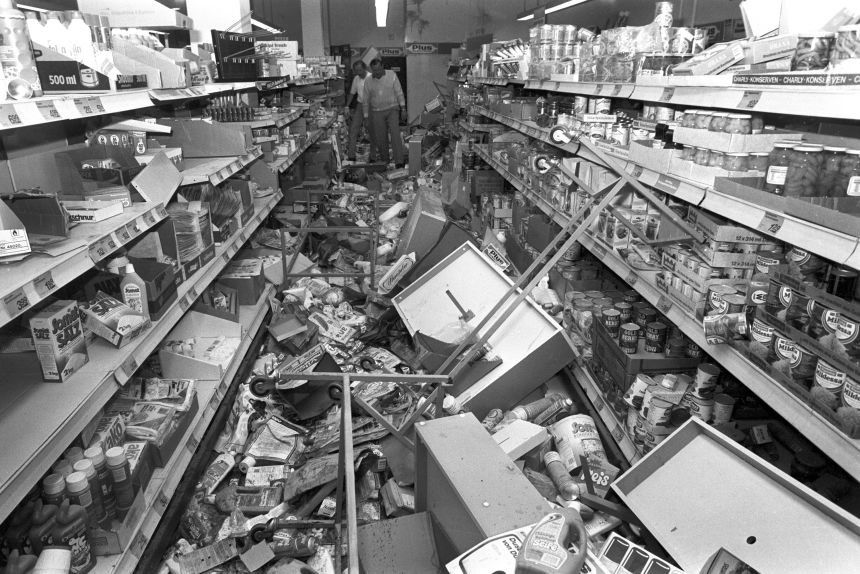
历史学家、左翼活动家雨果·梅尔基奥尔在法国西北部城市雷恩参加示威已有二十年,他亲眼目睹了这一现象。在戴面具的抗议者人海中,他发现了一些小规模的学生群体,他们似乎与激进组织没有关联。
Hugo Melchior, a historian and left-wing activist who has attended demonstrations in the northwestern city of Rennes for two decades, saw that firsthand. In the sea of masked protesters, he spotted small groups of students apparently unconnected to militant organizations.
“有时是四个年轻朋友,高中生或大学生,很可能不属于任何网络或组织,只是单纯决定以这种方式来示威,并打算发生冲突,”他对CNN表示。
“Sometimes it was four young friends, high-school or university students, probably affiliated with no network or organization, who had simply decided to come and demonstrate that way, with the intention of fighting,” he told CNN.
梅尔基奥尔表示,自2006年学生骚乱以来,他从未见过如此多做好对抗准备的人。
Melchior had not seen so many people prepared for confrontation since the 2006 student riots.
警方战术也在改变。历史上,法国的群众控制原则完全是关于让抗议者保持距离。由于暴力冲突,这一原则变得更加难以维持。
Police tactics are changing too Historically, France’s crowd control doctrine was all about keeping protesters at a distance. That’s become more difficult to maintain because of violent confrontations.
拥有25年经验的前防暴警察奥利维耶·卡普现代表UN1TÉ警察工会,他表示,警员现在面临燃烧瓶、烟花迫击炮、滚球以及其他投掷物的威胁。
Olivier Cappe, a former riot police officer with 25 years of experience who now represents the UN1TÉ police union, said officers are now facing threats from Molotov cocktails, fireworks mortars, pétanque balls and other projectiles.
“自然而然,你必须派遣警员出去干预,可能冲锋并与人对抗,”卡普说。“那就是人员受伤的地方。”人手短缺加剧了问题。卡普估计,法国缺少约800名专业防暴警察。
“Automatically you have to send your officers out to intervene, possibly charge and confront people,” Cappe said. “That’s where people get injured.”Staff shortages compound the problem. Cappe estimates France lacks around 800 specialist riot police officers.
“法国群众控制的原则是人数,”他说。“人越多,看起来越有威慑力。看起来越有威慑力,就越不需要干预。”他暗示,处于人数劣势的警员可能会更快诉诸橡胶子弹发射器等武器。在“黄马甲”运动和最近的学生抗议中,未接受过专业群众控制训练的警员被部署上岗,导致了毁灭性后果。
“The principle of French crowd control is numbers,” he said. “The more numerous you are, the more imposing you look. The more imposing you look, the less you intervene.”Outnumbered officers may resort more quickly to weapons such as rubber bullet launchers, he suggested. During both the Yellow Vest movement and more recently the student protests, officers without specialist crowd control training have been deployed with devastating results.
抗议活动初期,一名14岁男孩在一名警察近距离发射催泪弹击中面部后,牙齿被打碎、下颌骨折。一名16岁少年被橡皮子弹击中导致一只眼睛失明,一名15岁少年因震爆弹失去一只手,促使内政部长暂时暂停使用该类震爆弁。
Early in the protests, a 14-year-old boy suffered smashed teeth and a fractured jaw after a police officer fired a tear gas canister at close range, striking him in the face. A 16-year-old lost the use of an eye after being struck by a rubber bullet, while a 15-year-old lost a hand to a stun grenade, prompting the interior minister to temporarily suspend the grenade’s use.
卡普承认,更强硬的警力镇压可能会加剧问题。当警察在面对暴力团体时与学生发生对峙,年轻示威者日后可能会认同那些被针对的人。
Cappe acknowledges that more forceful policing can deepen the problem. When officers confront violent groups alongside students, younger demonstrators may later come to identify with those being targeted.
对于认同极左派的学生卢卡斯·佩蒂来说,争论超越了暴力是否合理的范畴。关键在于暴力旨在实现什么目的。他对针对资本主义象征的袭击并不感到震惊,因为他认为这些暴力行为可以服务于政治目的。
For student Lucas Petit, who identifies with the far left, the debate goes beyond whether violence is justified. It’s about what that violence is intended to achieve. He’s not shocked by attacks on symbols of capitalism, as he feels these acts of violence can serve a political purpose.
“这些不是为了暴力而暴力,”他对CNN表示,“它们有着非常具体的政治信息。”周三,法国总统埃马纽埃尔·马克龙将暴力升级描述为集体的失败。
“These are not acts of violence for the sake of violence,” he told CNN. “They have a very specific political message.”On Wednesday French President Emmanuel Macron described the escalation of violence as a collective failure.
“我不认为任何高中生在开始争取诉求时,会预料到会遭受如此可怕的后果,”他说,并补充道,警察也不是为了面对如此暴力的对抗而签约入职的。
“I don’t think any high school student started pushing for their demands expecting to suffer such terrible consequences,” he said, adding police officers hadn’t signed up to face such violent confrontations either.
当被问及一名15岁学生失去手部一事时,马克龙表示没有任何理由能为发生的事情辩解,并重申呼吁平静。
When asked about a 15-year-old student who lost his hand, Macron said nothing could justify what had happened and reiterated his call for calm.
在如此多的人认为政府遏制暴力的努力——如宵禁、禁止抗议和大量警察部署——侵犯了他们神圣的抗议权利,并等同于否定民主的当下,恢复街头平静是一项艰巨的任务。
Restoring peace to the streets is a tall order right now when so many feel that the government’s efforts to contain the violence, such as curfews, protest bans and a heavy police presence, violate their sacred right to protest and amount to a denial of democracy.
随着这场运动不再仅限于学生,工会和“黄马甲”加入其中,表达对生活成本的不满并呼吁马克龙下台,愤怒情绪短期内不太可能平息。
And with this no longer just being a student movement, as trade unions and Yellow Vests join in, voicing grievances over the cost of living and calling on Macron to go, the anger is unlikely to subside anytime soon.
此外,法国将于四月迎来一场极具分裂性的总统大选,进一步提高了赌注。
On top of all that, France is heading into a deeply divisive presidential election in April, raising the stakes even further.
一个不满之冬可能在即,周六将举行另一场抗议活动,而一场大型示威定于11月5日举行,引发了人们对10月17日所见极端暴力重演的担忧。
A winter of discontent may lie ahead, with another protest on Saturday and a major demonstration scheduled for November 5, raising fears of a repeat of the extreme violence seen on October 17.