
预测市场本周在三场重大选举中失准,这对那些向投资者推销自身可对冲全球风险的平台来说是个糟糕的形象。卡尔希和波利市场都认为巴西保守派候选人弗拉维奥·博索纳罗有80%的胜算;结果他败给了进步派现任总统,令任何交易巴西货币和股票的人蒙受损失。
Prediction markets blew three big elections this week, a bad look for platforms pitching themselves to investors as hedges against global risk. Kalshi and Polymarket both gave Brazilian conservative Flávio Bolsonaro a 4-in-5 chance of winning; he lost to the progressive incumbent, costing anyone who traded Brazil’s currency and stocks.
这些市场还高估了以色列内塔尼亚胡的挑战者,那里的选情仍然胶着难分——而且一系列可疑的投注引发了波利市场的调查。在塞尔维亚(新兴市场投资者也需要可靠的信息!),卡尔希直到选举日还认为这位占尽优势的现任强人有75%的胜算。结果他输了。
The markets also overrated Netanyahu’s challenger in Israel, where the race is still too close to call — and where a series of suspicious bets elicited an investigation by Polymarket. In Serbia (emerging-market investors need good information, too!), Kalshi gave the heavily favored incumbent strongman 75% odds as late as election day. He lost.
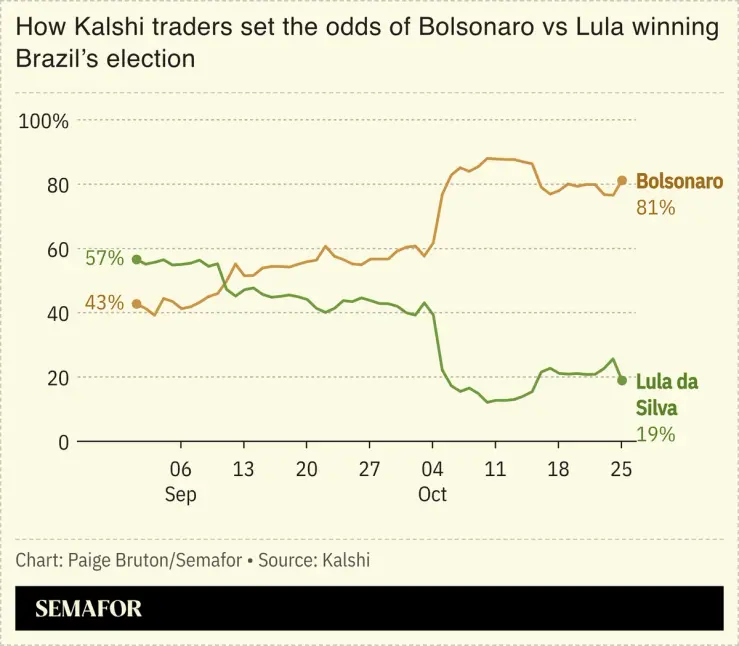
卡尔希一直吹嘘其市场的准确性,以争取机构投资者。一个不起作用的对冲是双重的糟糕:既无用又昂贵。
Kalshi has touted the accuracy of its markets to win over institutional investors. A hedge that doesn’t work is doubly bad: useless expensive.