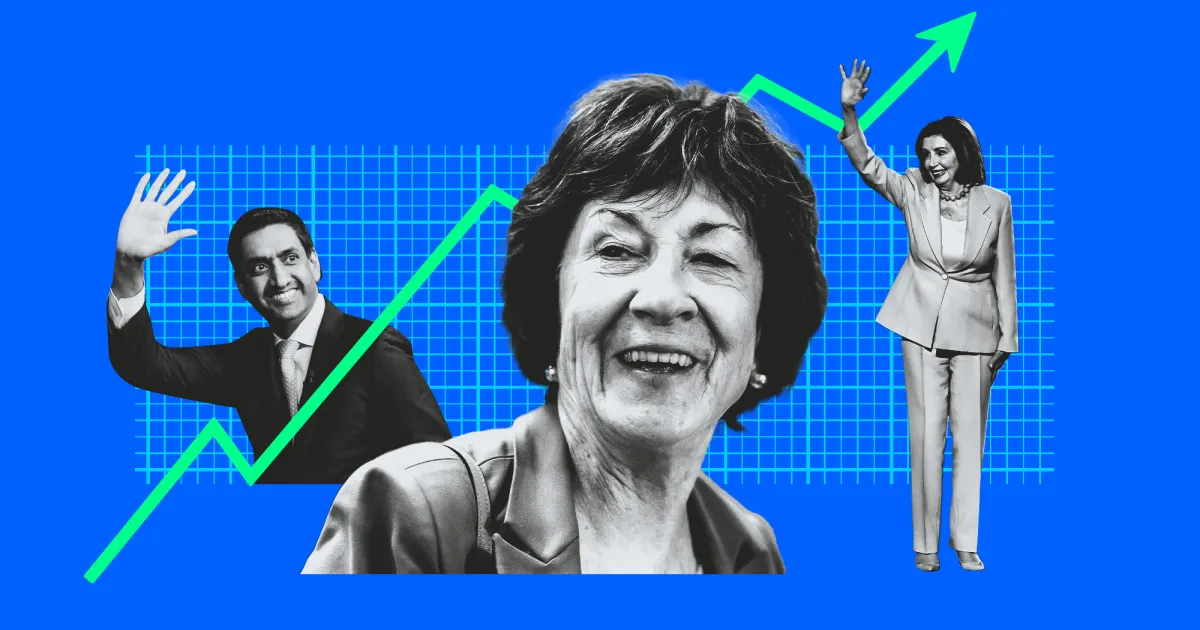
在10月15日共和党籍参议员苏珊·柯林斯(Susan Collins,缅因州)与其民主党挑战者特洛伊·杰克逊(Troy Jackson)的一场辩论中,一名异常客气的干扰者突然插话。“柯林斯参议员,非常抱歉打扰,但我感到恐惧,”此人高喊,“AI数据中心,它们正在毁坏我们的气候,污染我们的水源!”“这显然是特洛伊的支持者之一,”柯林斯说。“噢,闭嘴,”杰克逊回应道,“我根本不认识那小子。”
During an October 15 between Sen. Susan Collins (R-Maine) and her Democratic challenger, Troy Jackson, a curiously apologetic heckler piped up. “Senator Collins, I’m so sorry to interrupt, but I’m terrified,” the person shouted. “AI data centers, they’re destroying our climate, they’re poisoning our water!”“This is obviously one of Troy’s supporters,” Collins said. “Oh, shut up,” Jackson responded. “I don’t even know that kid.”
抗议者在缅因州参议员辩论中打断共和党籍联邦参议员苏珊·柯林斯,高呼关于AI数据中心的口号:柯林斯:“所以这显然是特洛伊的支持者之一。”
Protestor interrupts @SenSusanCollins (R-ME) by yelling about AI data centers during Maine Senate debate:
杰克逊:“噢,闭嘴……我根本不认识那小子。” 2026年10月15日 该干扰者被带离现场。
Collins: "So this is obviously one of Troy's supporters." Jackson: "Oh, shut up… I don't even know that kid."
但他针对这位参议员是有理由的。根据《Slate》报道,柯林斯的丈夫托马斯·达夫龙(Thomas Daffron)持有估计30万至80万美元的AI和数据中心相关投资,使他们的家庭成为参议院第五大此类投资者。(柯林斯的一名助手未对达夫龙的持仓置评,但告诉《Slate》,她投资于指数基金,从未亲自买卖个股。)美国GDP中取决于数据中心建设的份额目前在2%至4%之间;根据布鲁金斯学会(Brookings Institution)最近的一份报告,预计到2032年该行业的总投资将达到约10万亿美元。
October 15, 2026 The heckler was escorted out. But he had reason to target the senator According to , Collins’ husband, Thomas Daffron, holds an estimated $300,000 to $800,000 in AI- and data center-linked investments, making their household the Senate’s fifth largest such investor. (A Collins staffer did not comment on Daffron’s holdings, but told she invests in index funds and has never personally traded individual stocks.) The share of America’s GDP contingent on data center buildout is now somewhere between 2 percent and 4 percent; total investment in the industry through 2032 is predicted to sit in the neighborhood of $10 trillion per a recent Brookings Institution report.
按GDP占比计算,AI基础设施投资热潮的规模一年前已超越90年代末的互联网泡沫。因此,国会议员们从中获利也就不足为奇了——根据他们的财务披露,美国众议员和参议员共计持有1亿至3亿美元的数据中心相关投资。
As a percentage of GDP, the AI infrastructure investment boom surpassed the size of the late-1990s dot-com bubble a year ago. So it’s no surprise that Congressional lawmakers are cashing in—collectively, US representatives and senators hold between $100 million and $300 million in data-center-related investments, according to their financial disclosures.
根据《国会山报》9月的一项分析,五分之一的国会议员(包括62名共和党人和43名民主党人)报告称,他们或其家庭成员个人投资于“AI开发商、芯片制造商、云基础设施提供商、数据中心公司或私营AI初创企业”。投资此类项目最多的五个议员家庭均为民主党人,其中包括加利福尼亚州众议员罗·卡纳和南希·佩洛西,以及新泽西州众议员乔什·戈特海默。
One in five members (including 62 Republicans and 43 Democrats) report that they or others in their household are personally invested in “AI developers, chipmakers, cloud infrastructure providers, data center companies, or private AI startups,” according to a September analysis by The top five investing households in such projects were all Democratic, including those of California Reps. Ro Khanna and Nancy Pelosi, and Josh Gottheimer of New Jersey.
监督组织“共同事业”指出,这些议员也是国会股票交易最活跃的10人之一。但投资组合较小的国会议员也从这波热潮中获益。通常,这些议员——就像柯林斯一样——也曾公开支持有利于数据中心开发商的措施。
Those lawmakers are also among Congress’ 10 most active stock traders, per the watchdog group Common Cause But members of Congress with smaller portfolios have also benefited from the boom. Often, they are lawmakers who—like Collins—have also publicly supported measures favorable to data center developers.
尽管她76%的选民反对进一步建设数据中心,柯林斯仍反对全面禁止。据报道,她还利用自己拨款委员会主席的职位,为缅因州中部一座“高性能计算中心数据中心”争取到了620万美元联邦拨款。
While 76 percent of her constituents oppose further data center construction, Collins has opposed a blanket ban. She also, as has reported, utilized her position as Appropriations Committee chair to acquire $6.2 million in federal funding for a “high-performance computing hub data center” in central Maine.
国会中其他数据中心投资者更直白地帮助了该行业。据报道,弗吉尼亚州共和党众议员罗布·威特曼是今年《国防授权法案》中一项条款的推手,该条款旨在为在军事基地建设数据中心及配套小型核反应堆提供资金。截至2025年,威特曼的财务披露显示,他持有价值10万至30万美元的与数据中心繁荣相关的股票。(威特曼的竞选网站称,他的投资由理财经理监管,他们“在不咨询他的情况下做出那些决定”。)
Other data center investors in Congress have aided the industry more explicitly. Rep. Rob Wittman (R-Va.), was reportedly behind a clause in this year’s National Defense Authorization Act to fund the construction of data centers and accompanying small nuclear reactors on military bases As of 2025, Wittman’s financial disclosures show he owned between $100,000 and $300,000 in stocks related to the data center boom. (Wittman’s campaign website says his investments are overseen by a financial managers who make those “decisions without consulting him.”)
威特曼所在弗吉尼亚选区的亨里科县今年早些时候登上新闻头条,当时当地官员要求学校在酷热热浪期间关灯“节能”,而该县37座数据中心却继续全负荷运行。
Henrico County, in Wittman’s Virginia district, made headlines earlier this year when officials there told schools to turn off their lights to “save energy” during a scorching heat wave, at the same time the county’s 37 data centers kept operating at full capacity.
一些国会数据中心投资者支持的法案似乎与行业利益相悖。康纳在8月提出了一项所谓的“数据中心权利法案”,该法案将禁止数据中心设在“居民区以及距离住宅、学校、托儿设施、医院和养老院2500英尺范围内”。据报道,康纳的妻子和受抚养子女持有价值340万至840万美元的AI基础设施公司股票,其中包括芯片制造商英伟达。康纳曾称该行业具有“掠夺性”,但未谈及其在自己投资组合中的地位;他此前曾表示,妻子的资产由财务顾问管理。
Some of Congress’s data center investors have supported bills that seem counter to industry interests. Khanna introduced a so-called Data Center Bill of Rights in August that would ban them from “residential areas and within 2,500 feet of homes, schools, childcare facilities, hospitals and nursing homes.”Khanna’s wife and dependent children reportedly own between $3.4 million and $8.4 million worth of stock in AI infrastructure companies, including chipmaker Nvidia. Khanna has called the industry “extractive,” but has not discussed its place in his portfolio; he has previously stated that his wife’s assets are managed by financial advisers.
这种言行与财务现实的脱节跨越党派界限。“美国必须赢得AI竞赛,但不能以那些并未使用数据中心所需电力的勤劳家庭为代价,”众议员戴安娜·哈什巴格(共和党-田纳西州)近日宣称。她在Alphabet、微软、英伟达和博通等公司的投资高达460万美元。
The disconnect between rhetoric and financial reality extends across the aisle. “America must win the AI race, but not at the expense of hardworking families who aren’t using the electricity data centers need,” Rep. Diana Harshbarger (R-Tenn.) declared recently. She has up to $4.6 million invested in companies like Alphabet, Microsoft, Nvidia, and Broadcom.
相比之下,唐纳德·特朗普总统对其投资组合与其希望美国人让数据中心“称霸”之间的联系表现得相当坦率。监督组织“华盛顿责任与伦理公民组织”称,他持有拥有、运营或为数据中心提供基础设施的公司价值290万至950万美元的股票——仅一年时间,此类投资持仓就激增了600%。
President Donald Trump, by contrast, has been fairly open about the connection between his investment portfolio and his desire for Americans to let data centers “reign.”According to the watchdog group Citizens for Responsibility and Ethics in Washington, he owns between $2.9 million and $9.5 million in stock in companies that own, operate, or provide infrastructure for data centers—a 600 percent increase in his ownership of such investments over just one year.
“美国各地社区不想要数据中心的唯一理由,就是如果他们想最终变得落后和贫穷,”特朗普在8月宣称。与此同时,他的政治网络正在两边下注——彭博社本周报道,特朗普的“不回头”超级政治行动委员会正攻击民主党国会候选人与数据中心的自身关联。
“The only reason that communities throughout the USA should not want data centers is if they want to end up being backwards and poor,” Trump declared in August. Meanwhile, his political network is playing both sides—as Bloomberg reported this week Trump’s No Going Back PAC is now attacking Democratic congressional candidates over their own data center ties.