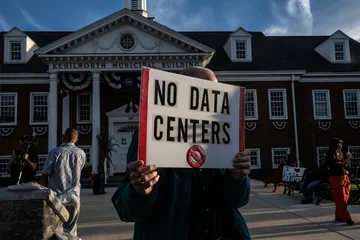
在过去大半年里,AI 领军人物之间的争论焦点在于:是否应放缓人工智能的发展步伐。周二,这一精英圈层之外的人群终于有了发言权。各方选民都选择猛拉手中唯一可用的杠杆。
For much of the past year, the debate among AI leaders has been whether to slow the pace of artificial-intelligence development. On Tuesday, those outside of that select community finally had their say. Voters of all stripes chose to pull hard on the only lever available to them.
在美国建设数据中心变得更加困难,但或许同样重要的是,选民向背后的 AI 亿万富翁们发出了挑战。
Building data centers in the US just became even more difficult, but perhaps as important, voters issued a challenge to the AI billionaires behind them.
获胜的民主党人现在必须应对这一结果,同时确保美国 AI 实验室在全球舞台上保持竞争力。在中国,瓶颈在于找到足够多的尖端芯片来填满其 AI 工厂;在美国,挑战在于建设足够多的工厂来容纳所有芯片。究竟哪种稀缺性将在 AI 竞赛中构成更大障碍,仍有待观察。
Victorious Democrats must now contend with the outcome while ensuring US AI labs remain competitive on the global stage. In China, the bottleneck is in finding enough cutting-edge chips to fill its AI factories. In the US, the challenge is building enough factories to hold all of its chips. Which scarcity proves the greater handicap in the AI race remains to be seen.
美国人走向投票站的理由有很多,但对数据中心项目的审查 —— 以及对科技资金的拒绝 —— 是一个反复出现的主题。据 Ballotpedia 追踪,截至周三下午,在 41 项与数据中心相关的投票议案中,除一项外,其余全部通过,赞成阻止、限制或以其他方式对开发施加额外控制。
Americans were compelled to the polls for many reasons, but scrutiny of data-center projects — and the rejection of tech money — was a recurring theme. As of Wednesday afternoon, of the 41 data center-related ballot measures tracked by Ballotpedia, all but one passed in favor of preventing, restricting or otherwise exerting additional controls on development.
在得克萨斯州,埃隆·马斯克(Elon Musk)投入的 2.24 亿美元——这是他在中期选举中总计 4.74 亿美元支出的一部分——最终更多地成了最终参议院获胜者詹姆斯·塔拉里科(James Talarico)的一份“礼物”,后者将其举为马斯克和大型科技公司腐蚀性影响力的例证。该州下一任州长吉娜·伊诺霍萨(Gina Hinojosa)是三十多年来首位担任该职位的民主党人,她承诺实施数据中心暂停令。
In Texas, Elon Musk’s $224 million — part of his $474 million in spending on the midterms — ended up being more of a gift to the eventual Senate winner, James Talarico, who held it up as an example of the corrosive influence of Musk and Big Tech. The state’s next governor, Gina Hinojosa, the first Democrat to hold that position in more than three decades, promised a data-center moratorium.
彭博社报道称,数据中心建设商正面临“最坏情况”。用马斯克的话说:“太空数据中心现在看起来相当有吸引力。”不过,他暂时还不需要把它们送上太空。周二的选举结果并不会让美国的数据中心建设戛然而止。据 SemiAnalysis 统计,马斯克旗下的 SpaceX 计划到 2027 年底新增 13 吉瓦的数据中心产能,尽管为其供电可能是个挑战。这一建设规模超过了谷歌从 1999 年到 2025 年底累计新增的数据中心产能。
Data-center builders, Bloomberg News reported, are facing their “worst case scenario.”Or, in Musk’s words: “Data centers in space looking pretty appealing right now.”He won’t need to put them there just yet. Tuesday’s results do not grind data-center construction to a halt in the US. Musk’s SpaceX is on course to add 13 gigawatts of data-center capacity by the end of 2027, though it might be a challenge to power it. That buildout is more than Google added in data-center capacity from 1999 to the end of 2025, according to SemiAnalysis.
但这一结果将为整个行业的进一步扩张计划——尤其是那些定于 2028 年的计划——设置障碍。约克维尔·艾夫斯(Yorkville Ives)分析师丹·艾夫斯(Dan Ives)直言不讳:“这些中期选举会减缓美国计划中的 800 到 1000 个、为 AI 革命提供动力的数据中心的建设步伐吗?我们认为答案是明确的 YES。”然而,胜利庆祝结束后,民主党人必须谨慎行事。
But this result will present an obstacle for further expansion plans across the industry, particularly those earmarked for 2028. There’s no point in sugarcoating it, said Yorkville Ives analyst Dan Ives. “Will these midterm elections slow the pace of the planned 800 to 1,000 data centers across the US fueling the AI Revolution?” he asked in a note. “The answer in our view is a clear YES.”Yet once the victory lap is over, Democrats must tread with caution.
反对一个数据中心项目,不等于反对所有形式的 AI,更不代表反对 AI 预计将带来的那种经济增长。存在这样一种风险:本可建成却最终空置的土地——那些本可以实现的项目——可能会成为民主党挥霍美国在 AI 领域领导地位的象征。与此同时,俄亥俄州乡间嗡嗡作响、轰鸣不已的数据中心,可能会成为一项破裂承诺的丰碑。
A vote against a data center is not necessarily one against AI in all its forms, and it certainly doesn’t signal opposition to economic growth of the kind AI is expected to bring. There is a risk that empty fields — projects that could have been — might come to symbolize Democrats squandering America’s leadership in AI. At the same time, a buzzing, humming data center in rural Ohio might become a monument to a broken promise.
答案在于建设数据中心,但要争取更有利的条件。在周二之前,AI 游说工作在很大程度上可以集中于一人身上——他几乎不提要求,只求对方将 AI 称为“超级智能”,站在他身后对着镜头微笑,并悄悄捐出数千万美元用于新建一座舞厅。随着民主党掌控参众两院,他们可以着手推进联邦法案,确保数据中心建设的成本负担不会沉重地落在消费者门口。
The answer is to build data centers but on better terms. Before Tuesday, AI lobbying efforts could in no small part be concentrated toward one man who asked little in return other than they refer to AI as “superintelligence,” stand behind him smiling for the cameras, and quietly send along tens of millions of dollars for a new ballroom. With control of both chambers, Democrats can look to advance federal bills that ensure the cost burden of data-center construction does not land with a thump on consumers’ doormats.
还有数据中心方程式中另一部分不容忽视——我认为这远比关于建设项目本身的辩论更为重要。
And then there’s another part of the data-center equation that must not be overlooked — far bigger, I’d argue, than the debate over the construction projects themselves.
美国人在数据中心问题上争取到的良好交易,应延伸至更广泛的保护,以应对 AI 的影响。这些保护体现为:为学校项目、大学、学徒制以及各年龄段获取新技能提供大规模资助;为那些因变革来得太快而措手不及的人提供经济缓冲;出台立法保护创意产业免遭毁灭性打击;防范掠夺性广告和动态定价宰客;追究 AI 公司对令人发指危害的全部责任,例如 AI 生成的儿童虐待图像和所谓的“报复性色情”;当 AI 在用户明显处于情绪危机、急需干预时未能采取行动,让受创家庭获得应有的救济途径。
A good deal for Americans on data centers extends into broader protections from the effects of AI. They come in the form of massive funding for school programs, colleges, apprenticeships and the acquisition of new skills for all ages. They include a financial cushion for those for whom the change came too quickly and legislation to protect creative industries from obliteration. They guard against predatory advertising and dynamic-price gouging. They hold AI companies fully accountable for disgusting harms such as AI-generated child abuse imagery and so-called revenge porn. They give devastated families proper recourse when an AI fails to act when a user is in obvious emotional distress and in need of an intervention.
当 AI 公司推出数据中心蓝图时,这些议题也应摆上谈判桌。只有将对话合二为一,才能赢得公众支持。
When an AI company rolls out its blueprints for a data center, these issues should be on the table as well. The conversation must become one and the same if the public is to be won over.
民主党人在尝试这样做时,明智的做法是记住,民众并非一直如此本能地反对数据中心。几十年来,市民们欣然享受着这些巨大的、嗡嗡作响的服务器机架仓库带来的便利:观看 Netflix、玩在线游戏、将一生的照片存储在云端、跨越半个地球与亲人进行高清视频通话,或做数字革命带来的其他无数事情。
As Democrats attempt this, they will be wise to remember that people weren’t always so viscerally opposed to data centers. For decades, citizens happily benefited as these vast warehouses of humming server racks enabled them to watch Netflix, play online games, store a lifetime’s photos in the cloud, call a loved one in high-definition video across the world or do any number of things our digital revolution brought us.
随后,情况发生了根本性变化。科技领袖从“极其富有”变成了“难以想象的富有”。他们的平台和财富赋予了他们前所未有的权力,他们很快便开始行使并巩固这种权力。人工智能热潮让这些差距更加凸显,伴随而来的是 AI 领军人物的承诺:这项令人振奋的新技术将颠覆我们个人的生计、动摇全球经济的根基,甚至可能彻底毁灭我们。
Then, something changed fundamentally. Tech leaders went from exceedingly rich to unfathomably rich. Their platforms and money brought them unprecedented power, and they soon moved to wield and consolidate it. The AI boom brought these disparities into even sharper focus, coming as it did with the promises from AI luminaries that this exciting new technology would upend our individual livelihoods, shake the foundations of the global economy and perhaps wipe us out altogether.
市民们被迫感到别无选择。“你可能会也可能不会因为 AI 而失业,”英伟达首席执行官黄仁勋曾说,“但你绝对会因为别人使用 AI 而失业。”但公众实际上是有选择的,而且他们在投票箱前做出了选择。黄仁勋——以及马斯克、马克·扎克伯格、萨姆·奥特曼、达里奥·阿莫代伊等人——应当吸取的关键教训是:这些选票既是对数据中心的反对,也是对他们这群亿万富翁科技领袖的反对,因为他们至今未能向美国公众推销他们的愿景。
Citizens have been made to feel they have little choice. “You may or may not lose your job to AI,” Nvidia Corp. Chief Executive Officer Jensen Huang once said. “But you will absolutely lose your job to someone who uses AI.”But the public does, in fact, have a choice, and it was made at the ballot box. The key takeaway for Huang — and Musk, Mark Zuckerberg, Sam Altman and Dario Amodei, et al — should be to understand that these votes were as much against them, the billionaire class of tech leaders who have so far failed to sell the American public on their vision, as they were against data centers.