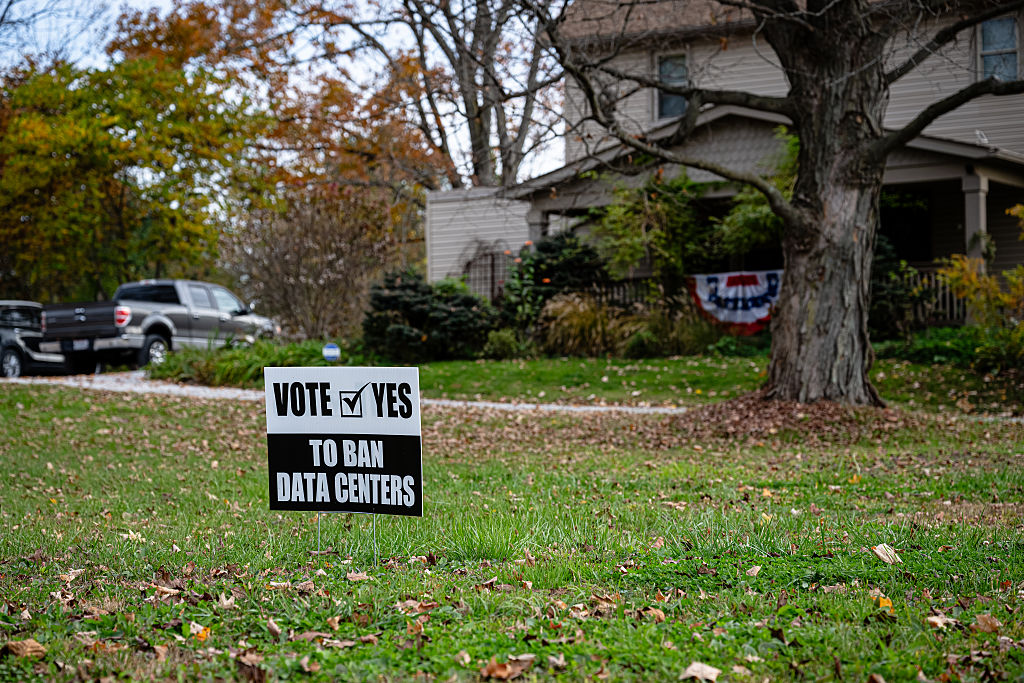
过去一年,AI行业中一个主张不受约束发展的派系似乎准备动用其财富,让2026年中期选举朝着有利于自己的方向倾斜。但11月3日,这个“加速主义”阵营的夜晚再糟糕不过了。
For the past year, a faction of the AI industry bent on unfettered development looked poised to use its wealth to tip the 2026 midterms in its favor. But on Nov. 3, that accelerationist wing could hardly have had a worse night.
NBC的一项出口民调发现,56%的选民表示,AI和数据中心是他们投票选举国会议员时的“关键或主要因素”。民主党人在电视广告上花费了超过1亿美元,将共和党对手描绘成与大科技公司和数据中心过于亲密——并在许多此类选战中决定性地获胜,包括俄亥俄州、堪萨斯州和艾奥瓦州。
An NBC exit poll found that 56% of voters said that AI and data centers were a “crucial or major factor” in their vote for Congress. Democrats spent more than $100 million on broadcast ads casting their Republican opponents as being overly cozy with Big Tech and data centers—and decisively won in many of those races, including Ohio, Kansas, and Iowa.
从佛罗里达州埃奇沃特到伊利诺伊州布卢明顿,全国多个县通过了数据中心禁令或暂停令,而俄亥俄州皮夸和俄克拉何马州育空市的市长则因先前支持数据中心项目而被罢免。
Data center bans or moratoriums passed in counties across the country, from Edgewater, Fla., to Bloomington, Ill., while the mayors of Piqua, Ohio and Yukon, Oklahoma were recalled for their previous support of data center projects.
数据中心和加速主义超级政治行动委员会通过支出影响选举的努力未能取得重大成效。他们投入资金支持的关键候选人之一达琳·格雷厄姆输给了安妮·安德鲁斯,后者给格雷厄姆起了个绰号“数据中心达琳”,并呼吁对新项目实施为期两年的暂停令。加速主义者的无效表现,为“支持安全”的政治行动委员会在关键选战中超过他们的支出开辟了道路。这些团体支持的几位候选人获胜,包括密歇根州的阿卜杜勒·埃尔-赛义德和科罗拉多州的曼尼·鲁蒂内尔。
Data center and accelerationist super PACs failed to make a major dent in influencing elections through spending. One of the key candidates they spent money on, Darline Graham, lost to Annie Andrews, who nicknamed Graham “Data Center Darline” and called for a two-year moratorium on new projects. The accelerationists' ineffectiveness opened a pathway for “pro-safety” PACs to outspend them in key races. Several candidates backed by those groups, including Michigan’s Abdul El-Sayed and Colorado’s Manny Rutinel, won.
不要指望联邦层面很快出台全面的AI监管。即便拿下两院,民主党人仍需要大量共和党支持,才能克服潜在的总统否决。
Don’t expect sweeping federal AI regulation soon. Even with both chambers, Democrats need substantial Republican support to pass over a potential Presidential veto.
但这次选举成为反AI民粹主义日益高涨的一年中令人震惊的顶点;在这一年里,唐纳德·特朗普为该行业推波助澜,并称数据中心的反对者“最终会落得落后和贫穷的下场”。如今,国会可能传唤高管到委员会作证回答问题,并推翻共和党阻止州级法律的努力。
But this election served as the stunning capstone in a year of mounting anti-AI populism, during which Donald Trump has spurred on the industry and said that opponents of data centers “want to end up being backwards and poor.”Now, Congress could haul executives before committees to answer questions and undo Republican efforts to block state-level laws.
即便没有修改法律,政客们在站队AI行业之前也可能会三思。共和党策略师、安全人工智能联盟首席执行官布伦丹·斯坦豪泽表示:“选民今晚已经表态:他们压倒性地支持AI安全与保障,并且非常反对数据中心和车牌识别摄像头。AI行业将不得不准备好应对此事,因为我认为大量法案正从州和联邦层面涌向他们。”数据中心已成为政治负资产。
Even without law change, politicians may think twice before siding with the AI industry. “Voters had their say tonight: they are overwhelmingly in support of AI safety and security, and very much against data centers and flock cameras,” says Brendan Steinhauser, a Republican strategist and the CEO of The Alliance for Secure AI. “The AI industry is going to have to get ready to deal with it because I think there's a big deluge of bills at the state and federal level coming their way.”
进步派研究公司蓝玫瑰研究开展的对比民调显示,美国人宁愿住在监狱、美沙酮诊所或核电站附近,也不愿住在AI数据中心附近。该公司的研究总监阿里·莫特尔表示,对AI的生存性担忧有所加剧,但数据中心具体的本地影响——包括更高的能源账单、噪音和环境问题——要突出得多。
Data centers became a political liability Americans would rather live near a prison, methadone clinic, or a nuclear power plant than an AI data center, according to comparative polling done by progressive research firm Blue Rose Research. Existential concerns about AI have grown, says Ali Mortell, the firm’s director of research, but data centers’ concrete local impacts—including higher energy bills, noise, and environmental concerns—were far more salient.
因此,在许多选战中,反对数据中心力度强于对手的民主党候选人获胜。在俄亥俄州,当选参议员谢罗德·布朗花费数百万美元投放广告,称赫斯特德是“俄亥俄州数据中心的代言人”。布朗以五个百分点的优势获胜。全国共和党参议院委员会甚至承认,赫斯特德与该行业的关联是个问题,并在8月的一份备忘录中写道:“在这场竞选中,数据中心比任何其他东西都更像是挂在赫斯特德脖子上的锚。”
Accordingly, Democratic candidates who opposed data centers more strongly than their opponents won in many races. In Ohio, Senator-elect Sherrod Brown ran millions of dollars of ads calling Husted “the face of data centers in Ohio." Brown won by five percentage points. The National Republican Senatorial Committee even acknowledged that Husted’s ties to the industry were a problem, writing in an August memo that “more than any other thing in this race, data centers are the anchor hanging around Husted’s neck.”
在堪萨斯州,辛迪·霍尔舍在周三上午的州长竞选中领先,此前她投放了一则广告,呼吁暂停数据中心建设,直到堪萨斯州制定保护其社区、农场、就业和预算的防护措施。她的对手泰·马斯特森曾从一个数据中心超级政治行动委员会获得150万美元。
In Kansas, Cindy Holscher led in the governor’s race on Wednesday morning after running an ad calling for a pause on data centers until Kansas set guardrails to protect its communities, farms, jobs, and budgets. Her opponent Ty Masterson had received $1.5 million from a data center super PAC.
在亚利桑那州,承诺“阻止数据中心建设”的民主党人阿米什·沙阿在周三上午领先于杰伊·菲利。菲利曾表示,美国的数据中心对于在全球AI竞赛中击败中国是必要的。
In Arizona, Democrat Amish Shah, who pledged to “stop data centers from being built,” led Jay Feely, who said American data centers were necessary to beat China in the global AI race, on Wednesday morning.
认为美国数据中心用水量低于全国高尔夫球场的比较,并未打消选民的疑虑。开发商承诺承担更高的能源账单,这缓和了反对情绪,但几乎未能赢得支持者。Mortell说,由于民众对机构的信任度很低,当科技公司和政客试图安抚人心时,“选民根本不会相信那是真的”。Politico在10月进行的一项民调发现,近半数美国人认为共和党是最热衷于建设数据中心的政党。
Comparisons suggesting that U.S. data centers use less water than the nation’s golf courses have done little to reassure voters. Developers’ promises to cover higher energy bills soften opposition but win few supporters. Trust in institutions is low, so when tech companies and politicians offer reassurance, Mortell says, “voters are not positioned to believe that's true.”An October Politico poll found that nearly half of Americans identify Republicans as the party most eager to build data centers.
但民主党人可能会发现自己站在反弹的另一边。在威斯康星州,共和党人Tom Tiffany嘲讽地称其对手为“数据中心David Crowley”。Crowley在10月转向更严格的限制立场——并赢得了选举。
But Democrats could find themselves on the other side of the backlash. In Wisconsin, Republican Tom Tiffany derisively called his opponent “Data Center David Crowley.”Crowley shifted toward tighter restrictions in October—and won.
“民主党选民和共和党选民在如何看待[数据中心]上并没有明显的分歧。所有人的看法都变差了,”Mortell说。
“There's not a clear divide between Democratic voters and Republican voters on how they're thinking about [data centers]. Opinion has soured with everyone,” Mortell says.
AI资金支持了双方 AI加速主义者也难以将其可观的竞选捐款转化为选举胜利。
AI money backed both sides AI accelerationists also struggled to translate their considerable campaign contributions into electoral victories.
超级政治行动委员会Leading the Future于2025年8月成立,获得了超过1亿美元的资金,用于支持亲AI的候选人。但由于公众对AI行业的怀疑已变得如此普遍,该PAC的捐款引发了反弹,给接受这些资金的候选人带来了麻烦。
The super PAC Leading the Future was created with more than $100 million in funding to support pro-AI candidates in August 2025. But because public skepticism of the AI industry has become so widespread, the PAC's financial contributions were met with backlash, creating headaches for candidates who received the money.
根据一项调查,四分之三的可能选民表示,如果发现某位候选人接受了AI超级PAC的捐款,他们就不太可能投票给该候选人。随着大选临近,OpenAI的Greg Brockman和Ron Conway等大额捐赠者退出了此前承诺的捐款,而Leading the Future基本上按兵不动。
According to one survey, three-quarters of likely voters said that they would be less likely to vote for a candidate if they found out they had accepted a donation from an AI super PAC. As the general election approached, big donors like OpenAI’s Greg Brockman and Ron Conway backed away from previously promised donations, and Leading the Future mostly kept their powder dry.
埃隆·马斯克的表现也不尽如人意。这位人工智能领域的领袖是本选举周期最大的金主,捐款4.46亿美元,其中1.68亿美元实际上用于支持得克萨斯州的肯·帕克斯顿。但帕克斯顿被詹姆斯·塔拉里科击败,后者呼吁终止对大型科技公司的“甜心税收协议”以及其他保障措施。
Elon Musk didn’t fare well either. The AI leader was the biggest donor in this cycle at $446 million, $168 million of which effectively went to supporting Ken Paxton in Texas. But Paxton was crushed by James Talarico, who has called for the ending of "sweetheart tax deals" for Big Tech and other guardrails.
“引领未来”及其关联的政治行动委员会在支出上远远不及那些专门为对抗其影响力而设立的、支持安全监管的政治行动委员会。这些支持安全监管的团体也有自己的富有支持者。Anthropic向倡导加强保障措施的“公共第一行动”捐赠了超过4000万美元。这笔资金被限制用于选举活动,不过Anthropic的员工另外还捐赠了500万美元用于支持竞选活动。
Leading the Future and associated PACs were far outspent by pro-safety PACs designed specifically to counter their influence. Those pro-safety groups had a wealthy supporter of their own. Anthropic contributed more than $40 million to Public First Action, which advocates for stronger safeguards. That money was restricted from election activities, though Anthropic employees separately donated another $5 million to support campaign efforts.
支持安全监管的政治行动委员会在密歇根州(托马斯·莫尔·巴雷特面临89.625万美元的反对资金)、科罗拉多州(呼吁有条件暂停令的曼尼·鲁蒂内尔从支持安全监管的团体获得了150万美元)和威斯康星州(丽贝卡·库克在一个支持安全监管的团体花费超过88万美元反对德里克·范·奥登后击败了他)取得了胜利。
Pro-safety PACs notched wins in Michigan (Thomas More Barrett faced $896,250 in opposition funding); Colorado (Manny Rutinel, who has called for a conditional moratorium, received $1.5 million from pro-safety groups); and Wisconsin (where Rebecca Cooke defeated Derrick Van Orden after a pro-safety group spent more than $880,000 opposing him).
但双方的资金都未能起到决定性作用。本周期内,以人工智能为重点的超级政治行动委员会之间最大的支出战是纽约州的一场国会初选。支持安全监管的团体花费2130万美元支持亚历克斯·博尔斯,而加速主义者则花费820万美元反对他。博尔斯落败——但获胜者迈卡·拉舍曾共同提出过同一项人工智能安全法案,正是这项法案使博尔斯成为行业的攻击目标。那人工智能虚假信息呢?
But neither side's cash proved decisive. The largest spending battle of the cycle among AI-focused super PACs was a New York congressional primary. Pro-safety groups spent $21.3 million supporting Alex Bores, while accelerationists spent $8.2 million opposing him. Bores lost—but the winner, Micah Lasher, had co-sponsored the same AI safety law that made Bores an industry target. What about AI misinformation?
人工智能批评者的另一个主要担忧是,人工智能深度伪造会传播关于候选人的虚假信息。虽然人工智能深度伪造内容确实在传播,但它们似乎并未在许多选战中产生过大影响。
Another major worry from AI critics was that AI deepfakes would spread misinformation about candidates. While AI deepfakes were circulated, they do not appear to have had an outsize impact in many races.
例如,缅因州当选参议员特洛伊·杰克逊的深度伪造视频在选举前一周流传,视频中他似乎威胁自己的竞选团队工作人员,但杰克逊最终以超过七个百分点的优势获胜。在威斯康星州,范奥登在社交媒体上发布了多段库克的深度伪造视频,视频中库克说了她从未说过的话。范奥登落败。
For instance, deepfaked videos of Maine Senator-elect Troy Jackson appearing to threaten his campaign staff circulated the week before the election, but Jackson went on to win by more than seven percentage points. In Wisconsin, Van Orden posted several deepfake videos on social media of Cooke saying things she never said. Van Orden lost.
AI可能成为更大的选举议题。经过两年的加速主义议程后,AI行业正在为更严峻的政治气候做准备。据Axios报道,OpenAI计划发起一场政策和公关攻势,包括努力将数据中心重新包装为“AI算力园区”。与此同时,据报道Meta正在组建一个两党团队,以加强与民主党的关系,同时维持与共和党的联系。“国会将会提出更多问题,”斯坦豪泽说,他所在的“安全AI行动联盟”是一个倡导护栏的两党非营利组织。
AI could become a bigger election issue After two years of a pro-acceleration agenda, the AI industry is now preparing for a harsher political climate. OpenAI plans to launch a policy and PR offensive, Axios reports, including an effort to rebrand data centers as “AI compute campuses.”Meanwhile, Meta is reportedly building a bipartisan team to strengthen its relationship with Democrats, while maintaining its ties with Republicans. “There's going to be a lot more questions from Congress,” says Steinhauser, whose Alliance for Secure AI Action is a bipartisan nonprofit that advocates for guardrails.
在特朗普入主白宫的情况下,全面的联邦AI立法很可能需要他的签署,或者需要足够的两党支持来推翻否决。由于反AI情绪跨越党派界限,跨党派合作并非不可能。“我认为这是特朗普取得两党胜利的好机会,”斯坦豪泽说。
With Trump in the White House, sweeping federal AI legislation would likely require either his signature or enough bipartisan support to overcome a veto. With anti-AI sentiment crossing party lines, cross-party collaboration isn’t out of the question. “I think this is a good chance for Trump to have a bipartisan win,” Steinhauser says.
“我还认为你会在州一级看到更多动向,”斯坦豪泽说。国会中的民主党人可能无法通过全面的联邦监管,但共和党人寻求的禁止州级AI监管的禁令将更难颁布。“如果国会陷入僵局,加利福尼亚州的举措将主导美国和世界的AI治理,”斯科特·辛格说,他是卡内基国际和平基金会的研究员,也是一份由加州州长加文·纽森委托撰写的报告的主要作者,该报告为SB-53提供了参考——这是美国第一部规范前沿AI系统的法律。
"I also think you're going to see more movement at the state level," Steinhauser says. Democrats in Congress might not be able to pass sweeping federal regulation, but the ban on state AI regulation Republicans have sought will be harder to enact. “If Congress is gridlocked, what happens in California will govern AI for the U.S. and the world,” says Scott Singer, a fellow at the Carnegie Endowment for International Peace who was a lead writer of a report commissioned by California Gov. Gavin Newsom, which informed SB-53—the first U.S. law governing frontier AI systems.
蓝玫瑰的民调发现,人工智能在39个议题中排名第29位。但在过去一年里,其关注度的上升幅度超过其他任何议题,包括中东战争。莫特尔表示,随着人工智能不断发展,其对就业和人们安全的影响可能会让2028年的政治辩论呈现出非常不同的面貌。“这是人工智能首次出现在政治话语中的选举周期,而可以说,这将是它今后最不重要的一次。”
Blue Rose’s polling finds AI is ranked 29th out of 39 issues. But in the last year, its salience has risen more than any other issue, including war in the Middle East. As AI advances, its effects on jobs and people’s safety could make for a very different political debate in 2028, Mortell says. “This was the first cycle where AI showed up in the political discourse, and it’s arguably the least important that it will ever be again.”