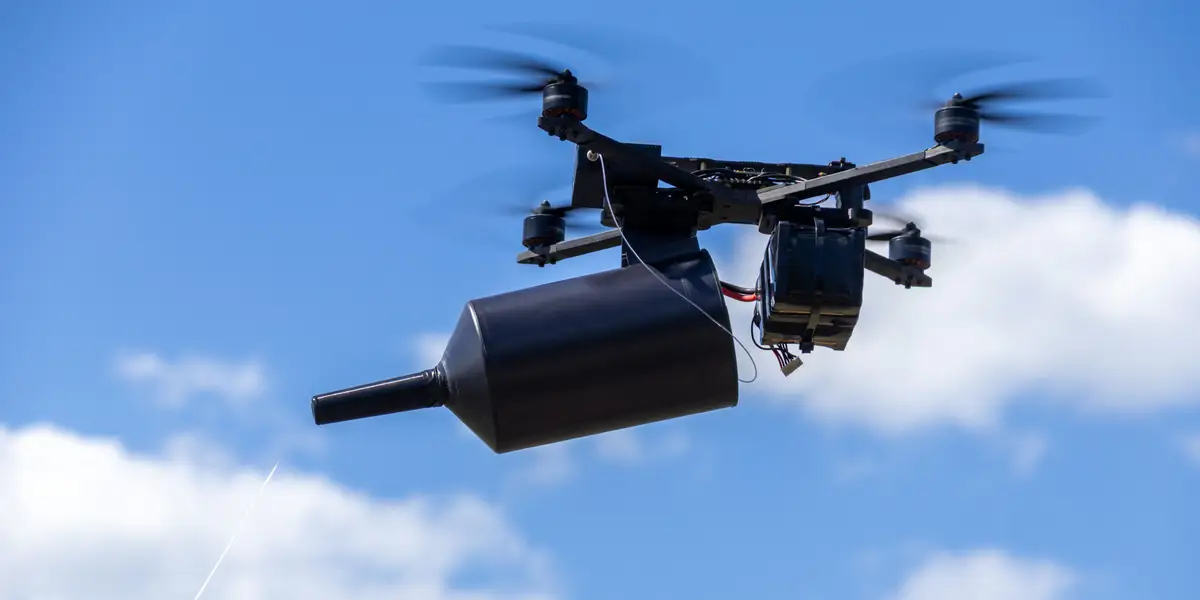
随着企业不断创新,乌克兰无法被干扰的光纤无人机飞得越来越远,但一家公司却在质疑是否值得继续延长它们的航程。
As companies continue to innovate, Ukraine's unjammable fiber-optic drones are flying farther and farther, but one company is questioning whether it's worth continuing to extend their range.
这些无人机通过物理线缆传输指令和视频,不受敌方电子战(尤其是常规射频干扰)的影响。与其他FPV无人机相比,它们能提供更清晰的视频画面,既可用于侦察,也可用于攻击;随着航程的增加,乌克兰官员和企业为它们而欢呼。
These drones, which can transmit commands and video through a physical cable, are not affected by enemy electronic warfare, specifically conventional radio-frequency jamming. Providing clearer video feeds than other FPV drones, they're useful for both surveillance and attack, and Ukrainian officials and companies have celebrated as their ranges have increased.
但乌克兰主要的光纤无人机和拦截无人机制造商泰克艾克斯公司告诉《商业内幕》,进一步突破这些极限可能得不偿失。该公司已制造出航程最高分别达35公里和40公里的机型。
But TechEx, a major Ukrainian fiber-optic and interceptor-drone maker, told Business Insider that pushing those limits further may not be worth the trade-offs. The company has built models with ranges of up to 35 and 40 kilometers.
“我们目前正在考虑,是否有必要继续研发下一代光纤无人机,使其飞行距离达到,比如说,45公里或50公里。”泰克艾克斯公司高管奥列格说。出于安全原因,他要求只透露自己的名字。
"We are currently considering whether it's still necessary to do the next versions of the fiber optic drones to fly, let's say, 45 or 50 kilometers," said Oleg, a TechEx executive who asked to be identified only by his first name for security reasons.
奥列格表示,之所以犹豫,是因为飞得更远需要更重的线轴,也需要更大的电池来支撑额外增加的线轴重量。“这可能会影响无人机携带的有效载荷数量。”
The reason behind the hesitation is that flying farther requires a heavier spool, as well as larger batteries to keep the added spool weight aloft, Oleg said. "This may affect the amount of the payloads carried by the drone."
“所以我们仍在考虑,这种远程FPV是否真的会在前线使用,还是我们会坚持,比如说,40或45公里。”
"So we are still figuring out whether it's something that will be actually used on the front lines to do that long-range FPVs, or we will stick to, let's say, 40 or 45 kilometers."
无人机公司不得不在摄像头、炸药、武器挂载、通信设备和其他装备的重量之间不断权衡。对于光纤无人机制造商来说,保持这种平衡更加困难,因为他们的无人机还要携带一轴线缆。
Drone companies are constantly having to balance the weight of the cameras, explosives, weaponry attachments, communications gear, and other equipment. That balance is harder for fiber-optic drone makers to maintain because their drones are also carrying a spool of cable.
一些乌克兰无人机制造商还表示,对光纤无人机而言,较短的航程反而更有效,因为距离越远,线缆断裂的风险就越大。
Some Ukrainian drone makers have also said that shorter ranges are more effective anyway for fiber-optic drones because longer distances increase the risk of the cable breaking.
乌克兰国家支持的创新平台 Brave1 在描述 TechEx 的 Stalker XO-10 和 Stalker XO-15 无人机时表示:“光纤无人机存在一些局限性,包括需要携带一盘电缆,电缆在飞行过程中逐渐展开,并提供与操作员的通信。”该平台称:“由于线盘本身具有一定重量,这可能会限制无人机的载荷。” Brave1 表示,TechEx 迄今已通过“良好的工程解决方案”“缓解了这一线缆重量限制”,并评估其工作“使这些无人机能够在保持光纤其他优势的同时实现高载荷”。不过,在更远射程下这一情况是否依然成立,目前还是个问号。
Describing TechEx's Stalker XO-10 and Stalker XO-15 drones, Ukraine's state-backed innovation platform Brave1 said the "fiber-optic drones have some limitations, including the need to carry a coil of cable that gradually unwinds during flight and provides communication with the operator." "Since the coil itself has some weight, this can limit the payload of the UAV," it said, referring to uncrewed aerial vehicles. Brave1 said that TechEx has so far been able to "mitigate this limitation" of the cable weight "through good engineering solutions" and assessed its work "allows these drones to achieve high payloads while maintaining the other advantages of fiber optics." Whether that would continue to be true at longer ranges is a question mark right now.
TechEx 代表 Olha 告诉《商业内幕》(Business Insider),该公司开发了使线盘更轻的技术,对其制造方式和光纤缠绕方式进行了“微小的调整和改进”。乌克兰国防部去年表示,Stalker 系列无人机拥有“乌克兰光纤无人机中最轻的线盘重量纪录”。
Olha, a TechEx representative, told Business Insider that the company developed technology to make the spool lighter, making "tiny tweaks and changes" to how it's made and how the fiber is wound onto it. Ukraine's Ministry of Defense said last year that the Stalker series drones have a "record-low spool weight among Ukrainian fiber-optic drones."
并非所有公司都以同样的方式看待重量与射程的权衡,这对乌克兰而言可能是件好事。部队使用来自不同公司的多种无人机执行不同任务,士兵表示他们喜欢这种灵活性,可以选择最适合各项任务的装备。有些任务可能需要射程更远但载荷较小的无人机,而另一些任务则需要在较短距离上投送更大火力。进攻任务并非唯一需要考虑炸药重量的场景。士兵描述称,他们利用搭载摄像头的光纤无人机进行情报收集。但仍可能存在权衡,一些画质更高的摄像头重量更大。
Not all companies see the weight-to-range payoff the same way, and that could be good for Ukraine. Units use a host of drones from different companies for different missions, and soldiers say they like the flexibility to choose the equipment best suited to each mission. Some missions may call for longer-range drones carrying smaller payloads, while others require more firepower over shorter distances. And attack missions aren't the only ones where explosive weight is a factor. Soldiers have described using fiber-optic drones for intelligence gathering with their onboard cameras. But there can still be a trade-off, with some higher-quality cameras weighing more.
光纤无人机只是乌克兰不断扩充的武库的一部分,该武库还包括远程打击无人机、中程打击无人机,甚至重型轰炸机。
Fiber-optic drones are just one part of Ukraine's growing arsenal, which includes long-range strike drones, mid-strike drones, and even heavy bombers.
其中许多系统能够携带比小型第一人称视角(FPV)无人机重得多的载荷。每种系统都有其优势和弱点,迫使制造商和士兵权衡哪些能力对特定任务最为重要。TechEx不断收到使用其无人机的部队的反馈和请求,这些反馈为其决定建造什么提供了依据。该公司设有一个技术支持部门,奥列格称该部门与100多支部队合作。
Many of these are able to carry much heavier payloads than small FPV drones. Each system comes with advantages and vulnerabilities, forcing manufacturers and soldiers to weigh which capabilities matter most for a given mission. TechEx receives constant feedback and requests from the units that use its drones, which inform its decisions about what to build. It has a technical support department, which Oleg says works with more than 100 units.
这导致产品每周都会发生变化,从小幅更新到重大改动不等。反馈以及军事飞行员和操作员的实地测试对该公司的工作至关重要,并引导其走向反直觉的方案,偏离了它最初认为最有效、也是部队会想要的方向。例如,该公司“打击者”拦截无人机的原型最初要大得多,载荷为1.5公斤,但测试和反馈表明它需要更小、更灵活,且不需要如此大的载荷。
It results in weekly changes to products ranging from small updates to major alterations. Feedback, along with field testing by military pilots and operators, is critical to the work the company does, and has led it toward counterintuitive approaches, away from what it had initially thought would work best and would be what units want. For instance, the prototype of the company's Striker interceptor drone was originally much bigger, with a 1.5-kilogram payload, but testing and feedback showed it needed to be smaller and more agile and didn't need such a large payload.
“我们得以彻底重新设计,可以说最终它看起来与最初的原型完全不同,”奥尔哈说。研发新型战争武器是一个不断重新评估、重新思考和演进的持续过程。
"We were able to completely redesign, and let's say eventually it looked nothing like the initial prototype," Olha said. Developing new weapons of war is a constant process of reevaluating, rethinking, and evolving.