中国向竞争对手传递信息:你们需要我们制造的产品这不仅仅关乎稀土。中国正让其他国家更难摆脱对其太阳能、无人机和制药技术的依赖。
China’s Message to Its Rivals: You Need What We Make It’s not just rare earths. China is making it harder for other countries to shed their dependence on its solar, drone and drugmaking technology.
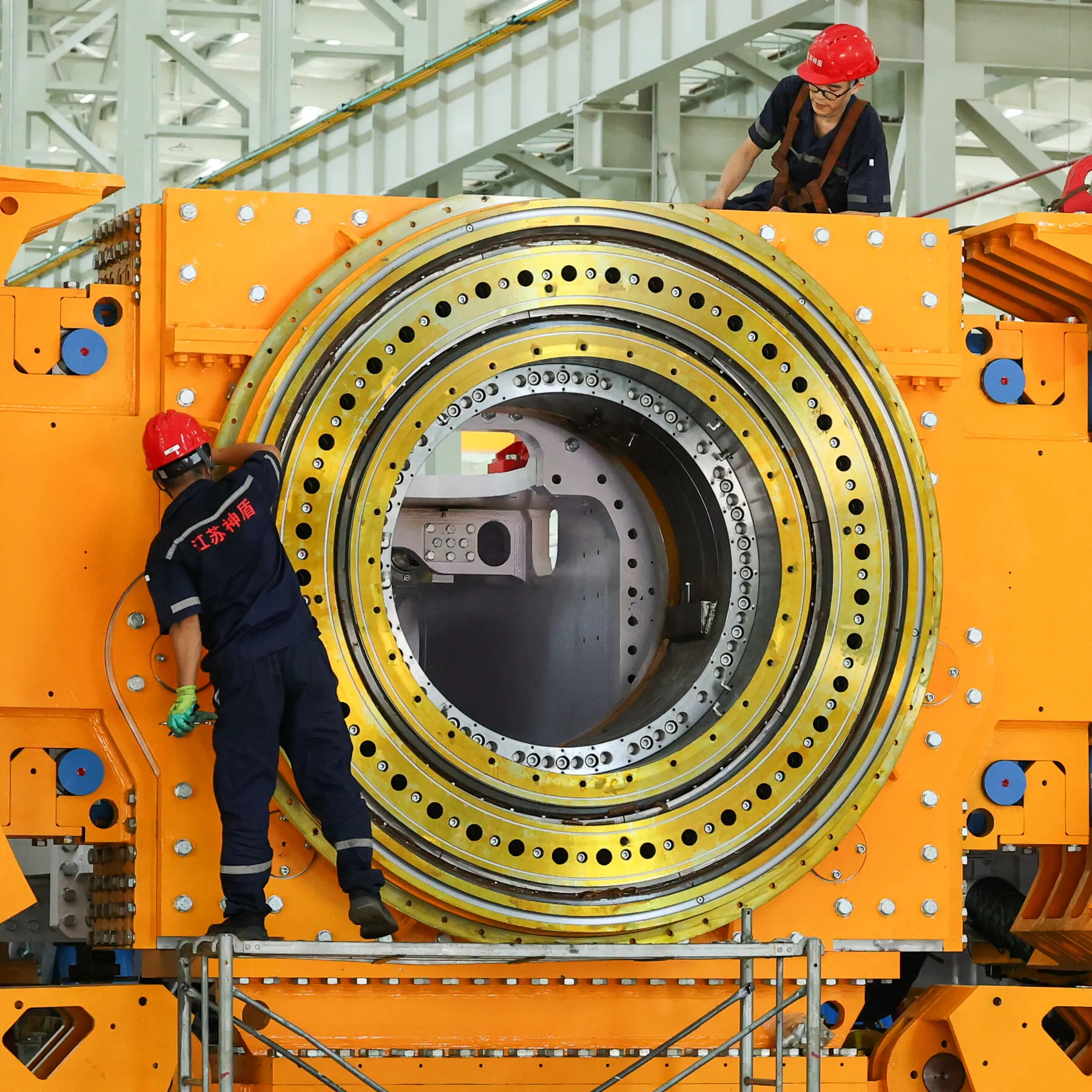
它们是世界上最大的机器之一:钢铁圆筒,有的长达一个足球场,配备旋转切削盘,能啃噬岩石为公路和铁路开辟通道。这些被称为盾构机的设备,仅由少数几家公司制造,工厂主要位于中国。
They are among the biggest machines in the world: steel cylinders, some as long as a football field, armed with rotating discs that can chew through rock to clear the way for roads and railways. Known as tunnel boring machines, they are made by only a handful of companies, mostly in factories in China.
印度使用它们挖掘隧道,包括在喜马拉雅山脉,以提升向与中国有领土争端的边境调兵遣将的能力。但从下个月起,北京很可能将能控制印度是否能采购这些设备。
India uses them to dig tunnels, including in the Himalayas, to improve its ability to send troops to defend its contested border with China. But starting next month, Beijing is likely to be able to control whether India gets to buy them.
这些机器是中国更广泛举措的一部分,旨在管控中国工厂和实验室的产品与技术流向海外。仅在过去一个月,北京就采取行动管控数十项技术的出口,包括无人机、人工智能模型和智能体,以及开发先进药物和制造太阳能电池板的特定工艺。
The machines are part of a broader effort by China to control what leaves Chinese factories and laboratories for foreign lands. In the past month, Beijing has moved to control the exports of dozens of technologies, including drones, artificial intelligence models and agents, and certain processes used to develop advanced medicines and to make solar panels.
这一整体推进可能让美国及其他国家的企业更难建立太阳能设备工厂,以与中国制造商竞争。也可能很快让中国境外任何方面更难获取最新、最强大的中国人工智能模型。
The overall push could make it much harder for companies in the United States and elsewhere to set up solar energy equipment factories that would compete against Chinese manufacturers. And it could soon make it more difficult for anyone outside China to gain access to the latest and most powerful Chinese A.I. models.
这些计划中的限制显示,北京正在加倍坚持其战略:让中国工厂成为世界不可或缺的一环,即便许多政府对本国对华依赖感到不安,并推动降低依赖程度。
The planned restrictions show that Beijing is doubling down on its strategy of making Chinese factories indispensable to the world, even as many governments are alarmed by their countries’ dependence on China and are pushing to be less reliant.
在美国,对中国掌控稀土的担忧促使政府重振本国的稀土开采和加工产业。在欧洲、日本及其他地区,各国政府正试图夺回生产抗生素和药物活性成分的能力,而这些产品目前许多都来自中国。在印度,交通部长敦促企业在本地制造盾构机。
In the United States, concern over China’s grip on rare earths has spurred the government to revive the country’s own mining and processing industry for the minerals. In Europe, Japan and elsewhere, governments are trying to reclaim their ability to make antibiotics and active ingredients of medicines, many of which now come from China. In India, the transport minister has urged companies to make tunnel boring machines locally.
对中国领导人习近平而言,这些管控措施是他多年前制定计划的落地实施。当时疫情暴露了中国在呼吸机、生命维持系统等先进医疗设备,以及原材料和专用零部件方面对外国的依赖。
For Xi Jinping, the Chinese leader, the controls are the realization of a plan he laid out years ago, when the pandemic exposed China’s dependence on foreign countries for advanced medical equipment like ventilators and life-support systems, as well as for raw materials and specialized parts.
他宣称中国将在高铁、可再生能源和电信等行业开发“杀手锏”技术。这不仅会让中国更加自给自足,还能威慑其他国家试图切断对华供应链。为“与西方的伟大斗争”深挖壕沟习近平将中国描绘为陷入了一场与西方的长期斗争,在他看来,西方正试图遏制中国的崛起。
He declared that China would develop “trump card” technologies in industries such as high-speed trains, renewable energy and telecommunications. That would make China not only more self-sufficient, but deter countries from trying to cut China off. Digging In for a ‘Great Struggle’ With the West Mr. Xi has depicted China as locked in a long struggle with the West, which he sees as trying to contain China’s rise.
专注于中国政治研究的咨询公司Asdal Advisory创始人柯尔斯滕·阿斯达尔表示,北京需要杠杆,以确保中国仍能从其他国家获取所需资源——即他们的市场和喷气发动机、高端芯片等先进技术。
Beijing needs leverage to ensure that China can still get what it needs from other countries — namely their customers and advanced technologies like jet engines and high-end chips, said Kirsten Asdal, a founder of Asdal Advisory, a consultancy that focuses on Chinese political research.
“习近平和中共视自己天然处于与西方的对抗之中,”她说,并一直“在寻找机会和具备能力时,迟早与西方发生对抗”。在国内,中共将中国争取工业和技术实力的推进描述为一场生存之战,呼应了该党革命历史上的种种斗争。
“Xi and the party see themselves as naturally embattled” against the West, she said, and have been “angling for a confrontation sooner or later, whenever the opportunity and capability present itself.”At home, the Communist Party has framed China’s push for industrial and technological might as a fight for survival, echoing the struggles of the party’s revolutionary past.
近日,该党多次援引长征——红军那场长达6000英里(约合9600公里)的史诗般战略大撤退,它奠定了毛泽东的领导地位,并成为该党战胜不可能之困境的决定性神话。通过借用这段历史,该党或许意在让普通中国人放心:在其领导下坚持下去,将带领中国度过经济增速放缓、房地产危机长期化以及外部敌意加剧的时期。
In recent days, the party has repeatedly invoked the Long March, the Red Army’s epic 6,000-mile strategic retreat that cemented Mao Zedong’s leadership and became its defining myth of triumph over impossible odds. By drawing on that history, the party may be trying to reassure ordinary Chinese that endurance under its leadership will carry China through a time of slower economic growth, a prolonged housing crisis and growing hostility abroad.
在一篇纪念长征90周年的头版社论中,作为该党喉舌的《人民日报》呼吁全国“聚焦‘卡脖子’关键核心技术”,并“硬起中国人自立自强的脊梁”。
In a recent front-page editorial commemorating the 90th anniversary of the Long March, People’s Daily, the party’s mouthpiece, called for the country to “focus on the ‘chokehold’ key core technologies” and “stiffen the Chinese backbone” of self-reliance.
该社论明确指向美国,赞扬中国经受住了关税与贸易战的考验,并敦促读者为“一场伟大斗争”做好准备。确保技术“卡脖子”环节的呼吁,也被比作红军在战场上夺取“战略主动”,最终击败国民党。
In a clear reference to the United States, the editorial praised China for weathering tariffs and trade wars and urged readers to prepare for a “great struggle.”The call to secure technological choke points was also likened to the way the Red Army took the “strategic initiative” on the battlefield to ultimately defeat the Nationalists.
中国表示,近期密集出台的出口管制和拟议规则是保护中国商业利益所必需的。例如,中国花费数十年和数十亿美元发展了太阳能设备制造的主导地位,并主张必须限制核心设备出口,以防竞争对手试图在国内复制中国的供应链。中国还表示,需要更多管制以防范国家安全威胁。
China has said that the recent flurry of export controls and proposed rules are needed to protect Chinese business interests. The country has spent decades and billions of dollars developing its dominance of the manufacturing of solar equipment, for instance, and it argues that it must restrict the export of core equipment to prevent competitors from trying to replicate China’s supply chain domestically. China has also said that more controls are needed to guard against threats to national security.
“中国开始更系统地考量哪些技术和设备可以出口、卖给谁以及最终用途是什么,”北京清华大学国际关系专家孙成昊表示。
“China is beginning to more systematically consider which technologies and equipment can be exported, to whom they should be sold and what their ultimate applications will be,” said Sun Chenghao, a foreign relations expert at Tsinghua University in Beijing.
他举例说,人工智能可能被用于网络攻击,掘进机和挖泥船可能被军方用于对抗中国,这些风险都是北京审查这些技术流向的正当理由。
He said, for instance, that the risks that A.I. could be used for cyberattacks or that machines that bore tunnels and that dredge mud could be used by militaries against China are legitimate reasons for Beijing to vet where these technologies go.
向美国学习 拟议中的管制措施也可能是中美近几个月来互相采取的以牙还牙行动的一部分,尽管双方达成了更广泛的贸易休战。特朗普政府将中国主要基因组学公司华大基因列入贸易黑名单,旨在禁止中国强迫劳动制造的产品进入。此前,财政部提出法规,禁止美国公司和投资者在中国生物技术公司中持有投资股份。
Learning From the United States The proposed controls may also be a part of tit-for-tat actions that China and the United States have traded in recent months, despite a broader trade truce. The Trump administration added BGI, a major Chinese genomics company to a trade blacklist aimed at barring products made with forced labor in China. Earlier, the Treasury Department proposed regulations prohibiting U.S. companies and investors from taking investment stakes in Chinese biotechnology firms.
预计特朗普总统和习近平主席将于本月晚些时候在中国会晤,下个月在迈阿密会晤。
President Trump and Mr. Xi are expected to meet in China later this month and next month in Miami.
一些分析人士表示,美国对中国的限制和制裁让北京认识到,大国需要经济武器,正如需要航空母舰和远程导弹一样。华盛顿首先切断了中国两家最大科技公司华为和中兴通讯获取美国芯片和软件的渠道,随后广泛限制向中国出口先进芯片,这些遏制措施持续打击着中国的人工智能雄心。
American restrictions and sanctions on China helped teach Beijing that great powers need economic weapons as much as they need aircraft carriers and long-range missiles, some analysts have said. Washington first cut two of China’s largest technology companies, Huawei and ZTE, off from American chips and software, then restricted exports of advanced chips to China broadly, curbs that continue to hurt China’s A.I. ambitions.
在与特朗普第二届政府的贸易战中,北京切断了向美国出口稀土,这种矿物是制造战斗机、汽车和日常技术所需的。这迫使华盛顿达成休战。
During its trade war with the second Trump administration, Beijing choked off exports to the United States of rare earths, the minerals needed to make fighter jets, cars and everyday technologies. That pressured Washington into a truce.
一些中国分析人士担心,北京的稀土战略过于成功。美国及其许多盟友和伙伴现在正争相开发替代来源。本月中国出台的一系列管制措施部分旨在建立新的杠杆点。
Some Chinese analysts worry that Beijing’s rare earths strategy has been too successful. The United States and many of its allies and partners are now scrambling to develop alternative sources. Part of this month’s flood of Chinese controls was aimed at establishing new points of leverage.
“中国担心可能会失去‘稀土牌’,”上海复旦大学国际关系学者赵明浩说。“那么,中国还手里握着什么牌?中国如何能有效反制美国的制裁或关税措施?我认为北京目前高度重视这一点。” 一场代价高昂的赌注 中国一心一意专注于技术自给自足,给北京带来了风险。
“China is concerned that it might lose its ‘rare earths card,’” said Zhao Minghao, an international relations scholar at Fudan University in Shanghai. “So, what other cards does China still hold? How can China effectively counter U.S. sanctions or tariff measures? I believe Beijing is prioritizing this highly at the present.”A Costly Bet China’s single-minded focus on technological self-sufficiency carries risks for Beijing.
经济学家长期以来一直敦促北京在养老金、医疗保健和失业救济方面加大投入,以便让居民有足够的安全感去消费。
Economists have long urged Beijing to invest in pensions, health care and unemployment benefits so that residents feel secure enough to spend.
“这种对发展技术和保护技术的执念,正导致中国大规模资源错配,从而拖累增长、推高债务,”华盛顿战略与国际研究中心中国经济研究员斯科特·肯尼迪说。
“That obsession with developing technology and protecting it is leading to a massive misallocation of resources in China that is generating slower growth and higher debt,” said Scott Kennedy, a researcher on the Chinese economy at the Center for Strategic and International Studies in Washington.
新的管制措施也可能令欧洲等其他贸易伙伴感到不安,欧洲已经对廉价中国出口商品的涌入感到不安。“这种以威胁手段做生意的方式是不可持续的,”肯尼迪先生说。即使是一些中国分析人士也承认这种危险。
The new controls could also alarm other trading partners like Europe, which is already uneasy about a flood of cheap Chinese exports. “That kind of business by threat is not going to be something that is sustainable,” Mr. Kennedy said. Even some Chinese analysts acknowledge the danger.
“如果不确定性变得过高,客户可能会寻找替代方案,”清华大学的孙先生说。
“If uncertainty becomes too high, customers may seek alternatives,” Mr. Sun of Tsinghua said.
这种情况已经在印度发生。专家表示,中国早在2024年就一直卡着盾构机的出口,随后才将其列入出口管制清单。结果,印度不得不另觅供应商。
That is already happening in India. Experts say that China had been holding up exports of tunnel boring machines as early as 2024, before it added them to its list of export controls. As a result, India has had to seek out other suppliers.
印度班加罗尔塔克沙希拉研究所高科技地缘政治项目负责人普拉奈·科塔斯坦说,由于新德里与中国的经济联系很薄弱,它几乎没有反击手段。
Yet New Delhi had few ways to retaliate because its economic ties with China were so thin, said Pranay Kotasthane, chair of the High Tech Geopolitics Program at the Takshashila Institution in Bengaluru, India.
“中国正在不加区分地扩大出口管制范围,将甚至不具备战略性质的基础设备也纳入其中,”他补充道。“他们正在表明,在任何政治冲突中,他们都可以利用产业杠杆进行反制。”大卫·皮尔森报道中国外交政策以及中国在经济和文化方面与世界的互动。他从事新闻工作已有二十多年。
“China is indiscriminately expanding the scope of their export controls to include basic equipment that aren’t even strategic,” he added. “They are demonstrating that in any political conflict, they can counter with industrial leverage.”David Pierson covers Chinese foreign policy and China’s economic and cultural engagement with the world. He has been a journalist for more than two decades.