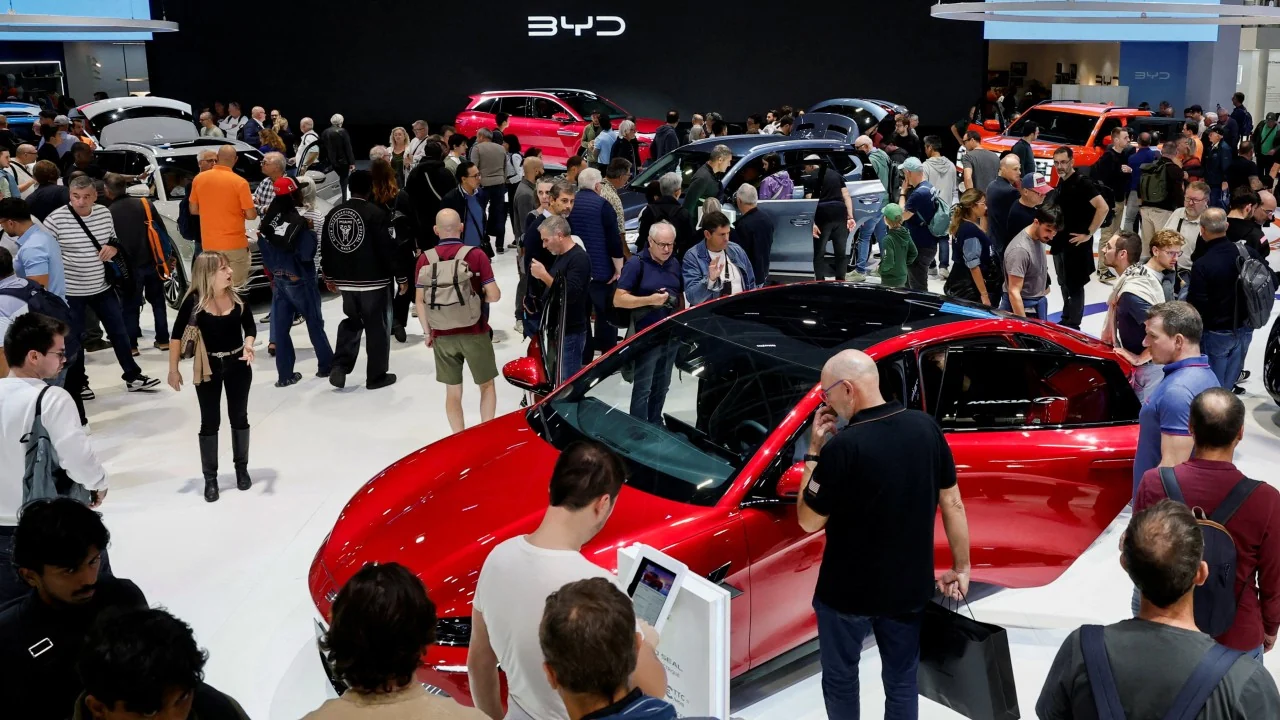
中国两大汽车制造商比亚迪和吉利汽车在10月份创下了今年以来的最高月度销量,逆转了全球最大汽车市场的下降趋势,而规模较小的竞争对手则面临着越来越大的扭亏为盈压力。
China’s two largest carmakers, BYD and Geely Auto, recorded their strongest monthly sales of the year in October, bucking a downward trend in the world’s largest automotive market as smaller rivals come under increasing pressure to turn a profit.
根据公司声明,总部位于深圳的电动汽车巨头比亚迪上个月向境内外客户交付了490,168辆汽车,同比增长11%,而总部位于杭州的吉利在同期向全球交付了310,183辆燃油车和电动汽车,较去年同期增长1%。
Shenzhen-based electric vehicle (EV) giant BYD handed over 490,168 cars to customers at home and abroad last month, up 11 per cent year on year, while Hangzhou-headquartered Geely delivered 310,183 petrol and electric cars worldwide in the same period, up 1 per cent from a year earlier, according to company statements.
上海独立分析师高申表示:“头部企业凭借新车型以及在成本和技术上的优势,展现出了销售韧性。它们的销量增长,加剧了在竞争激烈的国内市场中艰难求存的弱势车企的压力。”为了抵消国内需求疲软的影响,比亚迪和吉利今年都加速了其全球化进程。
“Top players, banking on their new models and advantages in cost and technology, showed their resilience in sales,” said Gao Shen, an independent analyst in Shanghai. “Their sales rises have ratcheted up pressure on weak carmakers that are struggling to survive [in a fiercely competitive] domestic market.”To offset weak demand at home, both BYD and Geely accelerated their go-global drives this year.
比亚迪10月销售电动汽车170,194辆,较去年同期增长102.8%。2026年前10个月,该公司的出口量同比激增93.8%。
BYD sold 170,194 EVs in October, up 102.8 per cent from a year earlier. In the first 10 months of 2026, the company’s exports surged 93.8 per cent year on year.
吉利上个月交付燃油车和电动汽车107,153辆,同比增长157.8%。其1月至10月的出口量同比跃升167.9%。
Geely delivered 107,153 petrol and electric cars last month, up 157.8 per cent year on year. Its exports from January to October jumped 167.9 per cent year on year.
分析师表示,其他几家中国领先的车企在10月份也报告了极为亮眼的销量,这再次表明中国汽车行业的整合正在牢固确立。
Several other leading Chinese carmakers reported sizzling sales in October – a fresh sign that consolidation in the country’s automotive sector was becoming firmly entrenched, analysts said.
总部位于广州的电动汽车制造商小鹏汽车上个月向全球交付了50,237辆汽车,较去年同期增长19.6%,超过了其在2025年10月创下的42,013辆的此前月度纪录。
Guangzhou-based EV assembler Xpeng handed over 50,237 cars worldwide last month, up 19.6 per cent from a year earlier and surpassing its previous monthly record of 42,013 units set in October 2025.
总部位于中国中部安徽省的奇瑞集团报告称,其销量同比增长5.3%,月度交付量达到2026年的最高值295,934辆。
Chery Group, headquartered in central China’s Anhui province, reported a year-on-year sales growth of 5.3 per cent, with monthly deliveries reaching a 2026 high of 295,934 vehicles.
中国乘用车市场信息联席会尚未公布中国内地整体汽车市场10月份的销售数据。
October sales numbers for the mainland’s overall car market have yet to be published by the China Passenger Car Association.
然而,据这家政府支持的行业协会早些时候报道,2026年前九个月的国内汽车销量较去年同期暴跌21.7%,降至1,530万辆。
Domestic vehicle sales in the first nine months of 2026, however, slumped 21.7 per cent from the same period a year earlier to 15.3 million units, the government-backed industry consortium reported earlier.
今年6月,财务咨询公司艾睿铂的汽车与工业业务亚太区负责人斯蒂芬·戴尔预测,到2030年,中国内地30家专注于电动汽车的车企中,只有7家能够实现收支平衡,规模较小或实力较弱的企业可能会退出市场或被竞争对手收购。
In June, Stephen Dyer, Asia-Pacific region leader of automotive and industrial practice at financial advisory firm AlixPartners, predicted that only seven of mainland China’s 30 EV-focused carmakers would break even by 2030, with smaller or weaker players likely to exit the market or be acquired by rivals.
戴尔表示:“盈利能力不再由规模驱动,而是越来越取决于公司的组织效率、产品周期的适应速度,以及设计、工程和商业化的整合效率。”
“Profitability is no longer driven by scale, but increasingly by how efficiently companies are organised, how quickly they adapt product cycles, and how effectively they integrate design, engineering and commercialisation,” Dyer said.
“我们预计赢家与行业其他企业之间的差距将进一步拉大,行业整合将成为一种结构性结果,而非周期性结果。”德意志银行今年1月曾表示,由于产能过剩和政府支持减少,今年中国的乘用车销量将下降5%,而瑞银则预测将下降2%。
“We expect a widening gap between winners and the rest of the industry, with consolidation becoming a structural outcome rather than a cyclical one.”Deutsche Bank said in January that passenger vehicle sales in China would fall 5 per cent this year, while UBS projected a 2 per cent fall, citing overcapacity and reduced government support.
摩根士丹利周日发布的一份报告显示,尽管部分中国车企的前景充满挑战,但该国配备入门级自动驾驶技术的智能汽车在无人驾驶出租车市场上仍然具有巨大的未开发潜力。
Despite the challenging outlook for some Chinese carmakers, the country’s intelligent vehicles – fitted with entry-level autonomous driving technology – still had significant untapped potential in the robotaxi market, according to a report released by Morgan Stanley on Sunday.
这家美国银行预测,到2035年,可能有100万辆自动驾驶出租车向内地消费者提供出租车服务。
The US bank forecast that 1 million self-driving cabs could be offering taxi services to mainland consumers by 2035.
以摩根士丹利大中华区汽车与共享出行研究团队负责人萧婷领衔的分析师团队表示:“中国的无人驾驶出租车行业一直受到难以获得的许可证和传感器成本的限制,但现在它正接近规模和盈利能力的拐点,资金充足的企业正依靠人工智能软件和硬件通货紧缩的支持,运营着拥有千辆规模的无驾驶员车队并获得经常性票价收入。”
“China’s robotaxi industry has been constrained by elusive permits and sensor costs, but now it’s nearing an inflection point in scale and profitability, with well-capitalised players operating thousand-vehicle driverless fleets on recurring fares, enabled by artificial intelligence software and hardware deflation,” said analysts led by Tim Hsiao, head of the Greater China auto and shared mobility research team at Morgan Stanley.