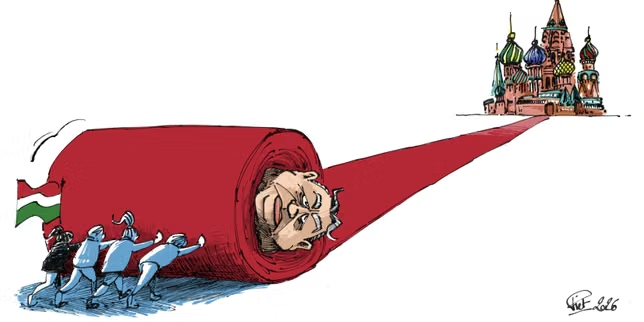
插图描绘维克托·欧尔班在2026年4月选举中落败。执政六个月后,匈牙利总理彼得·马扎尔的政府仍远未稳固,匈牙利民间社会代表表示,在维克托·欧尔班执政16年后,他们终于感到可以喘口气了。不过,他们仍保持“谨慎乐观”,正如人权非政府组织大赦国际匈牙利分支机构传播经理阿伦·德梅特所说。
Illustration depicting Viktor Orban's defeat in the April 2026 elections. Six months into its tenure, with Prime Minister Péter Magyar's government still far from settled in, representatives of civil society in Hungary say they finally feel they can breathe again after 16 years under Viktor Orban's regime. Still, they remain "cautiously optimistic," as Aron Demeter, communications manager for the Hungarian branch of human rights non-governmental organization Amnesty International, put it.
“我们现在工作的氛围完全不同了;我们摆脱了被描绘为‘匈牙利敌人’的沉重负担,”在该非政府组织工作了13年的德梅特说。在欧尔班执政期间,他以压倒性优势在2026年4月选举中落败,非政府组织面临持续的诋毁运动以及使其工作复杂化的法律,尽管并未使其工作完全不可能。
"The atmosphere we are working in now is completely different; we are free from the heavy burden of being portrayed as 'enemies of Hungary,'" said Demeter, who has spent 13 years with the NGO. Under Orban, who suffered a resounding defeat in the April 2026 elections, NGOs faced relentless smear campaigns and laws that complicated their work, even if did not make it outright impossible.
这尤其适用于捍卫人权和少数群体权利(包括匈牙利罗姆人权利)的组织,其中大部分组织接受境外资助。因此,当局指责它们是“外国代理人”和匈牙利裔慈善家乔治·索罗斯的“傀儡”。
This was especially true for organizations defending human rights and minority rights (including those of the Roma in Hungary), most of which received funding from abroad. As a result, the authorities accused them of being "foreign agents" and "puppets" of philanthropist George Soros, who is of Hungarian descent.