枪声迫使50岁的阿伊莎·亚当(Aisha Adam)逃离了她位于喀土M的卡拉克拉(al-Kalakla)社区的家。几天前,即2023年4月15日,苏丹武装部队(SAF)与准军事组织快速支援部队(RSF)在苏丹爆发了战争。
The sound of gunfire forced 50-year-old Aisha Adam to flee her home in the al-Kalakla neighbourhood of Khartoum days after war erupted in Sudan between the Sudanese Armed Forces (SAF) and the paramilitary Rapid Support Forces (RSF) on April 15, 2023.
她前往了邻近城市恩图曼,但战火一路追随,2023年5月,亚当不得不寻找新的避难所。这使她来到了位于该国红海海岸苏丹港的一个国内流离失所者(IDP)营地,她与自己抚养的孤儿孙子和侄子在那里生活。
She went to the neighbouring city of Omdurman, but fighting followed her and in May 2023, Adam had to find a new refuge. It brought her to a camp for internally displaced people (IDPs) in Port Sudan, on the country’s Red Sea coast, where she lives with her orphaned grandson and nephew.
“在冲突中,我和孙子前往了公共汽车站,本打算前往喀土M以南杰济拉州的瓦德麦达尼。但我发现了一辆开往苏丹港的公共汽车并上了车,尽管我对这座城市唯一的了解就是它很安全,”她对半岛电视台说。
“Amid the clashes, I left with my grandson for the bus station, intending to travel to Wad Madani in Gezira state, south of Khartoum. But I found a bus heading to Port Sudan and boarded it, even though all I knew about the city was that it was safe,” she told Al Jazeera.
据救援人员称,苏丹武装部队与快速支援部队之间的战斗已造成多达20万人死亡。这场战争还导致1300万人流离失所,并在该国部分地区引发了饥荒。
The fighting between the SAF and the RSF has killed as many as 200,000 people, according to aid workers. The war has also displaced 13 million people and led to famine in parts of the country.
在亚当被迫转移到苏丹港后,她最初住在市中心的一个国内流离失所者收容所。6月,她和其他人被重新安置到该市郊区的一个流离失所中心。
After Adam was forced to move to Port Sudan, she initially stayed at a shelter for IDPs in the centre of the city. In June, she and others were relocated to a displacement centre on the outskirts of the city.
住所是根据家庭人口规模分配的。亚当分到一个帐篷,与她照顾的两个孩子共享,并与另外两个家庭共用一道边界。
Accommodation was allocated according to household size. Adam was given a tent to share with the two children under her care, and shared a boundary with two other families.
“在第一个收容所时,我得到了一些来自组织、其他机构甚至普通人的援助。但这里的情况不同了。我们获得的援助大幅减少,所以我不得不试图找工作,以免饿死,”她说。
“At the first shelter, I received some assistance from organisations, other agencies and even ordinary people. But things are different here. The aid we receive has decreased significantly, so I had to try to find work to avoid starving to death,” she said.
在亚当为喂饱这两个孩子苦苦挣扎之际,苏丹正面临日益加剧的粮食短缺。美国国务院在10月27日发表的一份联合声明中警告称,未来几个月粮食供应状况正在恶化,并存在发生饥荒的风险。
Adam’s struggle to feed the two children comes as Sudan faces deepening food shortages. In a joint statement released on October 27, the United States Department of State warned of the deterioration in food availability and the risk of famine in the coming months.
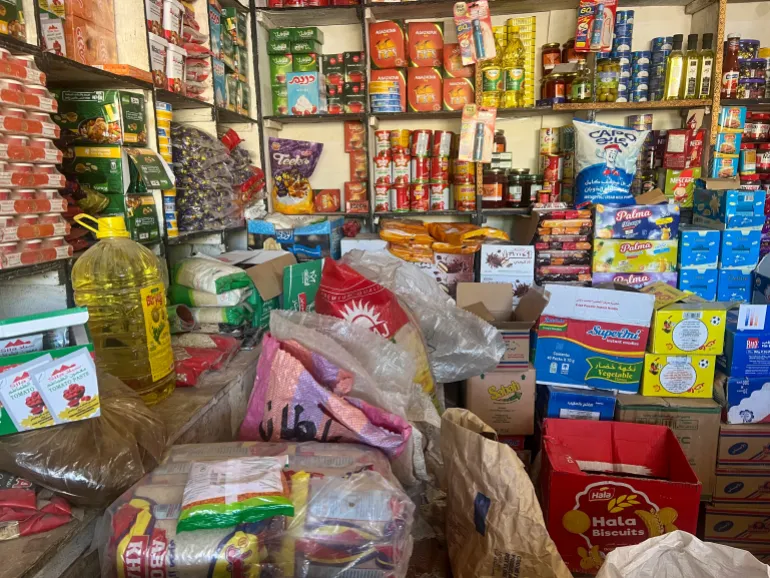
尽管附近杂货店的食物种类繁多,但艾莎·亚当主要依靠大米和小扁豆度日,而其他食品则超出了她的经济承受能力 [法蒂玛·埃达姆/半岛电视台]“苏丹的粮食安全正在经历令人担忧的恶化。正如综合粮食安全阶段分类所警告的那样,未来几个月发生饥荒的风险需要采取紧急行动,”声明称。
Despite the variety of food at the nearby grocery, Aisha Adam depends mainly on rice and lentils, while other food items remain beyond her financial reach [Fatima Edam/Al Jazeera]“Sudan is experiencing an alarming deterioration in its food security. The risk of famine in the coming months, as warned by the Integrated Food Security Phase Classification, needs urgent action,” the statement said.
法蒂玛正在经历该报告所强调的现实后果,寻找食物成了她每天都要面临的挣扎。过去六个月里,人道主义援助十分有限,她回忆说只收到过三次援助。有一次,她收到了55万苏丹镑(约合59.13美元)的现金。另一次,她得到了12公斤面粉。在最近的一次物资分发中,她收到了女性个人卫生用品。
Fatima is experiencing the real-life consequences highlighted in the report, as finding food becomes a daily struggle. Humanitarian assistance over the past six months has been limited, and she recalls receiving aid on only three occasions. Once, she received 550,000 Sudanese pounds ($59.13) in cash. Another time, she was given 12kg of flour. At the last distribution, she received personal hygiene supplies for women.
“我别无选择,只能工作。我没有可以依靠的人。我的两个儿子失踪了,我不知道他们在哪里,而我的另一个儿子在战争开始前就去世了,”她说。
“I have no choice but to work. There is no one I can rely on. My two sons are missing, and I do not know where they are, while my other son died before the war began,” she said.
亚当清晨离开住处,前往附近的集市,在那里制作并出售扎拉比亚(一种传统的苏丹油炸糕点)以及茶和咖啡。有时她能赚钱,有时则会亏本。
Adam leaves her accommodation early in the morning and heads to a nearby market, where she makes and sells zalabia, a traditional Sudanese fried pastry, alongside tea and coffee. Some days she makes a profit; on others, she loses money.
她告诉半岛电视台:“我不知道该怎么计算我的利润。但只要一卖完扎拉比亚,我就去购买……第二天所需的原料:3公斤面粉2.1万镑(约合2.25美元)、2升油2.2万镑(约合2.36美元)以及三袋木炭9000镑(约合0.97美元)。”
“I do not know how to calculate my profit. But as soon as I finish selling the zalabia, I go to buy the ingredients … for the next day: 3kg of flour for 21,000 pounds ($2.25), 2 litres of oil for 22,000 pounds ($2.36) and three bags of charcoal for 9,000 pounds ($0.97),” she told Al Jazeera.
亚当表示,买完这些物资后剩下的钱往往不足以为她自己和她照料的两个孩子提供一顿饭。一公斤小扁豆是她能买到的最便宜的食品之一,售价为1.6万镑(约合1.72美元)。肉类已经不在她的购物清单上了,她现在的饮食主要由小扁豆和大米组成。
Adam says the money left after buying these supplies is often insufficient to provide a meal for herself and the two children in her care. A kilogramme of lentils, one of the cheapest food items available to her, costs 16,000 pounds ($1.72). Meat is no longer on her shopping list, and her diet now consists mainly of lentils and rice.
“幸运的是,援助机构过去五天一直在提供水。在此之前,我买18升水要花1500镑(折合0.16美元)。有时我没有钱,不得不借钱,”她说。
“Fortunately, aid organisations have been providing water for the past five days. Before that, I used to buy 18 litres for 1,500 pounds ($0.16). Sometimes I did not have the money and had to borrow it,” she said.
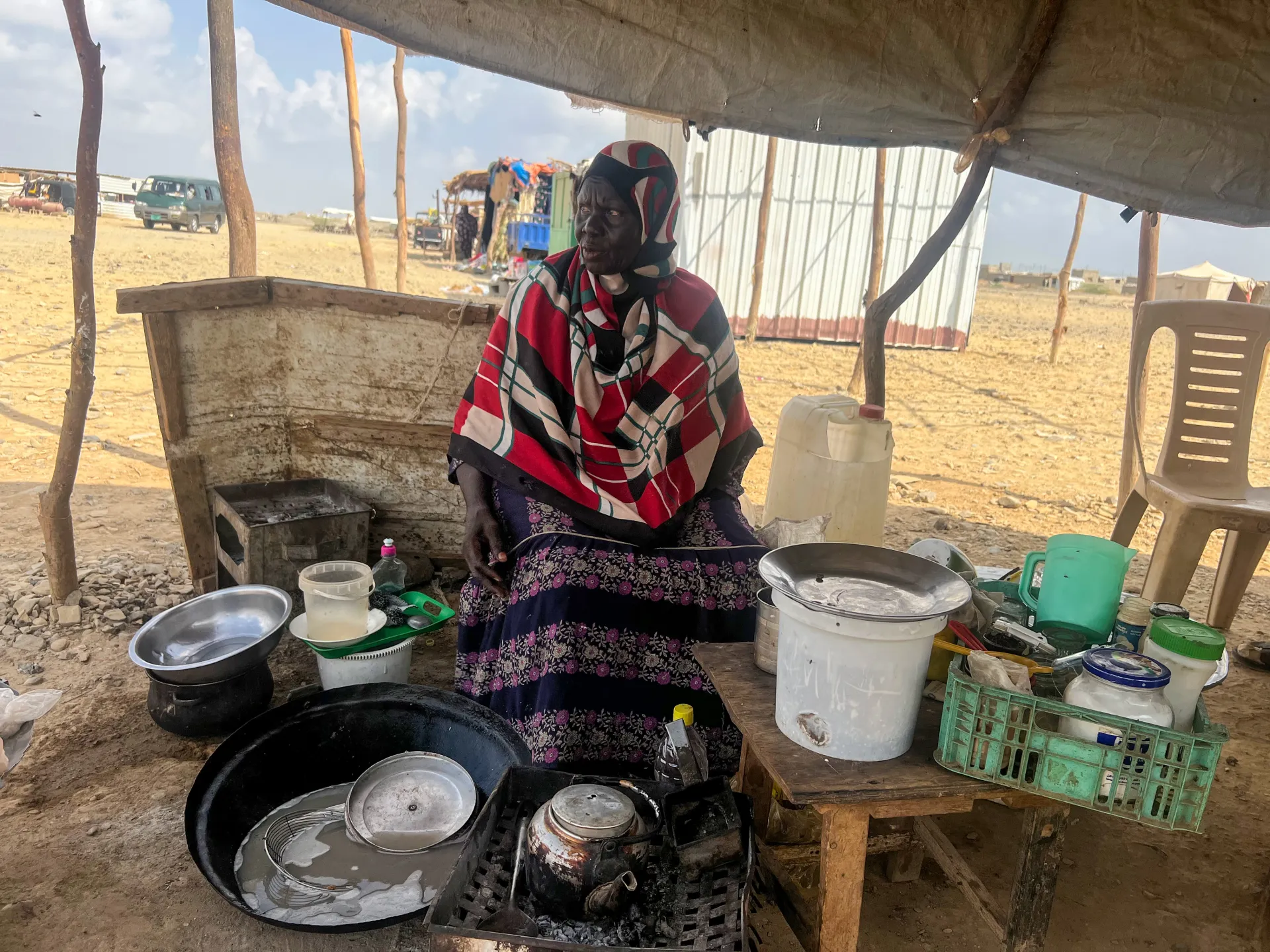
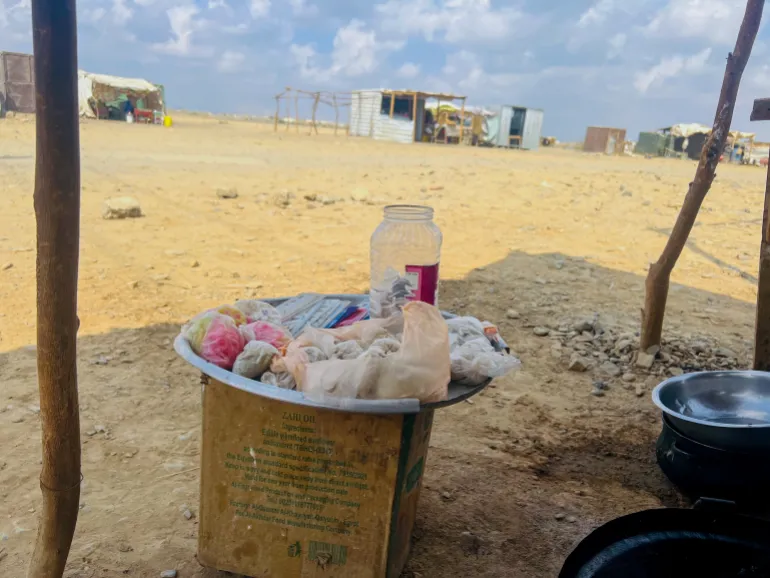
在苏丹港阿尔伊斯坎(al-Iskan)流离失所者营地附近的一个市场上,流离失所者从事着任何能找到的工作,哪怕薪酬微薄,以赚取足够买食物的钱。(法蒂玛·埃达姆/半岛电视台)亚当表示,她的首要任务是维持她的小生意运转。这有助于她在维持生计的同时,抚平不知自己两个失踪儿子下落的痛苦。
“重要的是我们要有饭吃,哪怕只有扁豆和水,别的什么都没有。但我最担心的是我们会生病,因为我们没有钱看病,”她说。
Displaced people take up any available work, however little it pays, at a market near the al-Iskan IDP camp in Port Sudan to earn enough to buy food [Fatima Edam/Al Jazeera] Adam says her priority is to keep her small business running. It helps her put food on the table while helping her cope with the pain of not knowing what happened to her two missing sons. “The important thing is that we eat, even if it is only lentils and water, with nothing else. But my greatest fear is that we will fall ill, because we have no money for treatment,” she said.
她的挣扎反映了苏丹数百万民众面临的更广泛的粮食危机。2026年10月22日,世界粮食计划署(WFP)宣布,资金短缺迫使其削减了对流离失所者的每月粮食援助,影响了约90万人。
Her struggle reflects the wider food crisis facing millions in Sudan. On October 22, 2026, the World Food Programme (WFP) announced that funding shortages had forced it to cut monthly food assistance to displaced people, affecting about 900,000 people.
与此同时,全国各地约有1950万人面临严重饥饿,其中包括500万人经历着紧急水平的食物短缺。世界粮食计划署表示,饥荒风险在几个饥饿重灾区依然存在,特别是大达尔富尔和大科尔多凡地区。
Meanwhile, some 19.5 million people across the country face acute hunger, including five million experiencing emergency levels of food shortages. The risk of famine persists in several hunger hotspots, particularly in Greater Darfur and Greater Kordofan, the WFP says.
奥贝德阿尔苏赖哈8号(al-Suraiha 8)流离失所者营地主管埃斯拉·穆罕默德(Esraa Mohammed)表示,流离失所的家庭正面临严重的人道主义援助短缺,甚至缺乏最基本的生活必需品。
Esraa Mohammed, supervisor of the al-Suraiha 8 IDP camp in al-Obeid, says displaced families are facing severe shortages of humanitarian assistance and lack even the most basic necessities.
“营地里有450名登记在册的流离失所者,此外还有40名新抵达尚未被列入官方记录的人,”她告诉半岛电视台。“大多数人历经旅途抵达时穿着破烂的衣服,没有什么能遮挡烈日或风雨,甚至连一顿饭都没有。”穆罕默德表示,一些组织提供粮食援助,包括每人约400毫升食用油和每人250克豌豆。另一个组织则分发扁豆、面粉、油和盐。
“We have 450 registered displaced people in the camp, in addition to 40 newly arrived people who have not yet been added to the official records,” she told Al Jazeera. “Most arrive wearing torn clothes after their journeys, with nothing to protect them from the sun or rain, and without even a single meal.”Mohammed says some organisations provide food assistance, including about 400ml of cooking oil per person and 250gm of peas per person. Another organisation distributes lentils, flour, oil and salt.
但这些物资不足以维持她家人一个月的生计,这迫使她和其他无家可归的苏丹流离失所者寻找临时工作来维持生计。有时他们能找到工作;但在其他时候,他们只能饿着肚子睡觉。
But these supplies are insufficient to sustain her family for a month, forcing her and other displaced Sudanese to look for casual work to make ends meet. Sometimes they find work; at other times, they go to bed without food.
她说:“营地里有100名儿童,其中30人患有严重急性营养不良。他们还迫切需要衣物来抵御恶劣的天气条件并遮蔽他们瘦小的身躯。”
“There are 100 children in the camp, 30 of whom are suffering from severe acute malnutrition. They also urgently need clothes to protect them from harsh weather conditions and cover their small bodies,” she said.
穆罕默德补充说,一些从南科尔多凡抵达的流离失所者告诉她,由于担心被快速支援部队杀害,他们在逃离家园时被迫以树叶充饥,此前有报道称平民遭到该组织武装人员的杀害、拘留或强奸。
Mohammed added that some displaced people arriving from South Kordofan had told her they were forced to eat tree leaves while fleeing their homes because they feared being killed by the RSF, following reports of civilians being murdered, detained or raped by fighters from the group.
联合国与非政府组织专家艾哈迈德·伊斯梅尔形容苏丹的人道主义局势极其严峻,民众的基本需求远超目前提供的支持。
Ahmed Ismail, an expert on the United Nations and NGOs, describes the humanitarian situation in Sudan as extremely serious, with the basic needs of the population far exceeding the support being provided.
他告诉半岛电视台:“苏丹正面临一场复杂的危机,涉及饥荒、流离失所、医疗服务的崩溃、生计的破坏以及针对平民的严重侵害。”
“Sudan is facing a complex crisis involving famine, displacement, the collapse of health services, the destruction of livelihoods and serious violations against civilians,” he told Al Jazeera.
人道主义监测显示,平民死亡人数有所增加,其中包括与难以获取食物、医疗保健和庇护所有关的死亡,以及来自袭击和侵害(包括无人机袭击)的伤亡。
伊斯梅尔表示:“当援助减少时,最脆弱的家庭将被剥夺食物和药物,从而增加儿童、妇女和老年人死亡的风险,特别是在冲突和流离失所地区。”
Humanitarian monitoring had indicated an increase in civilian deaths, including those linked to difficulties accessing food, healthcare and shelter, as well as casualties from attacks and violations, including drone strikes“When assistance declines, the most vulnerable families are deprived of food and medicine, increasing the risk of death among children, women and older people, particularly in conflict and displacement areas,” Ismail said.
他警告说,援助的持续减少,加上不断升级的侵害以及对人道主义准入的限制,可能会将这场危机转化为一场更大范围的灾难。
Continued reductions in aid, alongside escalating violations and restrictions on humanitarian access, could turn the crisis into an even wider catastrophe, he warned.
他说:“否认某些地区状况的严重性并不能改变平民所遭受痛苦的现实。”
“Denying the severity of conditions in some areas did not change the reality of the suffering experienced by civilians,” he said.