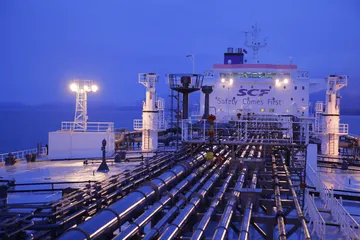
俄罗斯原油出口增加,与此同时该国炼厂开工率上升,此前乌克兰对其炼油厂的袭击出现暂时间歇。
Russia’s crude exports rose even as the country’s refinery runs increased amid a temporary lull in Ukrainian attacks on its oil processing plants.
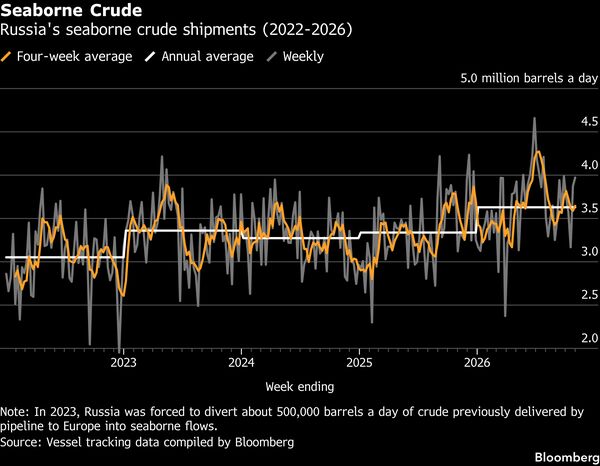
彭汇编的油轮数据显示,截至11月1日的四周内,俄罗斯海运原油出口略微增至日均365万桶。较截至10月25日修正后的周期数据增加了日均6万桶。
Overseas flows edged higher to 3.65 million barrels a day in the four weeks through Nov. 1, tanker data compiled by Bloomberg showed. That was up by 60,000 barrels a day from the revised figure for the period to Oct. 25.
自上周五以来,乌克兰恢复对俄罗斯炼厂的打击,已袭击至少四座工厂。被袭目标包括萨马拉州的新库比雪夫斯克炼厂、巴什科尔托斯坦共和国乌法的一座工厂、克斯特沃(诺西炼厂所在地)以及莫斯科东北部的雅罗斯拉夫尔。
Ukraine’s strikes against Russian refineries resumed at the end of last week, with attacks on at least four plants since Friday. Sites targeted included the Novokuibyshevsk refinery in the Samara region, a plant at Ufa in Bashkortostan, Kstovo — site of the Norsi refinery — and Yaroslavl, northeast of Moscow.
这轮新的密集袭击此前曾有近两周的停顿,恰逢美国总统特朗普呼吁停止此类攻击,他指责这些袭击导致全球柴油价格飙升。炼厂遭袭迫使莫斯科将无法加工的原油转向出口渠道,可能提振海外原油销售。但袭击间歇通常允许维修进行,从而提高加工量,将原油重新拉回国内炼厂。
The renewed barrage came after a near two-week pause that coincided with US President Donald Trump’s call for a halt to attacks that he has blamed for soaring worldwide diesel prices. Strikes on refineries force Moscow to divert crude it can’t process into the export stream, potentially boosting overseas crude sales. But a lull in those attacks typically allows repairs to be done, boosting processing and pulling crude back into the domestic refineries.
在美国斡旋的和平谈判定于11月10日至11日在阿拉伯联合酋长国举行之际,莫斯科加大了对乌克兰民用基础设施的攻击。这次实务层面的会议预计不会直接导致停火。
Moscow has stepped up its own attacks on civilian infrastructure in Ukraine ahead of peace talks, mediated by the US, that are scheduled to take place on Nov. 10-11 in the United Arab Emirates. The working-level meeting is not expected to lead directly to a halt in fighting.
此外,周一早些时候,萨马拉的一座输油泵站疑似遭乌克兰无人机袭击,一度中断哈萨克斯坦原油经俄罗斯管道系统的输送。
Separately, an oil pumping station at Samara was hit in a suspected Ukrainian drone attack early on Monday, briefly halting flows of Kazakh crude into the Russian pipeline system.
该萨马拉泵站是俄罗斯原油管网的主要枢纽,负责处理来自西西伯利亚和哈萨克斯坦的原油,输往黑海的新罗西斯克和波罗的海的乌斯特-卢加。哈萨克斯坦原油输送周二恢复,这次袭击似乎不太可能影响未来一周从这两个出口港的原油装运。
The Samara station is a major hub in Russia’s crude-pipeline network, handling supplies from western Siberia and Kazakhstan for delivery to Novorossiysk on the Black Sea and Ust-Luga on the Baltic. Kazakh flows restarted on Tuesday and the attack seems unlikely to affect crude shipments from the two export ports in the coming week.
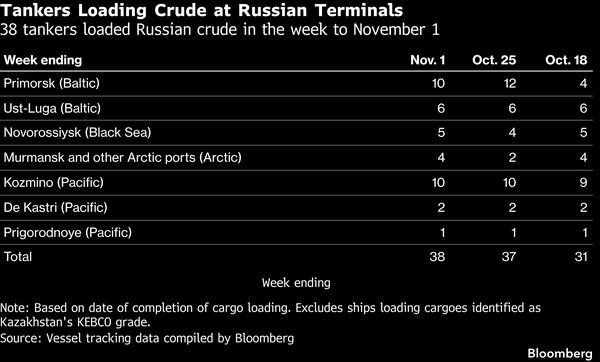
在截至11月1日的一周里,据船舶追踪数据和行业报告显示,约38艘油轮装载了2780万桶俄罗斯原油。这一数量较前一周略经修正的2712万桶(37艘船)有所增加。
In the week to Nov. 1, some 38 tankers loaded 27.8 million barrels of Russian crude, vessel-tracking data and industry reports show. The volume compared with a slightly revised 27.12 million barrels on 37 ships the previous week.
上周发货量日均增加10万桶,达到日均397万桶,为五周来最高水平。
Shipments rose by 100,000 barrels a day last week to average 3.97 million barrels a day, the highest in five weeks.
周度发货量可能波动较大,受天气、维护作业、制裁、军事活动及启航时点等因素影响。
Weekly shipments can be volatile, affected by weather, maintenance work, sanctions, military activity and the timing of departures.
本周有三批哈萨克斯坦Kebco牌原油从新罗西斯克发出。自9月初以来,莫斯科已将所有哈萨克原油经黑海港口转运,从而为其自身原油在波罗的海港口乌斯特-卢加腾出更多运力,该港口被视为更安全。
There were three shipments of Kazakhstan’s Kebco grade from Novorossiysk during the week. Since the start of September, Moscow has diverted all shipments of Kazakh crude through the Black Sea port, freeing up more capacity for its own barrels at Ust-Luga on the Baltic, which is seen as safer.
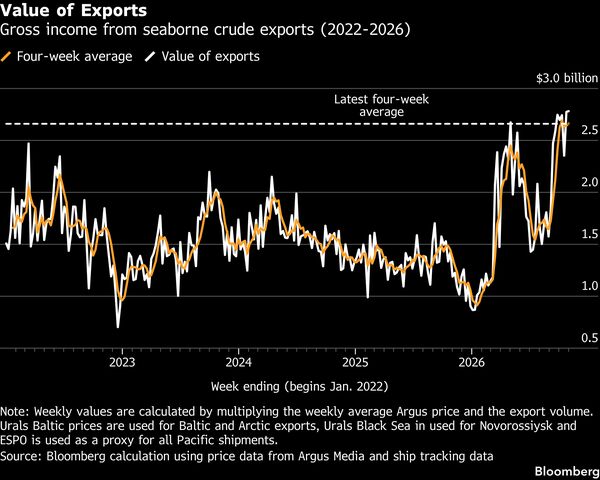
按四周移动平均计算,在截至11月1日的28天里,莫斯科石油出口总值微升至三周高点,达周均26.6亿美元。总出口量小幅增加,以及太平洋ESPO牌原油价格连续第16周上涨,在很大程度上被俄罗斯主要牌原油乌拉尔牌价格下跌所抵消。
On a four-week average basis, the gross value of Moscow’s oil shipments edged up to a three-week high of $2.66 billion a week in the 28 days to Nov. 1. The small increase in total flows and 16th straight gain in prices for the Pacific ESPO grade were largely offset by lower prices for Russia’s key Urals crude.
按周度计算,出口价值变化不大,约为27.8亿美元,所有牌原油价格下跌几乎完全抵消了发货量增加的影响。
On a weekly basis, the value of exports was little changed at about $2.78 billion, with lower prices for all grades virtually offsetting the increase in shipments.
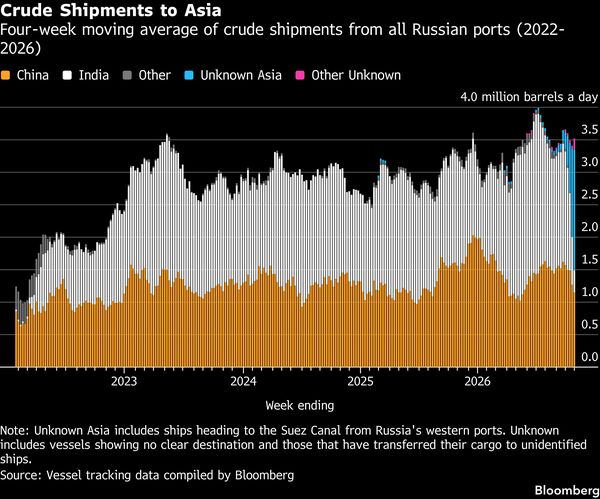
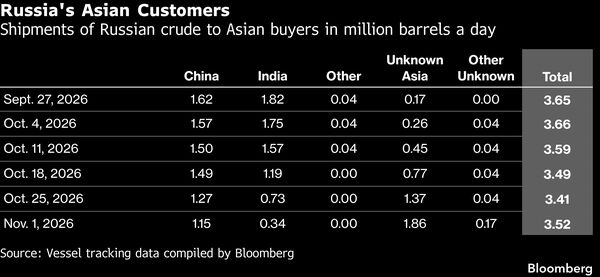
中国和印度仍以相当大的优势保持俄罗斯原油最大买家的地位。但直到航程进行到相当程度时,往往无法确定个别货物的最终目的地,因此许多较新的装船货物显示的目的地为中转港,如苏伊士、苏丹港或新加坡。这些货物被记录为“未知亚洲”,直到有可信的最终目的地信息。仍显示目的地为俄罗斯装货港或直布罗陀等地的船只,被记录为“其他未知”。
China and India remain the biggest buyers of Russian crude by a considerable margin. But it’s not always possible to assign a final destination to individual cargoes until well into their voyage, leaving many of the more recent shipments on tankers showing interim destinations, such as Suez, Port Sudan, or Singapore. These are recorded as “Unknown Asia” until a credible final destination is available. Ships still showing their destinations as their Russian loading ports, or places such as Gibraltar, are recorded as “Other Unknown.”
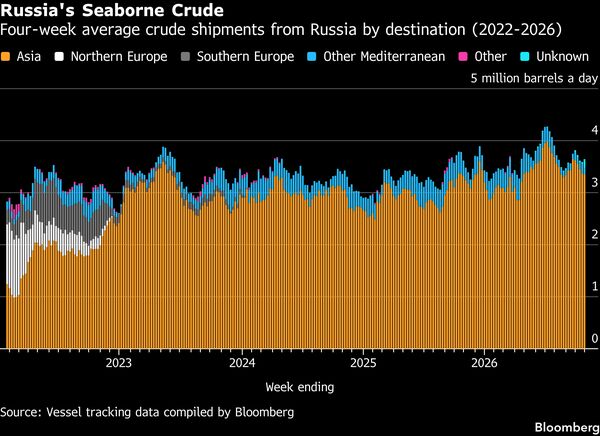
观测到的发往俄罗斯亚洲客户的货物(包括未显示最终目的地的货物)在截至11月1日的28天内上升至日均352万桶,高于截至10月25日修正后的日均341万桶。
Observed shipments to Russia’s Asian customers, including those showing no final destination, rose to 3.52 million barrels a day in the 28 days to Nov. 1, up from a revised 3.41 million in the period to Oct. 25.
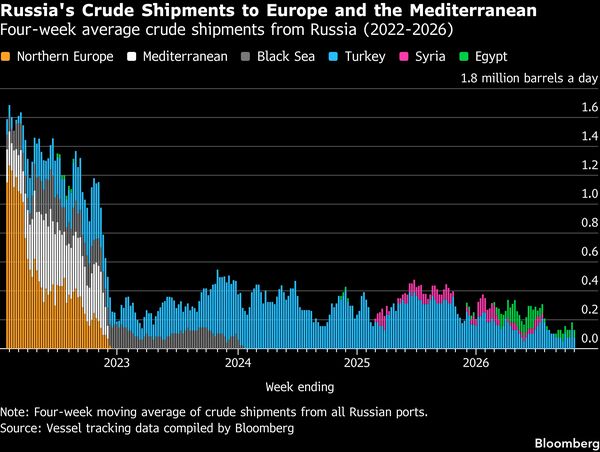
在截至11月1日的四周内,发往莫斯科在地中海地区剩余客户的货物约为日均13万桶,低于截至10月25日修正后的日均18万桶。
Shipments to Moscow’s remaining customers in the Mediterranean region stood at about 130,000 barrels a day in the four weeks to Nov. 1, down from a revised 180,000 barrels a day in the four weeks to Oct. 25.
在截至11月1日的四周内,发往土耳其的货物约为日均8万桶,低于前一时期的日均13万桶。
About 80,000 barrels a day was headed to Turkey in the four weeks to Nov. 1, down from 130,000 barrels a day in the earlier period.
此前发往埃及的货物曾激增,使流量在6月中旬达到日均16万桶,但最新时期已回落至日均约5万桶。
An earlier flurry of shipments to Egypt, which took flows to as much as 160,000 barrels a day in mid-June, has fallen back to about 50,000 barrels a day in the most recent period.
自8月以来,发往叙利亚的货物已降至零,此前该地中海国家在与美国就解除剩余制裁的谈判中同意“大幅”削减俄罗斯石油进口。
Flows to Syria have fallen to zero since August after the Mediterranean nation agreed to “drastically” reduce Russian oil imports in negotiations with the US on lifting remaining sanctions.
一旦日均近200万桶原油的目的地明朗,发往该地区的货物数据可能会被上调。历史上,显示中转目的地的船只大多将货物交付给印度或中国。
Shipments to the region may be revised higher once destinations for almost 2 million barrels a day of crude become clear. Historically, most cargoes on ships showing intermediate destinations have been delivered to India or China.
本报道属于每周系列报道的一部分,追踪从俄罗斯出口终端发运的原油及其总价值。下一次更新将于11月10日周二发布。
This story forms part of a weekly series tracking shipments of crude from Russian export terminals and the gross value of those flows. The next update will be on Tuesday, Nov. 10.
所有数据均不包括被认定为哈萨克斯坦 KEBCO 等级的货物。这些货物由哈萨克斯坦国家石油运输股份公司(KazTransoil JSC)运输,经俄罗斯过境,通过新罗西斯克和乌斯特-卢加港出口,不受欧盟制裁或价格上限限制。哈萨克斯坦原油与俄罗斯产原油混合,形成统一的出口流。自俄罗斯入侵乌克兰以来,哈萨克斯坦对其货物进行了重新品牌化,以区别于俄罗斯公司运输的货物。
All figures exclude cargoes identified as Kazakhstan’s KEBCO grade. Those are shipments made by KazTransoil JSC that transit Russia for export through Novorossiysk and Ust-Luga and are not subject to European Union sanctions or a price cap. The Kazakh barrels are blended with crude of Russian origin to create a uniform export stream. Since Russia’s invasion of Ukraine, Kazakhstan has rebranded its cargoes to distinguish them from those shipped by Russian companies.
如果自动定位信号似乎被关闭或伪造——这种手段称为“欺骗定位”——以隐瞒两艘船只会合进行货物转运,彭博社将该船对船转运归类为隐秘转运。
Bloomberg classifies ship-to-ship transfers as clandestine if automated position signals appear to be switched off or falsified — a tactic known as spoofing — to hide the two vessels involved coming together to make the cargo switch.
船舶跟踪数据将与港口代理报告,以及包括 Kpler 和 Vortexa Ltd. 在内的其他信息提供商报告的流向和船舶动向、覆盖俄罗斯港口的卫星图像进行交叉核对。
Vessel-tracking data are cross-checked against port-agent reports as well as flows and ship movements reported by other information providers including Kpler and Vortexa Ltd. and satellite imagery covering Russian ports.
如果您在彭博终端阅读此报道,请点击此处获取一份俄罗斯向主要目的地输出的四周平均流量 PDF 文件链接。
If you are reading this story on the Bloomberg terminal, click for a link to a PDF file of four-week average flows from Russia to key destinations.